
AppsFromResearch
Spanish Language Maze icon

Spanish Language Maze

Evidence Tier:VALIDATED

Proven effective in research studies

For:Educators & TeachersGeneral Public & EnthusiastsKids & Youth

App Summary

Spanish Language Maze is an educational game for beginning Spanish learners that uses a psycholinguistic 'maze task' to provide incremental, step-by-step practice in sentence construction. The associated research found that training with the app's 'story maze' format helped learners more quickly process grammatical structures that differ from their native language. The authors conclude that the task is both highly engaging and effective for learning difficult constructions, highlighting its usefulness as a supplemental pedagogical tool.

App Screenshots

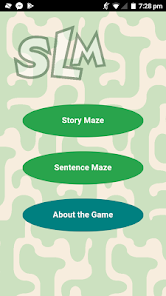
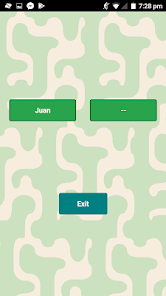
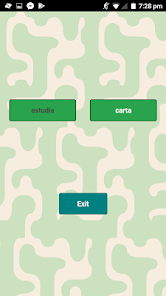
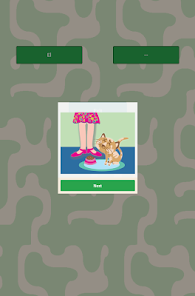
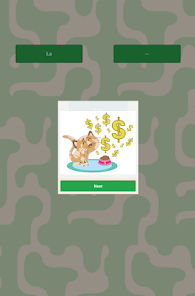
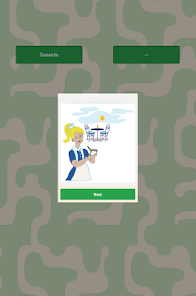
Spanish Language Maze screenshot 1 of 19Spanish Language Maze screenshot 2 of 19Spanish Language Maze screenshot 3 of 19Spanish Language Maze screenshot 4 of 19Spanish Language Maze screenshot 5 of 19Spanish Language Maze screenshot 6 of 19Spanish Language Maze screenshot 7 of 19Spanish Language Maze screenshot 8 of 19Spanish Language Maze screenshot 9 of 19Spanish Language Maze screenshot 10 of 19Spanish Language Maze screenshot 11 of 19Spanish Language Maze screenshot 12 of 19Spanish Language Maze screenshot 13 of 19Spanish Language Maze screenshot 14 of 19Spanish Language Maze screenshot 15 of 19Spanish Language Maze screenshot 16 of 19Spanish Language Maze screenshot 17 of 19Spanish Language Maze screenshot 18 of 19Spanish Language Maze screenshot 19 of 19

Detailed Description

Functionality & Mechanism

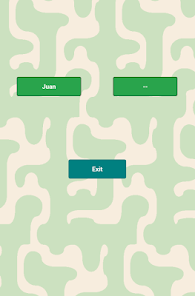
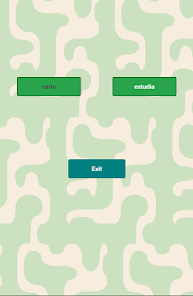
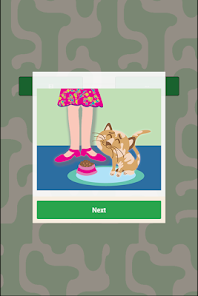
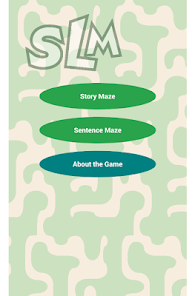
Developed at the University of Nebraska-Lincoln, this application adapts the psycholinguistic maze task for Spanish language acquisition. The system presents sentences word-by-word, requiring the selection of the grammatically correct continuation from a binary choice. The interface includes two modules: a 'Story Maze' with contextual image support and a 'Sentence Maze' for decontextualized practice. The tool provides immediate corrective feedback upon error and logs performance metrics, including completion time, to facilitate incremental sentence processing skill.

Evidence & Research Context

  • The tool's design is grounded in the psycholinguistic maze task, an experimental procedure used to measure real-time, incremental sentence processing.
  • Associated research demonstrates that the contextualized 'Story Maze' module facilitates learner acquisition of Spanish grammatical constructions that diverge from their native language (English).
  • In a training-test paradigm, learners exhibited reduced reaction time disparities between familiar and unfamiliar sentence structures post-intervention, indicating improved processing efficiency.
  • Quantitative and qualitative evaluations found that learners perceive the task as highly engaging, supporting its utility as a supplemental pedagogical tool.

Intended Use & Scope

This system is intended for second language learners (beginner to intermediate) and educators as a supplemental tool for grammatical practice. Its primary utility is reinforcing sentence-level processing and improving automaticity with specific constructions. The app does not deliver comprehensive grammar lessons or facilitate conversational skills and should be used alongside a formal language curriculum.

Studies & Publications

2 publications

Peer-reviewed research associated with this app.

Effectiveness/Outcome Study

Second Language Learning with the Story Maze Task: Examining the Training Effect of Weaving through Stories

Enkin et al. (2016) · Canadian Journal of Applied Linguistics

Story maze training helped learners process difficult Spanish structures faster with high engagement.

The maze task is a psycholinguistic experimental procedure that measures real-time incremental sentence processing. The task has recently been tested as a language learning tool with promising results. Therefore, the present study examines the merits of a contextualized version of this task: the story maze. The findings are consistent with previous research results (Enkin & Forster, 2014), and highlight the merits of using the contextualized maze version for language (Spanish) learning. Specifically, a story maze training-test paradigm revealed that learners trained on structures differing from their native language (English) showed little difference in reaction times between similar-to-English and different-from-English structures as compared to learners who were trained on structures similar to English, thus showing that the story maze task may help students learn constructions that may pose processing difficulty. Quantitative and qualitative survey data further showed that learners found the task highly engaging, thereby emphasizing its promising usefulness. Summary The maze task is an experimental procedure in psycholinguistics that measures increasing sentence comprehension in real time. The task has recently been tested as a second language learning tool and offers promising results. Therefore, the present study examines the merits of a contextualized version of this task: the story maze. The results are consistent with the findings of a previous study (Enkin & Forster, 2014) and highlight the advantages of using the contextualized version of the maze for foreign language learning (Spanish). Specifically, a story maze training test paradigm revealed that learners trained with structures different from their native language (English) showed little difference in reaction time between English-like and English-different structures, compared to learners trained with English-like structures. These results thus demonstrate that the story maze task can help students learn constructions that present comprehension difficulties. Furthermore, quantitative and qualitative research results have shown that learners found this task very engaging, thus highlighting its promising usefulness.
... Read More
Effectiveness/Outcome Study

The Maze Task: Examining the Training Effect of Using a Psycholinguistic Experimental Technique for Second Language Learning

Enkin et al. (2012) · DigitalCommons@UNL (Thesis/Dissertation)

Showed promise as a language learning tool but study results were incomplete.

The maze task was created for psycholinguistic experimental testing (Forster et al., 2009). However, this paper explores the merits of this task as a language training program for beginning Spanish learners. The attributes of providing ample comprehensible input and immediate corrective feedback allow the maze task to be considered as a potential supplemental pedagogical tool. Moreover, transfer effects to implicit and explicit measures as well as students' perception of such a task are examined. The maze task is a psycholinguistic technique used in experimental testing that records reaction times as subjects read (and comprehend) sentences. The task asks subjects to "weave" their way through a sentence word by word by choosing the correct grammatical alternative from two choices (Forster, Guerrera, & Elliot, 2009). The current study's main question asks if the maze task can be applied to a teaching program. In other words, could training on particular sentence types using the maze task help late L2 learners to better their foreign language performance? If the maze task does in fact yield training effects and learning benefits, is it a task that is enjoyable for students, and why? Thus, it is the intention of this paper to provide a psycholinguistic framework from which to draw pedagogical implications. The foundation for this paper rests on the implicit and explicit learning dichotomy and explores the merits of integrating both types of instruction within a late L2 learning curriculum. Explicit learning is associated with selectivity, which presupposes a deductive, concept-driven mode of learning; on the other hand, implicit learning is associated with unselectivity and assumes an inductive, data-driven mode of learning (Gasparini, 2004; N. Ellis, 1994). One of the main questions in second language learning is what type of instruction is best for L2 acquisition. Implicit learning is the retrieval and use of memories that have been formed without conscious awareness, whereas grammar rules and guided instruction are illustrative of explicit learning. Similarly, implicit knowledge is the intuitive understanding of the manner in which a language works; whereas explicit knowledge is conscious awareness of the grammatical rules of a language (R. Ellis, 2009a). Within the constructs of both connectionist and generative accounts of linguistic competence, there is general agreement that linguistic knowledge is primarily comprised of intuitive and tacit knowledge (N. Ellis, 2005; R. Ellis, 1993). It may be the case, however, that adult L2 learners necessitate explicit knowledge due to the role of
... Read More

Spanish Language Maze

Free