AppsFromResearch
StatsSims icon

StatsSims

Evidence Tier:DOCUMENTED

Published in academic literature

For:Educators & TeachersGeneral Public & EnthusiastsKids & Youth

App Summary

StatsSims is an educational tool for college and high school students that uses interactive simulations to explore introductory statistics concepts. The app's design is grounded in research on playful learning, which emphasizes effective visual design and interactive feedback to guide users through statistical concepts. The authors conclude that this integrated design approach has the potential to enhance student engagement and deepen their understanding of complex statistical topics.

App Screenshots

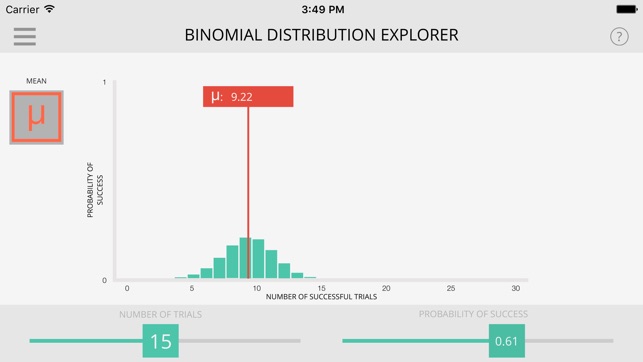
StatsSims screenshot 1 of 5StatsSims screenshot 2 of 5StatsSims screenshot 3 of 5StatsSims screenshot 4 of 5StatsSims screenshot 5 of 5

Detailed Description

Functionality & Mechanism

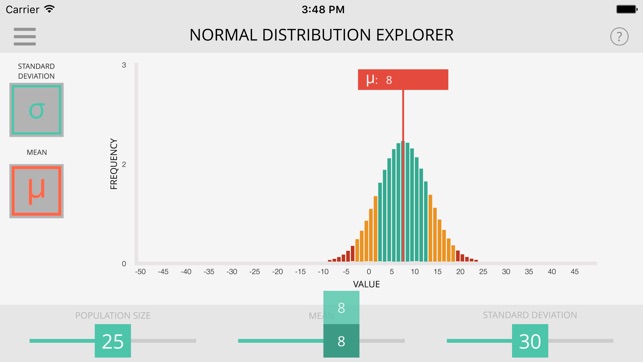
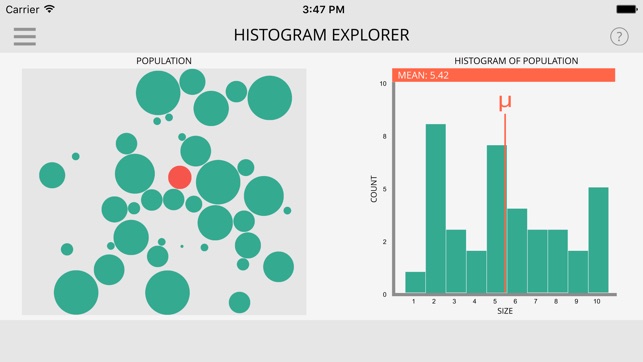
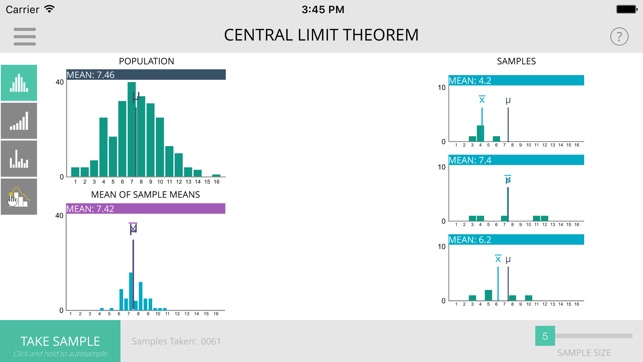
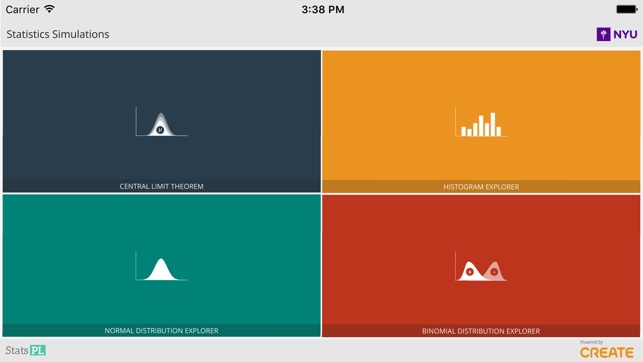
StatsSims provides a suite of interactive simulations designed to facilitate the exploration of foundational statistical concepts. The system comprises distinct modules, including Central Limit Theorem, Confidence Intervals, and Regression Line analysis. Each simulation presents a dynamic visual interface that allows for the direct manipulation of statistical parameters to observe outcomes in real-time. Sessions are self-contained and structured to support pedagogical objectives for introductory statistics curricula at the high school and undergraduate levels.

Evidence & Research Context

  • The app's design is informed by research principles for creating educationally effective animations and simulations, which emphasize the importance of visual and interaction design.
  • The associated research highlights the role of embedded metrics and feedback mechanisms within simulations to guide learner behavior and reinforce concepts.
  • The pedagogical approach aligns with an integrated "playful learning" framework that leverages cognitive and affective components to support learner engagement.

Intended Use & Scope

This system is designed as a supplementary pedagogical tool for educators and students in introductory statistics courses. Its primary utility is to reinforce conceptual understanding through interactive visualization. The tool does not perform statistical analysis on external data and is not a substitute for formal instruction, a complete curriculum, or professional statistical software.

Studies & Publications

3 publications

Peer-reviewed research associated with this app.

Non-Evaluative Reference

Playful Learning: An Integrated Design Framework

Plass et al. (2014)

Referenced in academic literature; no direct evaluation of the app
The design of, and research on, digital games for learning has been hampered by the lack of a comprehensive design framework of game-based learning that incorporates essential elements unique to learning from this genre. Broadening the scope to playful learning, we therefore propose an integrated approach to the design of these learning environments that brings together cognitive, affective, and socio-cultural perspectives to form a comprehensive learning sciences perspective. We first define playful learning and its characteristics as well as the different forms of learner engagement it entails. We then discuss each of the three perspectives, which aspects of playful learning they emphasize, and which they de-emphasize. We then describe key theoretical contributions to the design of playful learning from the three approaches. Finally, we draw conclusions from the emerging model, including suggestions for future research on the design of games for learning.\
... Read More
Non-Evaluative Reference

Metrics in Simulations and Games for Learning

Plass et al. (2013) · Game analytics: Maximizing the value of player data

Referenced in academic literature; no direct evaluation of the app
This chapter introduces the approach taken by the Games for Learning Institute (G4LI) to assess learning and related learner variables, with a focus on the use of metrics obtained during game play and simulation exploration. Learning is fundamental to all games (Gee 2008). At minimum, players must learn the basics of a game's mechanics to play. Additionally, players must uncover what these mechanics are for, and what the game designer wants them to do (Cook 2006). Feedback mechanisms are an example of how game designers encourage (reward) or discourage (punish) a behavior. Game mechanics for learning must incorporate all of these aspects, from the moment-to-moment activities in which players engage, to reward and punishment systems.
... Read More

StatsSims

Free