
Stop the Bleed
Initial evidence from research studies
App Summary
App Screenshots
Detailed Description
Functionality & Mechanism
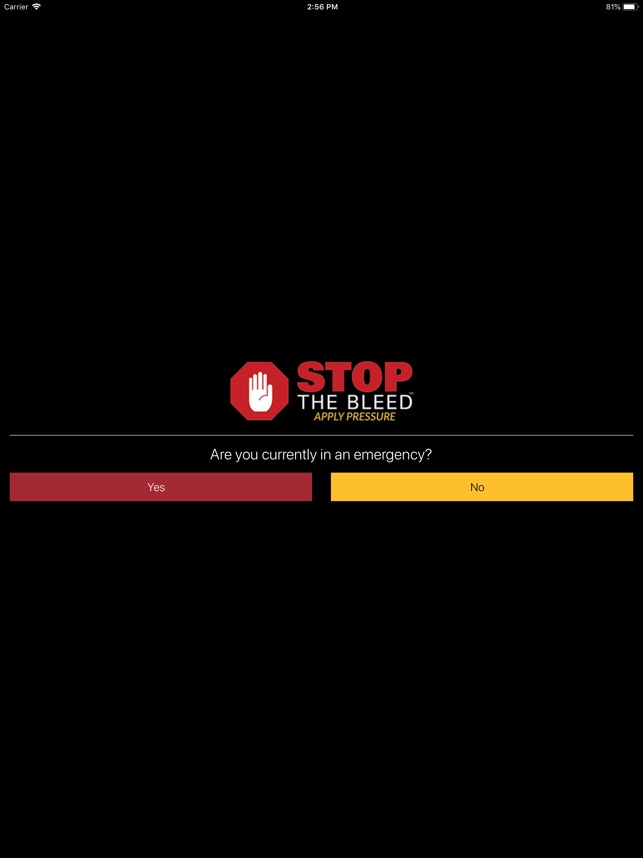
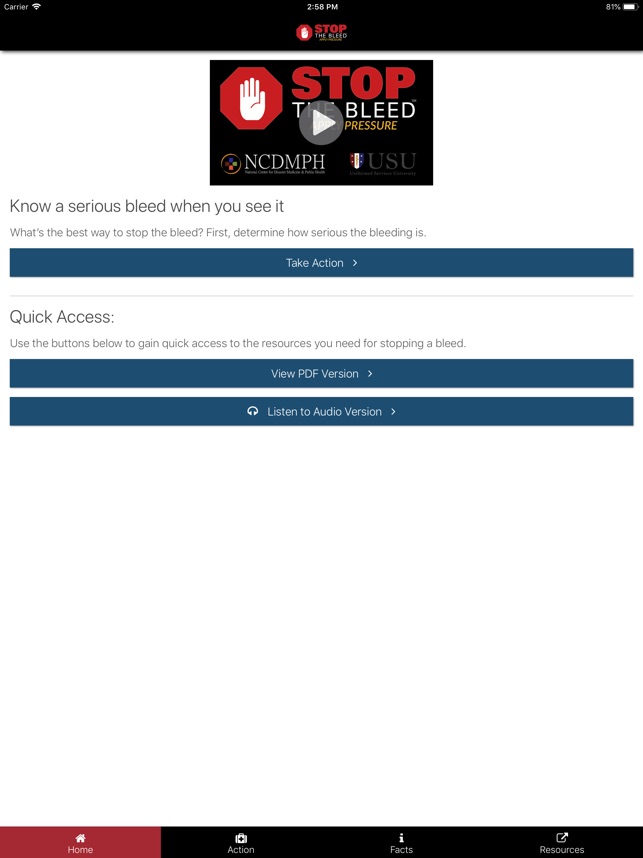
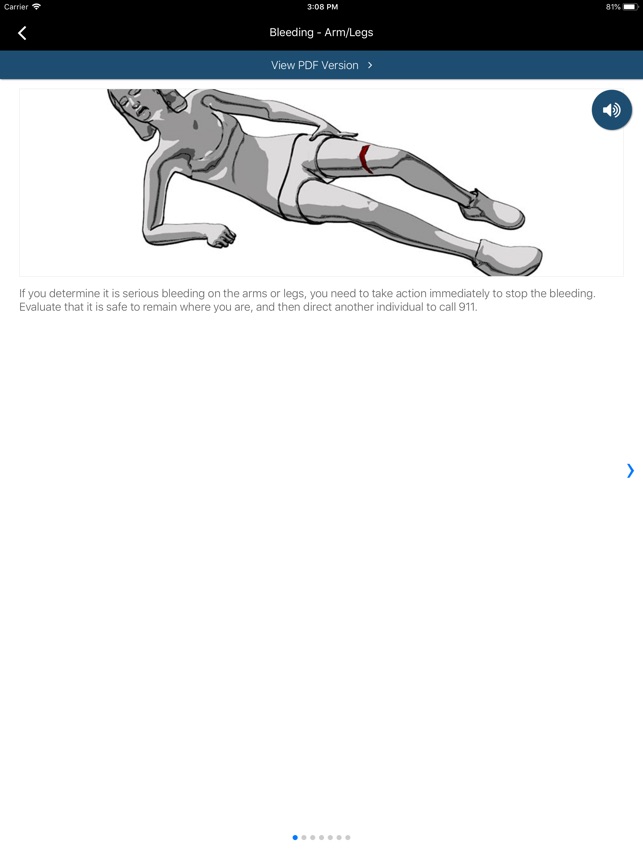
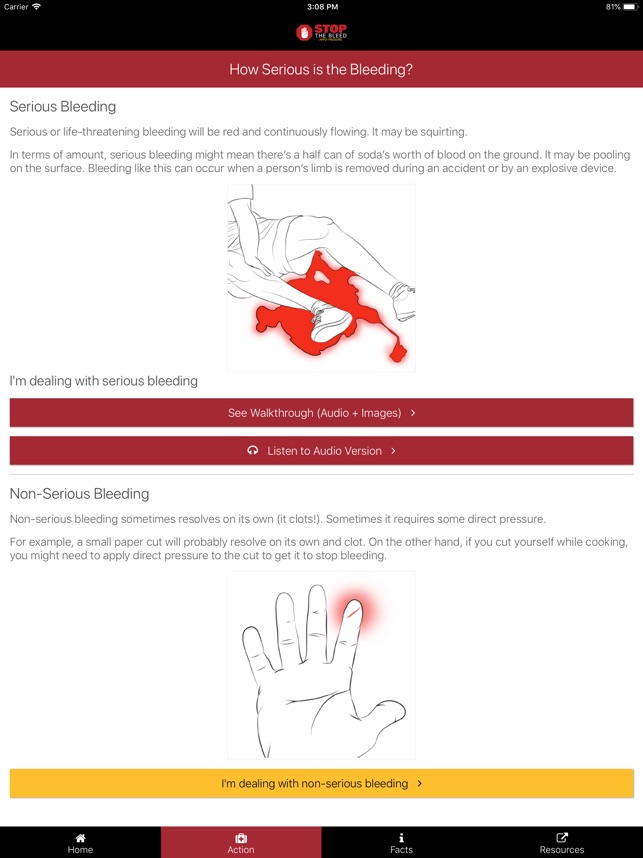
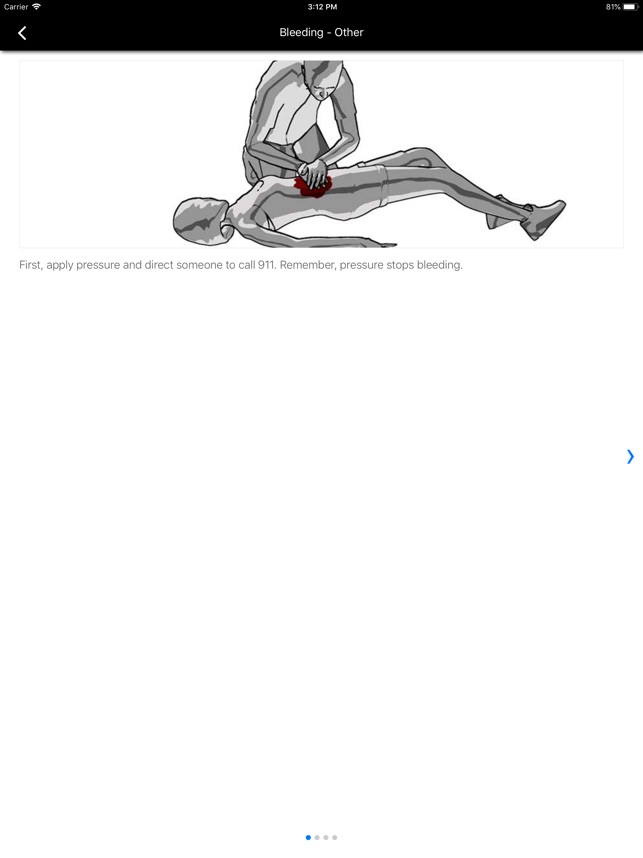
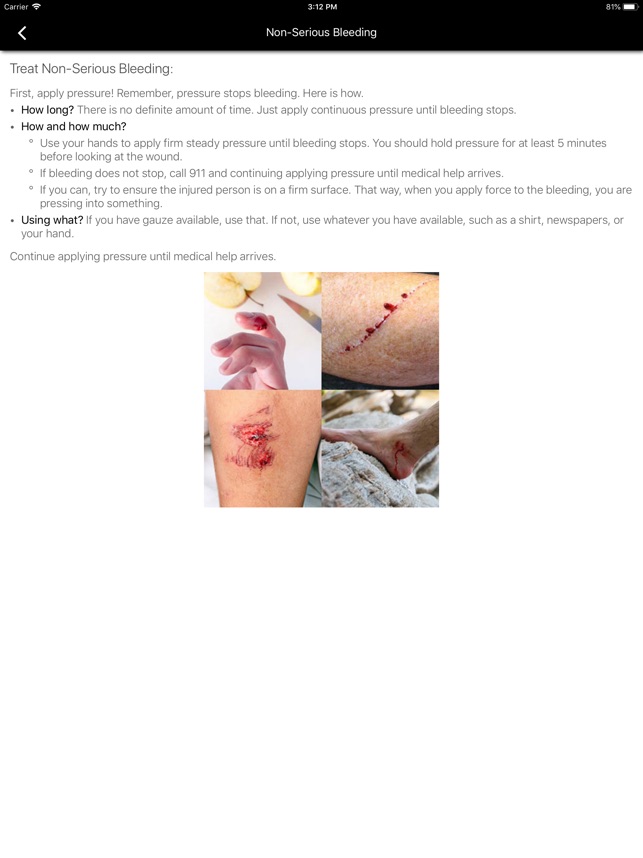
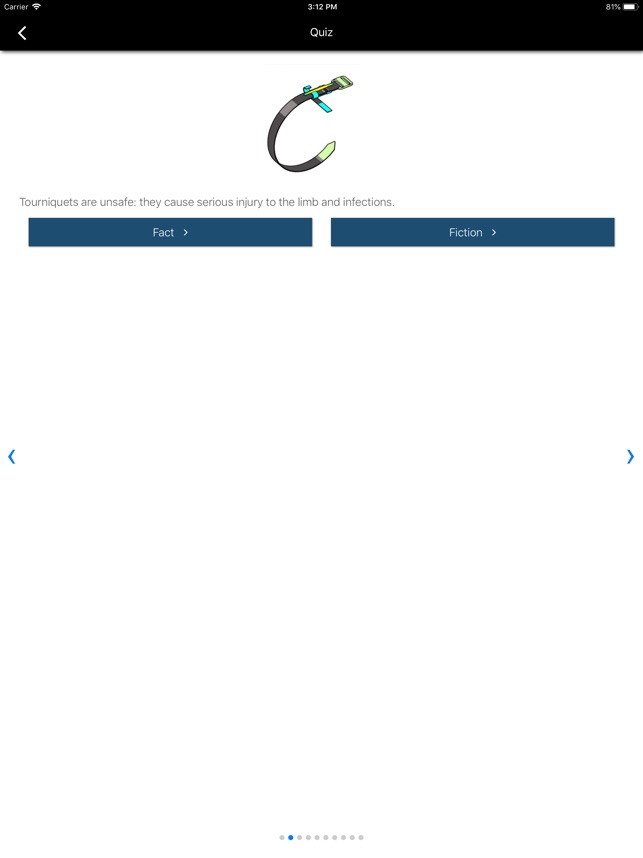
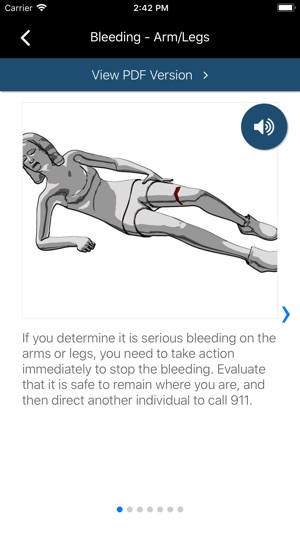
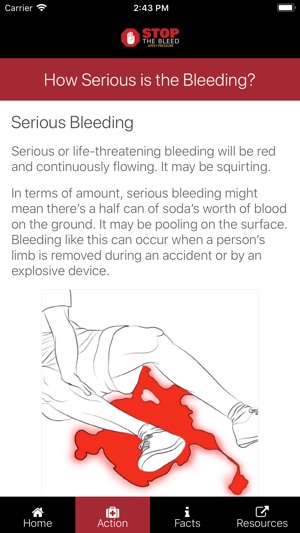
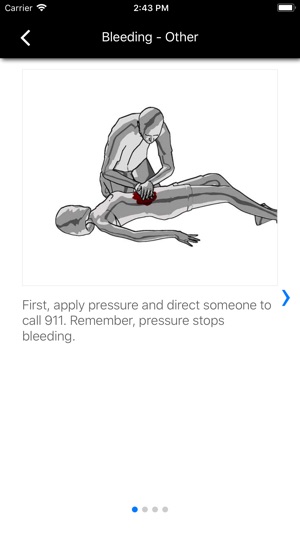
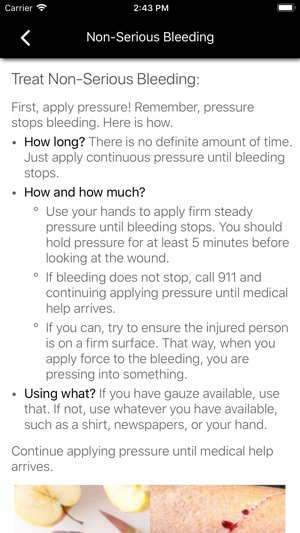
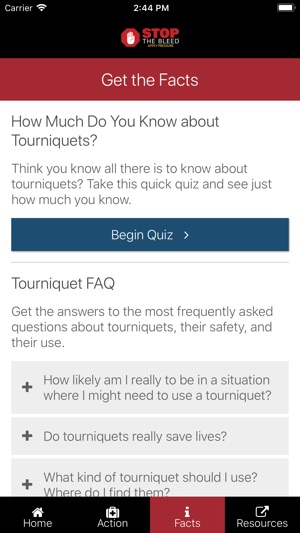
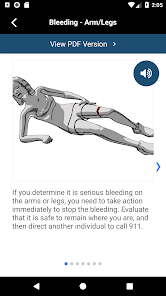
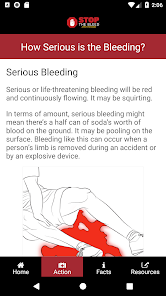
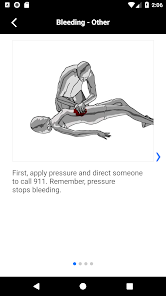
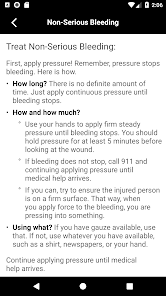
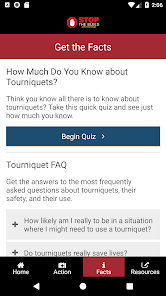
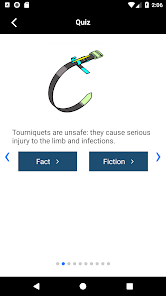
This educational tool delivers pedagogical content aligned with the national Stop the Bleed campaign, an initiative of the American College of Surgeons. The interface is designed to instruct laypersons on critical hemorrhage control techniques, including direct pressure application and wound packing. The system provides foundational knowledge intended for use by immediate responders in emergency situations prior to the arrival of professional medical services. It facilitates rapid learning of life-saving interventions for traumatic injuries.
Evidence & Research Context
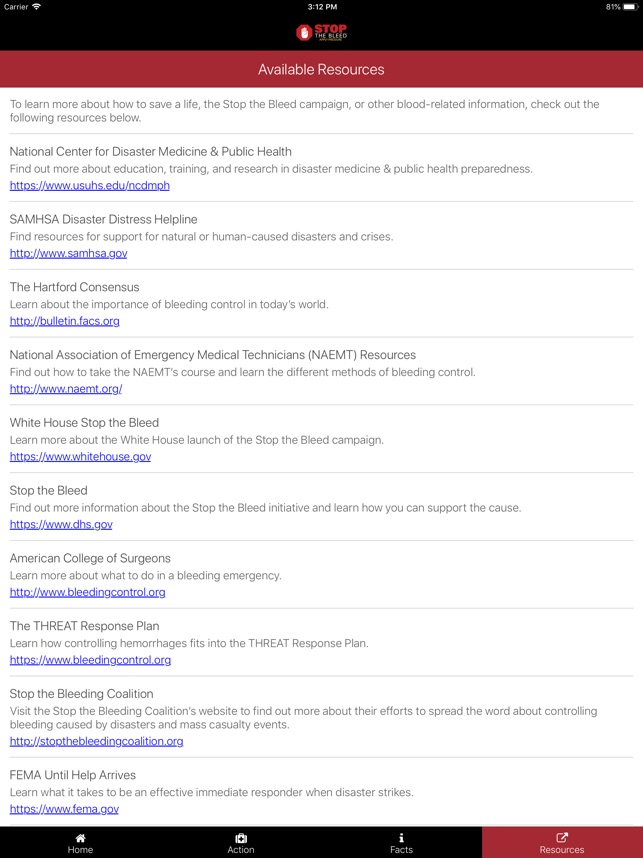
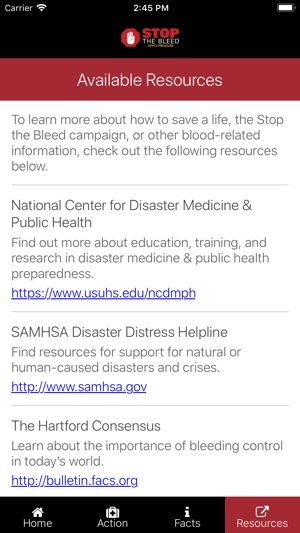
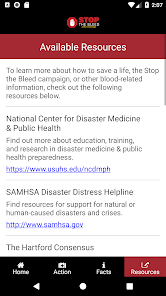
- The educational approach is derived from military medicine principles and the Hartford Consensus, which defines the public as "immediate responders" for point-of-injury hemorrhage control.
- Associated research from the Stop the Bleed Education Consortium provides a framework for standardized program implementation, covering equipment, logistics, education, and oversight.
- To standardize evaluation of bleeding control education, a validation study (N=171) of the Stop the Bleed Education Assessment Tool (SBEAT) demonstrated robust reliability (Cronbach's alpha = 0.85) for assessing cognitive learning outcomes.
Intended Use & Scope
This tool is designed for the general public to serve as an educational resource for immediate responders. Its primary utility is to deliver foundational knowledge on life-threatening bleeding control. The application does not replace formal, hands-on certification training and is not intended for use as a real-time decision-support guide during a medical emergency.
Studies & Publications
Peer-reviewed research associated with this app.
"Stop the Bleed" Education Assessment Tool (SBEAT): Development and Validation
Pellegrino et al. (2024) · Cureus
Reliably measures bleeding control training knowledge across educational programs.
A framework for the design and implementation of Stop the Bleed and public access trauma equipment programs
Levy et al. (2022) · JACEP Open
Referenced in academic literature; no direct evaluation of the appIn the Media
New App Teaches Citizens to 'Stop the Bleed,' Save a Life
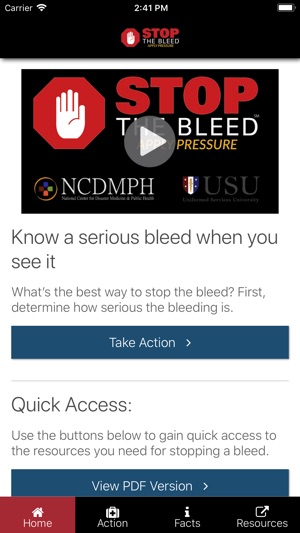
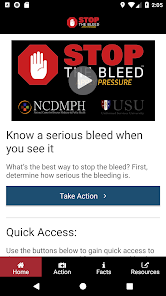
The Uniformed Services University's National Center for Disaster Medicine and Public Health recently launched "Stop the Bleed," a free iPhone and Android app designed to teach users how to stop life-threatening bleeding in emergencies following mass trauma events. "Our hope is that the 'Stop the Bleed' app empowers individuals to take action in the crucial minutes before first responders arrive," said Dr. Craig Goolsby, science director at NCDMPH. The app provides step-by-step instruction with audio versions and tutorial videos, based on battlefield research that saved thousands of military lives.
New app teaches civilians how to 'Stop the Bleed"
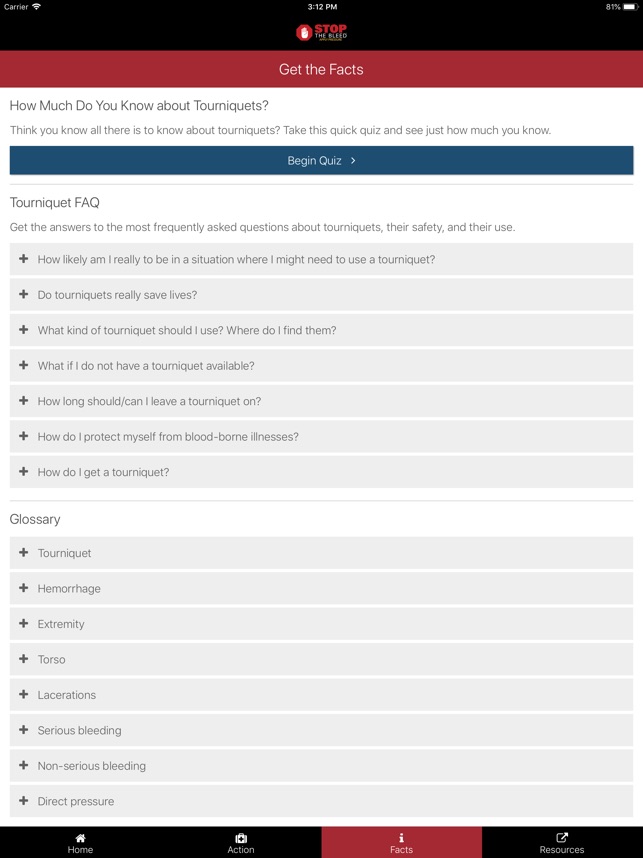
The Uniformed Services University's National Center for Disaster Medicine and Public Health launched the free "Stop the Bleed" app to teach civilians how to stop life-threatening bleeding during emergencies, featuring step-by-step instructions and hands-free audio guidance. "Our hope is that the 'Stop the Bleed' app empowers individuals to take action in the crucial minutes before first responders arrive," Dr. Craig Goolsby said, noting the app provides instant access to instruction on differentiating life-threatening bleeding and applying tourniquets. The app is now available for download on iPhone and Android platforms.
New app teaches civilians how to 'Stop the Bleed"
The "Stop the Bleed" app was developed to teach civilians how to save lives during bleeding emergencies using free mobile training technology. The app provides public education on emergency bleeding control techniques at no cost to users. This initiative aims to equip ordinary citizens with life-saving skills for crisis situations.
New App Teaches Citizens to 'Stop the Bleed,' Save a Life
The Uniformed Services University's National Center for Disaster Medicine and Public Health launched "Stop the Bleed," a free iPhone and Android app designed to teach users how to stop life-threatening bleeding in emergencies following mass trauma events. "Our hope is that the 'Stop the Bleed' app empowers individuals to take action in the crucial minutes before first responders arrive," said Dr. Craig Goolsby, science director at NCDMPH. The app provides step-by-step instruction with audio versions and tutorial videos, based on battlefield lessons learned and a decade of military research that saved thousands of lives.
Novel app teaches users how to stop life-threatening bleeding and save lives
The Uniformed Services University's National Center for Disaster Medicine and Public Health launched "Stop the Bleed," a free iPhone and Android app designed to teach users how to stop life-threatening bleeding in emergencies following mass trauma events. "We are extremely proud to make the app available to the public. It's an important step in the 'Stop the Bleed' initiative," said Dr. Thomas Kirsch, director of USU's NCDMPH.
App Information
Developer
Uniformed Services UniversityCategory
Evidence Profile
Initial evidence from research studies
Platforms
Updated
Jun 2018
© 2025 Uniformed Services University