
Traumatic Brain Injury
Published in academic literature
App Summary
App Screenshots
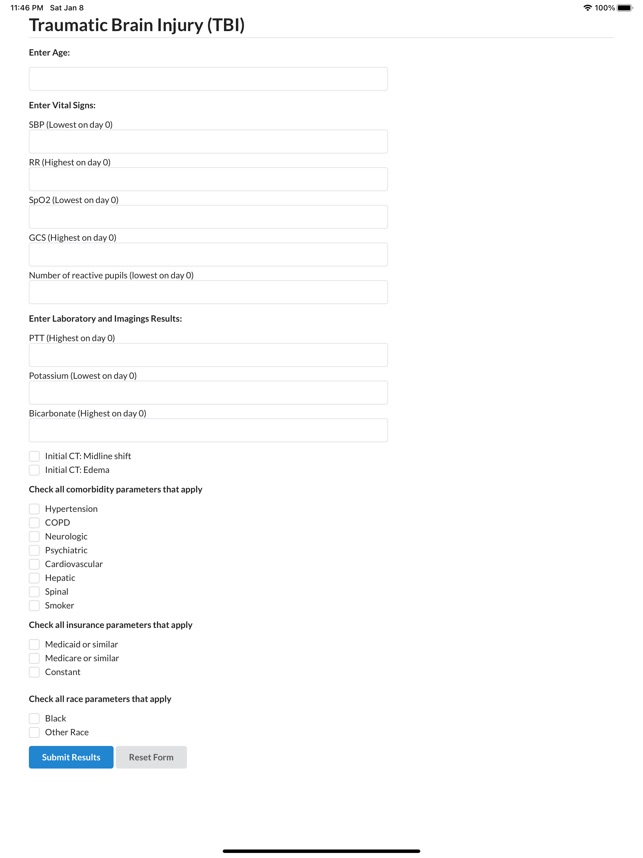
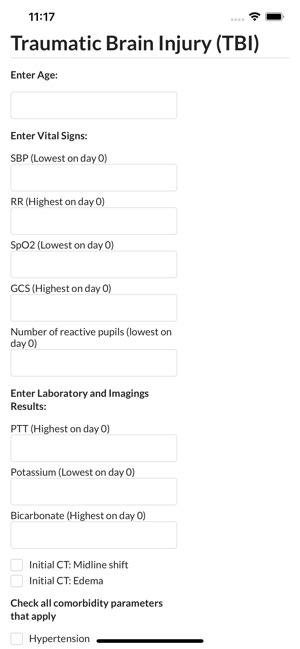
Detailed Description
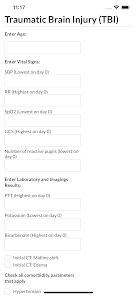
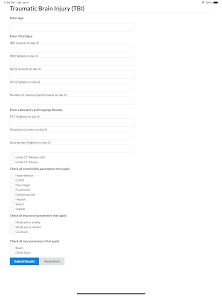
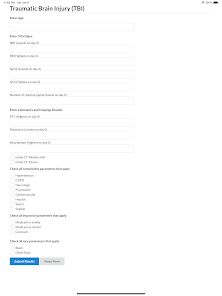
Functionality & Mechanism This clinical tool implements the Traumatic Brain Injury-Patient Reported Outcome (TBI-PRO) model to estimate long-term quality of life following a TBI. The interface captures key patient variables available during hospitalization, including Glasgow Coma Scale scores and comorbidity data. The system processes these inputs through a validated algorithm to generate prognostic estimates for favorable quality of life outcomes at 3, 6, and 12 months post-injury. The tool is designed for rapid prognostic assessment in a clinical setting.
Evidence & Research Context
- The underlying TBI-PRO predictive model was developed and validated using a large cohort of 1,549 adult patients from the multicenter TRACK-TBI dataset.
- The model demonstrated robust discrimination in predicting favorable quality of life outcomes, as measured by the Quality of Life after Brain Injury-Overall Scale (QOLIBRI-OS).
- Validation results indicated an Area Under the Receiver Operating Characteristic curve (AUROC) of 0.81 for 3-month outcomes, 0.79 for 6-month outcomes, and 0.76 for 12-month outcomes.
- The associated research identifies variables such as insurance status, Glasgow Coma Scale score, and comorbidities as significant predictors of long-term patient-reported outcomes.
Intended Use & Scope This tool is intended for clinicians to facilitate prognostic discussions and care planning for adult patients hospitalized with traumatic brain injury. Its primary utility is to provide an evidence-based estimate of long-term quality of life. The model's output is not a substitute for comprehensive clinical judgment and should not be used as the sole basis for treatment decisions.
Studies & Publications
Peer-reviewed research associated with this app.
Predicting outcomes after traumatic brain injury: A novel hospital prediction model for a patient reported outcome
Morris et al. (2022) · The American Journal of Surgery
Describes the research-driven development of this appApp Information
Developer
University of MinnesotaCategory
Evidence Profile
Published in academic literature
Platforms
Updated
Jan 2022
© 2025 University of Minnesota