
Tree Browser
Published in academic literature
App Summary
App Screenshots
Detailed Description
Functionality & Mechanism
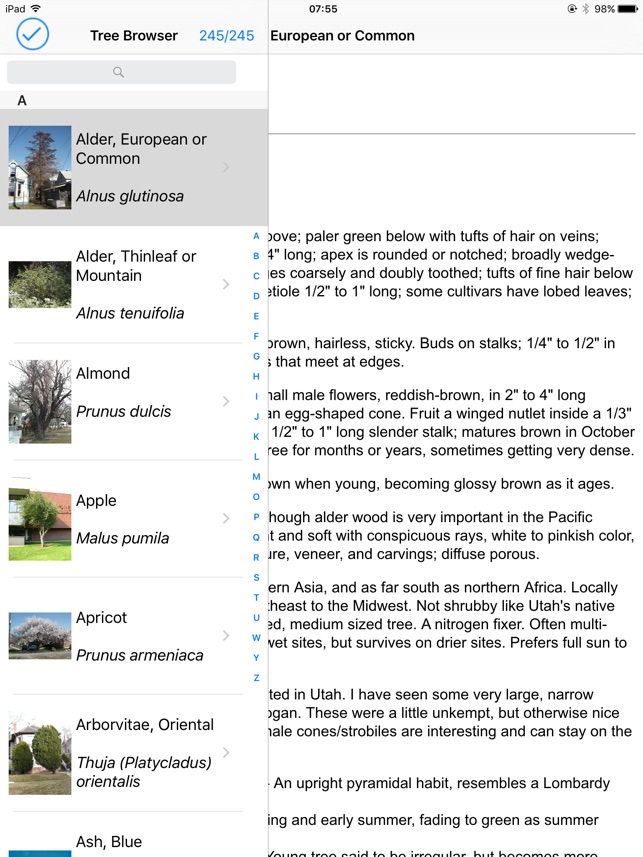
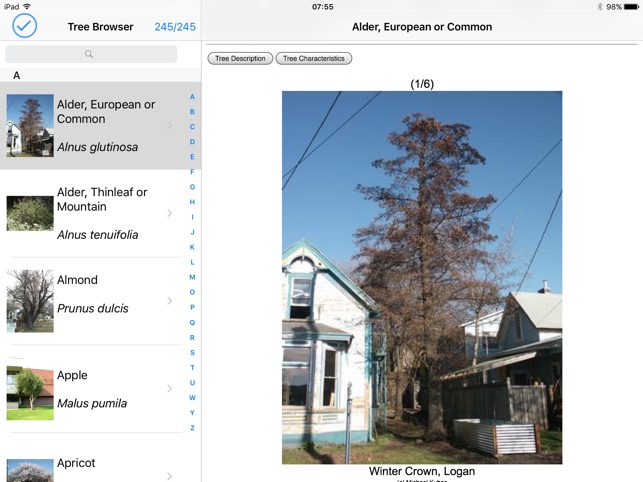
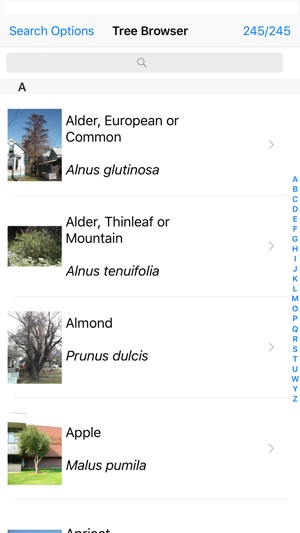
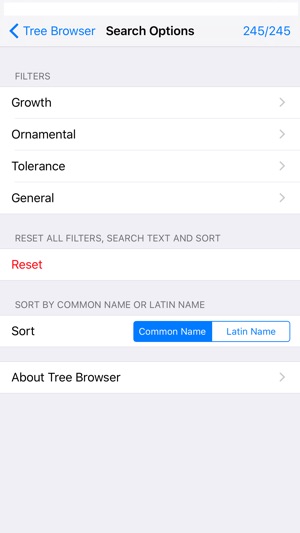
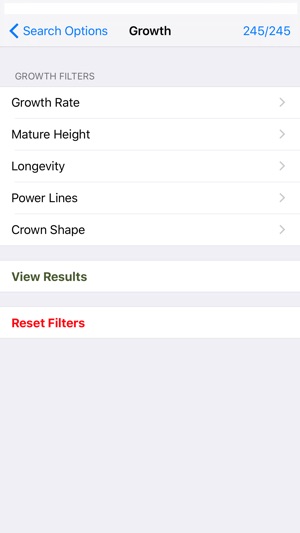
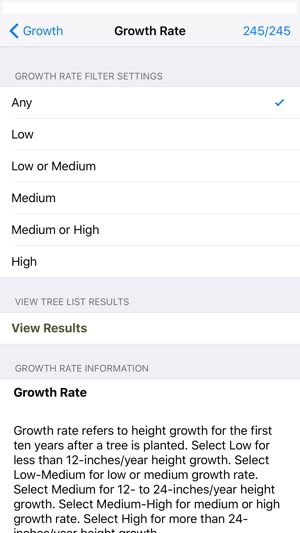
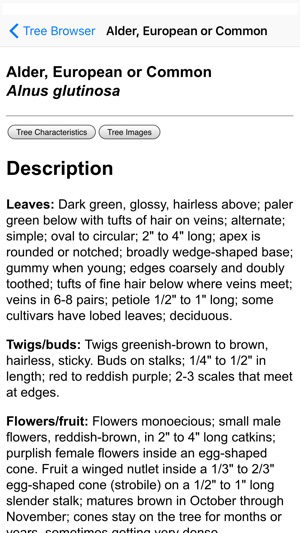
Developed at Utah State University Extension, Tree Browser is an interactive reference tool for tree identification and selection in the Intermountain West. The system leverages a database of 241 native and introduced tree species, illustrated with over 1,000 photographs. The interface facilitates identification by allowing selection from 21 distinct characteristics, including growth-related, cultural, and ornamental attributes. The system filters its database to present species that match the specified criteria, supporting informed horticultural and landscaping decisions.
Evidence & Research Context
- The tool is based on a Utah State University Extension publication detailing horticultural best practices for selecting and planting landscape trees in the region.
- The system's searchable database compiles information on 241 native and introduced trees adapted to the Intermountain West, including 1,070 identification photographs.
- Associated research describes the system's utility as an identification key for both native and common non-native trees in specific regional ecosystems like northern Utah.
Intended Use & Scope
Tree Browser is intended for horticulturalists, educators, and the general public as a reference tool for species identification and selection within the Intermountain West. Its primary utility is to support informed planting decisions based on regional suitability and desired characteristics. The tool does not provide pest or disease diagnostics and is not a substitute for professional arboricultural consultation.
Studies & Publications
Peer-reviewed research associated with this app.
Key to the Trees of Logan Canyon
Kuhns et al. (2015) · Utah State University Extension
Referenced in academic literature; no direct evaluation of the appTree browser mobile – Not just for the desktop anymore
Kuhns et al. (2012) · UACAA 2012 Summer Meeting Proceedings
Describes the research-driven development of this appIn the Media
USU Forester Mike Kuhns Receives Lifetime Achievement Award
Utah State University professor Mike Kuhns received a Lifetime Achievement Award from the Utah Community Forest Council and Utah Chapter of the International Society of Arboriculture in 2016 for his contributions to urban forestry. Kuhns, head of USU's Department of Wildland Resources and director of USU Forestry Extension, was recognized during the 2017 Green Industry Conference in Sandy, Utah. The award lauded "the breadth of Dr. Kuhns' impact on the field" of urban forestry throughout his career.
Mike Kuhns Named Head of USU's Department of Wildland Resources
Utah State University professor and Extension Forestry specialist Michael "Mike" Kuhns became the new department head of the university's Department of Wildland Resources in the Quinney College of Natural Resources. According to QCNR dean Chris Luecke, "Mike brings 20 years of experience working with Utah forest lands to his new position" along with expertise in teaching, research, extension, and administration. Luecke noted that Kuhns' broad perspective will bring vision and leadership to the department.
USU Forester Mike Kuhns Receives Distinguished Service Award
Utah State University forester Mike Kuhns, professor in USU's Department of Wildland Resources, received recognition for helping Utahns appreciate trees and learn about their benefits to our lives. Most Utahns have "probably picked up a tip or two about how these towering plants benefit our lives" thanks to Kuhns' educational efforts. The award honored his contributions to forestry education and public outreach since joining USU.
USU Tree Browser
Utah State University developed the USU Tree Browser, a web-based interactive database accessible at http://www.treebrowser.org containing information on 241 native and introduced trees growing in Utah and the Intermountain West. The browser contains over a thousand full-color photographs and allows users to browse through comprehensive tree information. The database serves as a comprehensive resource for identifying and learning about trees throughout the region.
App Information
Developer
Utah State UniversityCategory
Evidence Profile
Published in academic literature
Platforms
Updated
Sep 2017
© 2025 Utah State University
Tags



Tree Browser
Free