
AppsFromResearch
Trees: North & Central Florida icon

Trees: North & Central Florida

Evidence Tier:DOCUMENTED

Published in academic literature

For:Educators & TeachersGeneral Public & EnthusiastsIndustry Professionals

App Summary

'Trees: North & Central Florida' is a mobile field guide for professionals, educators, and enthusiasts to identify 140 common native and introduced tree species in the region. The app is based on a comprehensive University of Florida/IFAS publication that provides detailed morphological descriptions, phytogeographical range data, and phenological insights for accurate species identification. The associated research concludes that by synthesizing information on distribution, ecological roles, and invasive potential, this resource provides an essential foundation for landscape conservation and informed urban forestry management.

App Screenshots

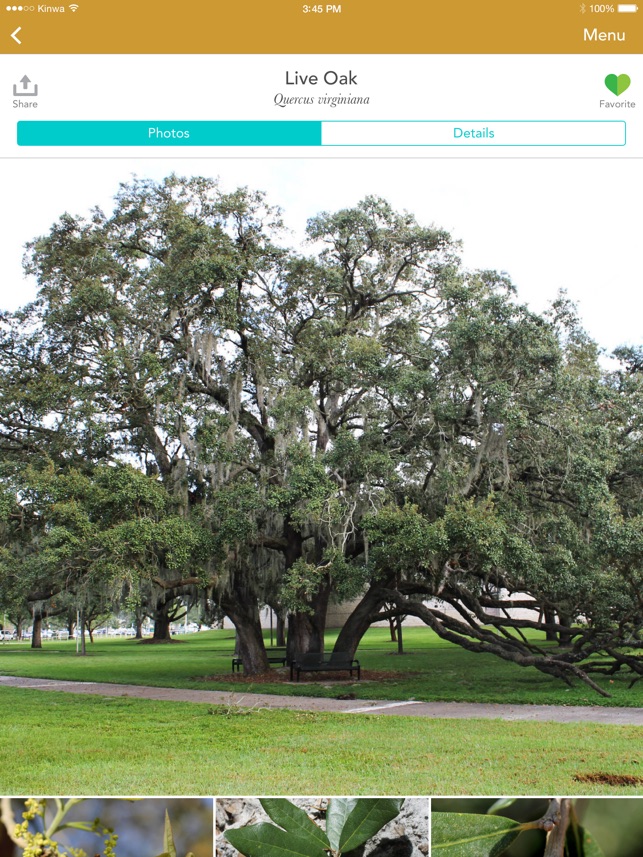
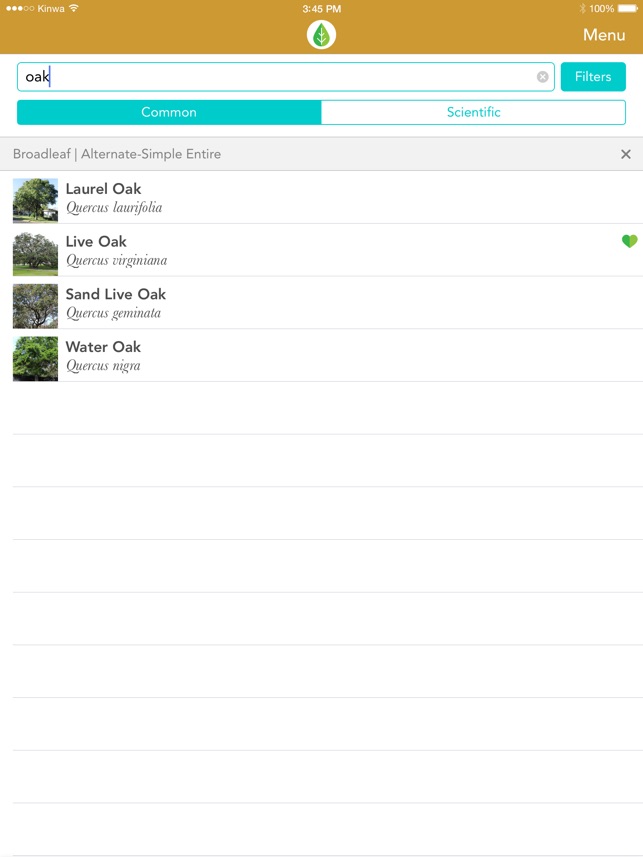
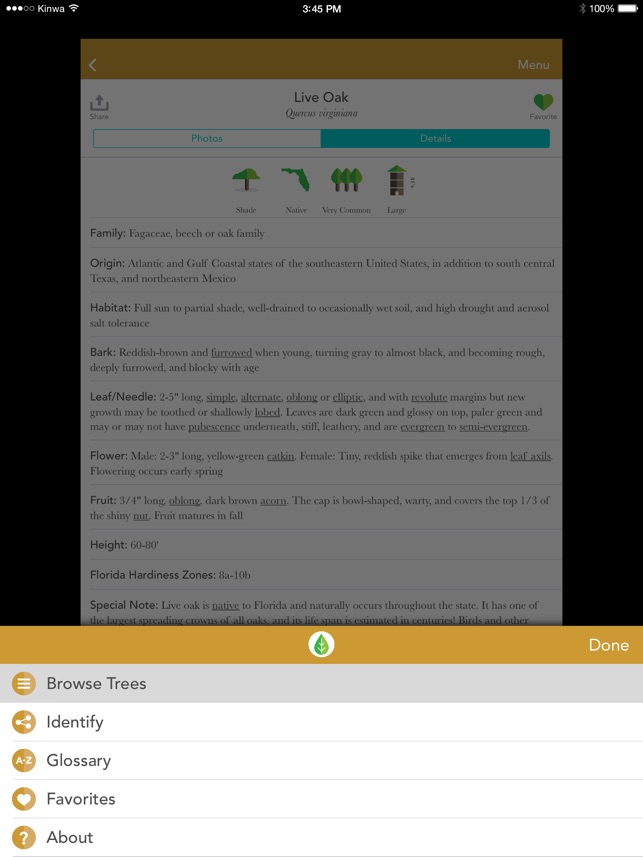
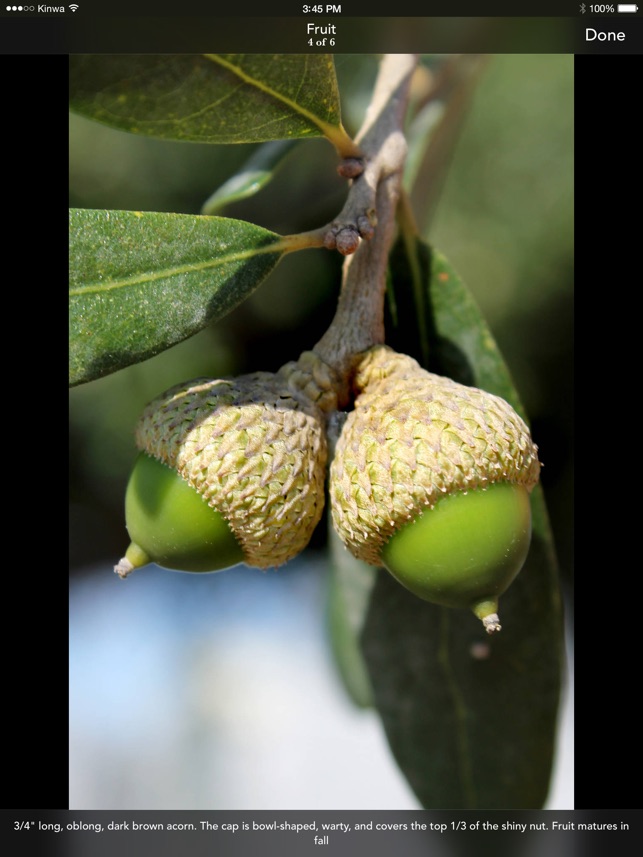
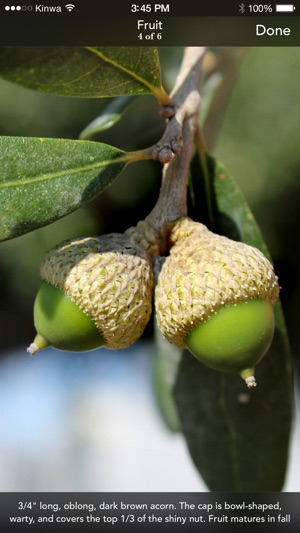
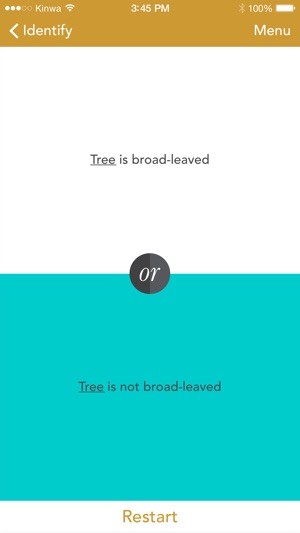
Trees: North & Central Florida screenshot 1 of 10Trees: North & Central Florida screenshot 2 of 10Trees: North & Central Florida screenshot 3 of 10Trees: North & Central Florida screenshot 4 of 10Trees: North & Central Florida screenshot 5 of 10Trees: North & Central Florida screenshot 6 of 10Trees: North & Central Florida screenshot 7 of 10Trees: North & Central Florida screenshot 8 of 10Trees: North & Central Florida screenshot 9 of 10Trees: North & Central Florida screenshot 10 of 10

Detailed Description

Functionality & Mechanism

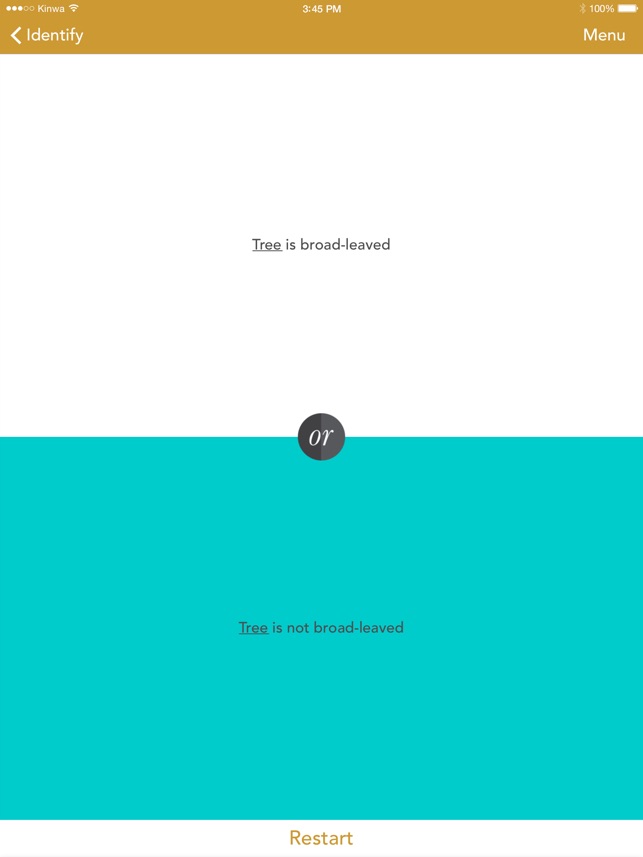
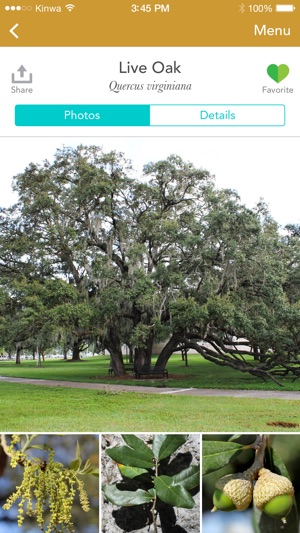
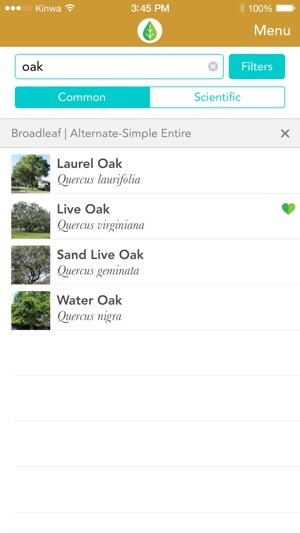
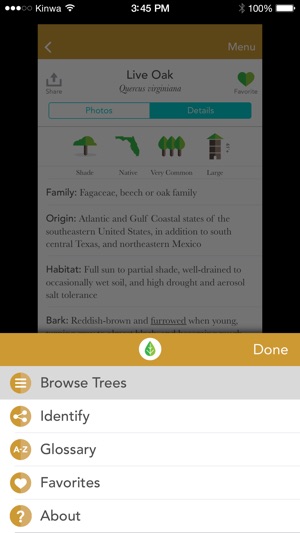
Developed by the University of Florida's IFAS Extension, this application functions as a comprehensive digital field guide for 140 tree species. The primary identification mechanism is a dichotomous key, which guides selection through a series of paired choices based on specimen characteristics. The interface also integrates a searchable database filterable by specific attributes. Each species entry is supplemented with high-resolution imagery and supported by an integrated glossary of botanical terms to facilitate accurate identification in field settings.

Evidence & Research Context

  • The app's content is derived from a comprehensive UF/IFAS publication documenting 140 prevalent native and introduced tree species in its target region.
  • The underlying guide provides detailed morphological descriptions, phytogeographical range data, and phenological insights for each documented species.
  • The resource addresses critical ecological themes, including habitat preferences, ecosystem roles, and the status of species as native or invasive.
  • Information on invasive potential and toxicity is included to support informed landscape conservation and urban forestry management decisions.

Intended Use & Scope

This application is designed as a taxonomic identification and ecological reference tool for use in field settings. The intended users include arborists, landscape professionals, educators, students, and the general public engaged in plant identification. The tool is geographically limited to North and Central Florida and does not provide diagnostic guidance for pathology or comprehensive forestry management protocols.

Studies & Publications

1 publication

Peer-reviewed research associated with this app.

Non-Evaluative Reference

Trees: North & Central Florida—A field guide to 140 common tree species

Koeser et al. (2015) · University of Florida, UF-IFAS

Referenced in academic literature; no direct evaluation of the app
The publication "Trees: North and Central Florida—A Field Guide to 140 Common Tree Species" (SP 496) serves as a comprehensive taxonomic and ecological resource for identifying the diverse arboreal landscape of the Florida peninsula. Authored by A. Koeser et al. and published by the University of Florida Institute of Food and Agricultural Sciences (UF/IFAS), this 344-page field guide documents 140 of the most prevalent native and introduced tree species found across the northern and central regions of the state. The guide provides detailed morphological descriptions, phytogeographical range data, and phenological insights to assist professionals and enthusiasts in accurate species identification. Beyond simple taxonomy, the text addresses critical ecological themes, including habitat preferences, ecosystem roles, and the status of various species as either beneficial natives or invasive exotic pests. Documented species include widespread natives as well as significant introduced plants such as Melaleuca quinquenervia, Schinus terebinthifolius (Brazilian pepper), and Washingtonia robusta. By synthesizing information on distribution, toxicity, and invasive potential, this resource provides an essential foundation for landscape conservation and informed urban forestry management in Florida's unique environmental conditions.
... Read More

Trees: North & Central Florida

Free