
Twolined Spittlebug Tool
Published in academic literature
App Summary
App Screenshots

Detailed Description
Functionality & Mechanism
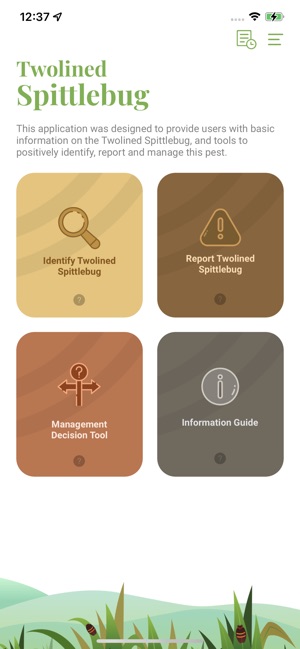
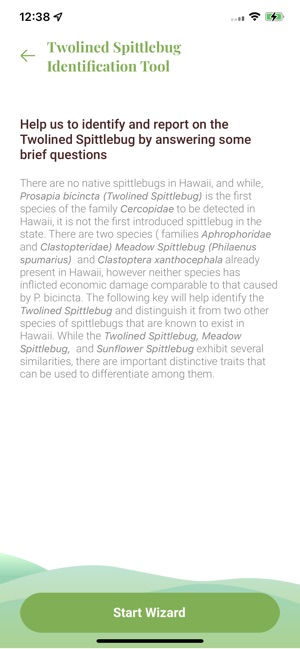
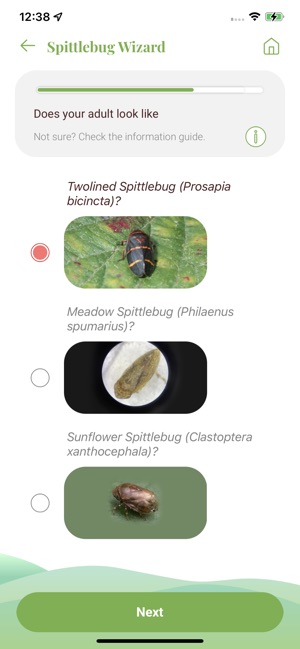
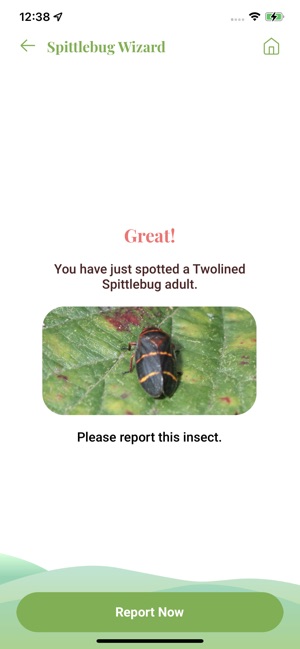
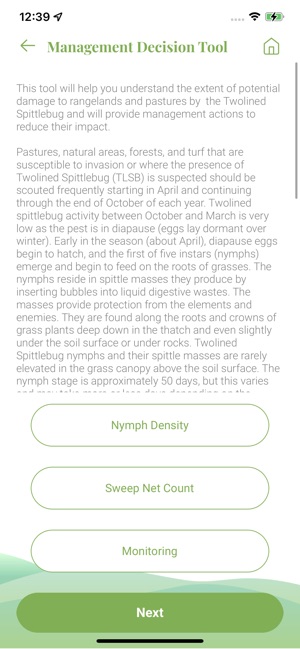
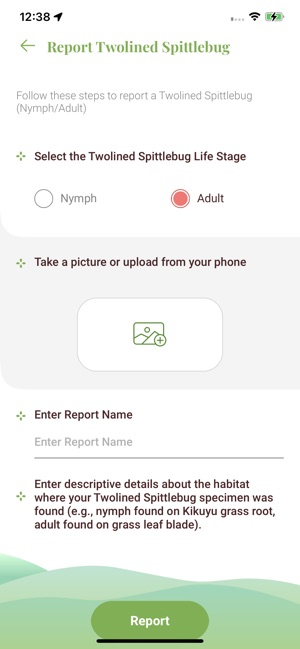
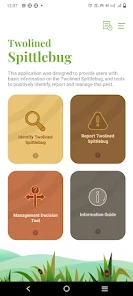
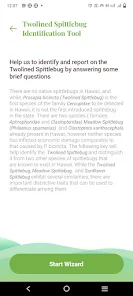
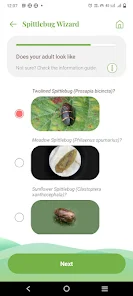
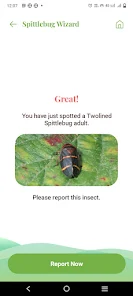
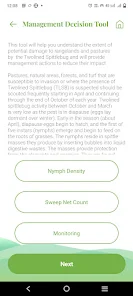
Developed at the University of Hawaii-Manoa, this tool facilitates the identification, reporting, and management of the Twolined Spittlebug. The system integrates four core modules: an informational portal, a species identification guide, a citizen science reporting function, and a land management planner. The reporting feature captures georeferenced photographic evidence for a central pest tracking database. The management module enables landowners to systematically document outbreak size and damage severity to inform Integrated Pest Management (IPM) priorities.
Evidence & Research Context
- The app addresses the ecological and economic threat of Prosapia bicincta, an invasive pest confirmed in Hawaiʻi in 2016 that severely impacts the state's pasture-based livestock industry.
- Associated research documents the pest's rapid expansion across more than 72,000 hectares on Hawaiʻi Island, causing up to 100% dieback of critical forage grasses in highly infested areas.
- The tool directly supports the surveillance and IPM objectives of a multi-agency task force created to monitor pest population dynamics and mitigate further spread.
- Field data indicates that high pest densities (exceeding 50 nymphs/m²) correlate with the displacement of valuable pasture grasses by invasive weeds, justifying the need for systematic tracking.
Intended Use & Scope
This tool is designed for ranchers, landowners, researchers, and citizen scientists in Hawaiʻi. Its primary utility is for pest identification, surveillance through crowdsourced data collection, and preliminary documentation of outbreaks. The system is intended to inform IPM planning and does not provide prescriptive treatment recommendations or replace consultation with agricultural extension specialists.
Studies & Publications
Peer-reviewed research associated with this app.
The twolined spittlebug (Hemiptera: Cercopidae) invades Hawaiʻi: establishment, biology, and management of a destructive forage grass pest
Wilson et al. (2023) · Journal of Integrated Pest Management
Referenced in academic literature; no direct evaluation of the appTwo-lined Spittlebug (Prosapia bicincta (Say)) in Hawaii
Thorne et al. (2018) · University of Hawaii CTAHR
Referenced in academic literature; no direct evaluation of the appIn the Media
Two-lined spittlebug continues to devastate Hawaii Island ranches
The two-lined spittlebug has devastated Hawaii Island ranches over the last couple years, covering around 300,000 acres of land in the south Kona area since its 2016 discovery. The invasive insect eats grasses like kikuyu and pangola that cattle depend on, posing a threat not just for ranchers but for the whole community. Experts warn that the rapidly spreading pest has become a growing problem requiring community-wide attention and response.
New app: You can help thwart a bug that's devastated 176k+ acres
University of Hawaii at Manoa scientists have been fighting the twolined spittlebug (TLSB) since its discovery in Hawaii in 2016, as the invasive insect spread to infest more than 176,000 acres of rangeland on the Big Island. In highly infested areas, TLSB caused nearly 100% die back of key range forages including kikuyu and pangola grasses, exposing land to invasive plant species. The university developed a mobile app to engage the general public in tracking and combating this devastating pest.
App Information
Developer
University of HawaiiCategory
Evidence Profile
Published in academic literature
Platforms
Updated
Sep 2022
© 2025 University of Hawaii