

UmbiCalc
Initial evidence from research studies
App Summary
App Screenshots
Detailed Description
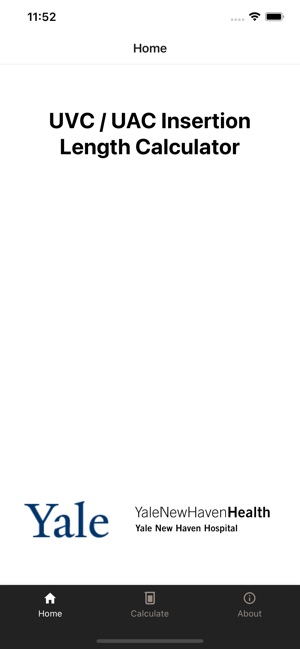
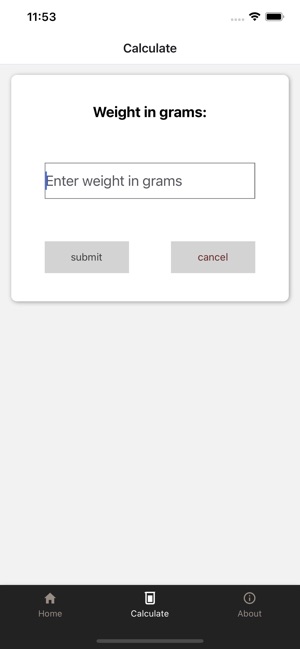
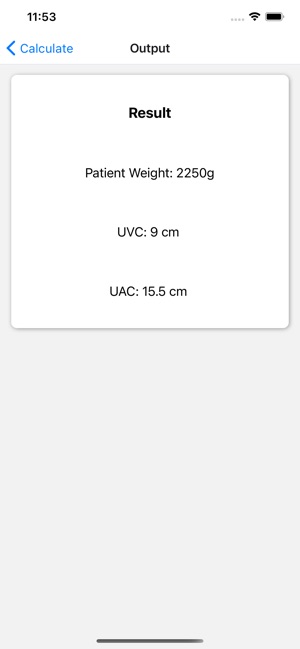
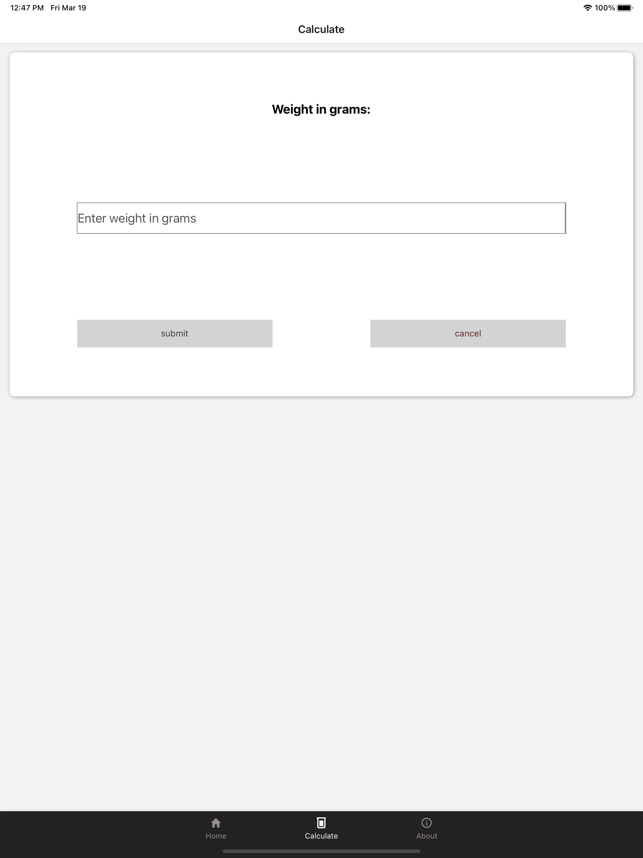
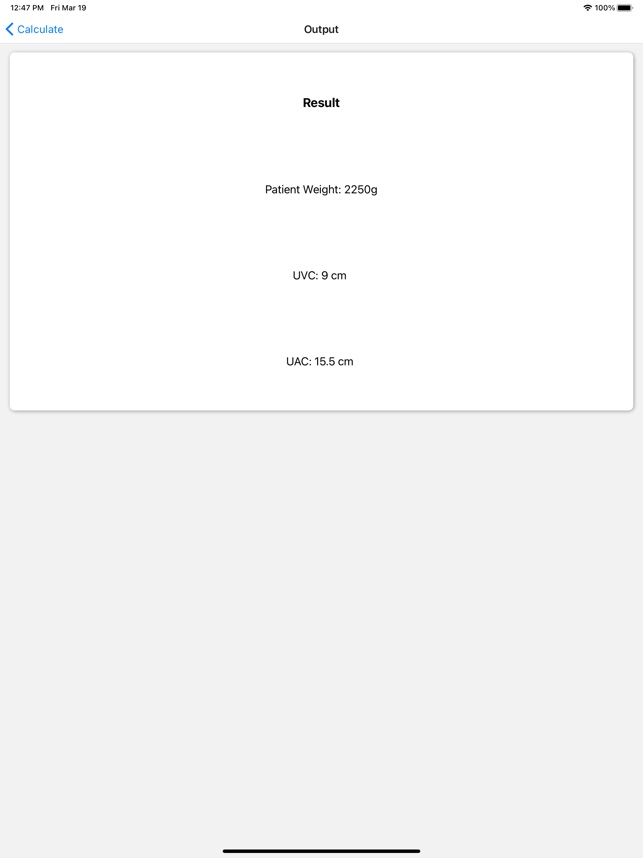
Functionality & Mechanism UmbiCalc calculates insertion length estimations for umbilical arterial (UAC) and venous (UVC) catheters in neonates. Developed from the algorithm by Tambasco et al., the system leverages a statistical model derived and validated from a representative neonatal intensive care unit population. The interface requires the input of the neonate's birth weight to generate precise insertion length recommendations for both UACs and UVCs. The calculation is designed for rapid retrieval to support neonatal procedure education.
Evidence & Research Context
- The underlying algorithm was developed to improve the accuracy of catheter placement compared to conventional birth weight-based equations.
- A retrospective analysis found conventional equations achieved correct initial positioning in 69% of umbilical arterial catheters (UACs) and only 36% of umbilical venous catheters (UVCs).
- In a prospective validation study (N=148 catheter placements), the novel UmbiCalc algorithm achieved successful initial positioning in 90% of UACs and 76% of UVCs.
- The model was validated across a wide range of birth weights within a neonatal intensive care unit (NICU) population.
Intended Use & Scope This tool is designed for neonatologists, pediatricians, and advanced practice providers as an educational reference. Its primary utility is to demonstrate a novel calculation method for catheter placement. The app is not intended for direct use in clinical practice or medical care delivery; clinical judgment and institutional protocols must always supersede its estimations.
Studies & Publications
Peer-reviewed research associated with this app.
A novel and accurate method for estimating umbilical arterial and venous catheter insertion length
Tambasco et al. (2021) · Journal of Perinatology
Improved catheter positioning success from 69% to 90% for arterial and 36% to 76% for venous lines.
App Information
Developer
Yale UniversityCategory
Evidence Profile
Initial evidence from research studies
Platforms
Updated
May 2022
© 2025 Yale University
Tags
Relevant Links
Privacy Policy


UmbiCalc
Free