
AppsFromResearch
Upper Respiratory Virtual Lab icon

Upper Respiratory Virtual Lab

Evidence Tier:VALIDATED

Initial evidence from research studies

For:Clinicians & Healthcare ProfessionalsStudents

App Summary

Upper Respiratory Virtual Lab is a 3D anatomical simulator designed for students and educators to explore 34 structures of the upper airway with tappable clinical information. The associated research (N=166) on integrating tablet-based learning into an undergraduate anatomy course found that students with unlimited access to relevant applications scored significantly higher on later examinations compared to control groups. The authors conclude that with sufficient exposure, such interactive tools can be useful for enhancing student performance in human anatomy courses.

App Screenshots

Upper Respiratory Virtual Lab screenshot 1 of 4Upper Respiratory Virtual Lab screenshot 2 of 4Upper Respiratory Virtual Lab screenshot 3 of 4Upper Respiratory Virtual Lab screenshot 4 of 4

Detailed Description

Functionality & Mechanism

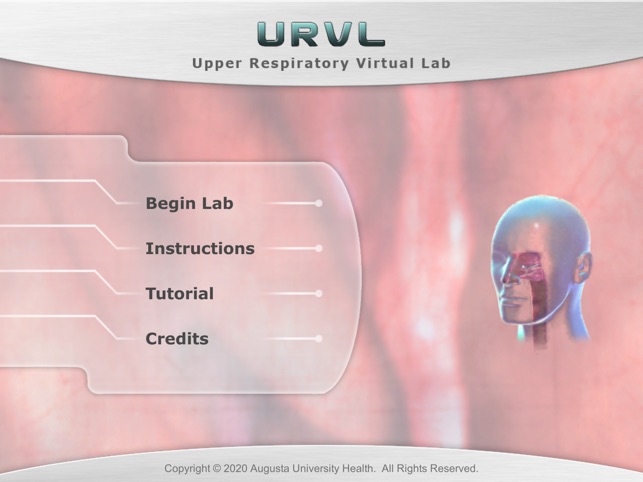
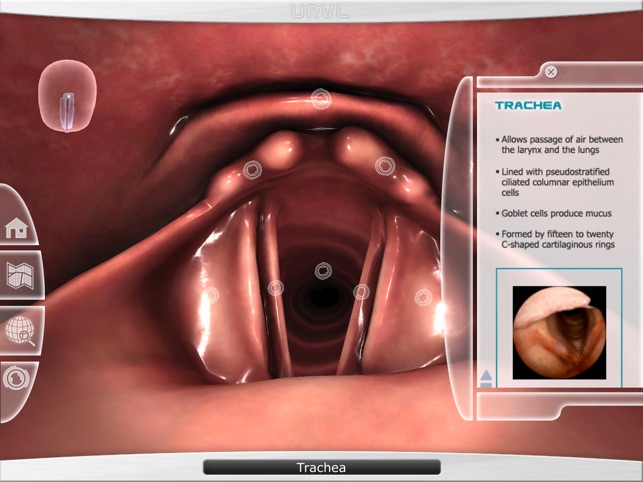
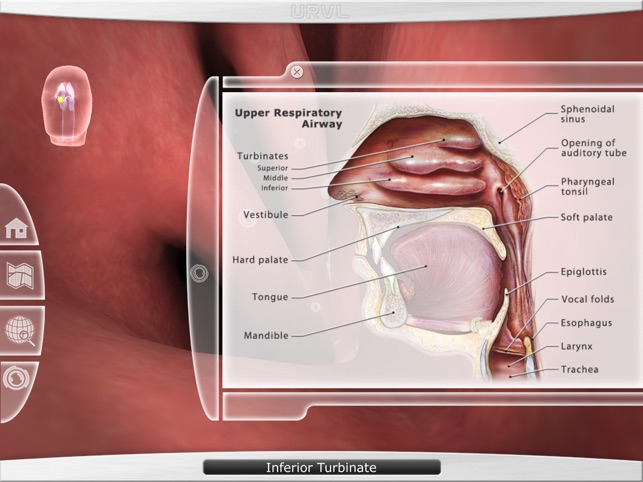
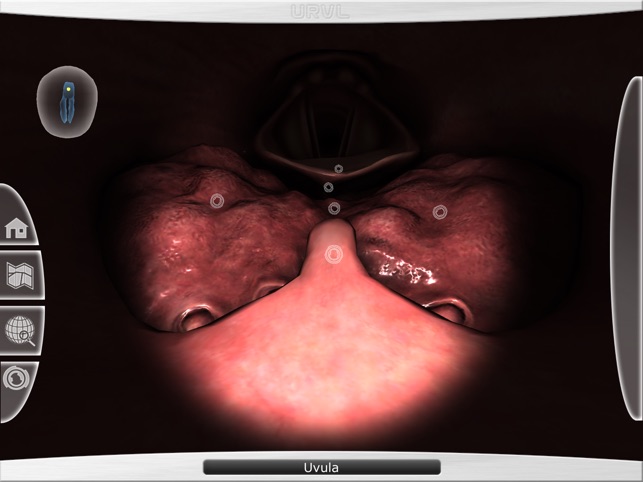
The Upper Respiratory Virtual Lab is a three-dimensional anatomical simulator designed for detailed exploration of the upper airway. The system leverages a gesture-based interface for navigation, enabling visualization of 34 distinct anatomical structures. Interactive targets are integrated throughout the model; selecting a target reveals associated clinical information, medical illustrations, and photographic examples. A cross-sectional view and navigational guide are provided to maintain spatial orientation, facilitating a comprehensive understanding of complex anatomical relationships.

Evidence & Research Context

  • This application is designed as a pedagogical tool to supplement traditional instruction in human anatomy and related life sciences.
  • Research investigating technology integration in anatomy education provides a context for the use of interactive digital learning resources.
  • In a study of undergraduate anatomy students (N=166), those with unlimited tablet access had a 3.0% performance increase between lab exams, while a control group's performance decreased by 4.2%.
  • The same research demonstrated that students with unlimited tablet access scored significantly higher (p < 0.05) on later-semester lecture examinations than peers with limited or no access.

Intended Use & Scope

This application is intended for students and educators in human anatomy, medicine, and allied health sciences as a supplementary learning resource. Its primary utility is for visualizing spatial relationships not easily conveyed by two-dimensional media. The tool is not a diagnostic aid and does not substitute for formal cadaveric laboratory experience or clinical training.

Studies & Publications

1 publication

Peer-reviewed research associated with this app.

Effectiveness/Outcome Study

Dose- and time-dependent benefits of iPad technology in an undergraduate human anatomy course

Raney et al. (2016) · Anatomical Sciences Education

Students with unlimited iPad access achieved significantly higher anatomy exam scores than those with limited or no access.

This study examined the impact of iPad integration on performance in an undergraduate gross anatomy course. Two out of six course sections were assigned to one of the following conditions: control (no iPad, n = 61); limited access (laboratory iPads, n = 58); and unlimited access (personal iPads, n = 47). Student knowledge was assessed over time during the semester with two practical examinations in laboratory and four multiple choice/essay examinations in lecture. The same PowerPoint presentations and examinations were utilized for all conditions. Mixed ANOVA analysis identified an interaction effect between time and condition for both laboratory (F2,153 = 16.12; P < 0.05) and lecture (F6,462 = 5.47; P < 0.05) performance. Between laboratory examinations, student performance was lower by 4.2% and higher by 3.0% in control and unlimited access conditions, respectively. Unlimited access students scored higher than control and limited access (82.8 ± 2.2 vs 71.5 ± 2.6 and 74.3 ± 1.7%; P < 0.05) and higher than control students (78.7 ± 2.1 vs 70.6 ± 2.0%; P < 0.05) on the third and fourth lecture examination, respectively. Postsemester surveys completed by experimental students (89.5% response rate) indicated that a greater percentage of unlimited vs limited access students agreed that laboratory (84.8 vs 56.3%, P < 0.05) and lecture (58.7 vs 14.6%, P < 0.05) performance was enhanced with the iPad. Results suggest that if students are given the opportunity to overcome the technology learning curve, tablet devices and relevant applications can be useful tools in human anatomy courses. Anat Sci Educ 9: 367-377. © 2015 American Association of Anatomists.
... Read More

Upper Respiratory Virtual Lab

Free