
AppsFromResearch
Ventilator Mode Map icon

Ventilator Mode Map

Evidence Tier:VALIDATED

Initial evidence from research studies

For:Clinicians & Healthcare Professionals

App Summary

Ventilator Mode Map is a clinical reference tool for clinicians that implements a standardized taxonomy for mechanical ventilation modes across different manufacturers and models. The associated research highlights the need for a unified classification system to overcome the confusing and inconsistent terminology between devices, a problem often described as the "Tower of Babel." By providing a clear, searchable map of ventilation modes, the app aims to reduce ambiguity and support safe and effective ventilator management.

App Screenshots

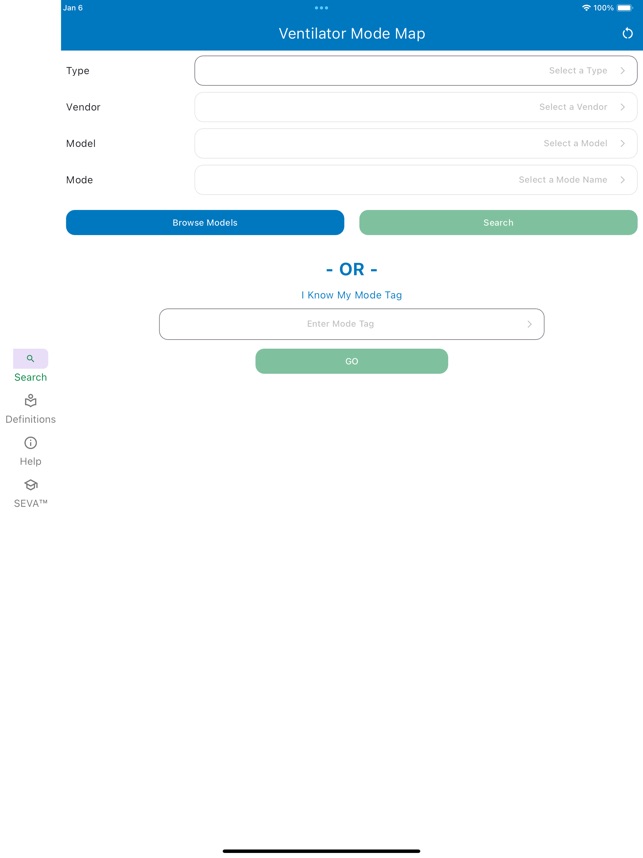
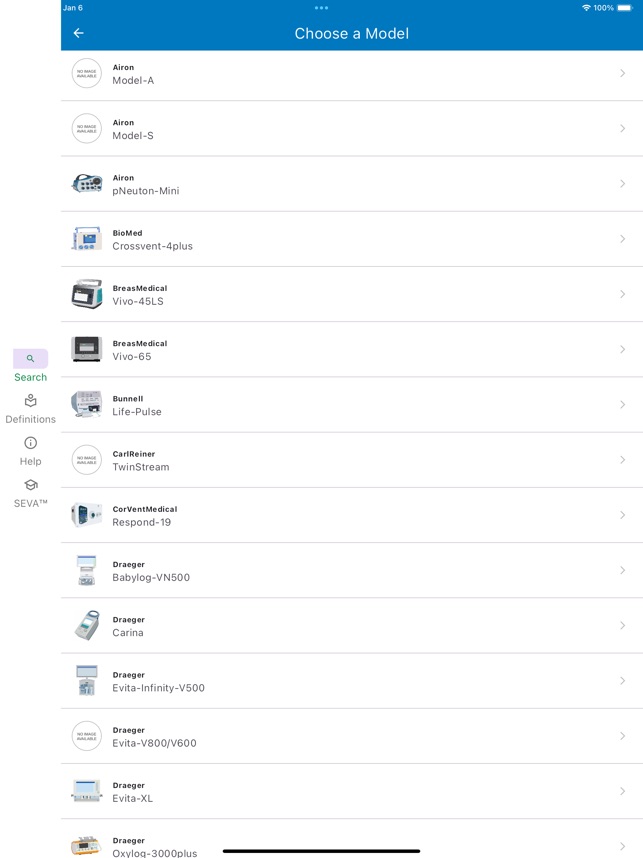
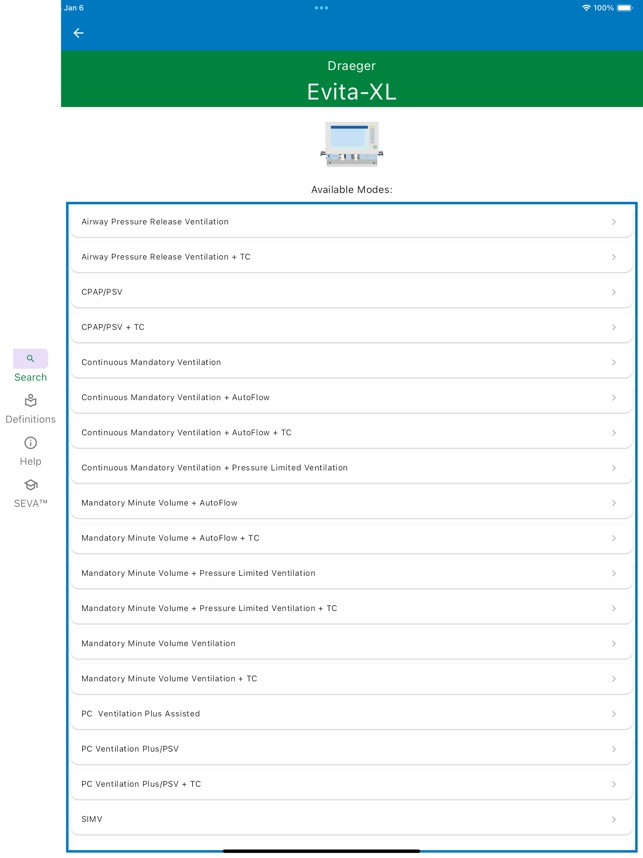
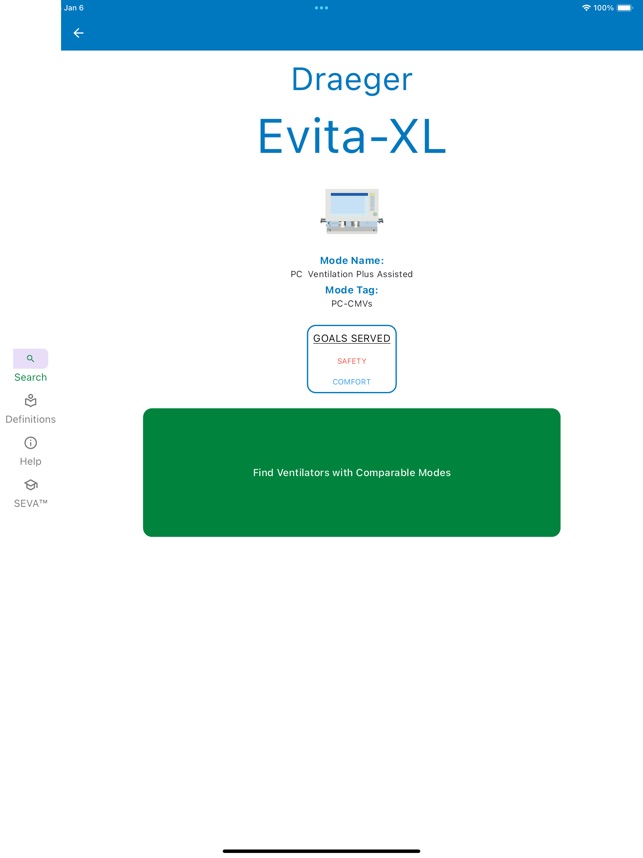
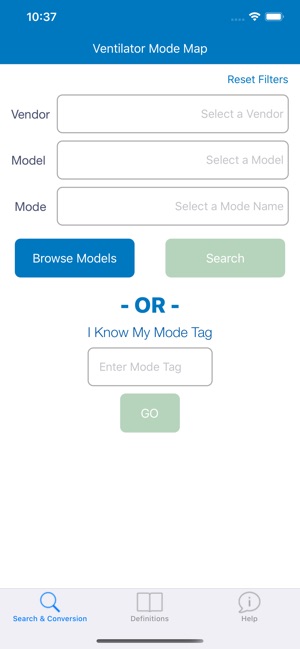
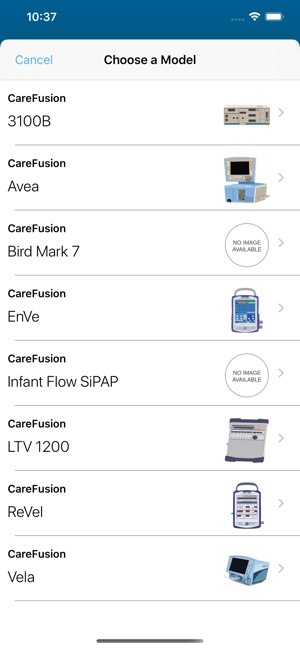
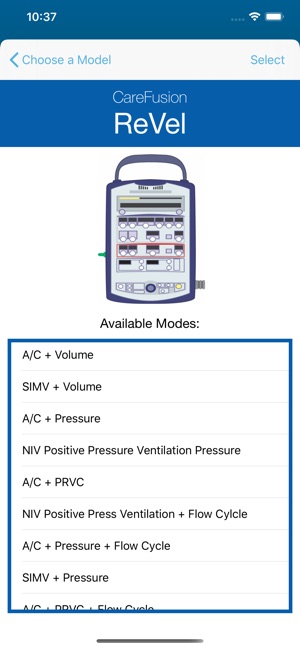
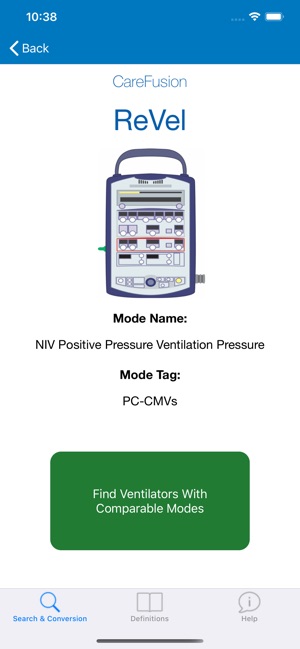
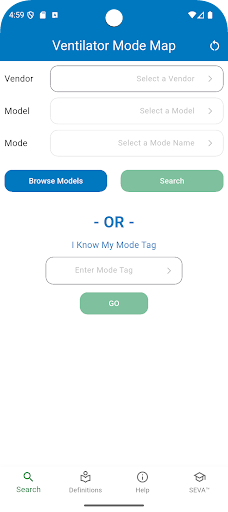
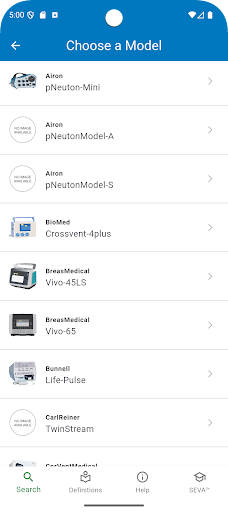
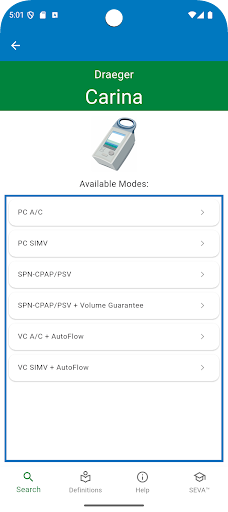
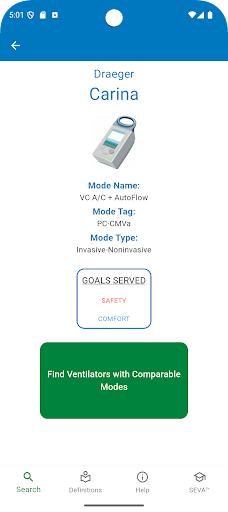
Ventilator Mode Map screenshot 1 of 8Ventilator Mode Map screenshot 2 of 8Ventilator Mode Map screenshot 3 of 8Ventilator Mode Map screenshot 4 of 8Ventilator Mode Map screenshot 5 of 8Ventilator Mode Map screenshot 6 of 8Ventilator Mode Map screenshot 7 of 8Ventilator Mode Map screenshot 8 of 8

Detailed Description

Functionality & Mechanism

Ventilator Mode Map operationalizes the standardized taxonomy for modes of mechanical ventilation. The system provides a comprehensive database of ventilators, searchable by manufacturer, model, and an accompanying device image. Upon selection, the interface displays the specific ventilator's modes classified according to the peer-reviewed Chatburn et al. framework. This process facilitates the rapid identification and comparison of ventilation modes across disparate devices, clarifying proprietary terminologies and standardizing communication for clinical and educational purposes.

Evidence & Research Context

  • The app's framework is directly based on the classification system for mechanical ventilation modes detailed in Chatburn et al. (Respir Care 2014).
  • This taxonomy was developed to address widespread inconsistencies and confusion arising from manufacturer-specific nomenclature for ventilator modes.
  • The classification system categorizes modes based on 10 fundamental characteristics, including control variables, breath sequence, and targeting schemes.
  • The associated research provides a structured, evidence-based approach to standardize terminology, aiming to enhance interprofessional communication, education, and patient safety in critical care.

Intended Use & Scope

Designed for respiratory therapists, intensivists, critical care nurses, and trainees, this tool serves as a point-of-care reference for translating proprietary ventilator mode names into a standardized classification. It is intended to support education and clarify clinical communication. The app does not provide clinical recommendations for mode selection or patient management.

Studies & Publications

1 publication

Peer-reviewed research associated with this app.

Effectiveness/Outcome Study

The Complexities of Mechanical Ventilation: Toppling the Tower of Babel

Chatburn et al. (2023) · Respiratory Care

Students with unlimited iPad access achieved significantly higher anatomy exam scores than those with limited or no access.

This study examined the impact of iPad integration on performance in an undergraduate gross anatomy course. Two out of six course sections were assigned to one of the following conditions: control (no iPad, n = 61); limited access (laboratory iPads, n = 58); and unlimited access (personal iPads, n = 47). Student knowledge was assessed over time during the semester with two practical examinations in laboratory and four multiple choice/essay examinations in lecture. The same PowerPoint presentations and examinations were utilized for all conditions. Mixed ANOVA analysis identified an interaction effect between time and condition for both laboratory (F2,153 = 16.12; P < 0.05) and lecture (F6,462 = 5.47; P < 0.05) performance. Between laboratory examinations, student performance was lower by 4.2% and higher by 3.0% in control and unlimited access conditions, respectively. Unlimited access students scored higher than control and limited access (82.8 ± 2.2 vs 71.5 ± 2.6 and 74.3 ± 1.7%; P < 0.05) and higher than control students (78.7 ± 2.1 vs 70.6 ± 2.0%; P < 0.05) on the third and fourth lecture examination, respectively. Postsemester surveys completed by experimental students (89.5% response rate) indicated that a greater percentage of unlimited vs limited access students agreed that laboratory (84.8 vs 56.3%, P < 0.05) and lecture (58.7 vs 14.6%, P < 0.05) performance was enhanced with the iPad. Results suggest that if students are given the opportunity to overcome the technology learning curve, tablet devices and relevant applications can be useful tools in human anatomy courses.
... Read More

Ventilator Mode Map

Free