AppsFromResearch
ARTFL Encyclopédie Reader icon

ARTFL Encyclopédie Reader

Evidence Tier:DOCUMENTED

Published in academic literature

For:Researchers & AcademicsGeneral Public & Enthusiasts

App Summary

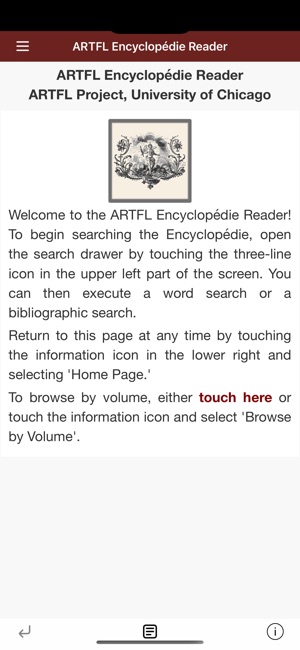
The ARTFL Encyclopédie Reader offers a search and retrieval interface for scholars and the public to explore Diderot and d'Alembert's influential 18th-century French *Encyclopédie*. The associated research describes the foundational principle of using light, automatically generated tagging based on typographic conventions to make the massive and complex work computationally searchable. The authors assert this model is a cost-effective and flexible approach for digitizing large-scale humanities projects, thereby opening complex historical texts to new forms of scholarly analysis.

App Screenshots
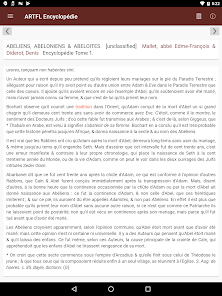
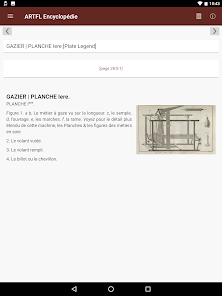
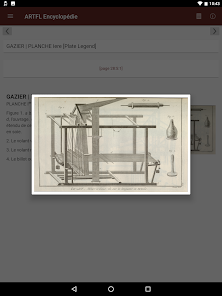
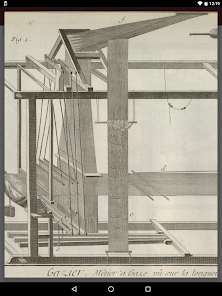
ARTFL Encyclopédie Reader screenshot 1 of 28ARTFL Encyclopédie Reader screenshot 2 of 28ARTFL Encyclopédie Reader screenshot 3 of 28ARTFL Encyclopédie Reader screenshot 4 of 28ARTFL Encyclopédie Reader screenshot 5 of 28ARTFL Encyclopédie Reader screenshot 6 of 28ARTFL Encyclopédie Reader screenshot 7 of 28ARTFL Encyclopédie Reader screenshot 8 of 28ARTFL Encyclopédie Reader screenshot 9 of 28ARTFL Encyclopédie Reader screenshot 10 of 28ARTFL Encyclopédie Reader screenshot 11 of 28ARTFL Encyclopédie Reader screenshot 12 of 28ARTFL Encyclopédie Reader screenshot 13 of 28ARTFL Encyclopédie Reader screenshot 14 of 28ARTFL Encyclopédie Reader screenshot 15 of 28ARTFL Encyclopédie Reader screenshot 16 of 28ARTFL Encyclopédie Reader screenshot 17 of 28ARTFL Encyclopédie Reader screenshot 18 of 28ARTFL Encyclopédie Reader screenshot 19 of 28ARTFL Encyclopédie Reader screenshot 20 of 28ARTFL Encyclopédie Reader screenshot 21 of 28ARTFL Encyclopédie Reader screenshot 22 of 28ARTFL Encyclopédie Reader screenshot 23 of 28ARTFL Encyclopédie Reader screenshot 24 of 28ARTFL Encyclopédie Reader screenshot 25 of 28ARTFL Encyclopédie Reader screenshot 26 of 28ARTFL Encyclopédie Reader screenshot 27 of 28ARTFL Encyclopédie Reader screenshot 28 of 28

Detailed Description

Functionality & Mechanism

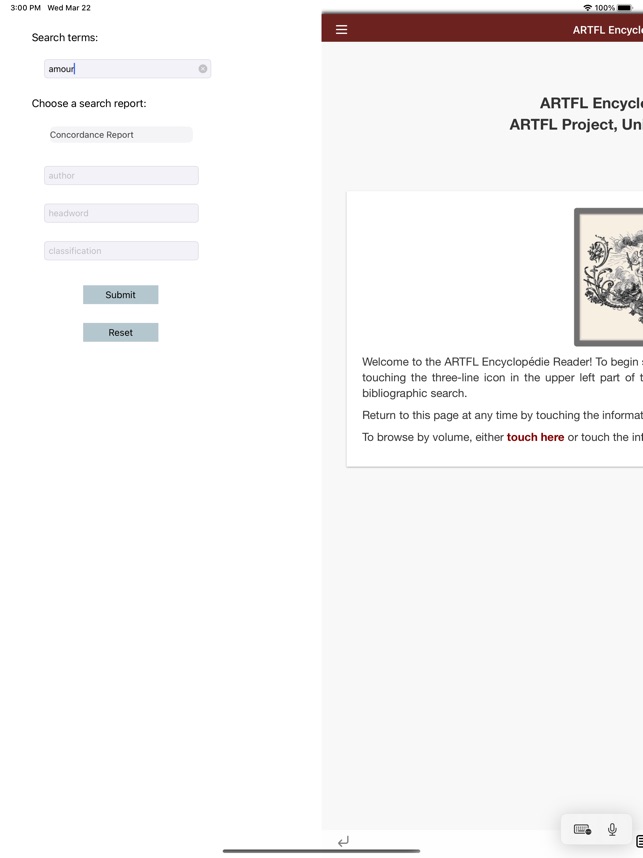
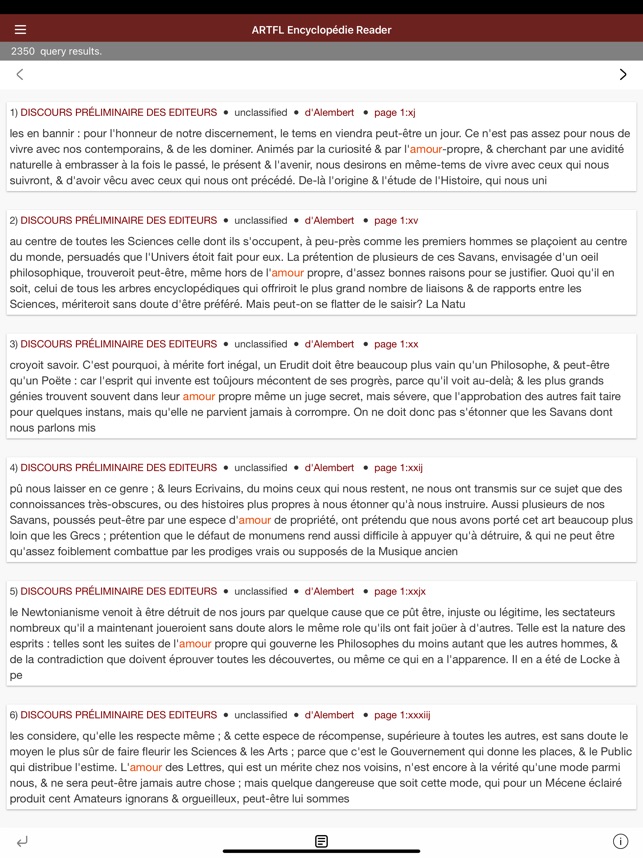
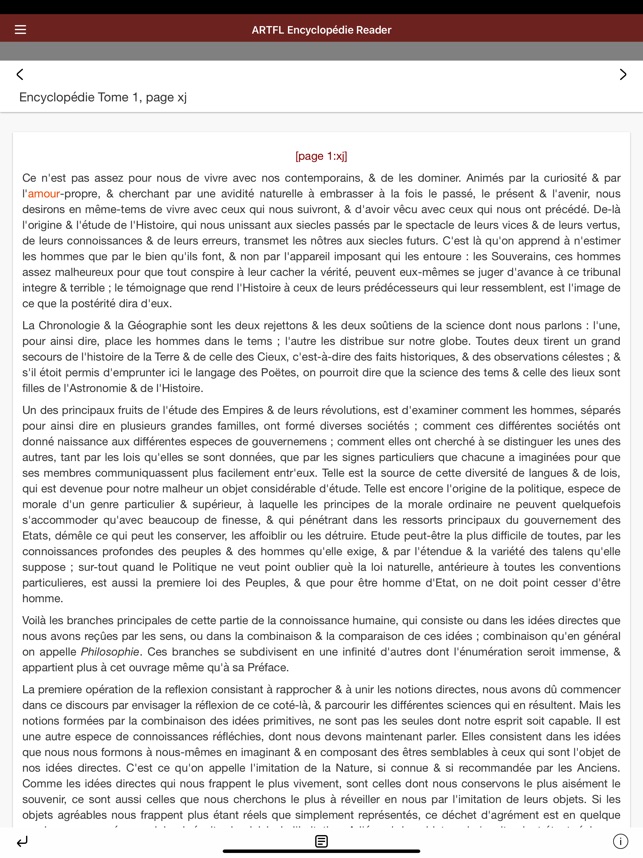
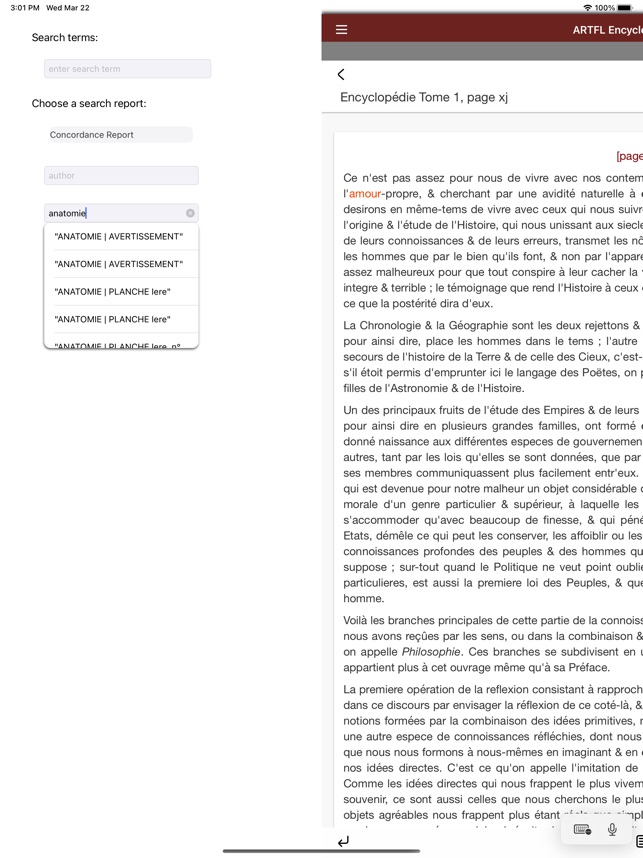
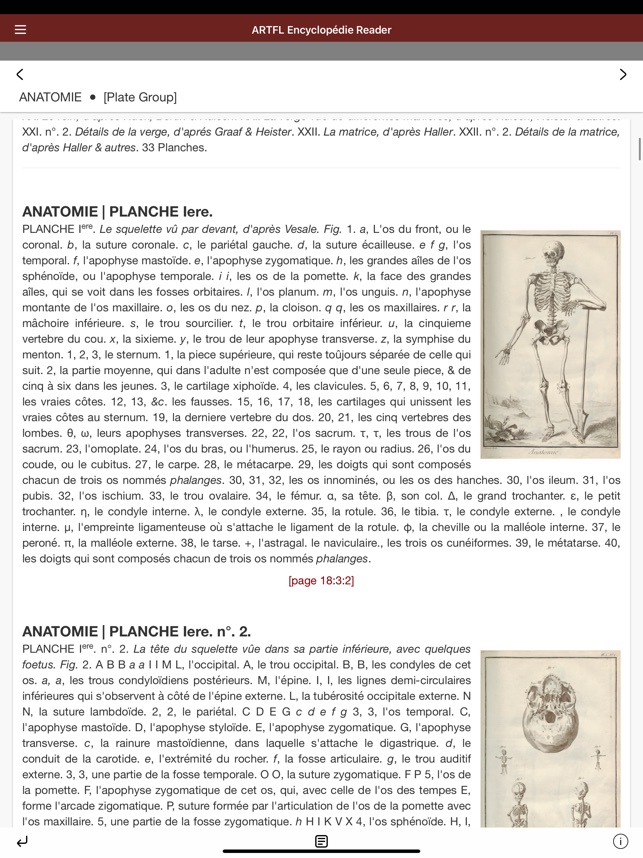
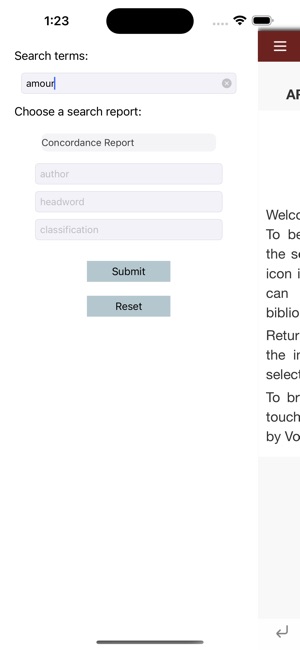
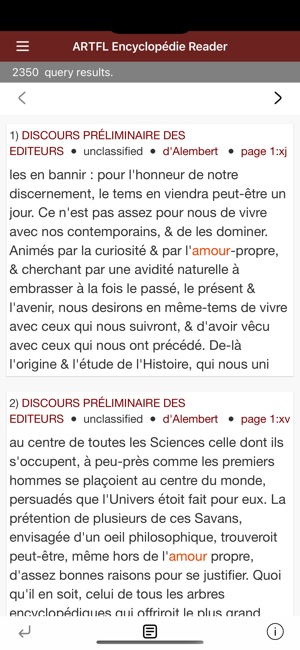
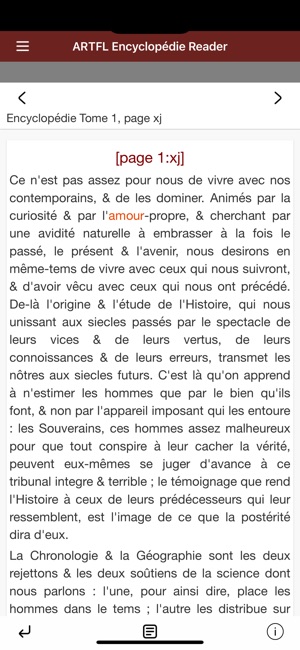
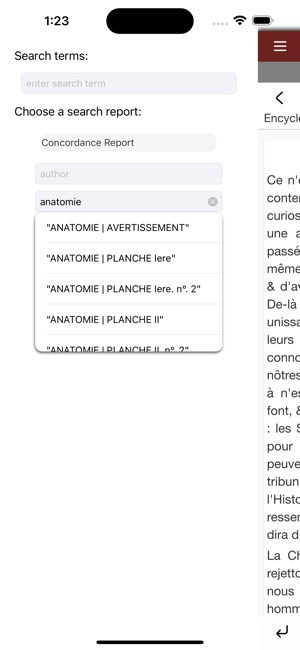
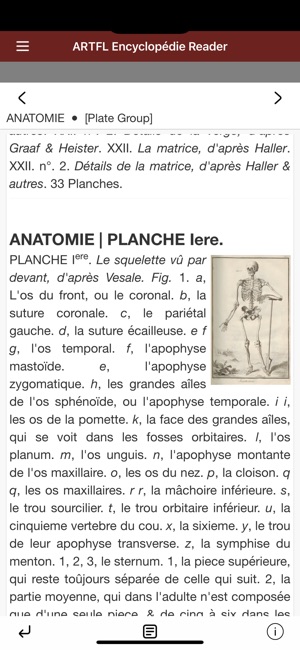
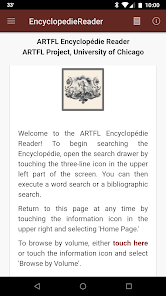
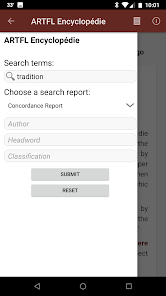
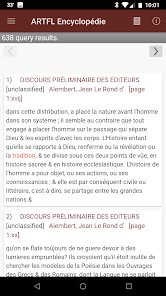
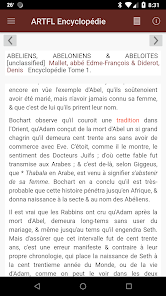
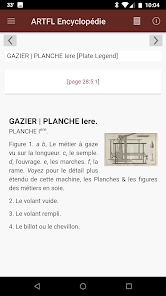
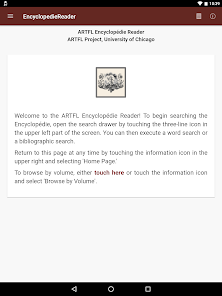
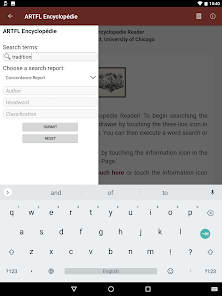
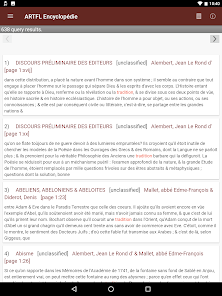
The ARTFL Encyclopédie Reader, developed by the University of Chicago's ARTFL Project, provides a text search and retrieval interface for the Encyclopédie of Diderot and d'Alembert. Sessions are initiated via word or bibliographic queries, which support wildcards and are not accent sensitive. The system returns results as a navigable concordance report or a word frequency list. From these results, the interface facilitates linking to larger text segments, viewing original page images, and bookmarking specific passages for later retrieval.

Evidence & Research Context

  • The system's design, detailed in an associated publication, leverages automated tagging and parsing to structure the massive text, eliminating the need for extensive manual markup.
  • This methodology facilitates the automatic identification of textual attributes, including authorship and subject classifications, enabling complex, user-defined queries across the entire corpus.
  • The ARTFL Encyclopédie database has been utilized as a core research tool for large-scale computational textual analysis within the digital humanities.
  • Its research application includes studies systematically identifying textual borrowings between the Encyclopédie and other period texts by integrating machine translation and sequence alignment algorithms.

Intended Use & Scope

This system is intended for researchers, educators, and students in the humanities for scholarly inquiry and reference. Its primary utility is facilitating direct, advanced textual access and search within the Encyclopédie corpus. The reader does not provide curated analysis or interpretive summaries; it is a direct interface to the digitized primary source text.

Studies & Publications

3 publications

Peer-reviewed research associated with this app.

Non-Evaluative Reference

From Cyclopaedia to Encyclopédie: Using machine translation and sequence alignment to identify encyclopaedia articles across languages

Roe et al. (2022) · Digital Humanities 2022

Referenced in academic literature; no direct evaluation of the app
It is well known that the great 18th-century French Encyclopédie began first as a modest translation project of Ephraim Chambers' Cyclopaedia in 1745. And, although their project grew into something much more significant, the Enyclopédie editors (Diderot and d'Alembert) were not shy in incorporating translations of the Cyclopaedia as filler for their expanded work. Indeed, as Paolo Quintili remarks, 'the they left a good part of these articles almost unchanged, or with only minor changes' (Quintili, 1996: 75). Given the scale of the two works under consideration, however, systematic evaluation of the extent of the philosophes' use of Chambers has remained, even today, a daunting task. John Lough, in 1980, framed the problem thusly: 'So far no one has had the patience to make a detailed study of the exact relationship between the text of Diderot's Encyclopédie and the work of Ephraim Chambers. This would no doubt require several years of arduous toil devoted to comparing the two works article by article' (Lough, 1980: 221). Recent developments in machine translation and sequence alignment now offer new possibilities for the systematic comparison of digital texts across languages. This paper outlines some recent experimental work in leveraging these new techniques in an effort to reduce the 'arduous toil' of textual comparison through automatic translation. In essence, we aimed to generate French translations of Cyclopaedia articles and then use sequence alignment to identify similar passages also found in the Encyclopédie [1]. We examined two of the most widely-used resources in this domain, Googe Translate and DeepL. Both systems provide useful APIs as part of their respective subscription services, and both provide translations based on cuttingedge neural network language models. While DeepL provided somewhat more satisfying translations from a reader's perspective, we ultimately opted to use Google Translate for the ease of its API and its ability to parse TEIXML. The latter is of critical importance as we wanted to keep the overall document structure of our dictionaries to allow for easy navigation between the versions. Our objective here was not to produce a good translation of the text, or even one that might serve as the basis for a readable edition. Rather, this machine-generated edition serves as a 'pivot-text' between the two corpora, allowing for an automatic comparison of the two (or three) versions using ARTFL's highly fault-tolerant sequence alignment package, Text-PAIR [2]. In order to determine the parameters for this task, we ran a series of tests with different matching parameters on a representative selection 2008-2021, and, more specifically, (Olsen, Horton and Roe, 2011). [3] The question of the Dictionnaire de Trévoux is one such factor, as it is known that both Chambers and the encyclopédistes used it as a source for their own articles—so matches we find between the Chambers and Encyclopédie may indeed represent shared borrowings from the Trévoux and not a translation at all. Or, more interestingly, perhaps Chambers translated a Trévoux article from French to English, which a dutiful encyclopédiste then translated back to French for the Encyclopédie—in this case, which article is the 'source' and which the 'translation'? For more on these particular aspects of dictionary-making, see our previous article (Allen et al., 2010) and a response (Leca-Tsiomis, 2013).
... Read More
Development/Design Paper

Re-engineering a war-machine: ARTFL's Encyclopédie

Andreev et al. (1999) · Literary and Linguistic Computing

Referenced in academic literature; no direct evaluation of the app
Current circumstances, specifically (i) competition from commercial developers and (ii) the need for compatibility between disparate data sources, suggest that it is crucially important to reconsider the ways in which the guidelines of the Text Encoding Initiative (TEI) are applied to computing projects in the humanities. Based on our work with Diderot and d'Alembert's Encycloédie, we contend that, in many cases light, automatically generated tagging is preferable to extensive manual mark-up. The massive size nd complex textual structures of this work made it imperative to devise procedures that would eliminate the need for hand editing. Data capture for this project was limited to clear typographic conventions using HTML conventions and simplified SGML-style tags. All identification of textual units (such as articles and cross-references) and textual attributes (such as authorship and subject headings) was then carried out automatically. The resulting hierarchical units (articles works, paragraphs) can be queried in diverse ways using systems developed by the ARTFL Project. These systems provide full-test retrieval and full-text searching, either in the full text or in a sub-corpus defined by the user. The proven viability of these procedures leads us to assert that this model could be applied profitably to a much wider range of projects where cost-effectiveness and flexibility are desirable.
... Read More

ARTFL Encyclopédie Reader

Free