AppsFromResearch
Bifurcaid 3D icon

Bifurcaid 3D

Evidence Tier:DOCUMENTED

Published in academic literature

For:Clinicians & Healthcare Professionals

App Summary

Bifurcaid 3D is an educational tool for clinicians that uses interactive 3D animations to teach stenting techniques for complex coronary bifurcation lesions. The associated research details how the animated models incorporate findings from laboratory studies to accurately depict realistic stent behaviors, such as stent crushing and metal carina formation. The authors conclude that the app is an engaging and visual teaching tool that offers unique perspectives from within the coronary arteries, potentially enhancing procedural understanding for this complex intervention.

App Screenshots

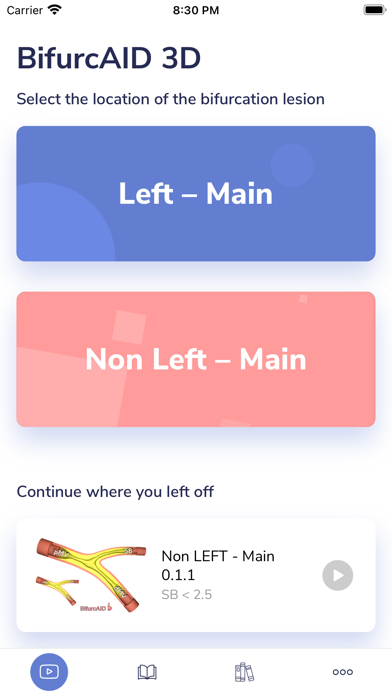
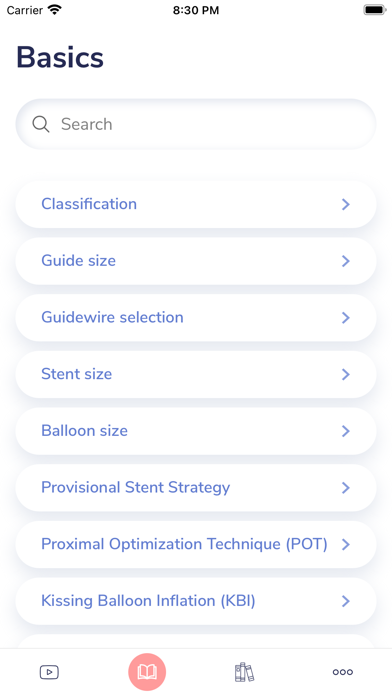
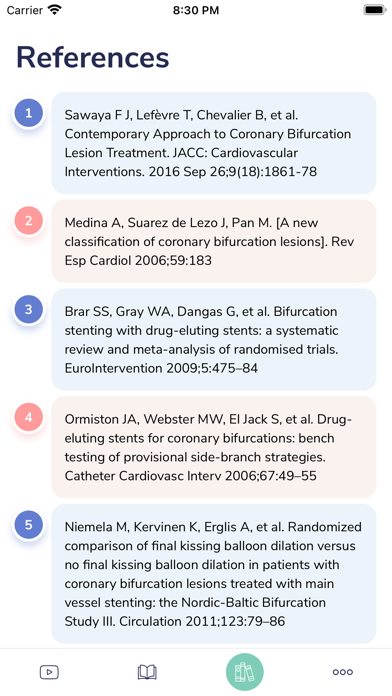
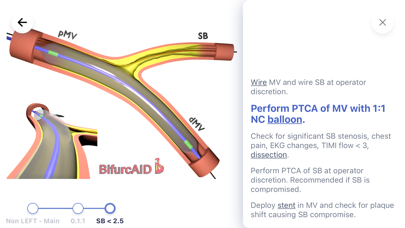
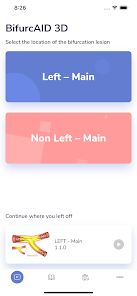
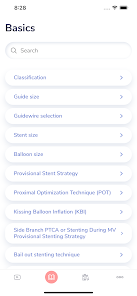
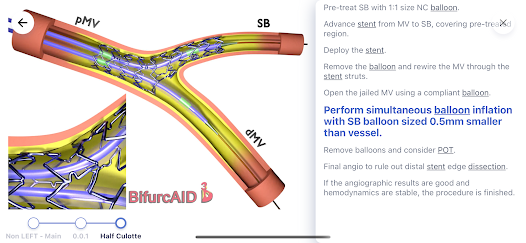
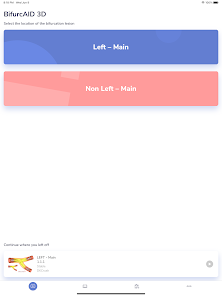
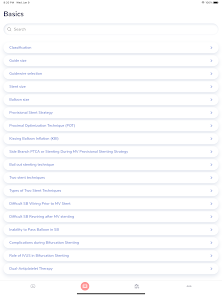
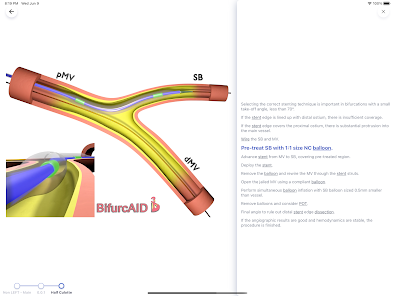
Bifurcaid 3D screenshot 1 of 12Bifurcaid 3D screenshot 2 of 12Bifurcaid 3D screenshot 3 of 12Bifurcaid 3D screenshot 4 of 12Bifurcaid 3D screenshot 5 of 12Bifurcaid 3D screenshot 6 of 12Bifurcaid 3D screenshot 7 of 12Bifurcaid 3D screenshot 8 of 12Bifurcaid 3D screenshot 9 of 12Bifurcaid 3D screenshot 10 of 12Bifurcaid 3D screenshot 11 of 12Bifurcaid 3D screenshot 12 of 12

Detailed Description

Functionality & Mechanism

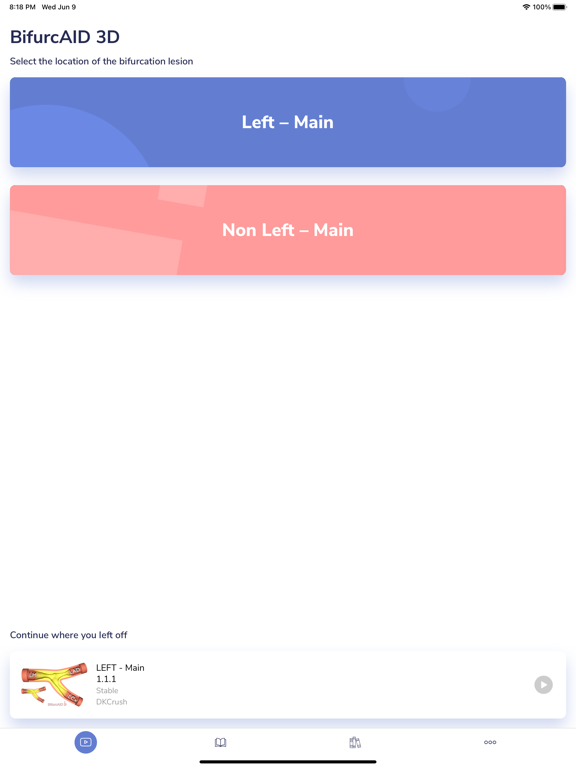
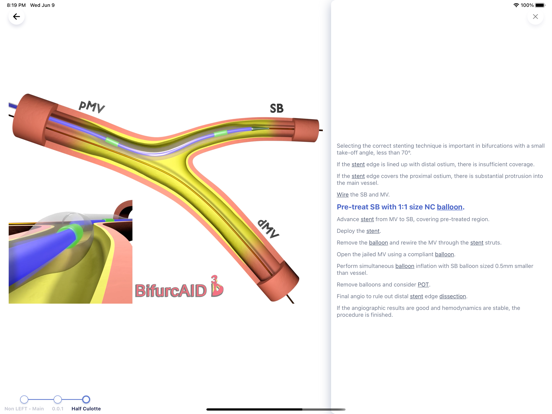
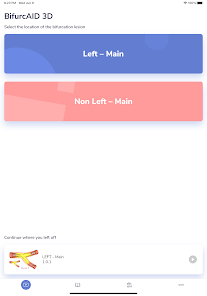
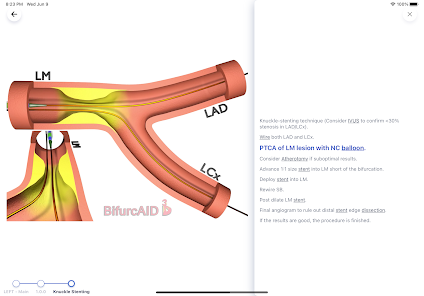
Bifurcaid 3D is an educational platform that leverages detailed three-dimensional animations to model percutaneous coronary interventions for bifurcation lesions. The interface guides the selection of lesion characteristics, including left main (LM) or non-LM location and Medina classification. It then generates a tailored, step-by-step animated sequence depicting dedicated two-stent, provisional, or bailout techniques. The system's animations offer unique intra-luminal perspectives to facilitate a comprehensive spatial understanding of complex procedural mechanics.

Evidence & Research Context

  • The app's design and scientific underpinnings are detailed in a descriptive research article outlining its development as an educational tool for interventional cardiology.
  • The 3D models integrate findings from animal and laboratory bench studies to render realistic stent behavior, including stent crushing and metal carina formation.
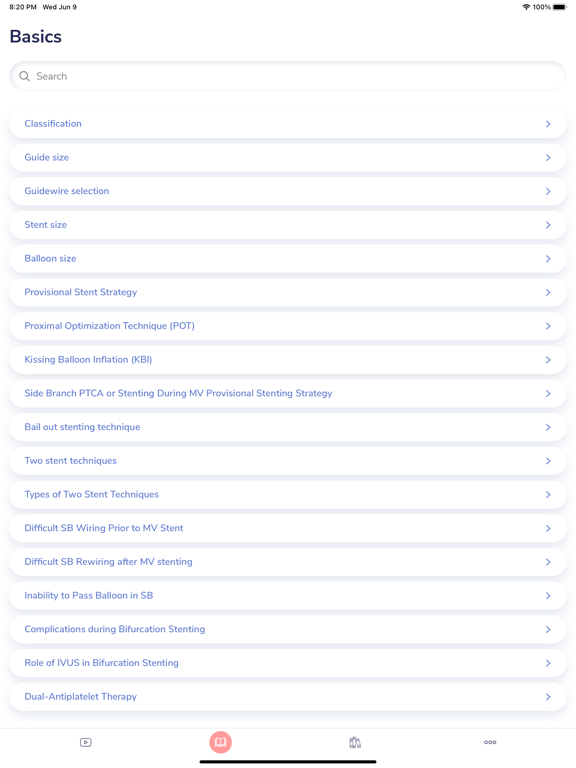
  • The platform's content architecture encompasses all Medina classification variations, addressing a wide spectrum of clinically relevant bifurcation lesion scenarios.
  • A primary pedagogical feature is the visualization of procedural aspects, such as side branch access, that are typically obscured in two-dimensional angiography.

Intended Use & Scope

This application is designed for interventional cardiologists, cardiology fellows, and catheterization laboratory staff. Its primary utility is as a supplementary educational resource for procedural conceptualization and training. The tool is not intended to guide real-time clinical decision-making or serve as a substitute for established clinical guidelines, proctorship, or hands-on procedural experience.

Studies & Publications

1 publication

Peer-reviewed research associated with this app.

Development/Design Paper

The intersection of 3D animation and bifurcation intervention: BifucAid 3D

Kini et al. (2020) · Journal of the American College of Cardiology

Describes the research-driven development of this app
Background Bifurcation lesions account for 15 to 20% of percutaneous coronary interventions and are technically challenging with multiple lesion and treatment permutations. More than two years and 13,000 downloads later, our mobile application BifurcAID continues to simplify this highly complex subject and teach about complex coronary bifurcation. BifurcAID 3D will make clear, intuitive, and interactive educational aminations of bifurcation lesion treatment and offer new perspectives on bifurcation lesions. Methods Detailed and animated models of LM and non LM bifurcation lesions were created with all medina classification variations. Animal and lab bench stenting technique publications were studied and incorporated to ensure the models depict real behaviors, especially with regard to stent crushing and metal carina formation. Results Due to the many branching decisions during treatment, non LM 1,1,1 medina classification alone has 177 different ways to reach the end of treatment. Despite this complexity, the user experiences a polished animation that is tailored to their lesion selection and how the plaque responds to treatment. New perspectives, such as from within the side branch, offer an insight into what is usually viewed in two hazy dimensions or obscured by contrast media (Figure 1). Conclusion BifurcAID 3D represents the embrace of technology in education, offering free global access to an engaging and visual teaching tool for the complex treatment of bifurcation lesions.
... Read More

Bifurcaid 3D

Free