AppsFromResearch
CassiniMIMI icon

CassiniMIMI

Evidence Tier:DOCUMENTED

Published in academic literature

For:Researchers & AcademicsGeneral Public & Enthusiasts

App Summary

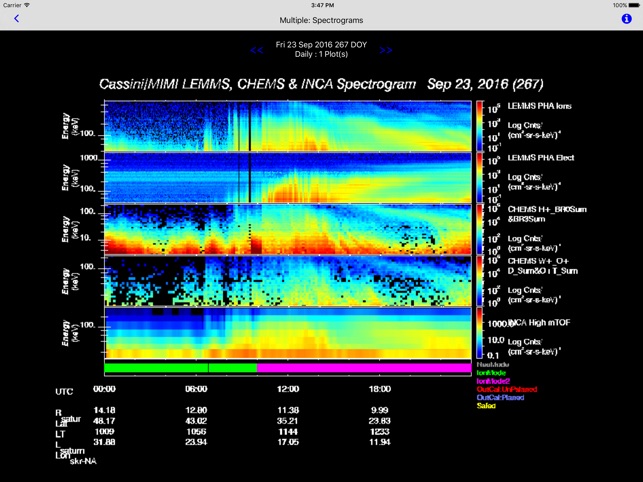
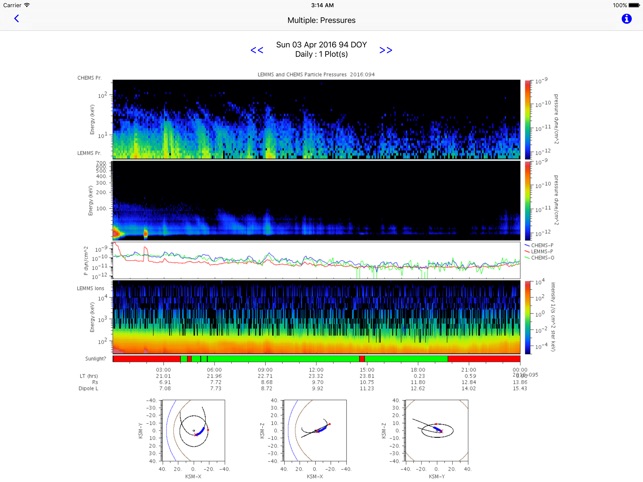
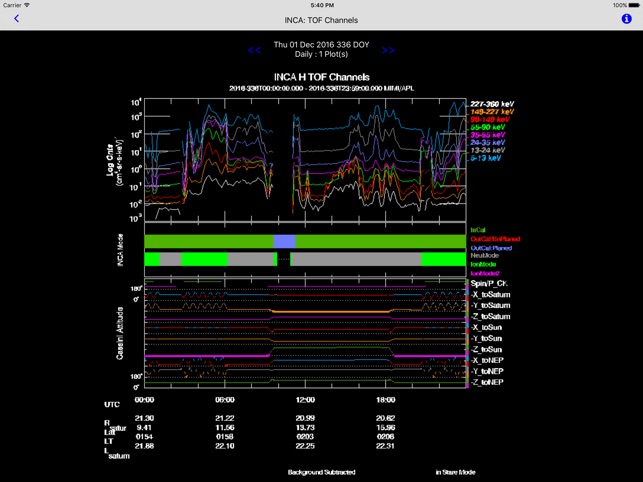
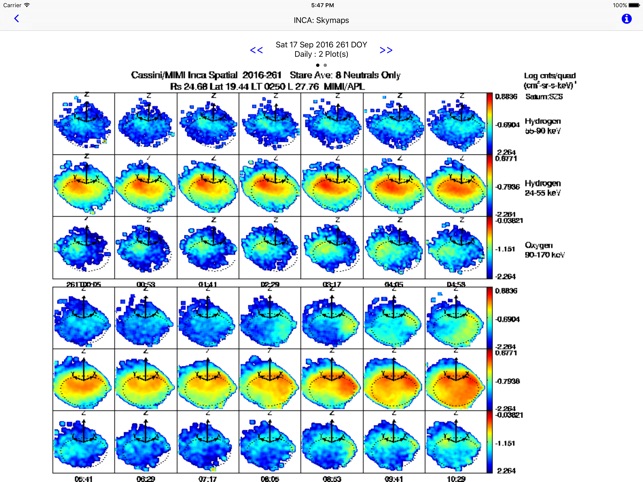
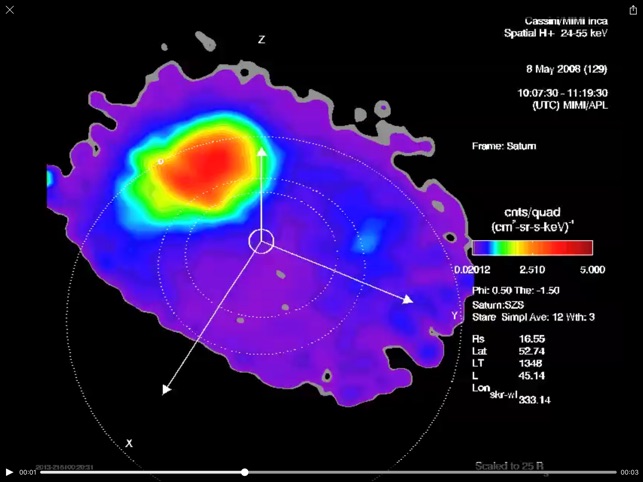
The CassiniMIMI app provides public access to images, spectrograms, and movies from the Cassini mission's Magnetospheric Imaging Instruments, which were designed to study the energetic particle environment of Saturn's magnetosphere. The associated research utilized the instrument's unique combination of remote Energetic Neutral Atom (ENA) imaging and in-situ particle measurements, leading to discoveries such as a previously unknown radiation belt and evidence of substorm-like plasma injections. The app makes this historic dataset directly accessible, providing a public window into the data used to reveal the global structure and complex dynamics of Saturn's magnetosphere.

App Screenshots

CassiniMIMI screenshot 1 of 10CassiniMIMI screenshot 2 of 10CassiniMIMI screenshot 3 of 10CassiniMIMI screenshot 4 of 10CassiniMIMI screenshot 5 of 10CassiniMIMI screenshot 6 of 10CassiniMIMI screenshot 7 of 10CassiniMIMI screenshot 8 of 10CassiniMIMI screenshot 9 of 10CassiniMIMI screenshot 10 of 10

Detailed Description

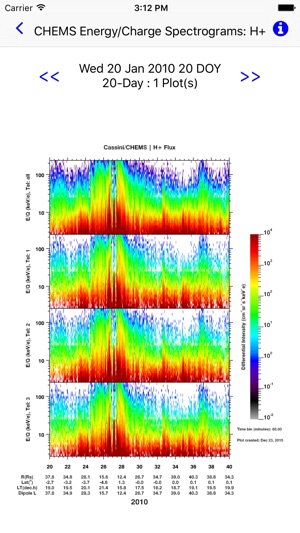
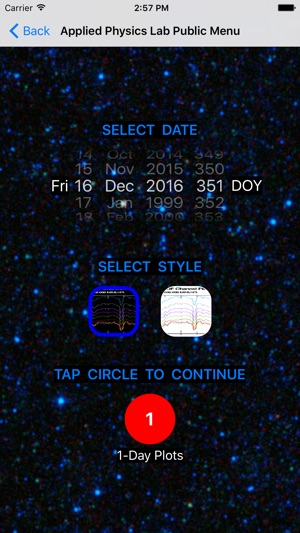
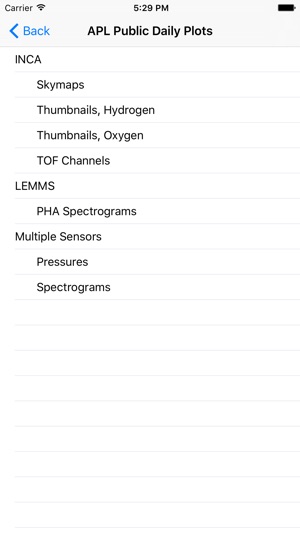
Functionality & Mechanism The CassiniMIMI iOS application provides direct access to the public dataset from NASA's Magnetospheric IMaging Instruments (MIMI) aboard the Cassini spacecraft. The interface facilitates exploration of calibrated scientific data products, including Energetic Neutral Atom images, spectrograms, and line plots from the INCA, CHEMS, and LEMMS sensors. The system renders visualizations such as plots and movies, which can be filtered by instrument, data type, and date, granting access to datasets from NASA's Planetary Data System.

Evidence & Research Context The app presents the foundational data from the MIMI instrument suite, which has produced significant scientific findings.

  • The associated research details the instrument's design for global imaging and in-situ measurements to study the configuration and dynamics of Saturn's magnetosphere.
  • Analysis of instrument data revealed a highly dynamic magnetosphere with a distinct day-night asymmetry and an approximately 11-hour periodicity in plasma activity.
  • Data captured by the Ion and Neutral Camera (INCA) sensor led to the discovery of a previously unknown radiation belt located inward of Saturn's D-ring.
  • In-situ measurements confirmed the composition of magnetospheric plasma, identifying water-product ions (O+, OH+, H2O+) and establishing Titan's exosphere as a copious source of Energetic Neutral Atoms.

Intended Use & Scope This application is designed for researchers, educators, students, and the public as a specialized data browser for the Cassini MIMI mission. Its primary utility is for data visualization, educational reference, and preliminary exploration of mission-specific datasets. The system does not perform data analysis or offer scientific interpretation; for rigorous research, users must consult the primary literature.

Studies & Publications

2 publications

Peer-reviewed research associated with this app.

Non-Evaluative Reference

Overview of Results from the Cassini Magnetospheric Imaging Instrument (MIMI) During the First Year of Operations

Krimigis et al. (2005) · Lunar and Planetary Science XXXVI

Referenced in academic literature; no direct evaluation of the app
The MIMI investigation comprises three sensors covering the indicated energy ranges: the Ion and Neutral Camera (INCA) -- 7 keV/nuc 3 Mev) and protons (1.6 < E < 160 Mev) from the back end of the dual field-of-view telescope. The Saturn observation sequences began in January, 2004 and culminated in Saturn Orbit Insertion on July 1, 2004. The MIMI sensors observed substantial activity in interplanetary space for several months prior to SOI, including several interplanetary shocks associated with corotating interaction regions, numerous increases most likely originating from particle streams in the vicinity of the Saturnian bow shock and energetic neutral atoms (ENA) emanating from Saturn s magnetosphere. Results following SOI revealed: a dynamical magnetosphere with a day-night asymmetry and an 11-hour periodicity; several water-product ions (O+, OH+, H2O+), but little N+; inferred quantities of neutral gas sufficient to cause major losses in the trapped ions and electrons in the middle and inner magnetosphere; a Titan exosphere that is a copious source of ENA; INCA imaging through ENA has also revealed a previously unknown radiation belt residing inward of the D-ring that is most likely the result of double charge-exchange between the main radiation belt and the upper layers of Saturn s exosphere. Finally, there is ample evidence for the presence of substorm-like injections of plasma that subsequently corotates for a number of days before dissipating on the night-side magnetotail. The observations will be presented and discussed in the context of current theoretical models.
... Read More
Non-Evaluative Reference

Magnetosphere imaging instrument (MIMI) on the Cassini mission to Saturn/Titan

Krimigis et al. (2004) · Space Science Reviews

Referenced in academic literature; no direct evaluation of the app
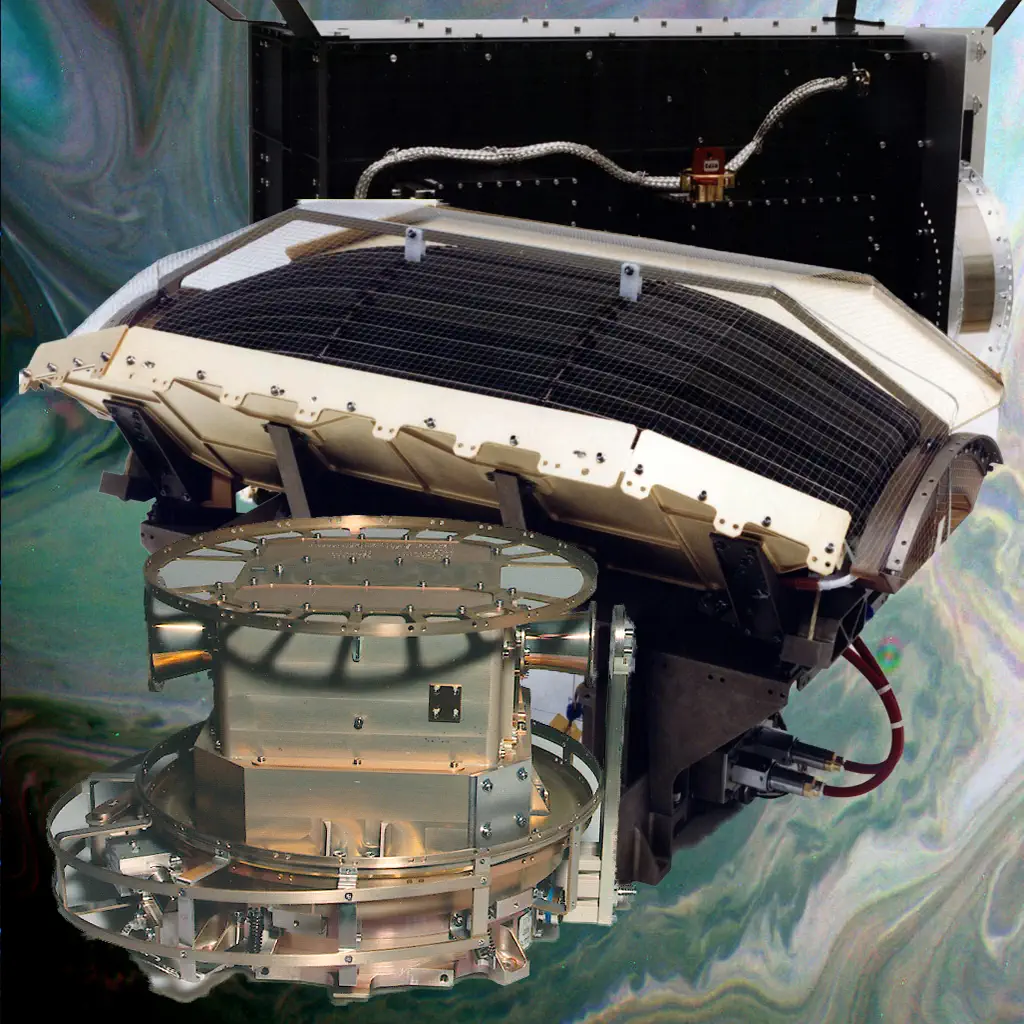
The magnetospheric imaging instrument (MIMI) is a neutral and charged particle detection system on the Cassini orbiter spacecraft designed to perform both global imaging and in-situ measurements to study the overall configuration and dynamics of Saturn's magnetosphere and its interactions with the solar wind, Saturn's atmosphere, Titan, and the icy satellites. The processes responsible for Saturn's aurora will be investigated; a search will be performed for substorms at Saturn; and the origins of magnetospheric hot plasmas will be determined. Further, the Jovian magnetosphere and Io torus will be imaged during Jupiter flyby. The investigative approach is twofold. (1) Perform remote sensing of the magnetospheric energetic (E > 7 keV) ion plasmas by detecting and imaging charge-exchange neutrals, created when magnetospheric ions capture electrons from ambient neutral gas. Such escaping neutrals were detected by the Voyager l spacecraft outside Saturn's magnetosphere and can be used like photons to form images of the emitting regions, as has been demonstrated at Earth. (2) Determine through in-situ measurements the 3-D particle distribution functions including ion composition and charge states (E > 3 keV/e). The combination of in-situ measurements with global images, together with analysis and interpretation techniques that include direct "forward modeling'' and deconvolution by tomography, is expected to yield a global assessment of magnetospheric structure and dynamics, including (a) magnetospheric ring currents and hot plasma populations, (b) magnetic field distortions, (c) electric field configuration, (d) particle injection boundaries associated with magnetic storms and substorms, and (e) the connection of the magnetosphere to ionospheric altitudes. Titan and its torus will stand out in energetic neutral images throughout the Cassini orbit, and thus serve as a continuous remote probe of ion flux variations near 20R S (e.g., magnetopause crossings and substorm plasma injections). The Titan exosphere and its cometary interaction with magnetospheric plasmas will be imaged in detail on each flyby. The three principal sensors of MIMI consists of an ion and neutral camera (INCA), a charge–energy–mass-spectrometer (CHEMS) essentially identical to our instrument flown on the ISTP/Geotail spacecraft, and the low energy magnetospheric measurements system (LEMMS), an advanced design of one of our sensors flown on the Galileo spacecraft. The INCA head is a large geometry factor (G ∼ 2.4 cm2 sr) foil time-of-flight (TOF) camera that separately registers the incident direction of either energetic neutral atoms (ENA) or ion species (≥5∘ full width half maximum) over the range 7 keV/nuc < E < 3 MeV/nuc. CHEMS uses electrostatic deflection, TOF, and energy measurement to determine ion energy, charge state, mass, and 3-D anisotropy in the range 3 ≤ E ≤ 220 keV/e with good (∼0.05 cm2 sr) sensitivity. LEMMS is a two-ended telescope that measures ions in the range 0.03 ≤ E ≤ 18 MeV and electrons 0.015 ≤ E≤ 0.884 MeV in the forward direction (G ∼ 0.02 cm2 sr), while high energy electrons (0.1–5 MeV) and ions (1.6–160 MeV) are measured from the back direction (G ∼ 0.4 cm2 sr). The latter are relevant to inner magnetosphere studies of diffusion processes and satellite microsignatures as well as cosmic ray albedo neutron decay (CRAND). Our analyses of Voyager energetic neutral particle and Lyman-α measurements show that INCA will provide statistically significant global magnetospheric images from a distance of ∼60 R S every 2–3 h (every ∼10 min from ∼20 R S). Moreover, during Titan flybys, INCA will provide images of the interaction of the Titan exosphere with the Saturn magnetosphere every 1.5 min. Time resolution for charged particle measurements can be < 0.1 s, which is more than adequate for microsignature studies. Data obtained during Venus-2 flyby and Earth swingby in June and August 1999, respectively, and Jupiter flyby in December 2000 to January 2001 show that the instrument is performing well, has made important and heretofore unobtainable measurements in interplanetary space at Jupiter, and will likely obtain high-quality data throughout each orbit of the Cassini mission at Saturn. Sample data from each of the three sensors during the August 18 Earth swingby are shown, including the first ENA image of part of the ring current obtained by an instrument specifically designed for this purpose. Similarily, measurements in cis-Jovian space include the first detailed charge state determination of Iogenic ions and several ENA images of that planet's magnetosphere.
... Read More

CassiniMIMI

Free