
CD4 Hunter
Published in academic literature
App Summary
App Screenshots
Detailed Description
Functionality & Mechanism
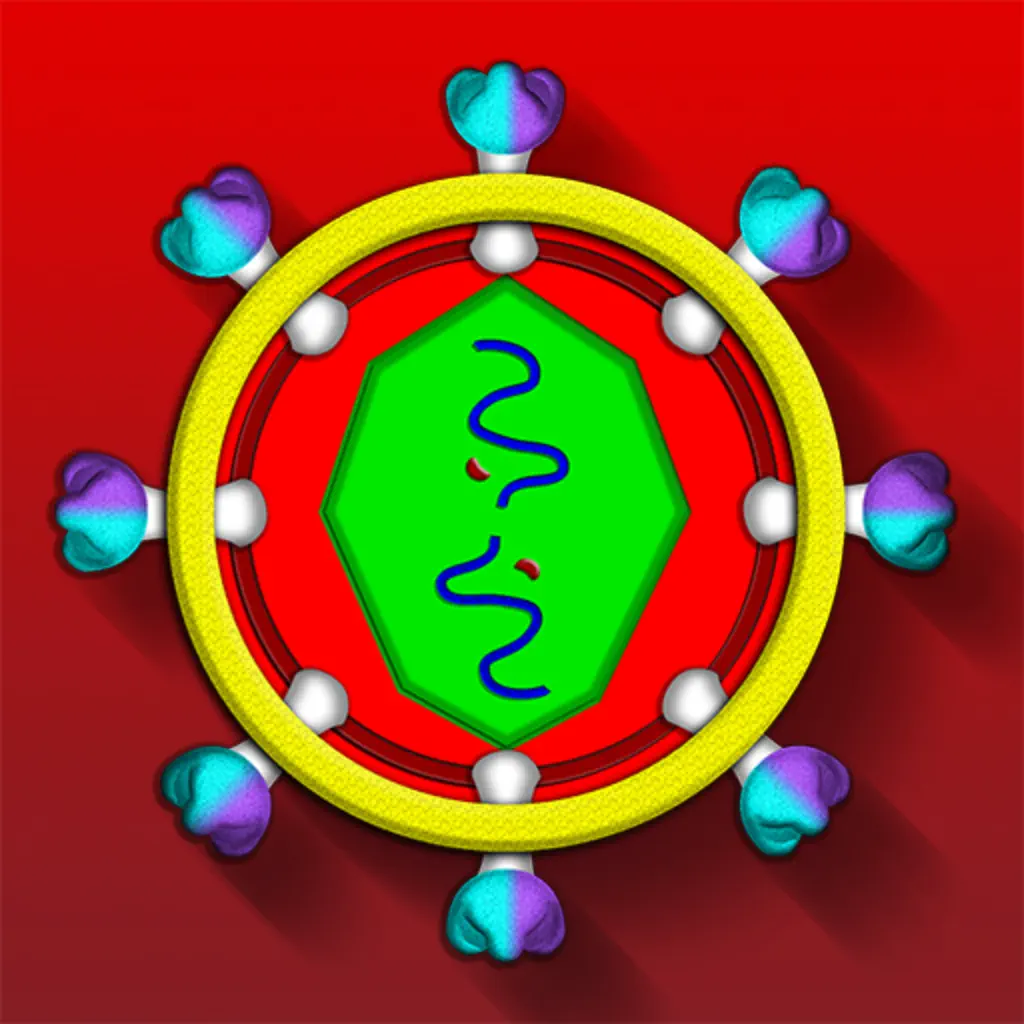
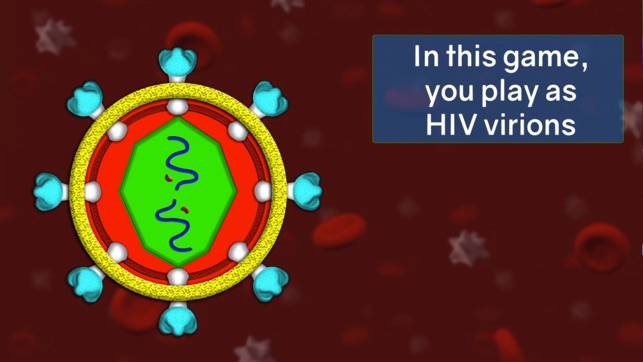
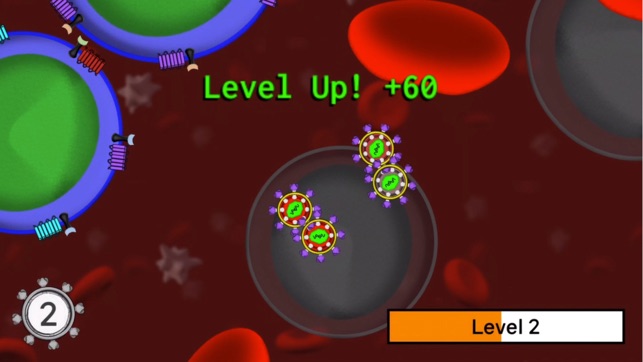
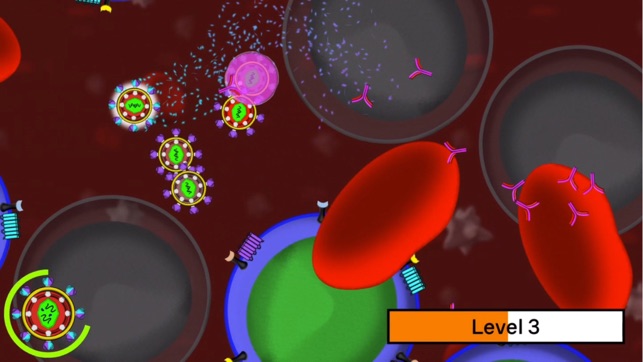
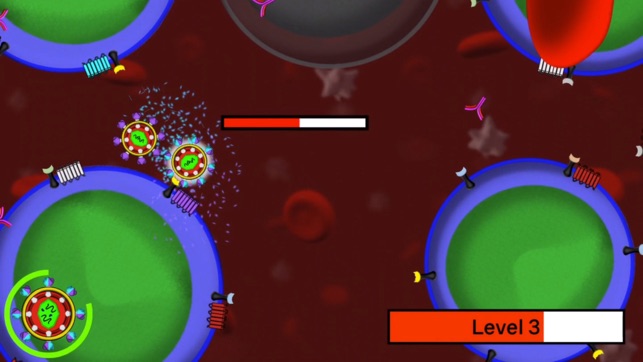
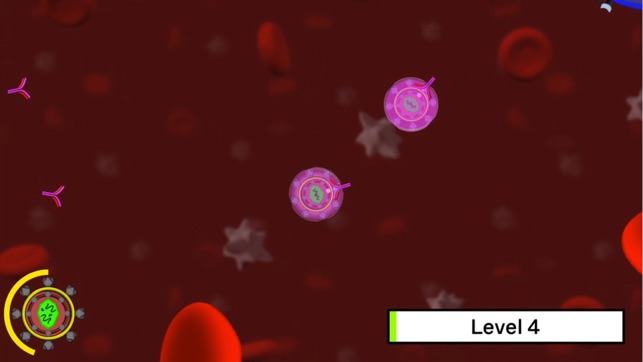
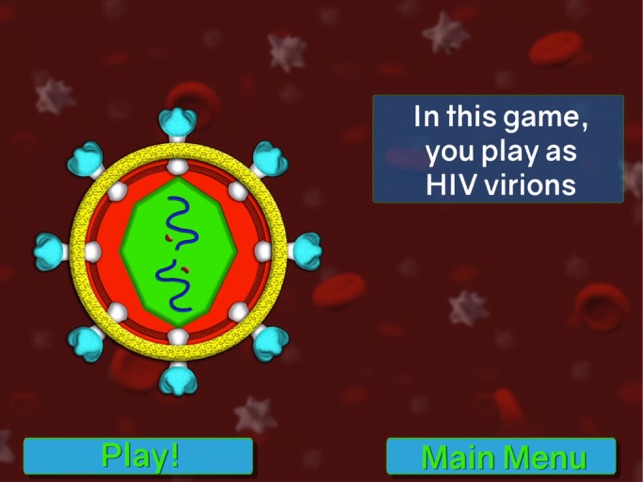
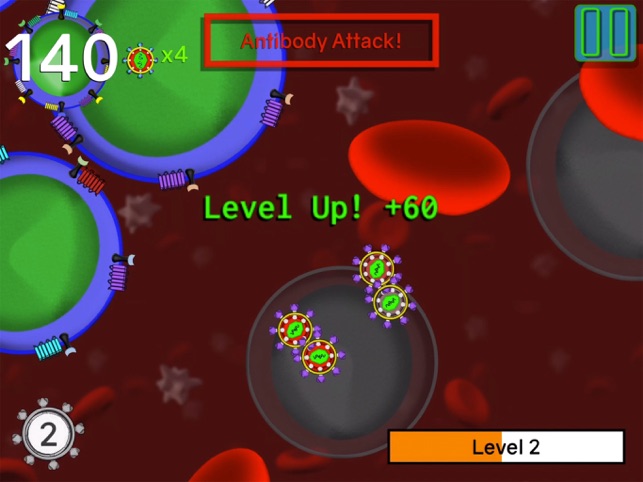
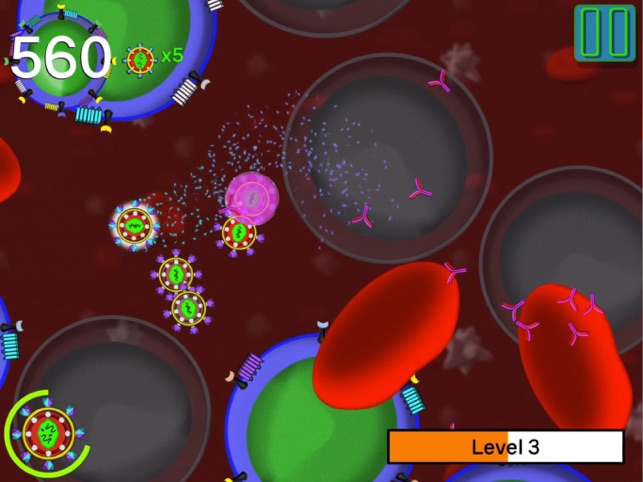
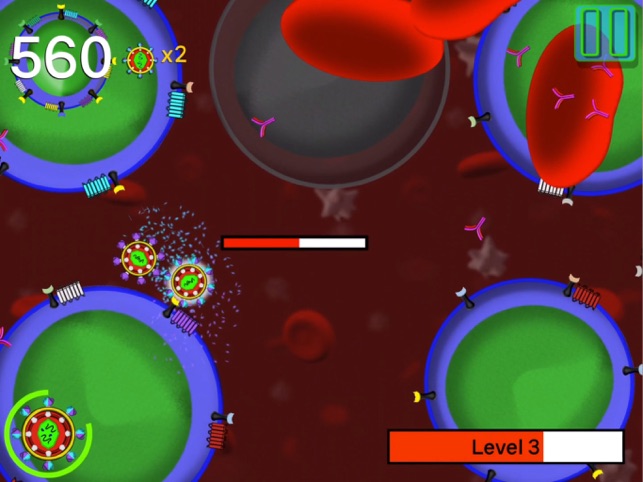
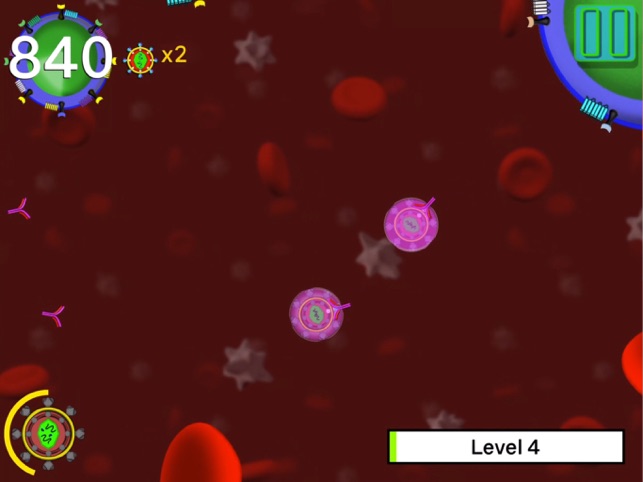
Developed at Drexel University College of Medicine, CD4 Hunter is an educational game that simulates the initial stages of HIV-1 infection. The system presents a fast-paced gameplay environment where the player controls an HIV-1 virion. Core mechanics involve navigating a simulated bloodstream to identify and attach to target CD4+ T cells by matching viral gp120 proteins with cell surface receptors (CD4+, CCR5/CXCR4). Gameplay also incorporates immune evasion challenges, requiring players to avoid antibody attacks while attempting to grow the viral population.
Evidence & Research Context
- The application leverages principles of digital game-based learning (DGBL) to deliver complex biomedical science content, a pedagogical approach increasingly utilized in higher education.
- Game mechanics are designed to directly correspond with four key learning objectives focused on the molecular biology of HIV-1 replication and pathogenesis.
- The simulation is grounded in established virological principles, modeling the interaction between HIV-1 gp120 glycoproteins and the CD4+ T cell receptor complex.
- This educational tool was developed by subject matter experts in microbiology and immunology to supplement formal science curriculum.
Intended Use & Scope
CD4 Hunter is designed as a supplementary educational tool for students in higher education biomedical science programs. Its primary utility is to reinforce learning about the initial molecular events of HIV-1 infection. The application does not provide comprehensive virology education or clinical guidance and should be used in conjunction with formal academic curricula.
Studies & Publications
Peer-reviewed research associated with this app.
Current climate for digital game-based learning of science in further and higher education
Brown et al. (2018) · FEMS Microbiology Letters
Referenced in academic literature; no direct evaluation of the appIn the Media
How One University is Gamifying Biomedical Education
Drexel University's Sandra Urdaneta-Hartmann developed CD4 Hunter to teach biomedical students about HIV replication cycles, using a mobile game where players roleplay as the virus moving through the bloodstream to identify receptors and infect cells. Urdaneta-Hartmann won a $10,000 grant from Drexel after struggling to find existing science education games that aligned with her department's curriculum, stating "Let's start with something we know well enough, so that's not another hurdle we need to jump." The game launched in June 2017 and represents Drexel's exploration of mobile gaming in biomedical education programs.
Biomedical researchers try out new mobile game about HIV at Camp Dreamcatcher
Drexel University College of Medicine researchers developed CD4 Hunter to communicate the complex science of HIV and AIDS, with players entering the bloodstream as an HIV particle to hunt and infect CD4 T cells. Postdoctoral fellow Carla Brown explained that "if you've played Candy Crush, you can play this game," noting the game took about a year to design and develop. The interdisciplinary team tested the educational mobile game with children and teens at Camp Dreamcatcher to gather feedback on its effectiveness.
Biomedical Researchers Design Mobile Game for Teaching About HIV
Drexel University College of Medicine researchers developed CD4 Hunter to teach students about HIV replication by turning players into HIV particles that hunt and infect CD4+ T cells in the bloodstream. "By using digital game-based learning, we are creating a more immersive learning environment," said Dr. Sandra Urdaneta-Hartmann, assistant professor and director of the Center for Business and Program Development at the Institute for Molecular Medicine and Infectious Disease. The game is now available on iTunes and Google Play as the first in a planned series of educational mini-games focusing on various pathogens.
App Information
Developer
Drexel UniversityCategory
Evidence Profile
Published in academic literature
Platforms
Updated
Sep 2017
© 2025 Drexel University
Tags


CD4 Hunter
Free