
CDC HEADS UP Concussion and Helmet Safety
Initial evidence from research studies
App Summary
App Screenshots
Detailed Description
Functionality & Mechanism
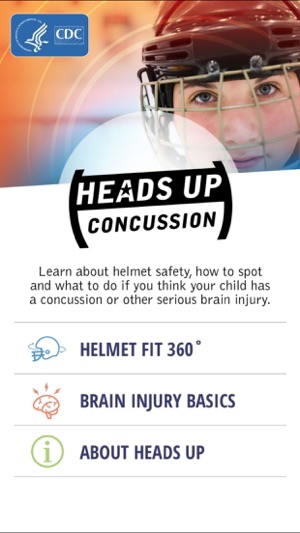
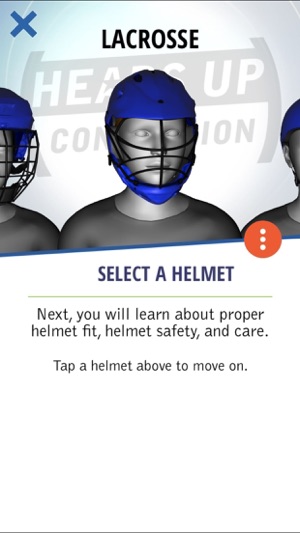
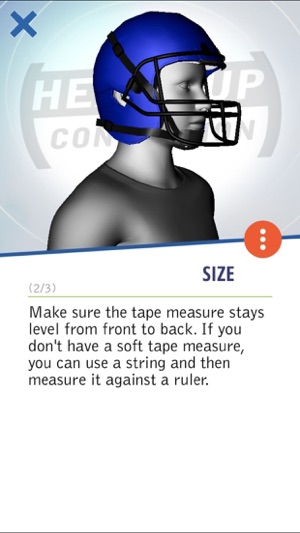
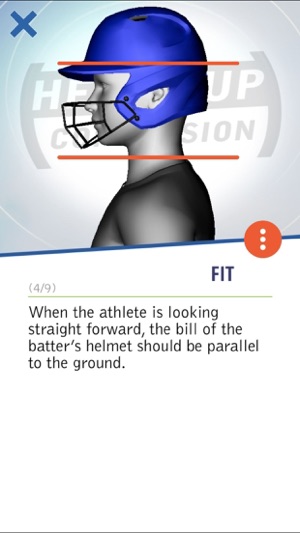
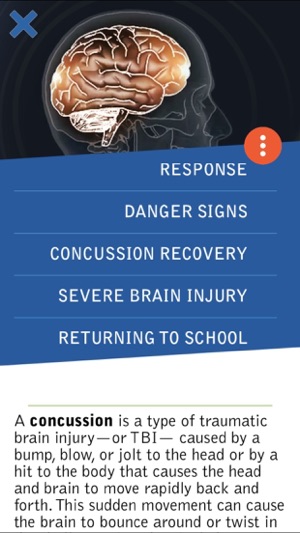
Developed by the Centers for Disease Control and Prevention (CDC), this application delivers educational content on concussion recognition and immediate response protocols. The interface guides users through critical information for identifying the signs and symptoms of a possible concussion following a head injury. Sessions provide structured guidance on appropriate actions and safety measures. The system also integrates an interactive 3D module that provides visual instruction on correct helmet fitting, safety checks, and proper equipment care.
Evidence & Research Context
- The app is a component of the CDC's long-standing HEADS UP initiative, a public health campaign designed to translate concussion science into accessible educational materials.
- An evaluation study (N=340) of the initiative's materials found 77% of youth coaches reported being better able to identify athletes with a potential concussion after reviewing the content.
- An effectiveness study of the program's online training demonstrated improved coach knowledge on complex topics, including symptom resolution and return-to-play recommendations.
- The training was also associated with increased coach confidence and improved behavioral intentions regarding athlete safety and concussion management.
Intended Use & Scope
This system is intended for parents, coaches, athletes, and educators as a reference and educational tool for preliminary concussion recognition and safety awareness. It is designed to inform immediate action but does not provide a medical diagnosis or replace evaluation by a qualified healthcare professional. Medical consultation is required for any suspected traumatic brain injury.
Studies & Publications
Peer-reviewed research associated with this app.
Effectiveness of the US Centers for Disease Control and Prevention HEADS UP coaches' online training as an educational intervention
Daugherty et al. (2019) · Health Education Journal
Improved coaches' knowledge on concussion topics and enhanced attitudes toward concussion management.
A 10-year review of the Centers for Disease Control and Prevention's Heads Up initiatives: Bringing concussion awareness to the forefront
Sarmiento et al. (2014) · Journal of Safety Research
Referenced in academic literature; no direct evaluation of the appIn the Media
HEADS UP to Sports Officials: Online Concussion Training
The CDC developed HEADS UP to Sports Officials online concussion training to help sports officials recognize concussion signs and determine when athletes should be removed from play. The 20-minute training features easy-to-follow information with knowledge checks and illustrated case studies to help officials apply concussion safety protocols. Officials learn to identify symptoms, manage player removal decisions, and contribute to overall concussion prevention during games and competitions.
App review: CDC's Heads Up
The CDC developed HEADS UP Concussion and Helmet Safety to provide crucial information for quickly identifying and responding to concussion injuries in young athletes, addressing their increased susceptibility to traumatic brain injury due to developing brains. The app emphasizes that "signs and symptoms generally appear soon after an injury, but the seriousness of the injury and some symptoms may not appear for hours or days," while also providing helmet selection guidance and recovery protocols. President Obama supported the app's mission at the Healthy Kids and Safe Sports Concussion Summit, stating "We have to change a culture that says you suck it up."
New Heads Up to Parents App and Website
The CDC Foundation launched the CDC HEADS UP Concussion and Helmet Safety app with the Centers for Disease Control and Prevention to address the serious public health problem of youth brain injuries, providing parents and coaches with essential safety tools. According to CDC data, more than 170,000 young athletes visit emergency departments annually for suspected sports- or recreation-related traumatic brain injuries, including concussions. The app features a helmet selector tool, brain injury basics for spotting concussions, and safety tips to help keep kids and teens safe from brain injuries.
App Information
Category
Evidence Profile
Initial evidence from research studies
Platforms
Updated
Jun 2015
© 2025 US Centers for Disease Control and Prevention
Tags


CDC HEADS UP Concussion and Helmet Safety
Free