AppsFromResearch
CDC HEADS UP Concussion Safety icon

CDC HEADS UP Concussion Safety

Validated in clinical trials

For:Clinicians & Healthcare ProfessionalsEducators & TeachersGeneral Public & Enthusiasts

App Summary

CDC HEADS UP Concussion Safety is an educational tool for coaches, parents, and athletes that provides guidance on how to prevent, recognize, and respond to potential brain injuries in youth sports. A randomized evaluation study of the materials (N=764 coaches) found they increased communication with athletes about concussion safety and improved coaches' symptom knowledge. The associated research concludes that these materials are a leading resource for youth sports organizations to consider when implementing mandatory concussion education.

App Screenshots

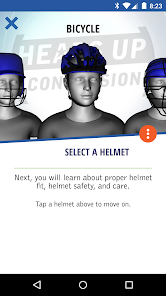
CDC HEADS UP Concussion Safety screenshot 1 of 5CDC HEADS UP Concussion Safety screenshot 2 of 5CDC HEADS UP Concussion Safety screenshot 3 of 5CDC HEADS UP Concussion Safety screenshot 4 of 5CDC HEADS UP Concussion Safety screenshot 5 of 5

Detailed Description

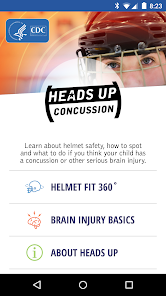
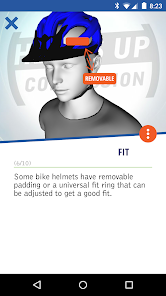
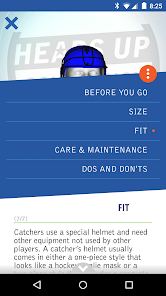
Functionality & Mechanism Developed by the Centers for Disease Control and Prevention (CDC), this application functions as an educational and clinical reference tool. It delivers pedagogical content on concussion prevention, symptom identification, and appropriate response protocols for youth sports. The interface provides access to a suite of materials tailored for distinct user groups, including a helmet fit guide that details proper fitting, safety, and care. The system facilitates rapid access to evidence-based concussion management information to inform action in non-clinical settings.

Evidence & Research Context

  • The app is a component of the broader CDC Heads Up initiative, which translates concussion science into educational materials for public health dissemination.
  • A randomized evaluation study (N=764) of the materials demonstrated that coaches using them significantly increased communication with athletes about concussion safety (aRR = 1.24) and improved their symptom knowledge.
  • An effectiveness study of the associated online training indicated improved coach knowledge on complex topics, including symptom resolution and return-to-play protocols, and enhanced confidence in responding to concussions.
  • The associated research establishes the HEADS UP materials as a leading, evidence-based resource for adoption by youth sports organizations implementing mandated concussion education.

Intended Use & Scope The app is designed as a decision-support and educational resource for coaches, parents, athletes, and associated school or healthcare professionals. Its primary utility is to disseminate guidelines on concussion identification, response, and prevention. This tool does not provide a medical diagnosis and is not a substitute for a comprehensive evaluation by a qualified healthcare professional.

Studies & Publications

3 publications

Peer-reviewed research associated with this app.

RCT

Randomized evaluation of CDC HEADS UP concussion education materials for youth sport coaches

Kroshus et al. (2023) · Journal of Neurotrauma

Increased coach communication with athletes about concussion safety compared to control group.

The Centers for Disease Control and Prevention (CDC) HEADS UP youth sports coach materials are the most widely adopted form of concussion education for coaches across the United States—reaching millions of youth sports coaches over the last decade. These materials focus on concussion symptom identification, response, and management (e.g., return to school and sports), while also addressing the importance of communicating to athletes and their families about concussion safety. The purpose of this study was to assess the effectiveness of CDC HEADS UP materials on coach knowledge and communication with youth athletes about concussion safety. This is the first randomized control study of the CDC HEADS UP materials in real world youth sport conditions. Participants were 764 coaches at 15 YMCA associations. Cluster randomization was used to assign branches within associations to intervention (CDC HEADS UP) and control (treatment as usual) conditions. Coaches completed surveys prior to and at the end of the competitive season. Communication with athletes about concussion increased among coaches in the intervention group (adjusted risk ratio [aRR]?=?1.24, 95% confidence interval [CI]?=?1.14, 1.36) but not the control group (aRR?=?1.09, 95% CI?=?0.90, 1.31), in multi-variate analyses controlling for coach demographic characteristics and baseline communication practices. Concussion symptom knowledge and communication intentions also significantly increased in the intervention group but not in the control group. This study provides evidence that CDC HEADS UP materials increase the likelihood that youth sport coaches communicate with their athletes about concussion safety. As youth sports organizations increasingly mandate concussion education for coaches, CDC HEADS UP materials may be considered a leading resource for adoption and setting-relevant implementation.
... Read More
Effectiveness/Outcome Study

Effectiveness of the US Centers for Disease Control and Prevention HEADS UP coaches' online training as an educational intervention

Daugherty et al. (2019) · Health Education Journal

Improved coaches' knowledge on concussion topics and enhanced attitudes toward concussion management.

Background: Concussions are common among youth athletes. Responsibility for the recognition and management of concussion is often put on coaches. To equip coaches with appropriate knowledge and skills, the US Centers for Disease Control and Prevention (CDC) launched the HEADS UP: Concussion in Youth Sports online training. Objectives: To determine whether HEADS UP coaches' training improves knowledge, attitudes and behavioural intentions. Methods: Knowledge questions were grouped into scales by level of difficulty. Differences between pre- and post-test scores were calculated based on the Wilcoxon Signed Rank Test Z-score and effect sizes were interpreted. Results: Coaches displayed a high level of knowledge in the pre-test. While lower difficulty questions did not show improvement from pre- to post-test, moderate and high difficulty questions did. Use of the training was associated with improved knowledge about symptom resolution, return-to-play recommendations and under-reporting of incidents of concussion. Coaches demonstrated improvement in five of the seven concussion-related attitude and behavioural intention items post training. Conclusion: HEADS UP training improved coaches' knowledge on select topics and helped them feel more comfortable about responding to concussion among their athletes. This study provides insight into how to better focus future HEADS UP concussion health education efforts to fit coaches' informational needs.
... Read More

CDC HEADS UP Concussion Safety

Free