

Chandra 20 Years & Beyond
Published in academic literature
App Summary
App Screenshots
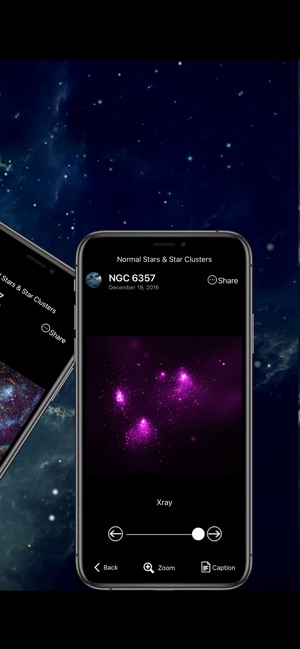
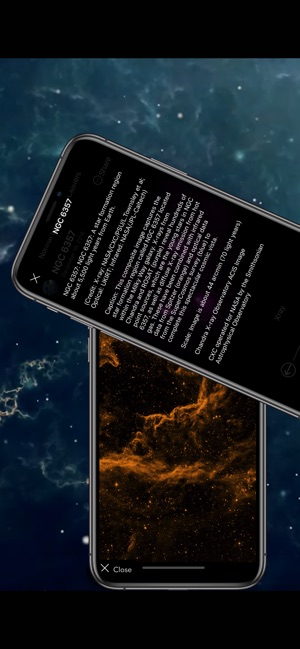
Detailed Description
Functionality & Mechanism
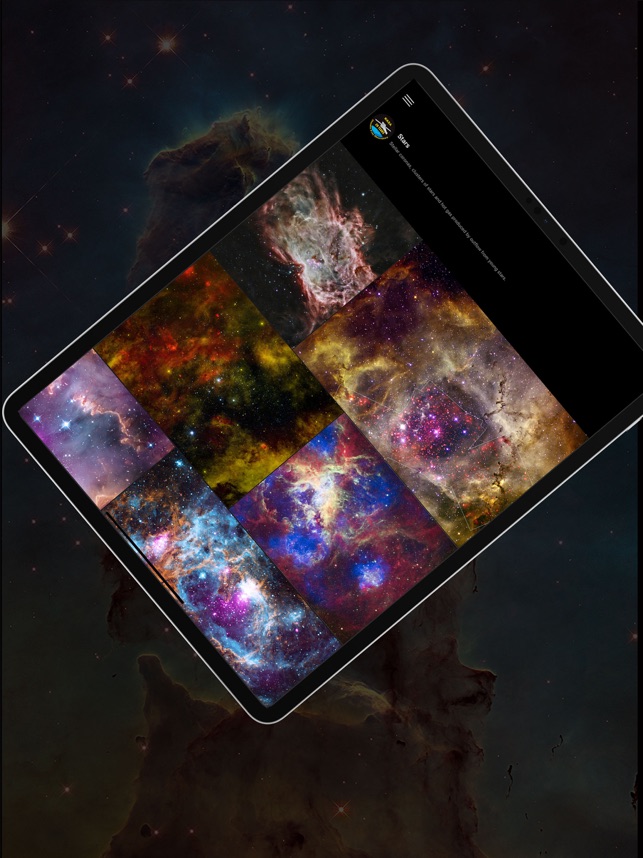
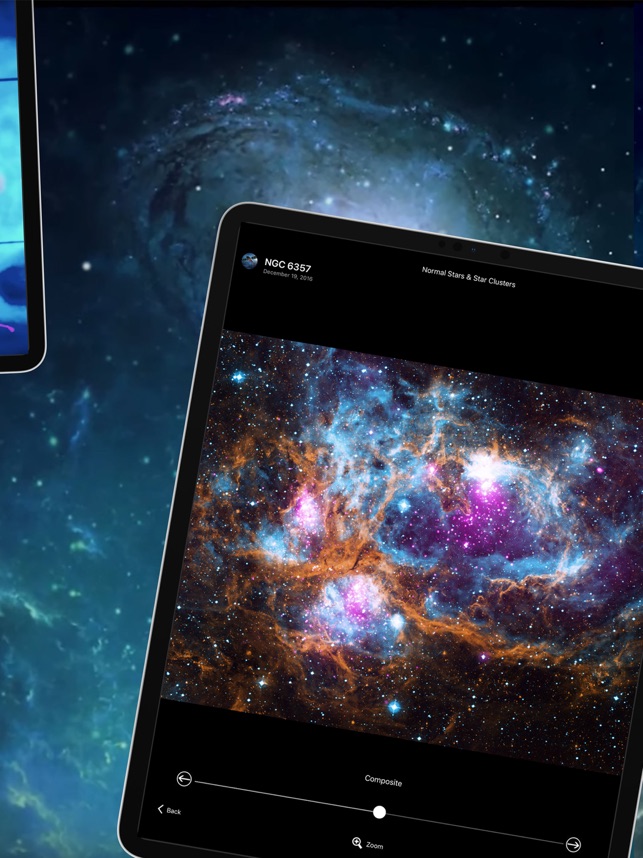
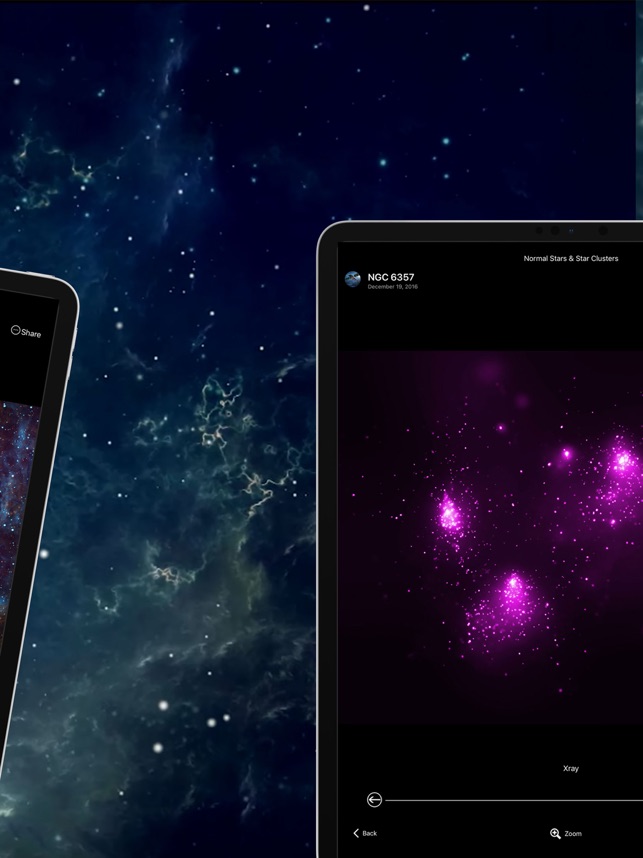
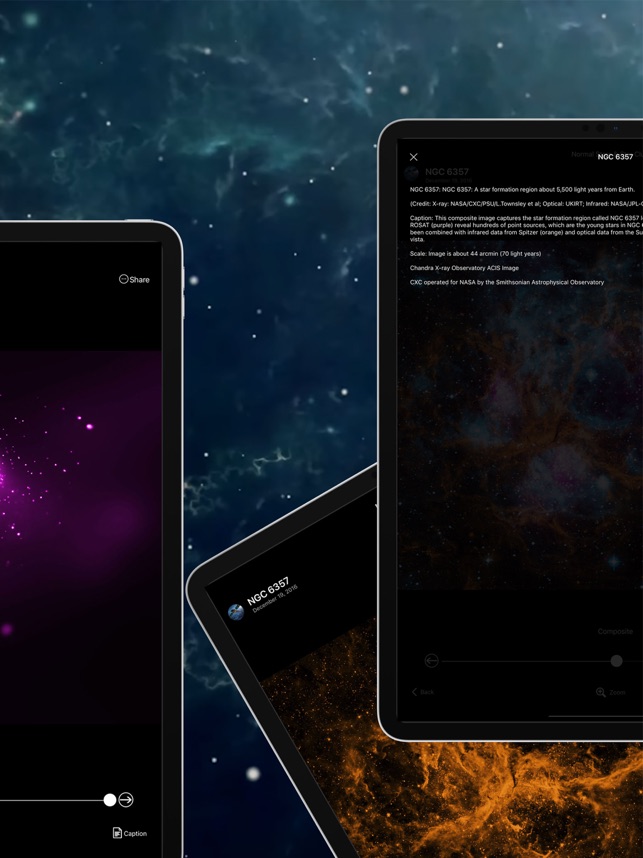
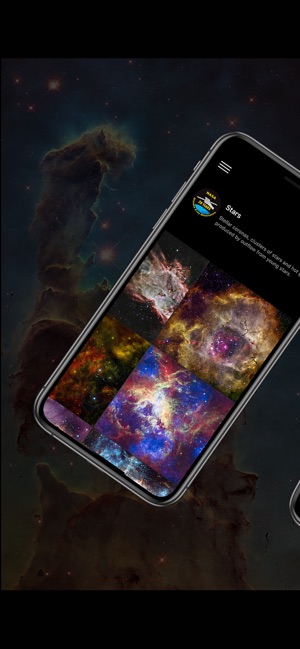
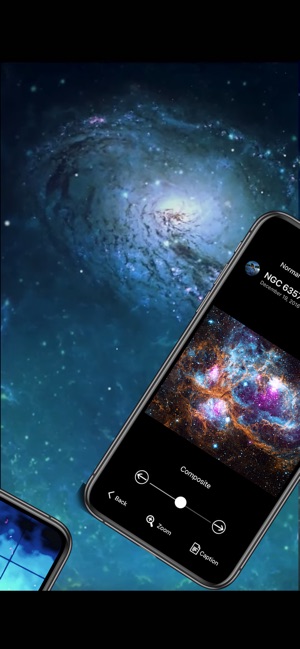
This application provides public access to astronomical imagery from NASA's Chandra X-ray Observatory. The interface facilitates exploration of celestial objects through curated photo albums, films, and spotlighted images. A core feature allows interactive comparison of objects across multiple electromagnetic wavelengths, including X-ray and optical, via a touch-based slider control. The system delivers associated pedagogical content through captions and supports standard image manipulation features such as zoom and social sharing, enabling public engagement with high-energy astrophysics data.
Evidence & Research Context
- The application visualizes data from NASA's Chandra X-ray Observatory, a flagship mission providing the highest angular resolution imaging in the 0.5–10 keV X-ray band.
- Associated research articles describe the observatory's foundational role in high-energy astrophysics and its continuous operation for over two decades, enabling novel long-baseline studies.
- The authors note that Chandra data has generated critical insights into the co-evolution of galaxies and supermassive black holes, the nature of dark matter, and supernova processes.
- The observatory's imaging and spectral capabilities are utilized by international researchers to investigate phenomena ranging from exoplanet atmospheres to the interiors of neutron stars.
Intended Use & Scope
This tool is designed for science education and public engagement, intended for students, educators, and the general public. Its primary utility is to provide a curated, visual introduction to landmark discoveries in high-energy astrophysics. The application is not a professional research instrument and does not provide access to raw observational data for analysis.
Studies & Publications
Peer-reviewed research associated with this app.
25 Years of Groundbreaking Discoveries with Chandra
Slane et al. (2025) · Nature Astronomy
Referenced in academic literature; no direct evaluation of the appInvited Review Article: The Chandra X-ray Observatory
Schwartz et al. (2014) · Review of Scientific Instruments
Referenced in academic literature; no direct evaluation of the appIn the Media
NASA Unveils Amazing Cosmic Views as Chandra X-Ray Observatory Turns 20
NASA developed the Chandra X-Ray Observatory app "Chandra 20 Years & Beyond" to commemorate the telescope's 20th anniversary, showcasing six new cosmic images ranging from infant stars to galaxy clusters. "Chandra remains peerless in its ability to find and study X-ray sources," stated Belinda Wilkes, Chandra X-ray Center director, emphasizing that virtually every astronomical source emits X-rays. The app celebrates the observatory's launch on July 23, 1999, aboard shuttle Columbia and its continued frontier science contributions.
NASAs Chandra X-ray telescope celebrates 20 years in space
NASA developed the Chandra X-ray Observatory app "Chandra 20 Years & Beyond" to celebrate the telescope's 20-year milestone of scanning the sky in high-energy X-rays invisible to human eyes. "Chandra remains peerless in its ability to find and study X-ray sources," said Chandra X-ray Center director Belinda Wilkes, noting that virtually every astronomical source emits X-rays. The app features six anniversary images combining X-ray data with optical observations, showcasing cosmic phenomena from star-forming regions to supermassive black holes.
Chandra X-ray Observatory marks 20th anniversary with new astro images
NASA's Chandra team developed "Chandra 20 Years & Beyond" to celebrate the X-ray Observatory's 20th anniversary, showcasing two decades of unprecedented cosmic discoveries. The app features a collection of new images captured by the telescope that demonstrate its ability to produce beautiful but also scientifically-important observations of nebulae, galaxies and other cosmic phenomena. Chandra launched on July 23, 1999 aboard Space Shuttle Columbia and continues revealing secrets of the Universe by observing in X-ray light.
NASA marks Chandra space telescope's 20th anniversary with gallery of stunning new images
NASA celebrated the Chandra X-ray Observatory's 20th anniversary with a gallery of stunning new images showcasing the telescope's scientific contributions, including views of our galaxy's center, supernova remnants, and stellar nurseries. The flagship telescope, originally proposed by Nobel Prize-winning astrophysicist Riccardo Giacconi in 1976, was launched on July 23, 1999, to study extreme cosmic environments where matter reaches millions of degrees. Chandra's X-ray observations complement data from Hubble and Spitzer telescopes, allowing astronomers to gather a more complete view of the universe's structure and evolution.
NASA's Chandra X-Ray Observatory Celebrates Its 20th Anniversary
NASA developed the Chandra 20 Years & Beyond app to commemorate the X-ray observatory's two decades of cosmic exploration, showcasing new images that demonstrate the breadth of Chandra's scientific discoveries. "Chandra was launched 20 years ago, and it continues to deliver amazing science discoveries year after year," said Paul Hertz, Director of Astrophysics at NASA. The app highlights Chandra's role as one of NASA's "Great Observatories" with the sharpest X-ray vision ever built.
Chandra :: Photo Album :: 20th Anniversary
NASA's Chandra X-ray Observatory team released an assembly of new images to commemorate the telescope's 20th anniversary, demonstrating the breadth of Chandra's exploration and how X-rays complement data collected in other types of light. The anniversary images showcase diverse cosmic objects including the colossal galaxy cluster merger Abell 2146, the supermassive black hole Sagittarius A* weighing about 4 million times the mass of the Sun, and the massive star-forming region 30 Doradus. These images represent both exclusive Chandra data and composite views showing how X-rays integrate with different types of light collected by other telescopes.
App Information
Developer
Smithsonian InstitutionCategory
Evidence Profile
Published in academic literature
Platforms
Updated
Aug 2021
© 2025 Smithsonian Institution
Tags
Relevant Links
Privacy Policy


Chandra 20 Years & Beyond
Free