AppsFromResearch
EPA's SunWise UV Index icon

EPA's SunWise UV Index

Evidence Tier:DOCUMENTED

Published in academic literature

For:General Public & Enthusiasts

App Summary

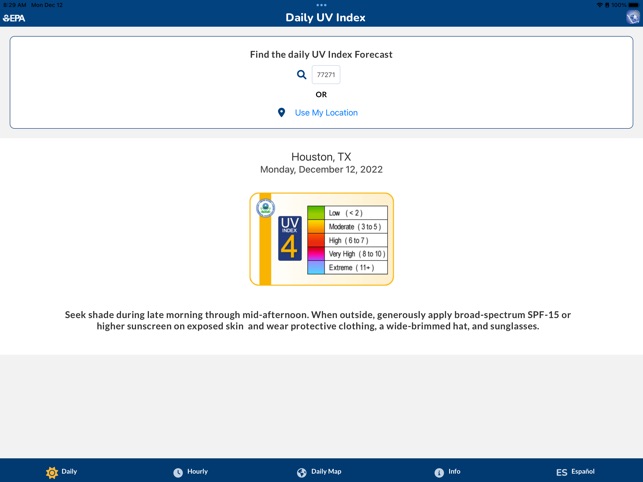
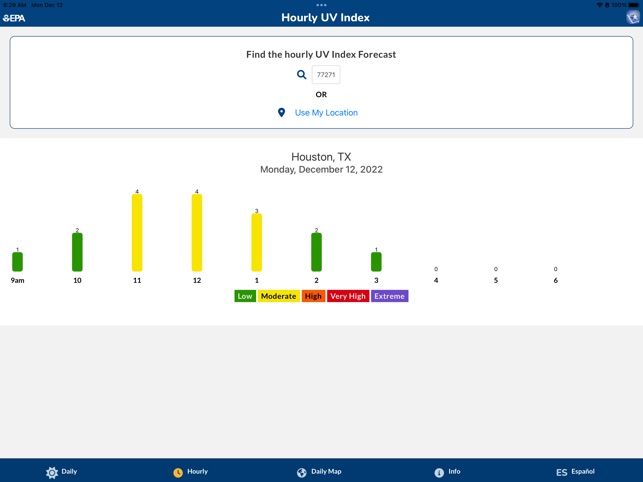
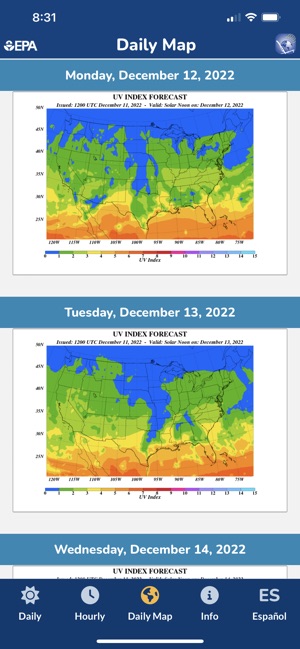
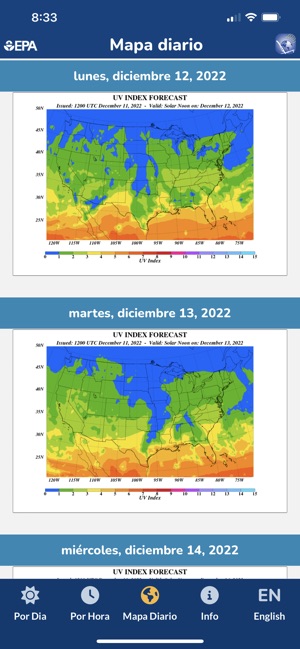
The EPA's SunWise UV Index app provides the public with daily and hourly forecasts of ultraviolet (UV) radiation intensity to help plan sun-safe outdoor activities. The index is based on a standardized national guideline that uses a predictive model incorporating factors like forecasted ozone, cloud cover, and elevation, with UV irradiances weighted to reflect their effect on human skin (erythema). The associated research concludes that this standardized system provides actionable guidance to help the public reduce the health risks associated with overexposure to UV radiation, such as skin cancer and cataracts.

App Screenshots

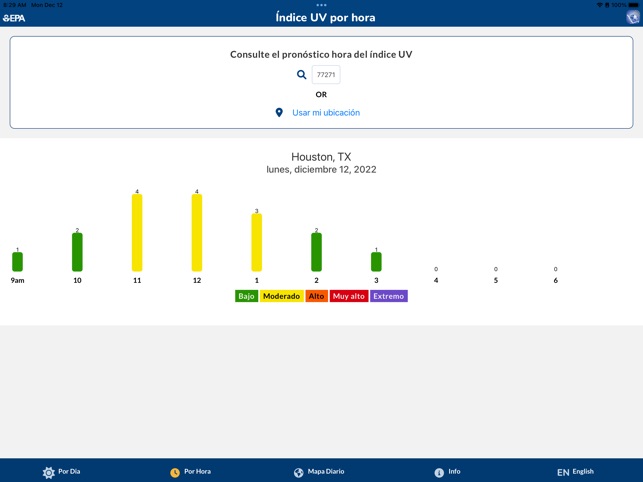
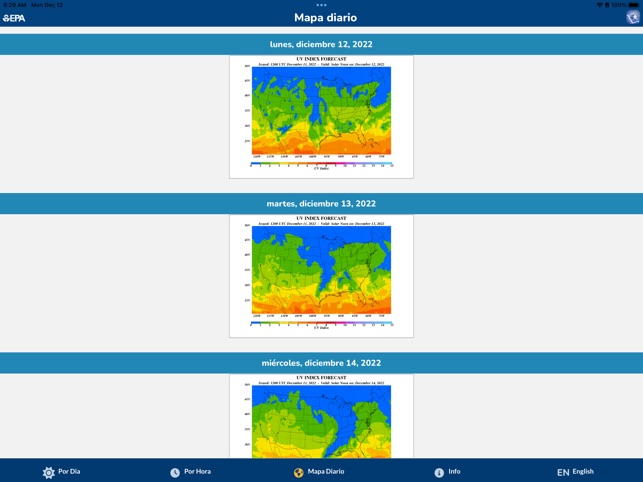
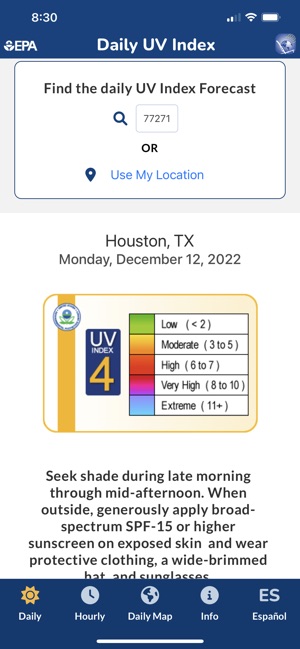
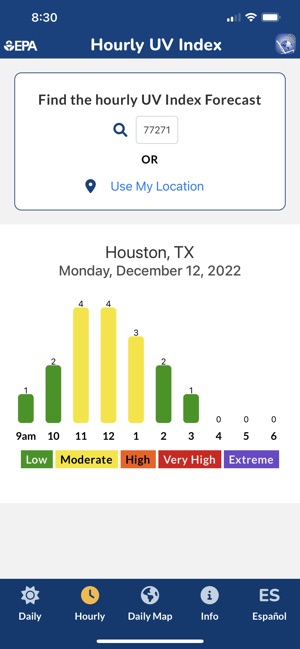
EPA's SunWise UV Index screenshot 1 of 12EPA's SunWise UV Index screenshot 2 of 12EPA's SunWise UV Index screenshot 3 of 12EPA's SunWise UV Index screenshot 4 of 12EPA's SunWise UV Index screenshot 5 of 12EPA's SunWise UV Index screenshot 6 of 12EPA's SunWise UV Index screenshot 7 of 12EPA's SunWise UV Index screenshot 8 of 12EPA's SunWise UV Index screenshot 9 of 12EPA's SunWise UV Index screenshot 10 of 12EPA's SunWise UV Index screenshot 11 of 12EPA's SunWise UV Index screenshot 12 of 12

Detailed Description

Functionality & Mechanism

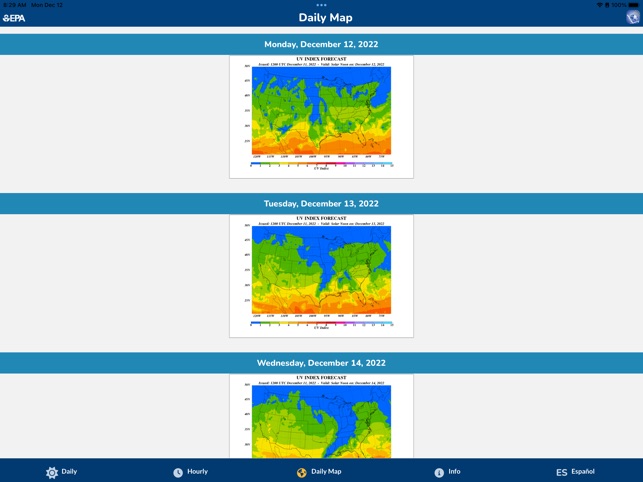
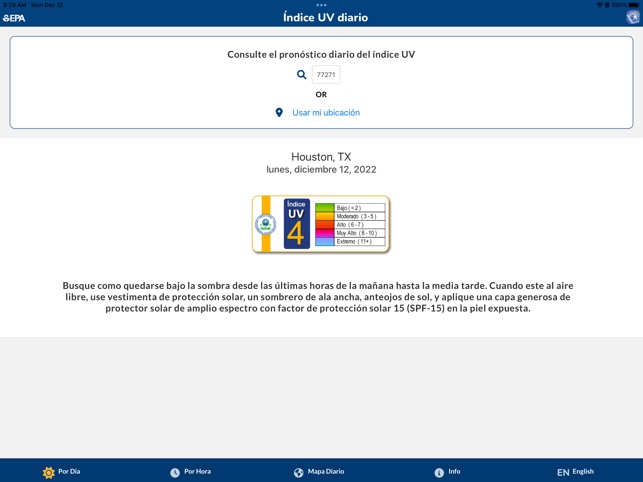
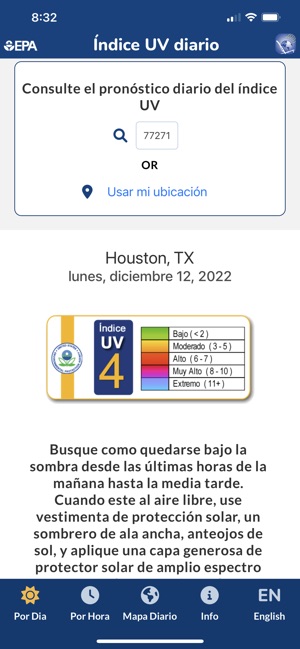
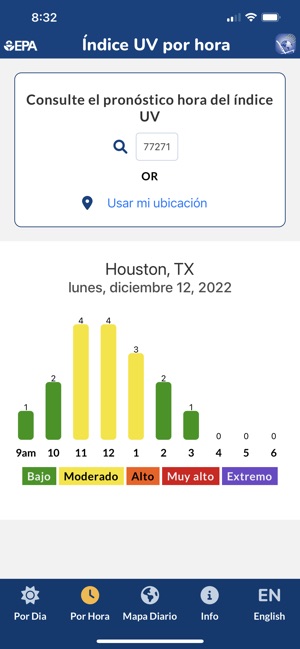
Developed by the U.S. Environmental Protection Agency (EPA) in collaboration with the National Weather Service and CDC, this system delivers daily and hourly forecasts of ultraviolet (UV) radiation intensity. The interface provides location-based data, presenting the UV Index on a standardized numerical scale accompanied by color-coded exposure categories. This core functionality is augmented with actionable sun protection messages tailored to the forecasted intensity level. The system is engineered for rapid, at-a-glance risk assessment prior to outdoor activity.

Evidence & Research Context

  • The UV Index is a standardized forecast tool based on national guidelines developed by the EPA and NWS, ensuring consistency with World Health Organization standards.
  • The index calculation leverages a radiative transfer model, integrating forecasted ozone data, cloud cover, elevation, surface albedo, and aerosol loading to predict UV irradiance.
  • Forecasted irradiance values are weighted using the McKinlay-Diffey Erythema action spectrum to correlate the data with the biological response of human skin to UV radiation.
  • The associated research documents the direct link between UV radiation exposure and significant health risks, including melanoma, cataracts, and immune system suppression.

Intended Use & Scope

The tool is intended for the general public as a behavioral planning resource to mitigate health risks associated with UV radiation exposure. Its primary utility is to inform daily decisions regarding sun protection. This system provides a forecast and is not a diagnostic or medical device; it does not substitute for professional dermatological consultation.

Studies & Publications

2 publications

Peer-reviewed research associated with this app.

Non-Evaluative Reference

Ultraviolet (UV) Index Forecasts: How It is Computed

National Oceanic et al. (2009) · NOAA Climate Prediction Center

Referenced in academic literature; no direct evaluation of the app
UV Index: How is It Computed? The NOAA/EPA UV Index is computed using forecasted ozone data, a radiative transfer model, forecasted cloud amounts, climatological aerosol loading, variable snow and constant bare earth albedo, and elevation. Forecasted total ozone amounts for the entire globe are obtained via the NCEP/Global Forecast System model. The operational forecast model assimilates NOAA OMPS total and profile ozone observations. A radiative transfer model (TUV) is used to determine the UV irradiances from 290 to 400 nm, using the time of day, day of year, and latitude. The irradiances are weighted by the McKinlay-Diffey Erythema action spectrum (weighting function) so as to reflect the human skins response to each wavelength. These weighted irradiances are integrated over the 290 to 400 nm range resulting in an erythema dose rate. So from the total ozone amounts, erythema dose rates are determined. The erythema dose rates are adjusted for the effects of elevation( an increase of about 6% per kilometer), surface albedo (an increase over bare ground is given 2%, while the increase over snow is variable from 30% to 100%), and tropospheric aerosol loading (Aerosol Optical Depth AOD and Single Scattering Albedos - SSA) decreases the UV dose rate by 0 to 20%. This results in a final clear sky UV dose rate forecast (milliWatts/sq meter). The NCEP/GFS is also used to provide forecasts of UV attenuation due to the presence of clouds. Instead of using the cloud amount and then using some relationship between observed cloud amount and UV transmission. The ratio of down- welling UV band radiation at the surface with clouds vs without clouds is used. This ratio gives the cloud transmittion in the UV. The transmission is nearly linear and nearly 1.0 until cloud amounts of 60% occur after which the transmission curves toward 0% at cloud amounts of 100%. However, due to the variability of the opacity of the clouds there is quite a large range in the transmission amout as cloud amounts increase. This is a much better estimate since the model has included all the various effects of multiple scattering by the clouds in these values. This transmission ratio is then applied to the clear sky forecast to provide the 'cloudy sky' UV dose rate. The UV Index value is determined by dividing the dose rate (milliWatts per square meter) by the standard of 25 milliWatts per square meter. This results in a number that usually ranges from 0 (where there is no sun light) to the mid 'teens. Currently, the tropospheric aerosol loading is derived from a semi-annual climatology. When daily observed and forcasted aerosol loading values becomes available they will be included in the forecast computation.
... Read More
Non-Evaluative Reference

A Guide to the UV Index

(2004) · U.S. Environmental Protection Agency

Referenced in academic literature; no direct evaluation of the app
This brochure, published by the U.S. Environmental Protection Agency (EPA) and the National Weather Service (NWS), establishes the national guidelines for reporting the Global Solar UV Index. It details the adoption of a standardized 1 to 11+ scale and color-coded exposure categories (from "Low" green to "Extreme" violet) to ensure consistency with World Health Organization standards . The guide explains the calculation methodology—incorporating ozone levels, cloud cover, sun angle, and elevation—and defines specific Sun Protection Messages for each intensity level, such as seeking shade during midday hours and utilizing SPF 15+ sunscreen . Furthermore, the publication addresses public health education by dispelling common myths about sun exposure and documenting the link between UV radiation and health risks like melanoma, cataracts, and immune suppression
... Read More

In the Media

SunWise UV Index Mobile App

The EPA's Envirofacts program developed the SunWise UV Index mobile app to help users make informed decisions about outdoor activity and sun exposure, using location-based ultraviolet radiation forecasts. The app provides quick, reliable access to UV forecasts with ratings that range from 1 (low) to 11+ (extreme). This user-friendly tool enables people to assess daily sun safety risks based on their specific geographic location.

EpaRead article

EPA Issues Health Warning to Residents of 20 States This Weekend

The Environmental Protection Agency and National Weather Service issued warnings that at least 20 states could experience extreme UV radiation levels of 11 this weekend, where skin can burn in just minutes. "The UV index is a measure of the sunburning power of sunlight ... The higher the UVI, the shorter the time you need in the sun to burn," said Antony Young, a professor at King's College, London. Officials advise residents to avoid sun exposure from 10 a.m. to 4 p.m. and reapply SPF 30+ sunscreen every 2 hours.

YahooRead article

How To Prevent Skin Cancer: 6 Tips

The EPA developed EPA's SunWise UV Index to help users monitor daily UV radiation levels and make informed decisions about sun protection. According to the Cleveland Clinic, nearly 6 million people in the U.S. are treated for skin cancer each year, making UV awareness tools increasingly important for prevention. The app supports dermatologist recommendations to apply broad-spectrum sunscreen with SPF 30 or higher about 30 minutes before going outside.

ClevelandclinicRead article

EPA's SunWise UV Index

Free