
Healthy Brains
Published in academic literature
App Summary
App Screenshots


Detailed Description
Functionality & Mechanism
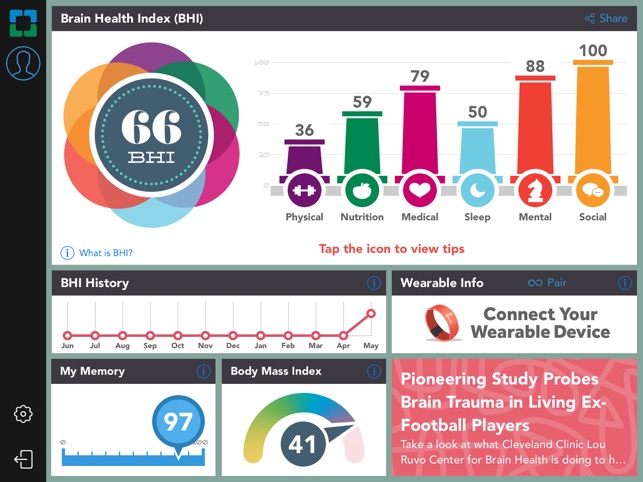
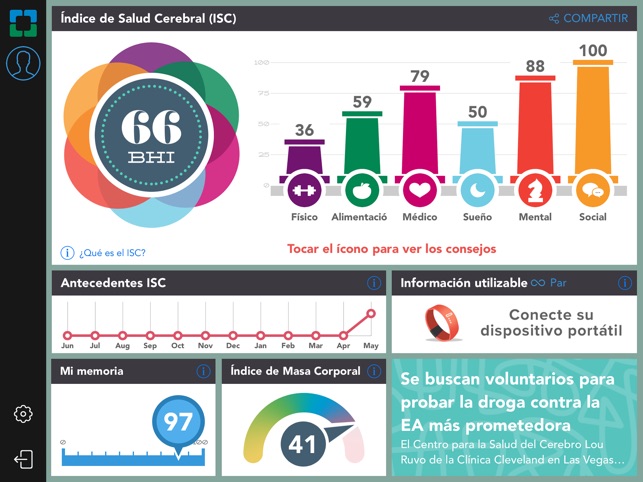
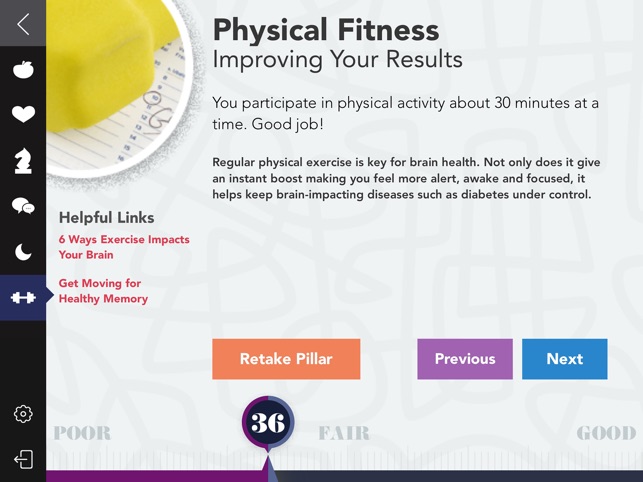
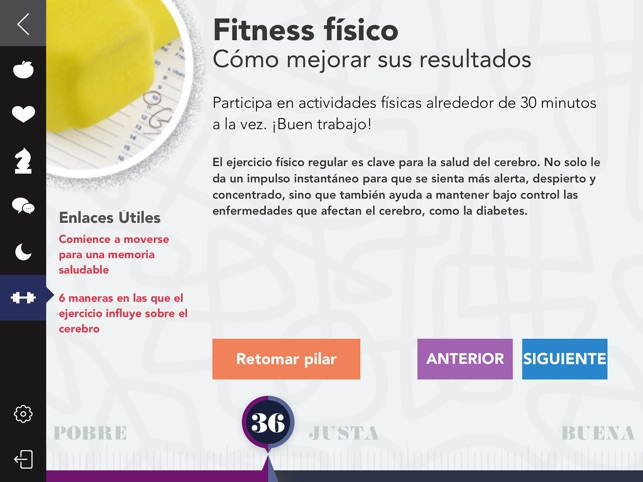
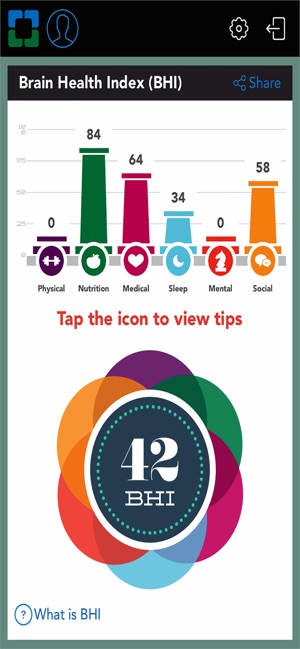
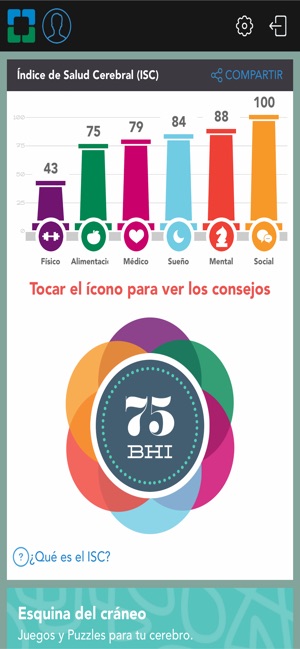
The Healthy Brains app generates a Brain Health Index (BHI), a unified metric for assessing cognitive health and risk. The system integrates user input on vulnerability and resilience factors with performance on a brief cognitive assessment (Number Symbol Coding Task). This process produces a BHI score, which facilitates longitudinal tracking of brain health. The interface is designed for repeated self-assessment to monitor changes and understand the potential impact of lifestyle modifications on cognitive status.
Evidence & Research Context
The Brain Health Index (BHI) metric utilized by the app was validated in research involving 469 participants across a cognitive spectrum (cognitively normal, MCI, and ADRD).
- The BHI demonstrated strong correlations with established clinical measures for cognitive (MoCA, r²=0.408) and functional (FAQ, r²=0.278) status.
- Threshold analysis revealed that 89.2% of participants with a low BHI score had existing cognitive impairment.
- The metric was associated with a 16-fold increase in identifying individuals likely to have cognitive impairment.
- The index also showed significant correlations with neurodegenerative biomarkers, including neurofilament light chain (NfL).
Intended Use & Scope
This tool is intended for the general public for self-assessment and longitudinal monitoring of cognitive health status. Its primary utility is preliminary risk stratification based on the BHI score. The app does not provide a clinical diagnosis of neurodegenerative disease and is not a substitute for professional medical evaluation. Users should consult a healthcare provider to interpret results and address concerns.
Studies & Publications
Peer-reviewed research associated with this app.
The Brain Health Index: Integrating vulnerability, resilience, and cognitive function into a unified measure of cognitive health and risk of neurodegenerative disease
Kleiman et al. (2025) · Alzheimer's & Dementia
Describes the research-driven development of this appIn the Media
The 6 Pillars of Brain Health
Cleveland Clinic developed Healthy Brains to reduce the risk of Alzheimer's disease and other neurodegenerative disorders, using their scientifically demonstrated "Six Pillars of Brain Health" framework. Psychiatrist Dylan Wint, MD emphasizes that "you can influence this," noting that daily decisions can have an enormous impact on brain health and protect against cognitive decline. The approach recommends 150 minutes of moderate exercise weekly, as research shows regular physical activity can reduce dementia risk and slow cognitive decline progression.
Las Vegas-originated website tests your brain health
The Cleveland Clinic Lou Ruvo Center for Brain Health in Las Vegas developed HealthyBrains.org to help users test their brain health through prevention-focused assessment, providing scores from zero to 100 based on six pillars of brain health. "We are focusing on prevention, not treatment," said Dr. Kate Zhong, senior director of clinical research and development at the Ruvo center. The Caesars Foundation funded the initiative with $200,000 for this year and a proposed $200,000 for 2016-17.
App Information
Developer
Cleveland ClinicCategory
Evidence Profile
Published in academic literature
Platforms
Updated
May 2019
© 2025 Cleveland Clinic
Tags
Relevant Links
Privacy Policy


Healthy Brains
Free