
AppsFromResearch
Heartpedia icon

Heartpedia

Assessed for usability and quality

For:Clinicians & Healthcare ProfessionalsGeneral Public & EnthusiastsPatients & Caregivers

App Summary

Heartpedia is an educational tool for clinicians, patients, and families that uses interactive 3D models to visualize and explain pediatric congenital heart defects and their surgical repairs. An evaluation (N=75) found that its use was associated with significantly improved caregiver satisfaction and perceived understanding of their child's condition (p<0.01). The associated research concludes that such digital tools can greatly enhance caregivers' perceived understanding and confidence regarding the details of their child's congenital heart disease.

App Screenshots

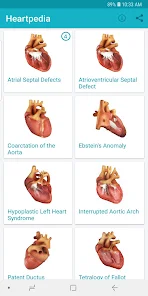
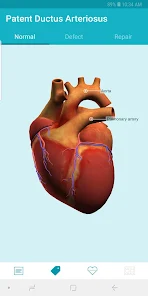
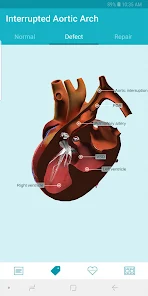
Heartpedia screenshot 1 of 8Heartpedia screenshot 2 of 8Heartpedia screenshot 3 of 8Heartpedia screenshot 4 of 8Heartpedia screenshot 5 of 8Heartpedia screenshot 6 of 8Heartpedia screenshot 7 of 8Heartpedia screenshot 8 of 8

Detailed Description

Functionality & Mechanism

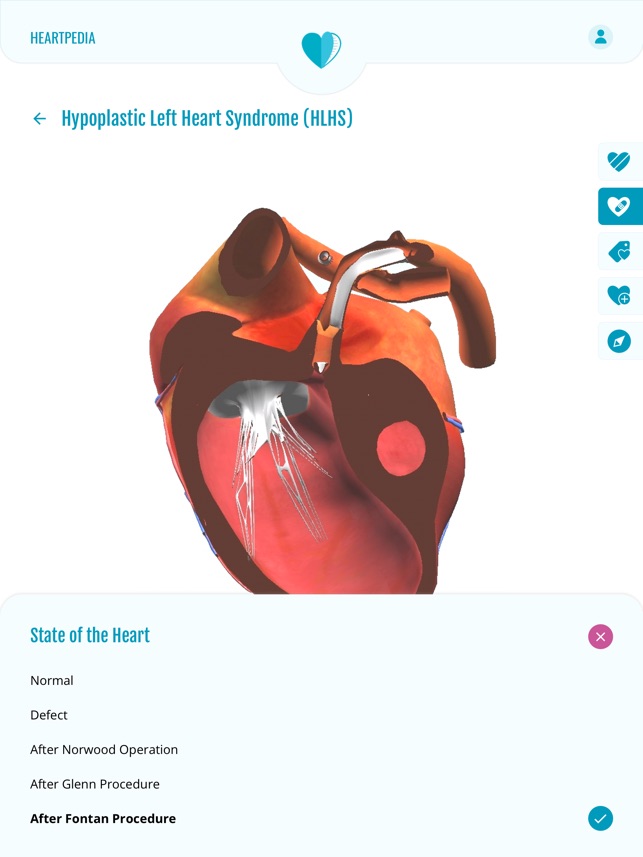
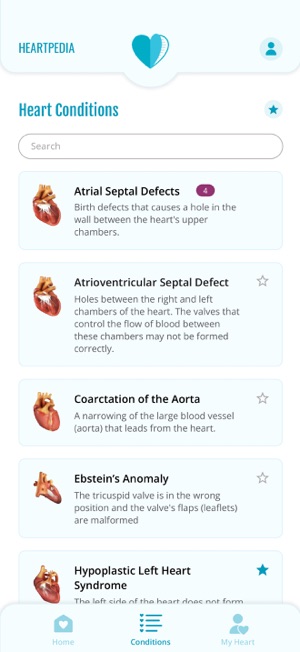
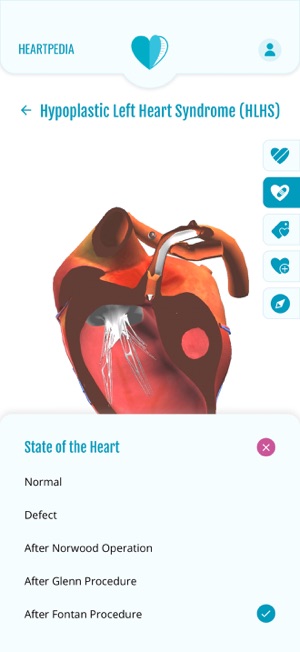
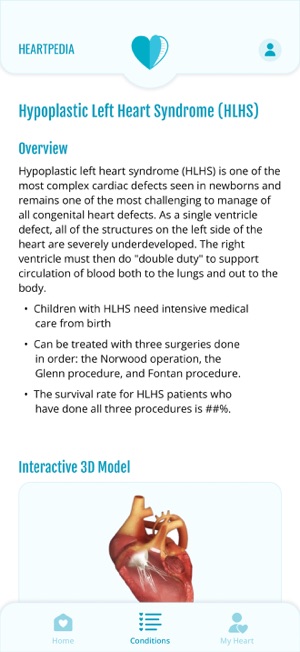
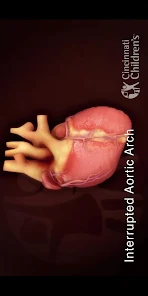
Developed by Cincinnati Children's Hospital, Heartpedia provides interactive, anatomically correct 3D models of common congenital heart defects. The interface enables exploration of normal, defective, and surgically repaired cardiac anatomy through pan, rotate, and zoom functions. Sessions involve toggling between views, activating structural labels, and viewing various interior planes. The platform also integrates narrated video animations and detailed textual descriptions to deliver comprehensive pedagogical content for each anomaly, such as Tetralogy of Fallot and Hypoplastic Left Heart Syndrome.

Evidence & Research Context

  • In a prospective evaluation study (N=75), 96% of caregivers of pediatric patients with congenital heart disease (CHD) reported that the app and associated 3D models were "very" or "extremely useful" for understanding the condition.
  • The same study demonstrated statistically significant improvements (p<0.01) in caregivers' self-reported satisfaction, perceived understanding of the CHD, and confidence when describing the condition to others.
  • Caregivers participating in the evaluation expressed a preference for the mobile app interface over physical 3D-printed heart models for educational purposes.
  • The platform's design is consistent with research highlighting the utility of 3D visualization for enhancing interdisciplinary communication and patient education in complex CHD cases.

Intended Use & Scope

The app is designed as an educational and clinical reference tool for healthcare providers, medical trainees, and patients and their families. Its primary utility is to facilitate patient-clinician communication by providing clear, interactive visualizations of complex cardiac anatomy and surgical repairs. The tool is not intended for diagnostic use, direct surgical planning, or as a substitute for professional medical consultation.

Studies & Publications

2 publications

Peer-reviewed research associated with this app.

Usability Study

Improving patient experience and education on congenital heart defects: the evolving role of digital heart models, 3D-printing and mobile application

Osakwe et al. (2019) · Pediatrics

Families found the 3D heart models and app extremely useful, significantly improving satisfaction and understanding.

Background: Effective counseling and good communication are vital to adequately educate families on congenital heart disease (CHD) anatomy, prognosis, and surgical options. In addition, families desire to have easy access to reliable sources of information to further educate themselves and their social networks. Advanced digital and 3D printing technology has enabled the creation of CHD-specific visual aids aimed at improving patient-physician communication and enhancing the patient-family experience. Objective: To determine ambulatory CHD patient family/caregiver response to new tech-based counseling utilizing 3D printed hearts and a novel interactive mobile application. Methods: This is a single center prospective study of caregivers of previously diagnosed ambulatory CHD patients. Consenting participants were provided lesion specific education using 3D printed models (Figure 1) and an internally-developed interactive mobile app known as Heartpedia (Figure 2). At the end of the encounter, the caregiver completed a survey on their overall assessment of the novel educational tools and their perception of knowledge regarding the specific CHD described. Questions on the survey included recalling details related to the patient specific CHD condition. Additionally, the caregiver';s satisfaction and experience with the new educational tools compared to prior encounters was assessed, and the educational tool preference (3D model vs. app) was recorded. Simple T-test was used to assess for significant differences with the current encounter, compared to prior encounters. Results: Of the total 75 participants, 96% of caregivers reported that the 3D model and mobile application was "very useful" or "extremely useful" in helping them understand their child';s CHD. The caregiver satisfaction was reported as "significantly improved" (p<0.01), and their perceived understanding of their child';s CHD was also "significantly improved" (p<0.01). The caregivers also report "significantly improved" confidence when describing their child';s CHD to their social network and their healthcare provider (p<0.01). The caregivers also perceived "improved effort" by the physician with regard to including their perspectives when explaining their child';s CHD (p<0.01). The mobile app was preferred to the 3D printed heart models in this cohort. Conclusions: Novel educational tools, such as 3D printed models and an interactive mobile ap, introduced into ambulatory follow up visits for CHD patients greatly enhance the caregivers'; perceived understanding and confidence regarding the details of their child';s CHD. Future studies to assess if these tools can improve teen and young adult CHD transitioning to adult providers, as well as, quality of life outcomes tied to anxiety and perceived knowledge are next to be evaluated.
... Read More
Non-Evaluative Reference

Three-dimensional printing and virtual surgery for congenital heart procedural planning

Moore et al. (2018) · Birth Defects Research

Referenced in academic literature; no direct evaluation of the app
Complex unrepaired congenital heart disease requires extensive planning to determine the optimal procedural approach. Conventional noninvasive diagnostic imaging initially provides only two-dimensional (2D) representations of the complex, three-dimensional cardiovascular anatomy. With the expansion of 3D visualization techniques in imaging, a paradigm shift has occurred in complex congenital heart disease surgical planning using digital and 3D printed heart models. There has been early success in demonstrating the benefit of these models in interdisciplinary communication and education. The future goal of this work is to demonstrate a clinical outcome benefit using digital and 3D printed models to plan both surgical and catheterization-based interventional procedures. Ultimately, the hope is that advanced procedural planning with virtual surgery and 3D printing will enhance decision-making in complex congenital heart disease cases resulting in improved perioperative performance by reducing operative times, complications, and reoperations.
... Read More

In the Media

Heartpedia App, a tool for visualization of congenital heart defects

Cincinnati Children's Hospital created Heartpedia to improve visualization and explanation of congenital heart defects and correction methods, using interactive 3D models of pediatric heart anomalies. The app addresses a critical need since congenital heart defects affect nearly 1% of births in the United States, with about a quarter requiring surgery in the baby's first year of life. Medical providers can use these anatomically correct models as visual learning tools to educate patients and families on specific defects and repairs.

SteadyhealthRead article

App educates parents about congenital heart defects

Cincinnati Children's Hospital developed HeartPedia to help explain congenital heart defects to patients and families, using three-dimensional, anatomically correct images of the heart. The professionally animated app provides detailed descriptions and animated videos that describe each defect and repair, allowing parents to share information with loved ones and friends. HeartPedia is available as a free mobile app for iPad and iPhone.

AapRead article

Interactive 3D App Explains Congenital Heart Defects

Cincinnati Children's Hospital developed Heartpedia to help families better understand congenital heart defects, using interactive 3D heart models created in collaboration with the Critical Care Media Lab. The team created realistic 3D models of more than 10 different congenital heart defects along with their most common repairs over several months of development. Heartpedia is now available for free download on iPad, iPhone, and Android devices through Google Play.

CincinnatichildrensRead article

Heartpedia

Free