
AppsFromResearch
HIV/HCV Education icon

HIV/HCV Education

Assessed for usability and quality

For:Clinicians & Healthcare ProfessionalsPatients & Caregivers

App Summary

HIV/HCV Education is a tool for patients and health educators that provides accessible information on HIV and hepatitis C transmission, prevention, and treatment, integrating teach-back questions to reinforce learning. In an evaluation at community health events (N=53), the app was shown to be effective in conveying key health information, with over 79% of users correctly answering knowledge-based questions on topics like transmissibility and curability. Based on these findings, the authors conclude that appropriately developed apps can be effective tools for teaching essential knowledge points about HIV and HCV infection.

App Screenshots

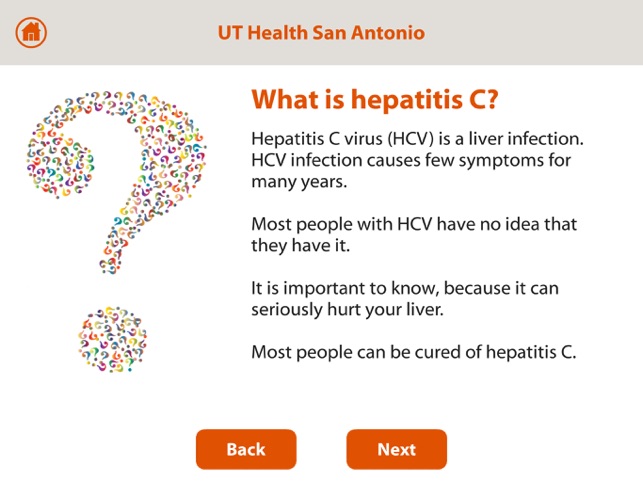
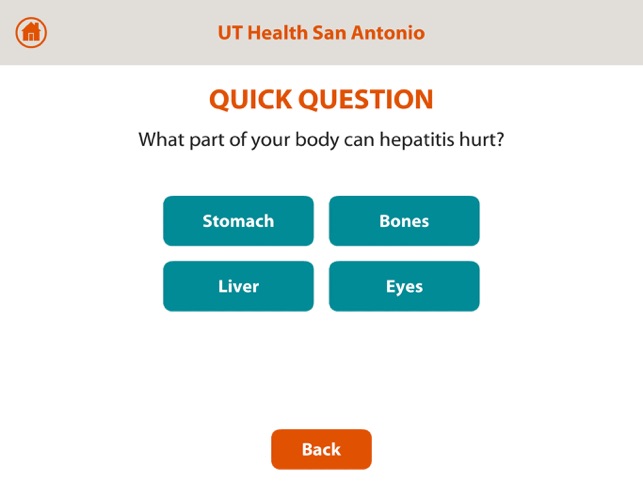
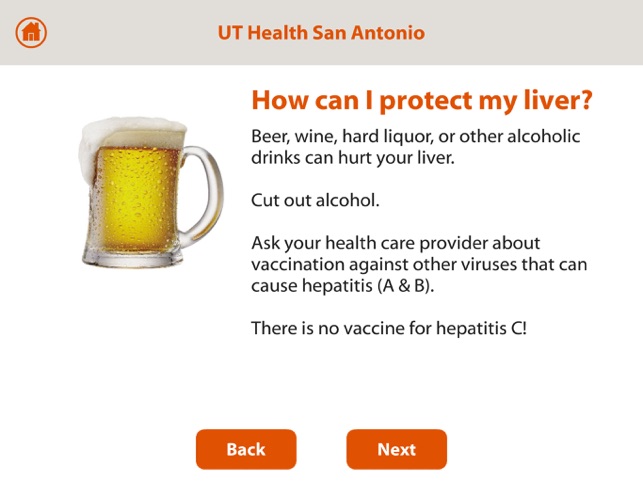
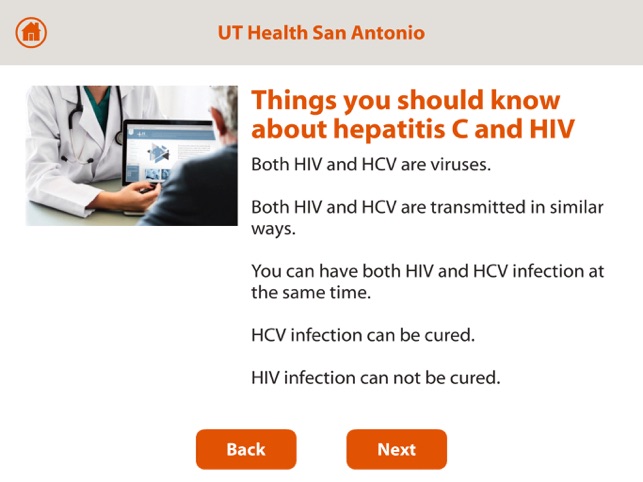
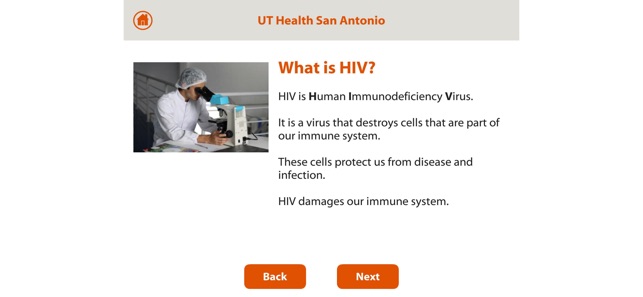
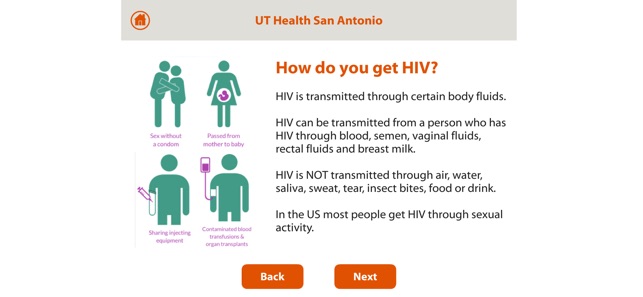
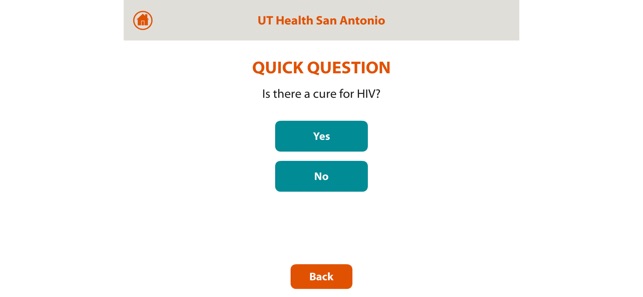
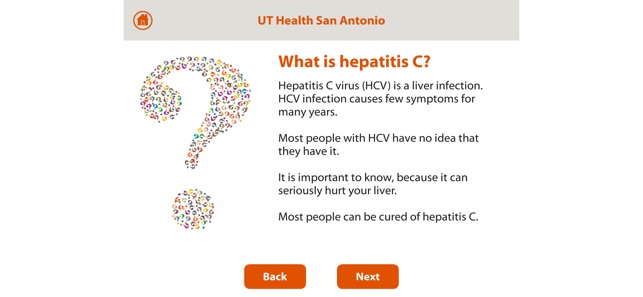
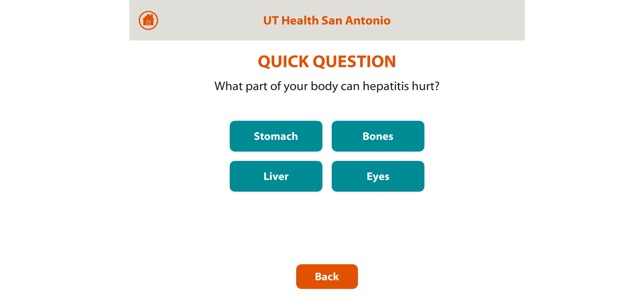
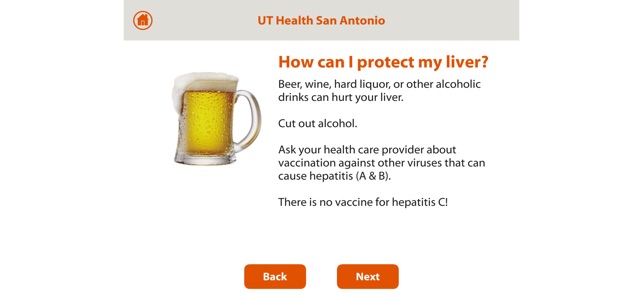
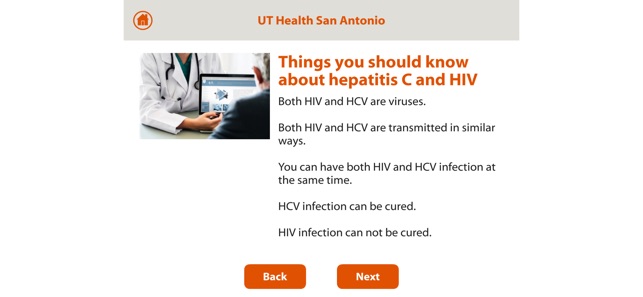
HIV/HCV Education screenshot 1 of 16HIV/HCV Education screenshot 2 of 16HIV/HCV Education screenshot 3 of 16HIV/HCV Education screenshot 4 of 16HIV/HCV Education screenshot 5 of 16HIV/HCV Education screenshot 6 of 16HIV/HCV Education screenshot 7 of 16HIV/HCV Education screenshot 8 of 16HIV/HCV Education screenshot 9 of 16HIV/HCV Education screenshot 10 of 16HIV/HCV Education screenshot 11 of 16HIV/HCV Education screenshot 12 of 16HIV/HCV Education screenshot 13 of 16HIV/HCV Education screenshot 14 of 16HIV/HCV Education screenshot 15 of 16HIV/HCV Education screenshot 16 of 16

Detailed Description

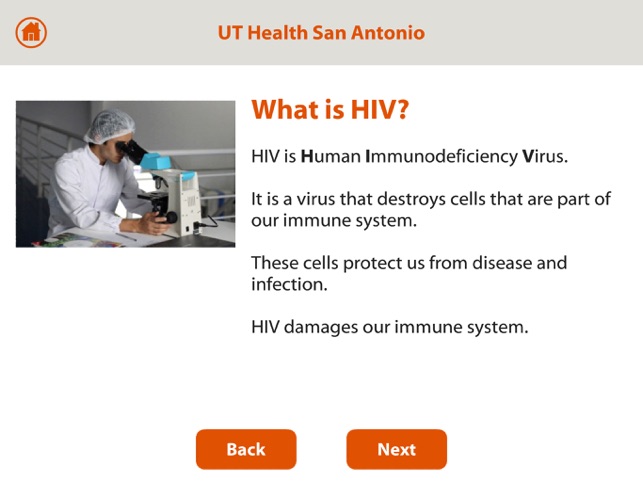
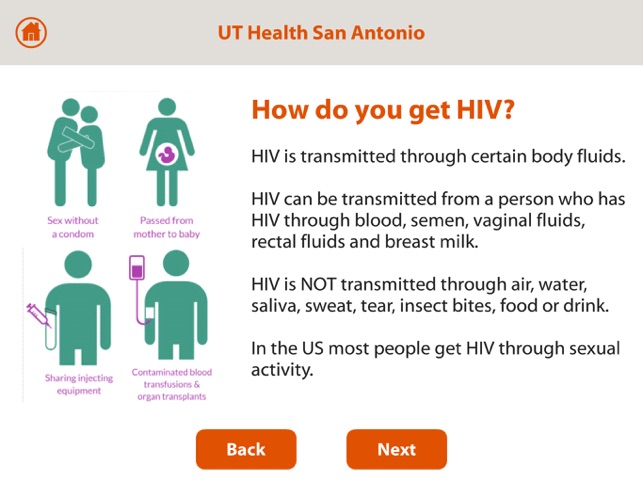
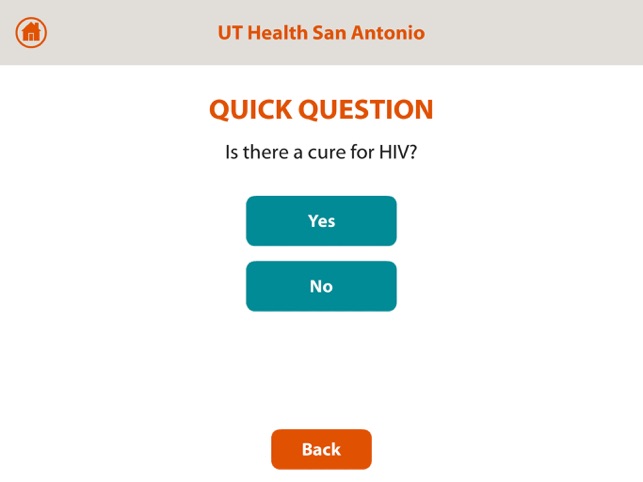
Functionality & Mechanism Developed by UT Health San Antonio, this tool delivers pedagogical content on human immunodeficiency virus (HIV) and hepatitis C (HCV). The system is structured for either self-directed patient use or provider-facilitated education sessions. The interface presents modules covering transmission, prevention, testing, and treatment. To reinforce learning, the design integrates teach-back questions at the conclusion of each module, a mechanism that assesses and confirms immediate knowledge acquisition. The content is optimized for high readability to support patient comprehension.

Evidence & Research Context

  • The app was evaluated as an educational tool during community health screening events with a sample of primarily young, Hispanic adults (N=53).
  • An integrated teach-back feature demonstrated high rates of short-term knowledge acquisition on core HIV/HCV topics.
  • Key knowledge points retained included that HIV is incurable (91% correct), HCV primarily impacts the liver (87% correct), and HCV is curable (79% correct).
  • User acceptability was robust, with participants rating the tool's utility at 4.8 out of 5 on a Likert scale.
  • The associated research characterizes the app as an effective mechanism for delivering public health education in community-based settings.

Intended Use & Scope This tool is designed for health educators and clinical providers to facilitate patient education, or for direct patient use following a diagnosis. Its primary utility is to deliver foundational knowledge and reinforce understanding of HIV/HCV. The application is not a diagnostic or treatment-planning instrument and does not replace professional medical consultation.

Studies & Publications

1 publication

Peer-reviewed research associated with this app.

Usability Study

Community Screening and Education for HIV and Hepatitis C (HCV) infection in South Texas with Rapid Point of Care Testing and a Mobile Phone Application (app)

Allison et al. (2019) · Open Forum Infectious Diseases

Users rated the HIV/HCV education app highly useful and demonstrated strong knowledge retention.

Background HIV and HCV infection cause considerable morbidity and mortality if untreated. The southern United States has the highest burden of new HIV diagnoses nationwide. Approximately 60% of hepatocellular carcinoma (HCC) in the United States is due to HCV. HCC incidence rates are the fastest growing among all cancers in Texas (TX). We aimed to use community screening events to provide additional diagnostic opportunities and surveillance data for HIV/HCV and to evaluate an HIV/HCV app to optimize public health education and prevention. Methods Two community HIV/HCV screening/education events occurred in April 2019 in the border city of Laredo, TX (at a community park) and San Antonio, TX (on a university campus). Those screened for HIV/HCV using point of care rapid tests completed a demographic and risk factor questionnaire. HIV/HCV education was offered to attendees via an app with a teach-back feature to assess short-term knowledge gains in specific areas: HIV and HCV cure, body organ impacted by HCV, HCV transmission, HCV symptoms. Results Attendees: Laredo event—approximately 260 people; San Antonio event approximately 100 people. 60 people were screened for HIV and HCV. 77% were Hispanic, 63% were female, 68% were 18–25 years old, 63% reported not having a primary care provider. One HCV seroreactive case was identified and linked to care. The most commonly reported risk factors were having tattoos (43%) and body piercing (37%). Other risk factors included street drug use (12%), home finger stick blood checks (12%), dental surgery outside the United States (12%). Fifty-three people utilized the HIV/HCV education app. 91% correctly identified that HIV cannot be cured, 87% correctly identified that HCV impacts the liver and that a test can confirm HCV infection. 81% correctly identified how HCV can be transmitted and 79% corrected identified that HCV can be cured. The app was rated 4.8/5, as "very useful" on a Likert scale. Conclusion Features of those screened included not being engaged in primary care, having risk factors for both HCV and HIV infection and the majority being young adults. The HIV/HCV mobile phone app was an acceptable education tool for those who utilized it. Appropriately developed and implemented apps can be effective in teaching key knowledge points about HIV/HCV infection. Disclosures All authors: No reported disclosures.
... Read More

HIV/HCV Education

Free