
HorseBCS
Published in academic literature
App Summary
App Screenshots
Detailed Description
Functionality & Mechanism
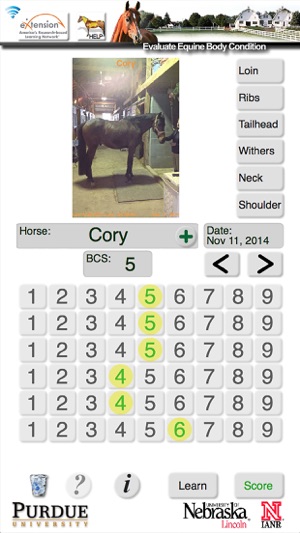
Developed by eXtension HorseQuest, the HorseBCS system facilitates objective body condition scoring in adult equids. The interface guides the capture of key morphometric measurements, including wither height, body length, and neck and girth circumference. Leveraging breed-specific algorithms for Arabian, pony, and stock horses, the application processes these inputs to generate an estimated body weight and a standardized body weight score, providing a quantitative assessment of the animal's likelihood of being underweight or overweight.
Evidence & Research Context
- The app's algorithms are derived from a development study (N=629 adult horses and ponies) that established and validated breed-specific equations for estimating body weight.
- The primary body weight estimation model, which incorporates height, length, neck, and girth measurements, demonstrated high predictive accuracy (R² = 0.92).
- A separate model was developed to calculate an ideal body weight based on measurements unaffected by adiposity, such as skeletal height and body length.
- The research established a body weight score to assess overweight risk, finding that a body condition score of 7 or greater correlated with a higher likelihood of being overweight.
Intended Use & Scope
This application is intended for horse owners, equine professionals, and animal welfare personnel as a tool for routine body condition assessment and management. It provides a quantitative screening for weight status but does not substitute for a comprehensive veterinary evaluation for diagnosis or treatment. The integrated equations are specific to adult Arabian, pony, and stock horse breeds.
Studies & Publications
Peer-reviewed research associated with this app.
Estimation of body weight and development of a body weight score for adult equids using morphometric measurements
Martinson et al. (2014) · Journal of Animal Science
Describes the research-driven development of this appIn the Media
Horse body condition scoring app
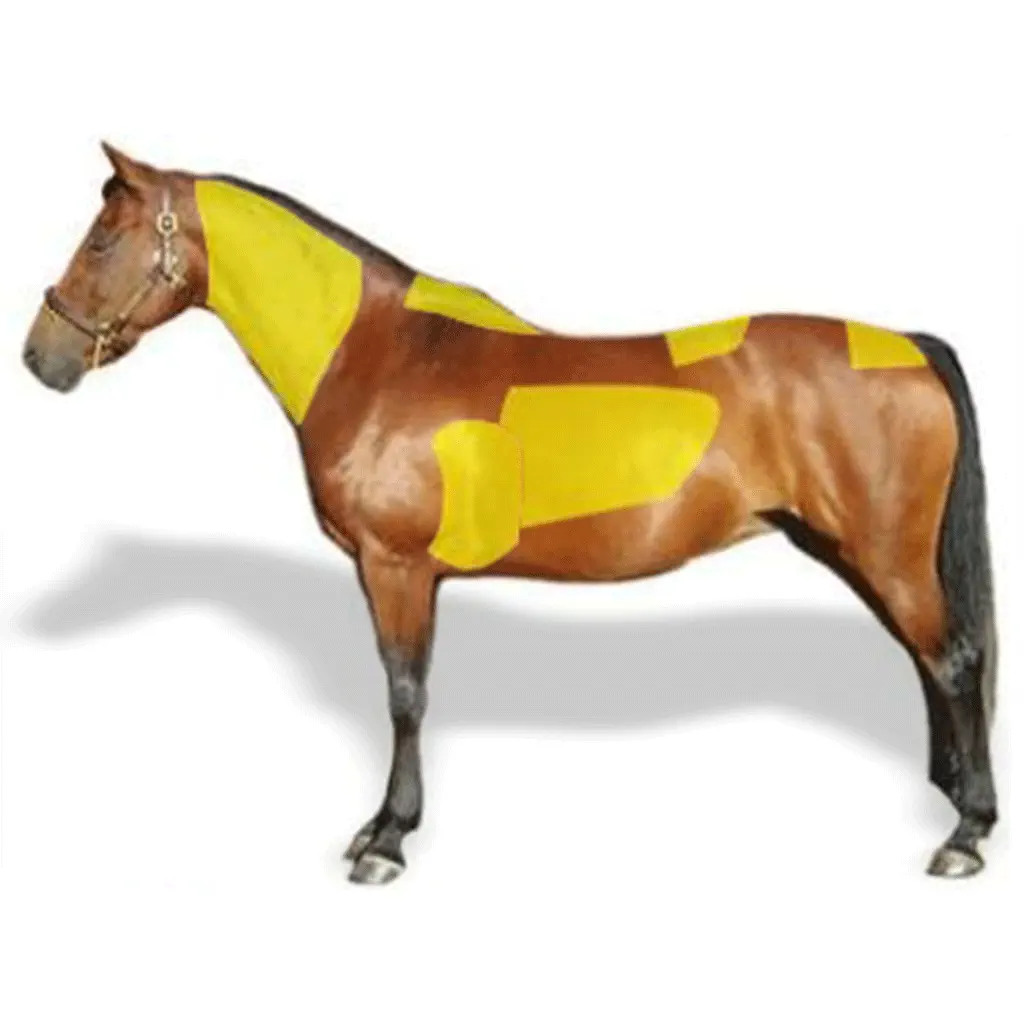
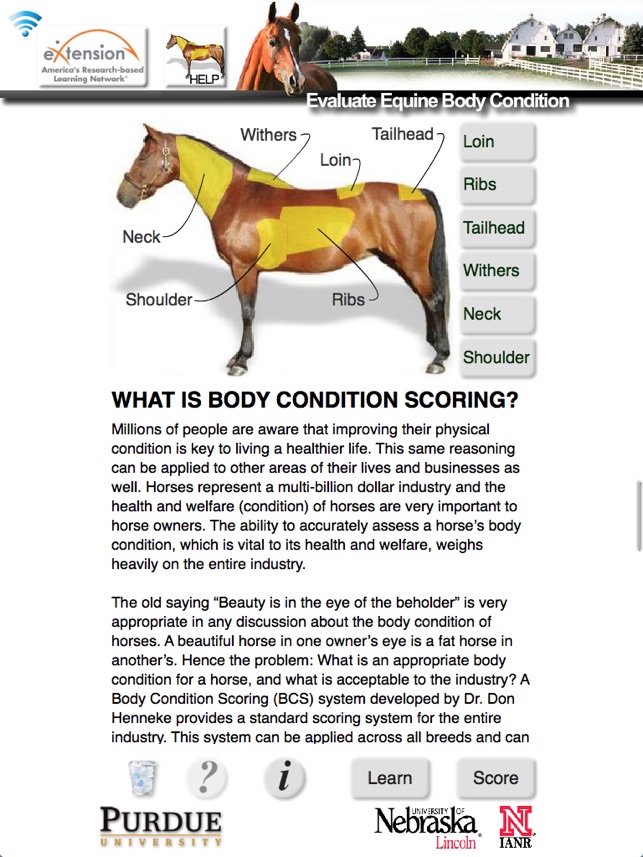
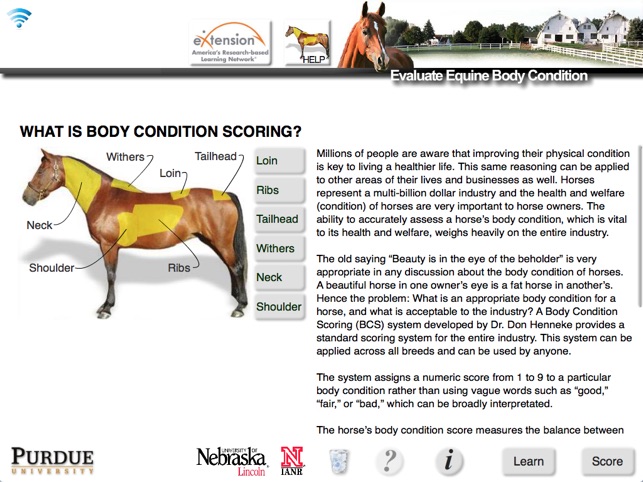
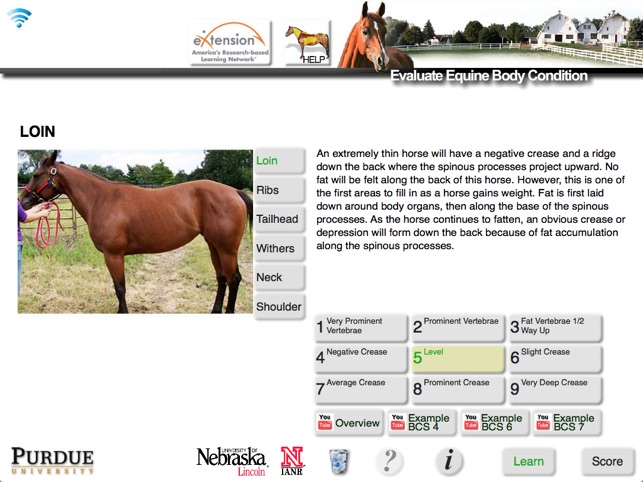
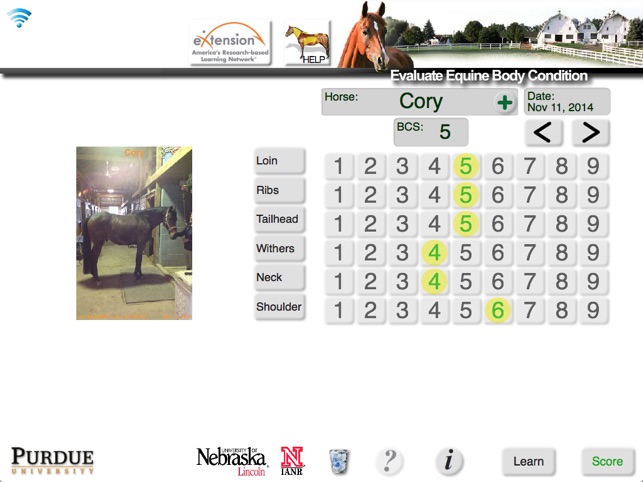
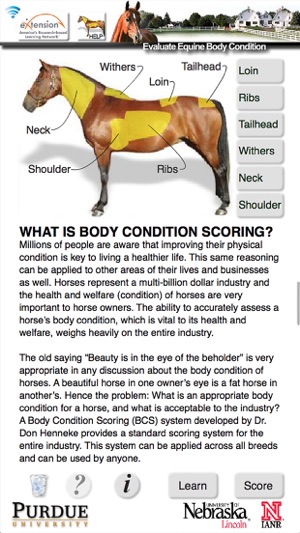
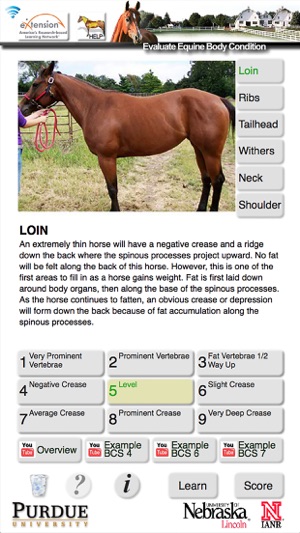
Extension horse specialists in eXtension HorseQuest developed HorseBCS to help equine caretakers evaluate horse body condition scores, using technology that covers various body locations including ribs, loin, tailhead, withers, neck and shoulder. The app allows users to take pictures of horses and add condition scores for each location directly on the photo, creating time and date stamped documentation for future management decisions. Michigan State University Extension recommends body condition scoring horses at least monthly for healthy horses and more frequently for those with weight maintenance difficulties.
Extension app records horse body condition score
Extension horse specialists from Purdue University and the University of Nebraska developed HorseBCS to help smartphone users calculate a horse's body condition score and record it with photos, using a numerical system based on physical parameters. "Body condition scoring is a vital part of monitoring your horse's health and assessing your feeding program," said Purdue Extension's Colleen Brady. The app is available on iTunes and Google Play for $1.99 and includes a desktop application that syncs with mobile devices.
App Information
Developer
University of KentuckyCategory
Evidence Profile
Published in academic literature
Platforms
Updated
May 2015
© 2025 University of Kentucky
Tags


HorseBCS
Free