AppsFromResearch
HotHog icon

HotHog

Evidence Tier:DOCUMENTED

Published in academic literature

For:Industry Professionals

App Summary

HotHog is a decision support tool for swine producers that provides location-based predictions of thermal stress and management recommendations tailored to non-pregnant, mid-gestation, and late-gestation sows. The tool is based on research demonstrating that physiological heat stress thresholds, measured by changes in respiration rate and body temperature, are significantly different depending on the sow's stage of gestation. The authors conclude that this stage-specific approach can help producers make more informed environmental management decisions to reduce the negative effects of thermal stress.

App Screenshots

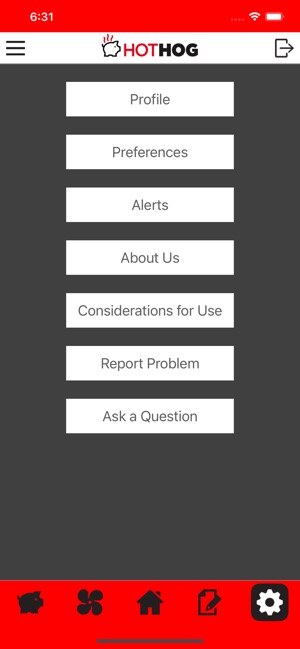
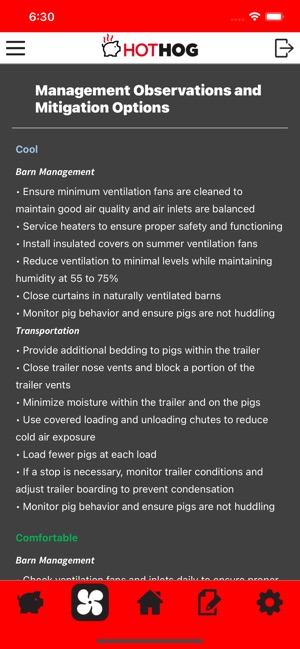
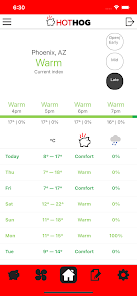
HotHog screenshot 1 of 14HotHog screenshot 2 of 14HotHog screenshot 3 of 14HotHog screenshot 4 of 14HotHog screenshot 5 of 14HotHog screenshot 6 of 14HotHog screenshot 7 of 14HotHog screenshot 8 of 14HotHog screenshot 9 of 14HotHog screenshot 10 of 14HotHog screenshot 11 of 14HotHog screenshot 12 of 14HotHog screenshot 13 of 14HotHog screenshot 14 of 14

Detailed Description

Functionality & Mechanism

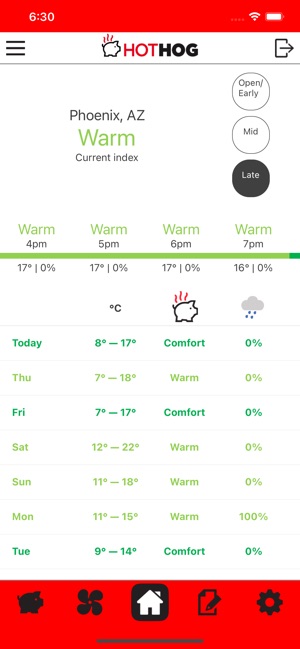
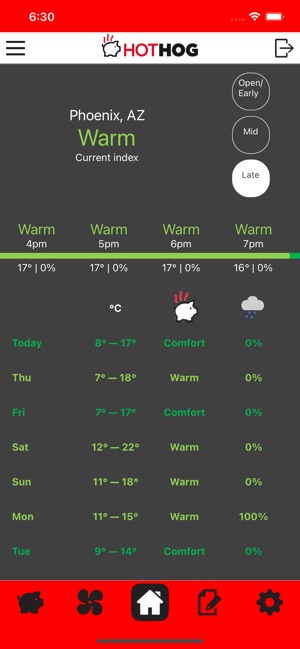
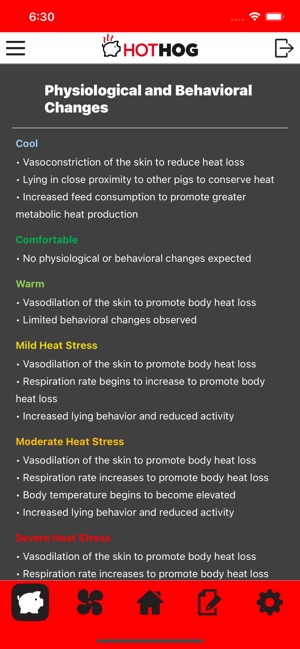
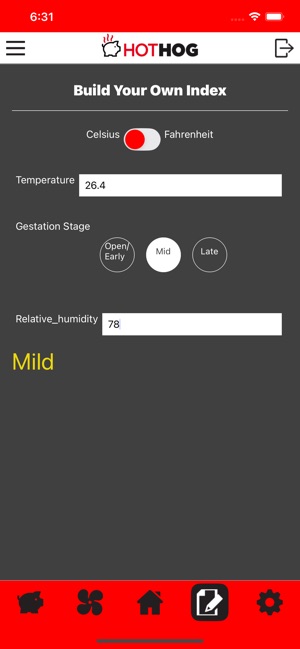
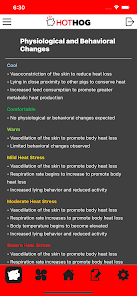
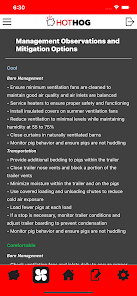
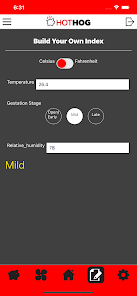
Developed by researchers at the USDA, University of Illinois, and Purdue University, HotHog is a decision support tool for swine management. The system generates hourly and daily predictions of thermal comfort and stress for sows based on geographic location and weather data. Its interface presents a multi-level thermal index (cool to severe heat stress) tailored to non-pregnant, mid-, and late-gestation stages. The application also provides corresponding management mitigation options and expected physiological and behavioral changes for each stress category.

Evidence & Research Context

  • The app's decision support tool is based on published research that characterized the physiological and behavioral thermal responses of gestating and non-pregnant sows.
  • The underlying model integrates gestation-stage-specific heat stress thresholds; the mild heat stress inflection point occurs at 25.5°C, 25.1°C, and 24.0°C for non-pregnant, mid-gestation, and late-gestation sows, respectively.
  • Moderate heat stress thresholds, identified by body temperature inflection points, also differ significantly by gestation stage (28.1°C, 27.8°C, and 25.5°C).
  • The associated research established that dewpoint influences heat stress responses for mid- and late-gestation sows, a factor integrated into the tool's predictions.

Intended Use & Scope

HotHog is designed for swine producers, livestock technicians, and educators as a decision support tool for environmental management. Its primary utility is to facilitate proactive planning and implementation of heat stress mitigation strategies. The tool provides predictive guidance and does not replace direct animal observation or professional veterinary consultation for assessing individual animal health and welfare.

Studies & Publications

1 publication

Peer-reviewed research associated with this app.

Development/Design Paper

307 Hothog: a Smartphone Application to Support Environmental Management Decisions for Non-Pregnant and Gestating Sows

Johnson et al. (2023) · Journal of Animal Science

Describes the research-driven development of this app
Abstract Several management practices and technologies have been developed to mitigate thermal stress in swine. However, recommended temperature thresholds for implementing thermal stress mitigation are variable and may not accurately reflect the thermal requirements of non-pregnant and gestating sows with modern genetics. Therefore, a tool to support environmental management decisions for non-pregnant and gestating sows was created. The decision support tool is based on several published works by our group that characterized responses of non-pregnant, mid-gestation, and late-gestation sows across a wide temperature range. Cool, comfortable, and warm ranges were identified based upon behavioral thermal preferendum, and physiological responses were used to determine mild, moderate, and severe heat stress thresholds. The inflection points of respiration rate and body temperature as a function of dry bulb temperature were used to establish heat stress thresholds by gestation stage. Non-pregnant, mid-gestation, and late-gestation sow mild heat stress thresholds differed (P < 0.05) and occurred at 25.5, 25.1, and 24.0 °C, respectively. Body temperature inflection points indicative of moderate heat stress differed by gestation stage (P < 0.05) and occurred at 28.1, 27.8, and 25.5 °C, respectively. Severe heat stress inflection points were lower (P < 0.05) for late-gestation sows (30.8 °C) but were similar for non-pregnant and mid-gestation sows (32.9 °C). Dewpoint influenced heat stress response for mid- and late-gestation sows (P < 0.05) but did not have an effect on non-pregnant sows (P > 0.05). Heat stress threshold data were integrated with behavioral thermal preferendum data. For non-pregnant and mid-gestation sows, similar (P > 0.05) cool (< 13.2°C) and comfortable (13.2 to 16.4°C) temperature ranges were observed. However, late-gestation sows had lower (P < 0.05) cool (< 12.6°C) and comfortable (12.6 to 15.6°C) temperature ranges relative to non-pregnant and mid-gestation sows. The dry bulb temperature (TDB) that non-pregnant, mid-gestation, and late-gestation sows found to be warm was estimated as TDB preference range < TDB < mild heat stress. The decision support tool was integrated into a smartphone application called HotHog. This smartphone application provides hourly and daily predictions of thermal comfort and stress in non-pregnant, mid-gestation, and late-gestation sows. Users can set geographical locations, either manually or by current location, for thermal index predictions. Additionally, hourly and daily precipitation, and temperature predictions are displayed for the selected location. Management observations and mitigation options, as well as expected physiological and behavioral changes, are provided for each thermal index category to help users identify stressed pigs and assist with management decisions. HotHog will support swine producers in making more informed decisions related to in-barn environmental management to reduce the negative effects of thermal stress on sows and their gestating offspring. Furthermore, the tool may be helpful for teaching thermal management to livestock technicians and students.
... Read More

In the Media

Pigs Can't Sweat, and It's Costing Us Billions ' Can USDA's 'HotHog' App Keep Them Cool?

Jay Johnson and USDA's Livestock Behavior Research Unit developed HotHog to help farmers detect when pigs are overheating, addressing heat stress that costs American pork producers nearly half a billion dollars annually. "Think about a human's behavior response to heat — you'll probably try to go inside an air conditioned building," said Johnson, explaining how pigs use mud wallowing as their natural cooling method. The app was released this summer after years of research focusing specifically on breeding sows' thermal preferences.

AmbrookRead article

USDA develops new heat stress app for pigs

The USDA's Agricultural Research Service developed HotHog to predict heat stress in pigs using local weather data, providing hourly, daily, or weekly comfort level forecasts to help producers take preventive measures. According to lead scientist Jay S. Johnson, HotHog represents "the first decision-support tool of its kind to predict thermal stress based on behavioral and physiological data collected from heat-load studies of swine," specifically targeting the $481 million annual revenue losses from heat stress in the US swine industry. The app is now available in both the Apple App Store and Google Play Store.

ThepigsiteRead article

USDA develops new heat stress app for pigs

The USDA's Agricultural Research Service developed HotHog to predict heat stress in pigs using local weather data, helping producers take preventive measures like adjusting ventilation and water access. According to lead scientist Jay S. Johnson, heat stress annually costs the US swine industry an estimated $481 million in revenue losses. HotHog represents the first decision-support tool based on behavioral and physiological data specifically collected from heat-load studies of swine, differentiating it from existing thermal indices developed for other species.

ThepigsiteRead article

The HotHog Days of Summer: New App Predicts Heat Stress in Pigs

USDA's Agricultural Research Service and university scientists developed HotHog to help predict heat stress in pigs using local weather data on an hourly, daily or weekly basis. Heat stress costs the U.S. swine industry an estimated $481 million in revenue losses annually, while the app represents "the first decision-support tool of its kind to predict thermal stress based on behavioral and physiological data collected from heat-load studies of swine." The app launched with collaborators from University of Illinois, Purdue University, and Oak Ridge Institute for Science and Education.

PorkbusinessRead article

Producers Can Now go "Whole Hog" on New Heat Stress App for Pigs : USDA ARS

Agricultural Research Service (ARS) and university scientists developed HotHog to predict heat stress in pigs, using local weather data to forecast comfort levels on hourly, daily or weekly bases. The app addresses a significant economic problem, as heat stress costs the U.S. swine industry an estimated $481 million annually in revenue losses. HotHog is now available for download in the Apple App Store and Google Play Store.

UsdaRead article

HotHog

Free