

Indexing Go
Published in academic literature
App Summary
App Screenshots
Detailed Description
Functionality & Mechanism
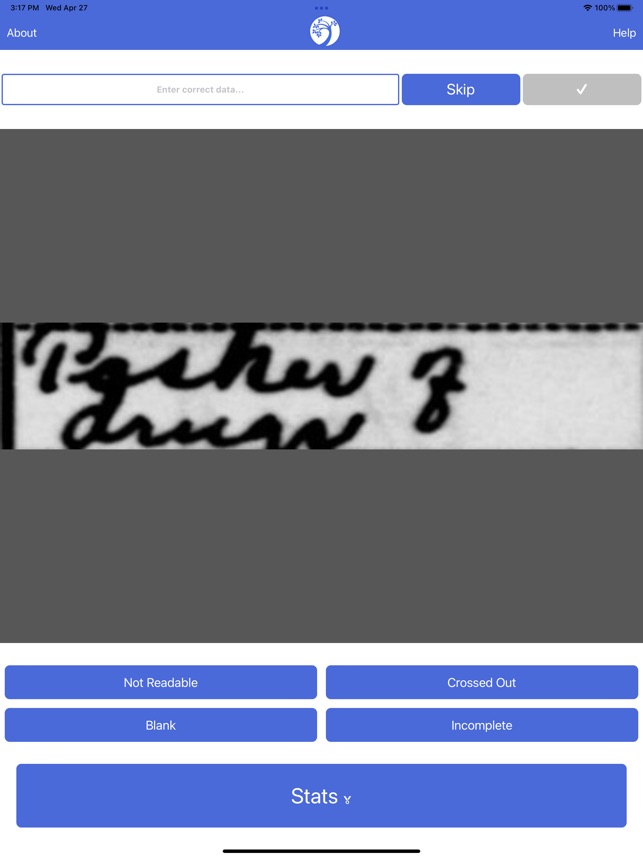
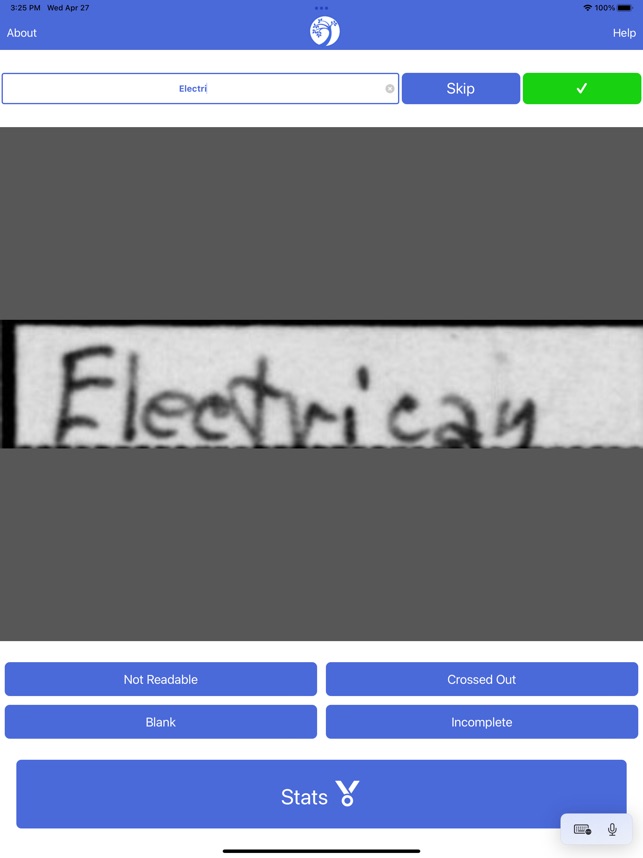
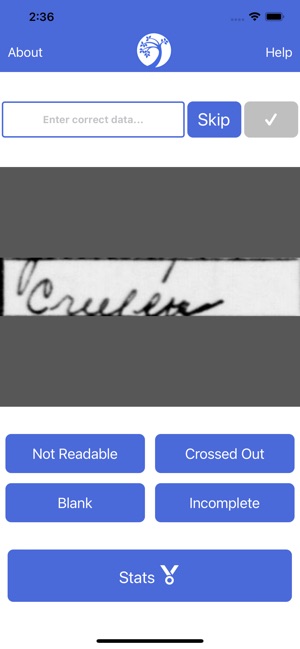
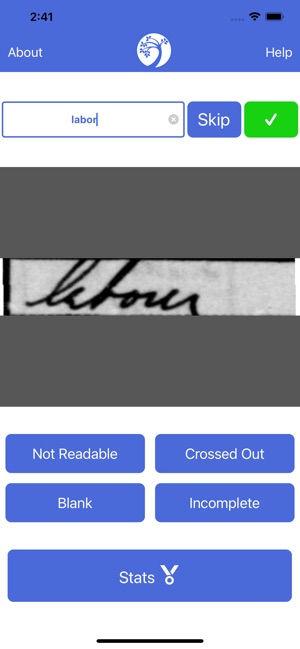
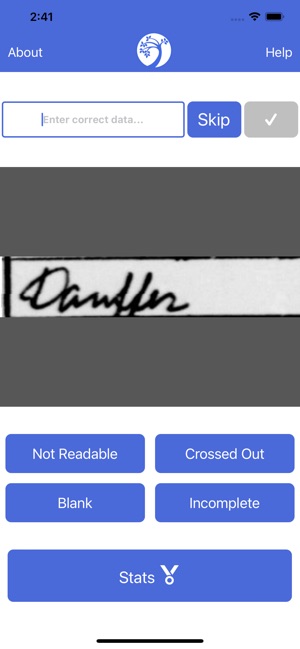
Indexing Go is a mobile data contribution tool that facilitates the crowdsourced transcription of historical census records. The interface presents users with digitized images of individual cells from census documents, such as a name or occupation. The system captures user-entered transcriptions of the handwritten text. This human-generated data serves as a training and validation set for a sophisticated handwriting recognition algorithm that leverages a convolutional neural network (CNN) and a Long-Short-Term-Memory (LSTM) network to automate large-scale indexing.
Evidence & Research Context
- The associated research details the underlying algorithm, which integrates a convolutional neural network with a Long-Short-Term-Memory (LSTM) network for handwriting recognition.
- The system's design leverages a training dataset of 2.4 billion labeled sub-images derived from the 1940 U.S. Census.
- A pilot application of the algorithm on a 1930 census dataset demonstrated a character error rate (CER) of 10.4% for names.
- To enhance accuracy, the system incorporates data from the FamilySearch Family Tree to correct transcription errors and identify alternative name spellings.
Intended Use & Scope
This application is designed for volunteers, genealogists, and family history researchers as a data contribution and verification platform. Its primary utility is to improve the accuracy and completeness of large-scale digital census archives. The tool does not function as a genealogical search engine; it is intended exclusively for performing transcription and indexing micro-tasks.
Studies & Publications
Peer-reviewed research associated with this app.
Using Hand-Writing Recognition to Auto Index the US Census Records
Clement et al. (2019) · SSHA Annual Meeting
Describes the research-driven development of this appApp Information
Developer
Brigham Young UniversityCategory
Evidence Profile
Published in academic literature
Platforms
Updated
May 2022
© 2025 Brigham Young University
Tags
Relevant Links
Privacy Policy


Indexing Go
Free