
AppsFromResearch
LDL Cholesterol Calculator icon

LDL Cholesterol Calculator

Evidence Tier:CLINICAL GRADE

Validated in clinical trials · Initial evidence

For:Clinicians & Healthcare Professionals

App Summary

This clinical calculator estimates LDL cholesterol for healthcare providers using the Martin-Hopkins equation, which applies a personalized factor based on a patient's full lipid profile. A validation study (N=1,350,908) found the novel method provided significantly more accurate cardiovascular risk classification (91.7% concordance) than the standard Friedewald equation (85.4% concordance), particularly in patients with low LDL-C levels. The associated research concludes that this method offers a more accurate LDL-C estimation at no additional cost, and its use is supported by major clinical guidelines for improved risk stratification.

App Screenshots

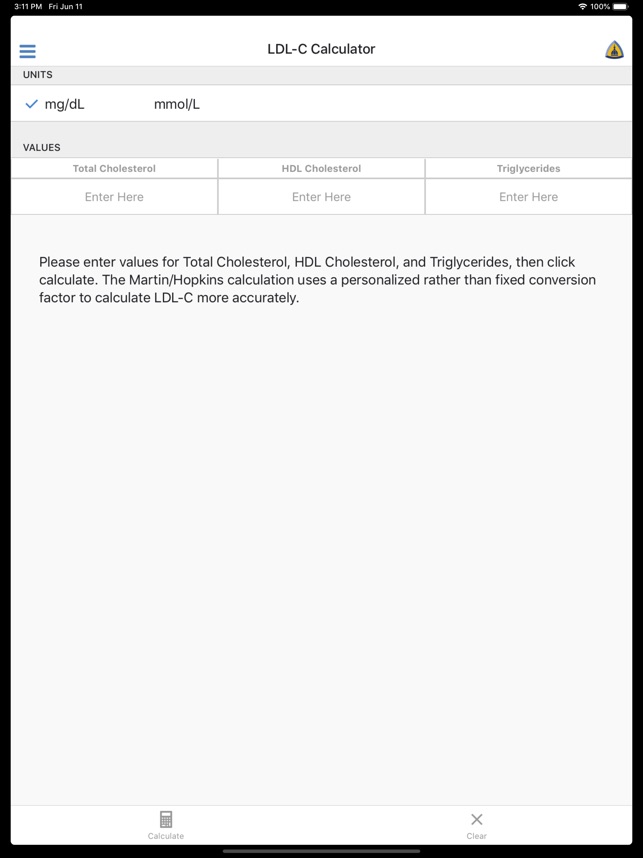
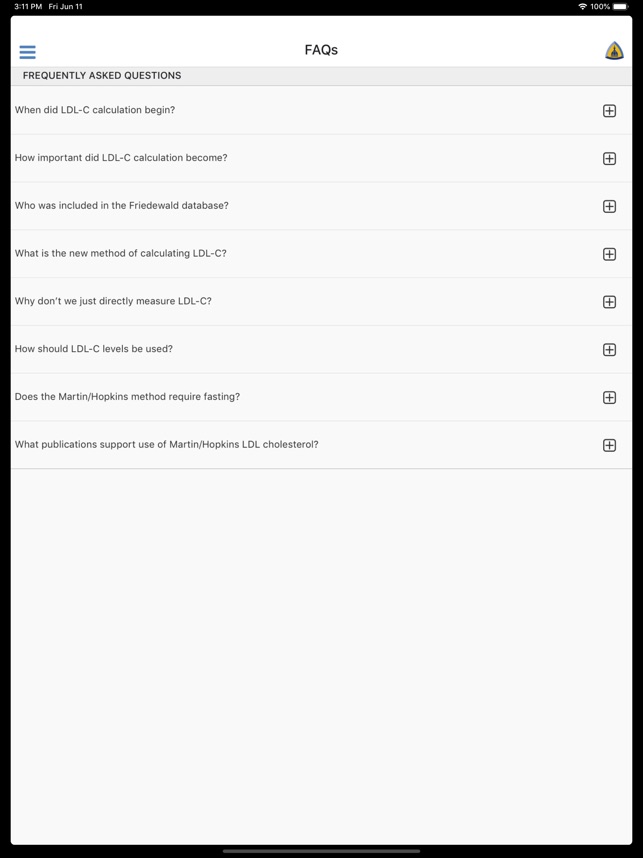
LDL Cholesterol Calculator screenshot 1 of 6LDL Cholesterol Calculator screenshot 2 of 6LDL Cholesterol Calculator screenshot 3 of 6LDL Cholesterol Calculator screenshot 4 of 6LDL Cholesterol Calculator screenshot 5 of 6LDL Cholesterol Calculator screenshot 6 of 6

Detailed Description

Functionality & Mechanism

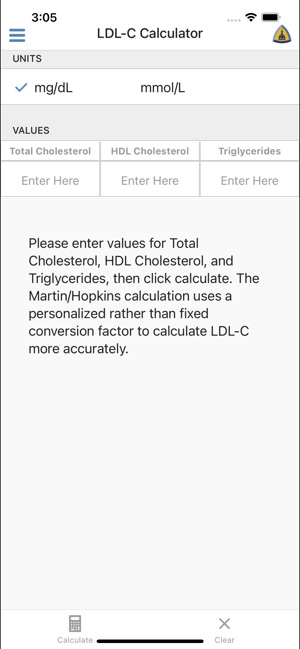
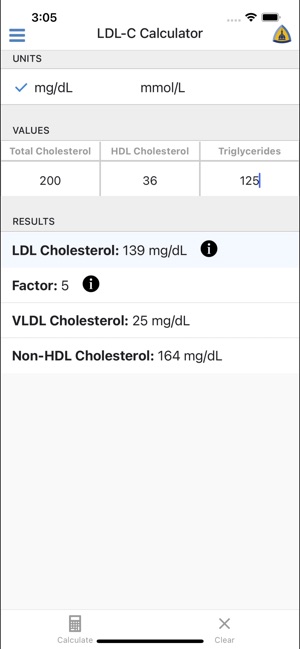
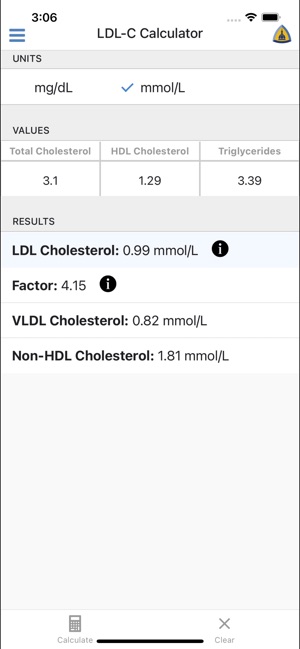
Developed by the Johns Hopkins Ciccarone Center, this tool provides automated calculation of low-density lipoprotein cholesterol (LDL-C). The interface captures three standard inputs: total cholesterol, HDL cholesterol, and triglycerides. It then leverages the Martin-Hopkins method, which applies a personalized factor for the TG:VLDL-C ratio based on the patient's specific lipid values. This dynamic approach contrasts with the fixed-factor calculation of the traditional Friedewald equation, facilitating a more precise and individualized estimation.

Evidence & Research Context

  • A large-scale validation study (N=450,303) demonstrated that the Martin-Hopkins method achieved significantly higher concordance (91.7%) with directly measured LDL-C levels compared to the Friedewald equation (85.4%).
  • The method substantially improves accuracy for classifying low LDL-C levels (<70 mg/dL), especially in patients with high triglycerides (200-399 mg/dL), where classification accuracy increased from 40.3% to 84.0%.
  • Subsequent research has robustly validated the equation in diverse global populations exceeding 5 million individuals, including those with diabetes, kidney disease, and other common comorbidities.
  • The calculation method is recommended in clinical practice guidelines from the American Heart Association/American College of Cardiology and other international expert societies.

Intended Use & Scope

This calculator is intended for clinicians and researchers for the accurate estimation of LDL-C. Its primary utility is as a clinical reference tool to guide risk assessment, particularly in patient profiles where traditional formulas are less reliable. The tool's output is for informational purposes and does not replace comprehensive clinical evaluation or the determination of individualized therapeutic plans.

Studies & Publications

2 publications

Peer-reviewed research associated with this app.

Non-Evaluative Reference

Extensive Evidence Supports the Martin-Hopkins Equation as the LDL-C Calculation of Choice

Grant et al. (2023) · Clinical Chemistry

Referenced in academic literature; no direct evaluation of the app
This "Point" contends that now is the time for all laboratories to recognize the importance of more accurately reporting clinically valid lipid results, notably low-density lipoprotein cholesterol (LDL-C). In 2013, one of us (S.S.M.) and colleagues introduced a novel solution (1) that has been robustly validated in numerous studies across varying populations globally (2, 3). This "Point" describes the extensive body of work from research and clinical practice supporting the Martin–Hopkins/extended Martin–Hopkins equations that we hope you will soon adopt, if you have not done so already. One of us (H.W.K.) once lived and worked in Framingham, a western suburb of Boston, Massachusetts, and collaborated with the Framingham Heart Study. Lipid testing was performed on a cohort of Framingham residents who participated in the longitudinal study, which was established in 1948. Beginning in the 1960s, landmark studies from the Framingham Heart Study led to a much deeper understanding and appreciation of the role of lipid testing to assess cardiovascular disease risk (4, 5). At that time, LDL-C testing was cumbersome and not developed for routine clinical laboratory use. Not until 1972 did William Friedewald, Robert Levy, and Donald Frederickson propose a simple equation to estimate LDL-C: LDL-C = total cholesterol—high-density lipoprotein (HDL) cholesterol—triglycerides (TG)/5 in mg/dL (2.2 in mmol/L). The Friedewald equation enabled routine LDL-C assessment based on an estimate (TG/5) of very low-density lipoprotein cholesterol (VLDL-C). That paper (6) became the most cited in the history of Clinical Chemistry. For decades, clinical laboratories applied the Friedewald equation to estimate LDL-C. However, the Friedewald equation is prone to considerable underestimation when the TG level is elevated (?150?mg/dL [1.69?mmol/L]) and LDL-C level is low (particularly <100?mg/dL [2.59?mmol/L]) (2, 3). Clinical laboratories generally adopted a TG upper limit of <400?mg/dL (4.52?mmol/L), as suggested in the original Friedewald et al. study, to report calculated LDL-C (6), while some suggested lower TG limits. Indeed, Friedewald et al. acknowledged that TG/5 failed to accurately estimate VLDL-C in any subgroup, although VLDL-C was a relatively small portion of the equation in the setting of typical LDL-C levels in the 1970s (6). Accurate LDL-C assessment is challenging. The reference measurement procedure for LDL-C is preparative ultracentrifugation, also known as beta quantification. This method is restricted in clinical practice by high cost and arduous implementation. Alternatively, direct chemical LDL-C assays have gained acceptance in clinical practice, yet they are of variable accuracy and add costs (2, 3). Furthermore, the introduction of novel pharmacologic therapies has enabled patients to commonly achieve very low LDL-C levels that were rare in the early 1970s; when the Friedewald equation was introduced, only 35 of 448 Friedewald et al. participants had LDL-C <100?mg/dL [2.59?mmol/L] (6). The Fridewald equation has limitations under certain conditions, primarily when metabolic abnormalities alter the relationship between VLDL-C and TG, such as in patients with diabetes, kidney disease, and other common medical conditions. To better serve patients in the contemporary treatment era, the Martin–Hopkins equations use an adjustable factor (strata-specific median VLDL-C:TG ratio), essentially moving from a one-size-fits-all to tailored LDL-C calculation (1–3, 7). For patients with TG levels <400?mg/dL (4.52?mmol/L), the original Martin–Hopkins equation defined 174 adjustable factors based on a range of TG and non-HDL-C levels (1). The Martin–Hopkins equation was derived in the Very Large Database for Lipids, which included >1 million patients with population-representative lipid levels who had vertical autoprofile (VAP) ultracentrifugation measurement (validated against beta quantification by twice yearly split sample comparisons at Washington University) (1). Furthermore, for patients with TG levels of 400–799?mg/dL (4.52–9.02?mmol/L), an extended Martin–Hopkins equation defined an additional 240 strata-specific median TG:VLDL-C ratios based on TG and non-HDL-C categories (7). Importantly, performance of the Martin–Hopkins equations did not improve by smoothing the calculation using a greater number of strata or with a continuous equation. Indeed, the Martin–Hopkins equations have performed superbly in external validation studies and in clinical practice over the past decade (1, 2). These equations have been studied in large (>5 million people) and wide-ranging patient populations that have included various fasting statuses, ages, racial and ethnic groups, and both sexes, as well as populations undergoing PCSK9 inhibitor treatment or those with familial hypercholesterolemia, other dyslipidemias, atherosclerotic cardiovascular disease (ASCVD), hypertension, diabetes, kidney disease, thyroid dysfunction, chronic inflammation, and diabetes mellitus, with and without lipid-lowering drugs, including statins. Of 23 LDL-C equations proposed in the literature, the Martin–Hopkins equation was the most accurate in a large-scale analysis (8) followed by the Sampson-NIH equation (correctly categorizing 90% and 86% of patients, respectively). Table 1 lists the highest quality of evidence since 2020, comparing the Martin–Hopkins equation with the Friedewald, Sampson-NIH, and other equations (7–18). Based on the extensive evidence of superior accuracy, the adoption of the Martin–Hopkins equation in clinical practice is supported by guidelines and expert recommendations around the world, including from AHA/ACC, the European Atherosclerosis Society and European Federation of Clinical Chemistry, National Lipid Association, World Heart Federation, Polish Lipid Association, and Multi-Society Recommendations of Brazil. The Martin–Hopkins equations have been successfully deployed at scale in laboratories globally.
... Read More
Validation Study

Comparison of a novel method vs the Friedewald equation for estimating low-density lipoprotein cholesterol levels from the standard lipid profile

Martin et al. (2013) · JAMA

New estimation method accurately matched directly measured cholesterol values 92% of the time versus 85% for standard equation.

Importance: In clinical and research settings worldwide, low-density lipoprotein cholesterol (LDL-C) is typically estimated using the Friedewald equation. This equation assumes a fixed factor of 5 for the ratio of triglycerides to very low-density lipoprotein cholesterol (TG:VLDL-C); however, the actual TG:VLDL-C ratio varies significantly across the range of triglyceride and cholesterol levels.ObjectiveTo derive and validate a more accurate method for LDL-C estimation from the standard lipid profile using an adjustable factor for the TG:VLDL-C ratio.Design, Setting, and ParticipantsWe used a convenience sample of consecutive clinical lipid profiles obtained from 2009 through 2011 from 1 350 908 children, adolescents, and adults in the United States. Cholesterol concentrations were directly measured after vertical spin density-gradient ultracentrifugation, and triglycerides were directly measured. Lipid distributions closely matched the population-based National Health and Nutrition Examination Survey (NHANES). Samples were randomly assigned to derivation (n = 900 605) and validation (n = 450 303) data sets.Main Outcomes and MeasuresIndividual patient-level concordance in clinical practice guideline LDL-C risk classification using estimated vs directly measured LDL-C (LDL-CD).ResultsIn the derivation data set, the median TG:VLDL-C was 5.2 (IQR, 4.5-6.0). The triglyceride and non–high-density lipoprotein cholesterol (HDL-C) levels explained 65% of the variance in the TG:VLDL-C ratio. Based on strata of triglyceride and non–HDL-C values, a 180-cell table of median TG:VLDL-C values was derived and applied in the validation data set to estimate the novel LDL-C (LDL-CN). For patients with triglycerides lower than 400 mg/dL, overall concordance in guideline risk classification with LDL-CDwas 91.7% (95% CI, 91.6%-91.8%) for LDL-CNvs 85.4% (95% CI, 85.3%-85.5%) for Friedewald LDL-C (LDL-CF) (P < .001). The greatest improvement in concordance occurred in classifying LDL-C lower than 70 mg/dL, especially in patients with high triglyceride levels. In patients with an estimated LDL-C lower than 70 mg/dL, LDL-CDwas also lower than 70 mg/dL in 94.3% (95% CI, 93.9%-94.7%) for LDL-CNvs 79.9% (95% CI, 79.3%-80.4%) for LDL-CFin samples with triglyceride levels of 100 to 149 mg/dL; 92.4% (95% CI, 91.7%-93.1%) for LDL-CNvs 61.3% (95% CI, 60.3%-62.3%) for LDL-CFin samples with triglyceride levels of 150 to 199 mg/dL; and 84.0% (95% CI, 82.9%-85.1%) for LDL-CNvs 40.3% (95% CI, 39.4%-41.3%) for LDL-CFin samples with triglyceride levels of 200 to 399 mg/dL (P < .001 for each comparison).Conclusions and RelevanceA novel method to estimate LDL-C using an adjustable factor for the TG:VLDL-C ratio provided more accurate guideline risk classification than the Friedewald equation. These findings require external validation, as well as assessment of their clinical importance. The implementation of these findings into clinical practice would be straightforward and at virtually no cost.Trial Registrationclinicaltrials.gov Identifier:NCT01698489
... Read More

In the Media

Martin/Hopkins Method to Calculate LDL or 'Bad' Cholesterol Outperforms Other Equations, Study Shows

Johns Hopkins researchers developed the Martin/Hopkins method to calculate LDL cholesterol with higher accuracy than existing equations, analyzing data from over 5 million patients. The study found that the Martin/Hopkins algorithm correctly classified 89.6% of patients' LDL cholesterol values, outperforming the previous gold standard Friedewald method which achieved 83.2% accuracy. "The biggest concern is that underestimating LDL cholesterol could lead to withholding treatments that would be beneficial for patients," says lead researcher Dr. Seth Martin.

HopkinsmedicineRead article

As Medical Apps Multiply, Johns Hopkins Takes the Lead on Standards

Johns Hopkins Medicine launched two review boards to establish high standards for accuracy and clinical value in health-related apps, addressing widespread inaccuracies in the largely unregulated mobile health marketplace. Johns Hopkins cardiologist Seth Martin's 2016 study found that more than 75% of people with hypertensive blood pressure received falsely reassuring information from a popular blood pressure app. "Johns Hopkins is a place that deeply respects the importance of science and evidence to guide what we do," Martin says.

HopkinsmedicineRead article

App Makes Calculating LDL Cholesterol Easy for Physicians

Johns Hopkins cardiologists Steven Jones and Seth Martin created LDL Cholesterol Calculator to make their complex Martin-Hopkins calculation method accessible for physicians to accurately assess patients' cholesterol levels using lab results. "The beauty is the app is straightforward," says Martin, noting that "in a matter of seconds, you can get an accurate LDL cholesterol result." The app has been downloaded more than 10,000 times and serves as a free alternative for health facilities that haven't adopted the Martin-Hopkins calculation software used by Johns Hopkins Medicine and Quest Diagnostics.

HopkinsmedicineRead article

LDL Cholesterol Calculator

Free