Materials VR
Published in academic literature
App Summary
App Screenshots
Detailed Description
Functionality & Mechanism
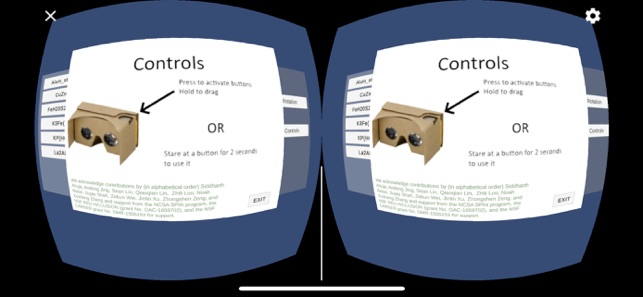
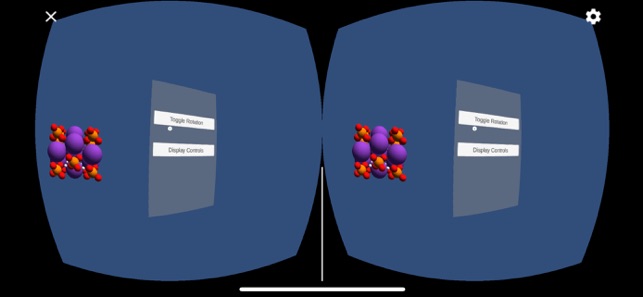
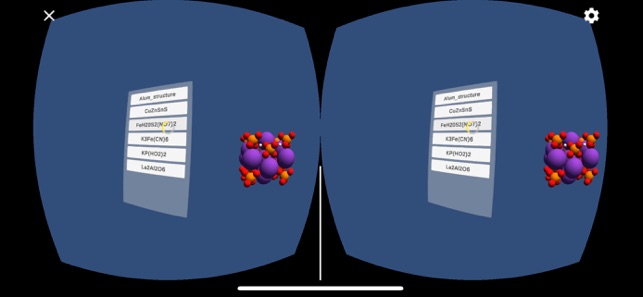
Materials VR is an educational tool that renders immersive, three-dimensional visualizations of molecular structures. Leveraging virtual reality platforms such as Google Cardboard, the system allows for direct manipulation of molecular models, including selection, rotation, and translation. The interface integrates a gaze-based input mechanism, where a sustained two-second gaze activates on-screen controls. The application is designed to provide students with an interactive modality for exploring complex crystallographic information, bridging theoretical concepts with spatial understanding.
Evidence & Research Context
- The tool's pedagogical application is detailed in research describing its integration into a computational module for a freshman Materials Science and Engineering course.
- In the described implementation, the educational module requires students to retrieve crystallographic files from a materials database for analysis within the visualization program.
- A survey-based evaluation of the module indicated that a majority of participating students reported comfort with the system and expressed interest in its future use.
- The associated research establishes a framework for using such visualization tools to help students understand three-dimensional material structures early in their curriculum.
Intended Use & Scope
This system is intended for undergraduate students and educators in materials science, chemistry, and engineering as a supplementary tool for visualizing molecular structures. Its primary utility is to augment traditional pedagogical methods by providing an interactive learning environment. The application is not a substitute for comprehensive materials databases, computational modeling software, or formal laboratory analysis.
Studies & Publications
Peer-reviewed research associated with this app.
Integration of materials visualization with a materials database in a Materials Science and Engineering freshman course
Kang et al. (2021) · ASEE Annual Conference
Referenced in academic literature; no direct evaluation of the appIn the Media
UI advancements change the purpose of virtual reality
The University of Illinois developed VR@Illinois as a collaborative initiative to integrate virtual reality technology for teaching, research and exploration purposes on campus, backed by the University's Technology Services department. The program coordinates with members from the Center for Innovation in Teaching & Learning, University Library's IDEA Lab and Media Commons to support VR tech integration beyond gaming applications.
Virtual Reality Materials Visualization
The University of Illinois developed Materials VR to visualize materials science data in virtual reality, using technology that reads VASP CHGCAR files directly. The tool currently supports Oculus headsets and Windows Mixed Reality devices, with development supported by the NCSA SPIN program and NSF grants including REU INCLUSION and a CAREER grant.
App Information
Developer
University of IllinoisCategory
Evidence Profile
Published in academic literature
Platforms
Updated
Aug 2021
© 2025 University of Illinois
Tags
Relevant Links
Privacy Policy


Materials VR
Free