
AppsFromResearch
Mayo Clinic Mini-EAT icon

Mayo Clinic Mini-EAT

Evidence Tier:CLINICAL GRADE

Validated in clinical trials · Initial evidence

For:General Public & EnthusiastsPatients & Caregivers

App Summary

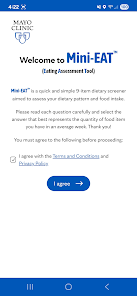
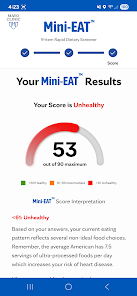
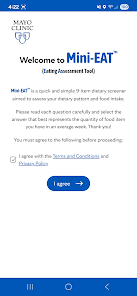
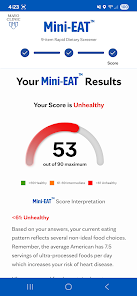
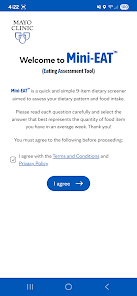
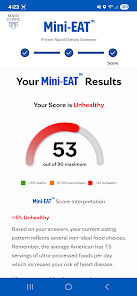
Mayo Clinic Mini-EAT is a 9-item rapid screening tool designed for patients and clinicians to quickly assess dietary patterns and food intake. A validation study (N=661) demonstrated that the tool's scores correlated strongly (r=0.71) with the comprehensive Healthy Eating Index, which requires a much longer questionnaire to compute. The authors conclude that the Mini-EAT is a validated brief dietary screener, providing a practical method for gaining insight into a patient's diet in a clinical setting.

App Screenshots

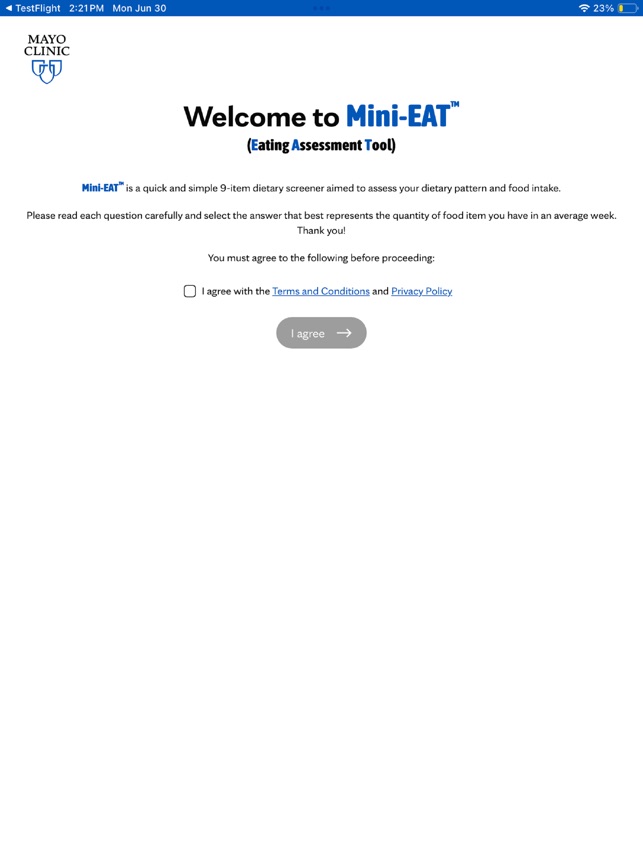
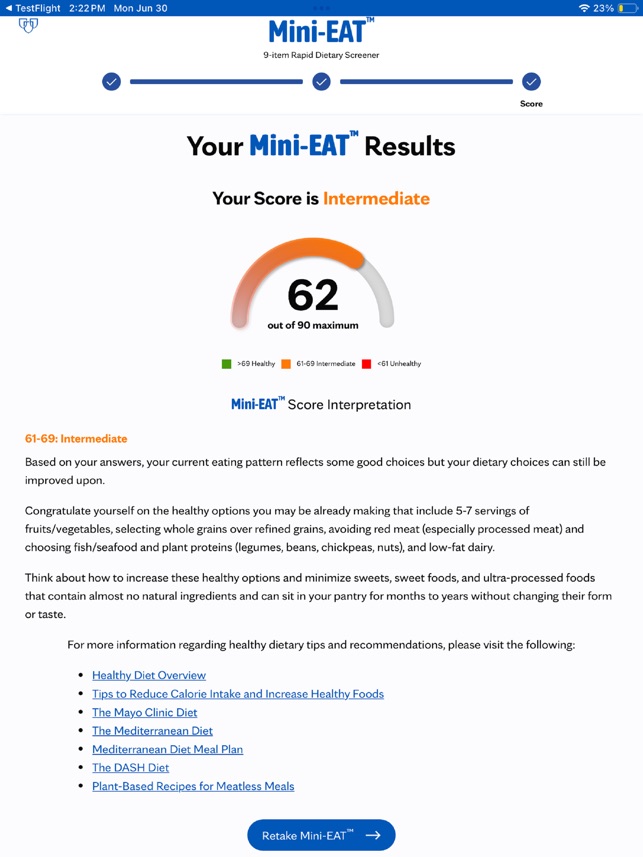
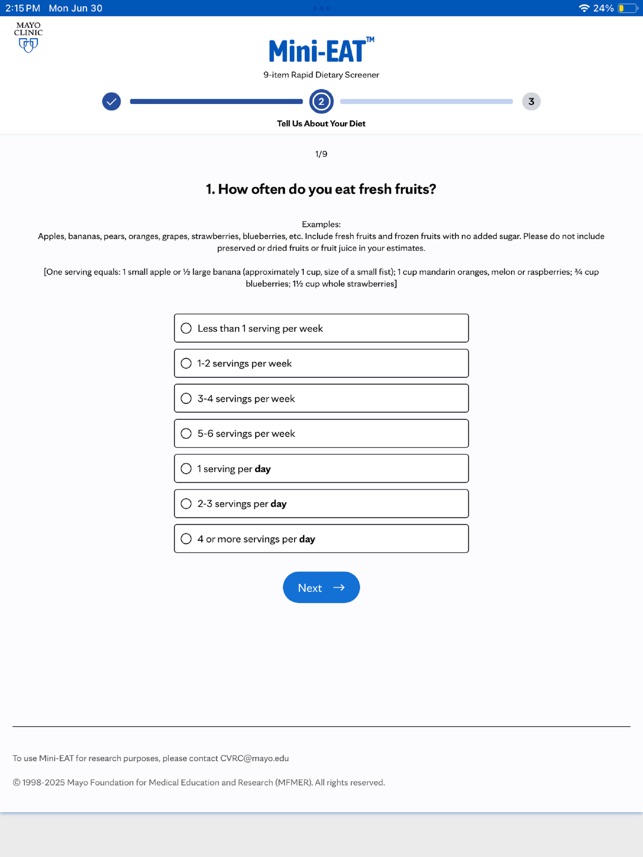
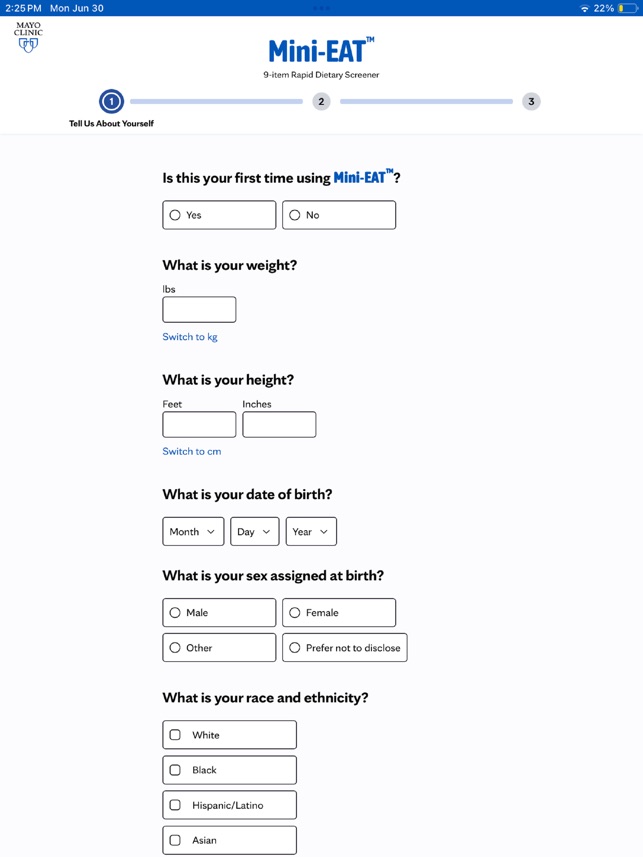
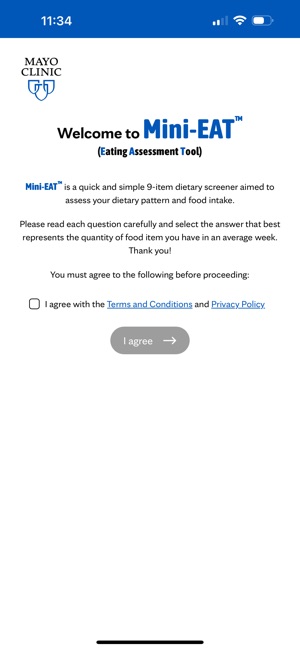
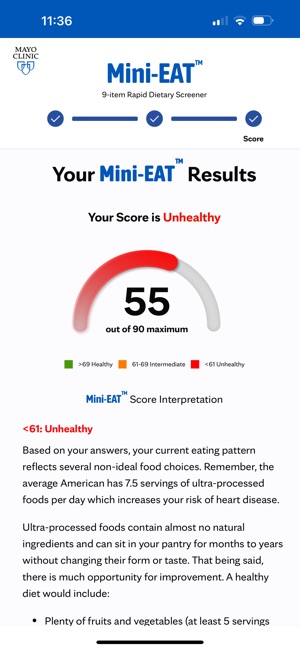
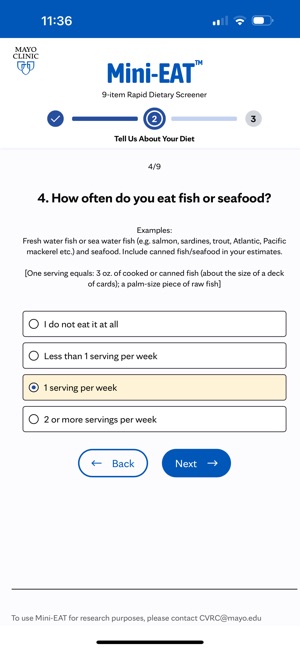
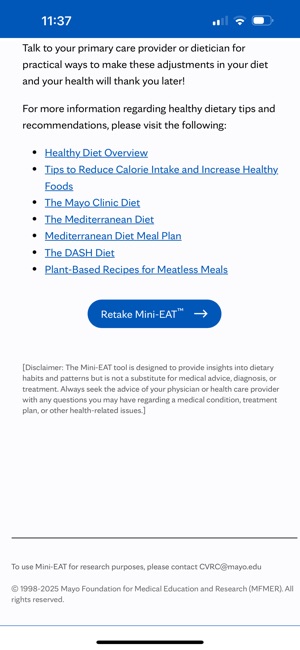
Mayo Clinic Mini-EAT screenshot 1 of 20Mayo Clinic Mini-EAT screenshot 2 of 20Mayo Clinic Mini-EAT screenshot 3 of 20Mayo Clinic Mini-EAT screenshot 4 of 20Mayo Clinic Mini-EAT screenshot 5 of 20Mayo Clinic Mini-EAT screenshot 6 of 20Mayo Clinic Mini-EAT screenshot 7 of 20Mayo Clinic Mini-EAT screenshot 8 of 20Mayo Clinic Mini-EAT screenshot 9 of 20Mayo Clinic Mini-EAT screenshot 10 of 20Mayo Clinic Mini-EAT screenshot 11 of 20Mayo Clinic Mini-EAT screenshot 12 of 20Mayo Clinic Mini-EAT screenshot 13 of 20Mayo Clinic Mini-EAT screenshot 14 of 20Mayo Clinic Mini-EAT screenshot 15 of 20Mayo Clinic Mini-EAT screenshot 16 of 20Mayo Clinic Mini-EAT screenshot 17 of 20Mayo Clinic Mini-EAT screenshot 18 of 20Mayo Clinic Mini-EAT screenshot 19 of 20Mayo Clinic Mini-EAT screenshot 20 of 20

Detailed Description

Functionality & Mechanism

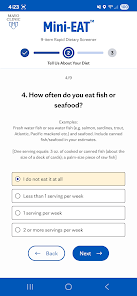
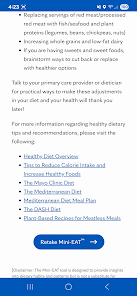
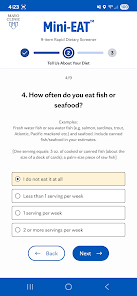
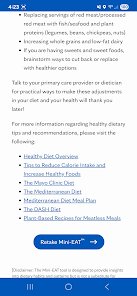
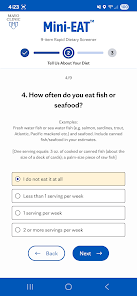
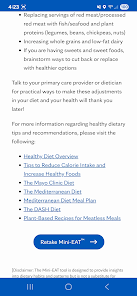
Developed by Mayo Clinic, the Mini-Eating Assessment Tool (Mini-EAT) functions as a rapid dietary screener. The interface captures input on nine distinct food group consumption frequencies, including fruits, vegetables, whole grains, refined grains, fish, dairy, and sweets. This system is engineered for rapid completion within a clinical workflow, providing an efficient method to assess dietary patterns without requiring a comprehensive food frequency questionnaire. The tool generates a summary assessment based on validated item correlations.

Evidence & Research Context

  • A validation study (N=661) demonstrated the 9-item Mini-EAT has a strong correlation (r=0.71) with the comprehensive Healthy Eating Index (HEI)-2015 score.
  • The tool was systematically reduced from an initial 19-item survey to the final 9 items most predictive of dietary quality, maintaining its predictive ability.
  • The validation cohort included adults from preventive cardiology, cardiac rehabilitation settings, and healthy volunteers, indicating its initial testing in relevant populations.
  • The authors note that further research is required to establish the tool's validity across more diverse populations and clinical settings.

Intended Use & Scope

Primarily designed for clinicians, the Mini-EAT functions as a rapid, preliminary screening instrument to assess patient dietary patterns within a clinical workflow. It is not a comprehensive diagnostic tool and does not replace a full nutritional analysis. Results should guide patient-provider conversations and inform the need for a formal dietetic assessment.

Studies & Publications

1 publication

Peer-reviewed research associated with this app.

Validation Study

Validation of a Brief Dietary Questionnaire for Use in Clinical Practice: Mini-EAT (Eating Assessment Tool)

Lara-Breitinger et al. (2022) · Journal of the American Heart Association

Accurately assessed diet quality with strong correlation to comprehensive dietary guidelines while using only 9 questions.

Background There is a scarcity of validated rapid dietary screening tools for patient use in the clinical setting to improve health and reduce cardiovascular risk. The Healthy Eating Index (HEI) 2015 measures compliance with the 2015 to 2020 Dietary Guidelines for Americans but requires completion of an extensive diet assessment to compute, which is time consuming and impractical. The authors hypothesize that a 19?item dietary survey assessing consumption of common food groups known to affect health will be correlated with the HEI?2015 assessed by a validated food frequency questionnaire and can be further reduced without affecting validity. Methods and Results A 19?item Eating Assessment Tool (EAT) of common food groups was created through literature review and expert consensus. A cross?sectional survey was then conducted in adult participants from a preventive cardiology clinic or cardiac rehabilitation and in healthy volunteers (n=661, mean age, 36?years; 76% women). Participants completed an online 156?item food frequency questionnaire, which was used to calculate the HEI score using standard methods. The association between each EAT question and HEI group was analyzed by Kruskal?Wallis test. Linear regression models were subsequently used to identify univariable and multivariable predictors for HEI score for further reduction in the number of items. The final 9?item model of Mini?EAT was validated by 5?fold cross validation. The 19?item EAT had a strong correlation with the HEI score (r=0.73) and was subsequently reduced to the 9 items independently predictive of the HEI score: fruits, vegetables, whole grains, refined grains, fish or seafood, legumes/nuts/seeds, low?fat dairy, high?fat dairy, and sweets consumption, without affecting the predictive ability of the tool (r=0.71). Conclusions Mini?EAT is a 9?item validated brief dietary screener that correlates well with a comprehensive food frequency questionnaire. Future studies to test the Mini?EAT's validity in diverse populations and for development of clinical decision support systems to capture changes over time are needed.
... Read More

Mayo Clinic Mini-EAT

Free