MI Diaries
Published in academic literature
App Summary
App Screenshots
Detailed Description
Functionality & Mechanism
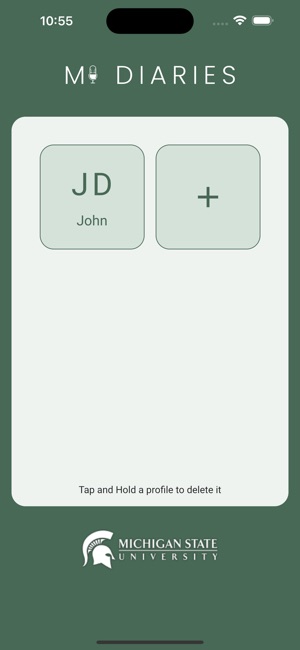
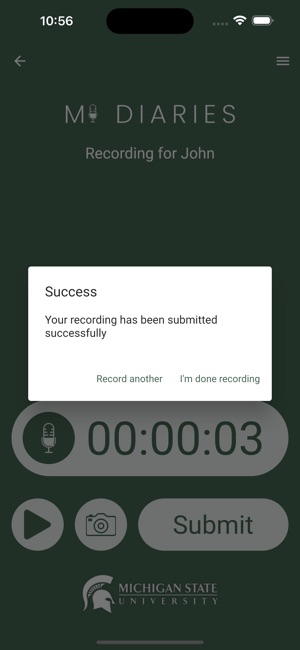
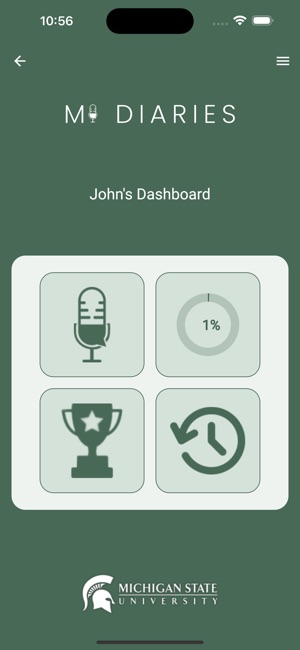
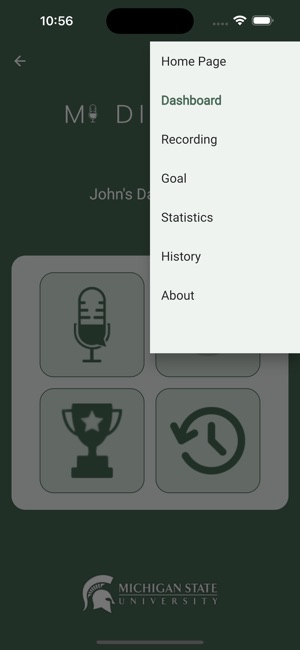
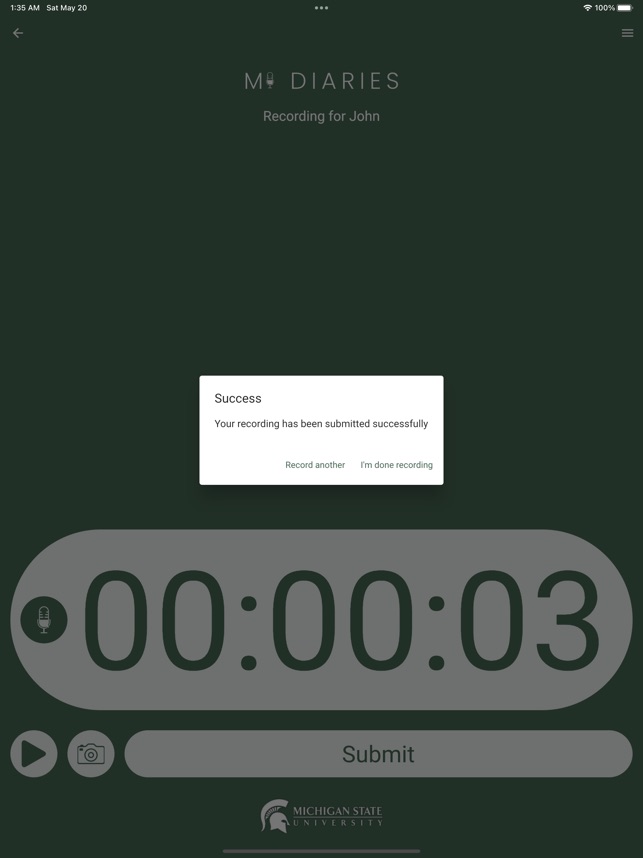
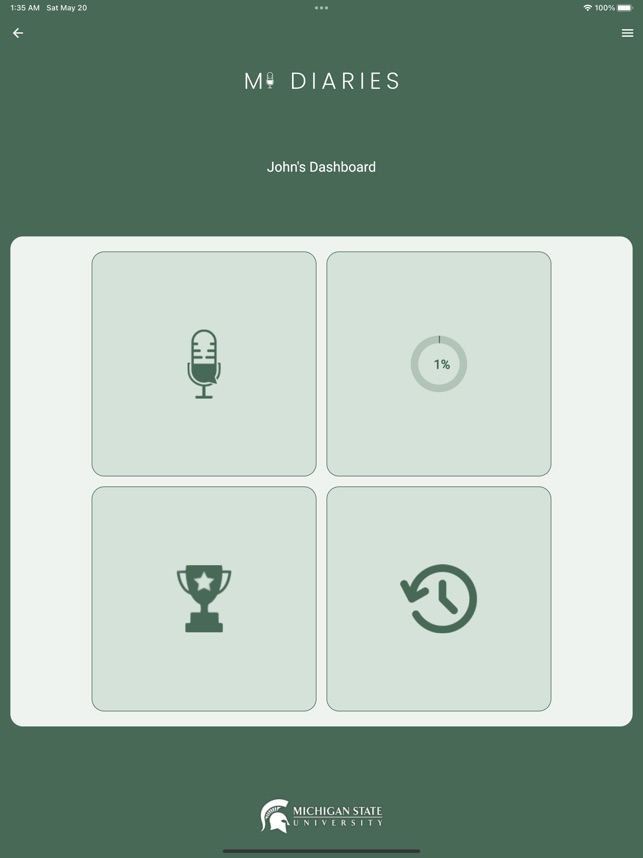
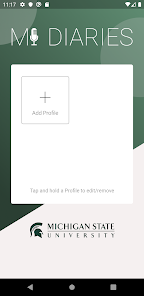
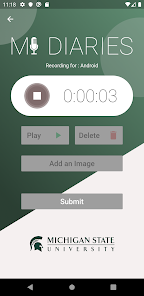
The MI Diaries mobile application, developed by Michigan State University's Sociolinguistics Lab, facilitates the longitudinal collection of self-recorded audio diaries for sociolinguistic research. The system distributes periodic email prompts designed to elicit personal narratives and other speech styles from participants. Through a custom interface, participants submit asynchronous audio recordings, contributing to an oral history corpus documenting language and life in Michigan. The design supports sustained engagement with minimal participant burden.
Evidence & Research Context
- The associated research presents the app as a successful remote data collection methodology, particularly for engaging populations underrepresented in variationist sociolinguistics, such as older adults.
- The system's question prompts are based on established sociolinguistic methods that are adapted to elicit a range of speech styles, including formal narratives of personal experience.
- The app's design and deployment are detailed in research that addresses the ethical and logistical considerations of remote, longitudinal data collection within a community context.
Intended Use & Scope
This application is designed as a specialized data collection tool for sociolinguistic researchers and participating citizen scientists. Its primary utility is the contribution of audio data to a specific, long-term oral history corpus. The app does not function as a private journaling platform or provide any form of therapeutic or diagnostic support.
Studies & Publications
Peer-reviewed research associated with this app.
Sociolinguistic research projects as brands
Wagner et al. (2025) · Linguistics Vanguard
Referenced in academic literature; no direct evaluation of the appIncluding older adults in variationist sociolinguistics via mobile self-recording
Wagner et al. (2023) · Journal of Language and Aging Research
Describes the research-driven development of this appIn the Media
MSU researcher awarded grant to expand educational opportunities through Michigan linguistics project
Michigan State University researcher Betsy Sneller co-leads MI Diaries, a linguistics project that launched in 2021 to document changes in the lives and language of Michigan residents using a mobile app for voice recordings. The project has collected more than 8,700 individual audio records totaling 1,900+ hours from over 1,500 participants ranging in age from 5 to 78. Sneller recently received a $646,385 NSF grant to expand educational opportunities and partnerships with Michigan school districts.
MSU Research Team and MI Diaries Project Foster Community During Challenging Times
Michigan State University researchers Betsy Sneller and Suzanne Evans Wagner developed MI Diaries to document changes in the lives and language of Michigan residents, using a mobile app that allows people to record their own voices. "We work hard to curate a sense of community between ourselves and the diarists," said Sneller, MSU Assistant Professor of Linguistics. The project is supported through grants from the National Science Foundation, National Endowment for the Humanities, and MSU.
MI Diaries Receives NSF Grant to Support Its Expansion
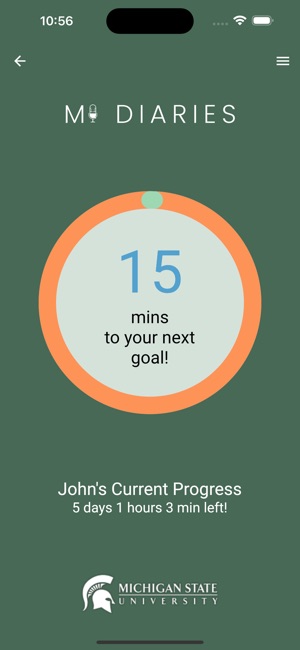
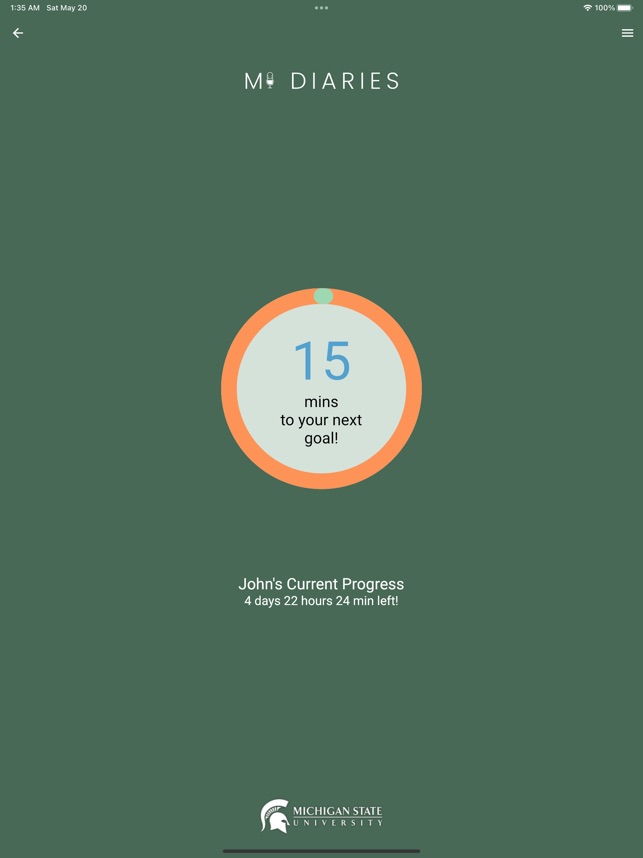
Michigan State University's Sociolinguistics Lab developed MI Diaries to track language changes and capture daily experiences during COVID-19, using innovative self-recorded audio diaries that participants submit through a custom mobile app. The project received a $265,830 NSF grant to support infrastructure expansion, with Assistant Professor Betsy Sneller stating "The NSF grant will support the improvement and expansion of the MI Diaries infrastructure to optimize participant recruitment and retention through the development of improved technology (a gamified app)." The funding will enable community partnerships with youth organizations across Michigan and allow the data collection system to be shared with other sociolinguists.
MI Diaries Project Sees Seven Team Members Graduate
Michigan State University's Sociolinguistics Lab developed MI Diaries to track changes to language during the COVID-19 pandemic, collecting recorded speech from Michigan residents since April 2020. Assistant Professor Betsy Sneller stated, "Our graduating seniors have been absolutely integral to the success of MI Diaries and have been an important part of lab meetings, helping come up with creative diary prompt questions to ask each week." The project is led by Assistant Professor Betsy Sneller and Associate Professor Suzanne Wagner.
App Information
Developer
Michigan State UniversityCategory
Evidence Profile
Published in academic literature
Platforms
Updated
Sep 2025
© 2025 Michigan State University