
AppsFromResearch
microCavity icon

microCavity

Evidence Tier:DOCUMENTED

Published in academic literature

For:Researchers & AcademicsIndustry Professionals

App Summary

microCavity is a research tool that enables scientists and engineers to wirelessly control and monitor whispering-gallery-mode (WGM) optical resonator sensing systems from an iPhone. The associated research demonstrates the system's utility as a wireless photonic sensor node, which is immune to electromagnetic interference, successfully using it for real-time thermal sensing and aerial temperature mapping. The authors conclude that this approach shows the practical capability of WGM sensors and may pave the way for their large-scale deployment in Internet of Things (IoT) applications.

App Screenshots

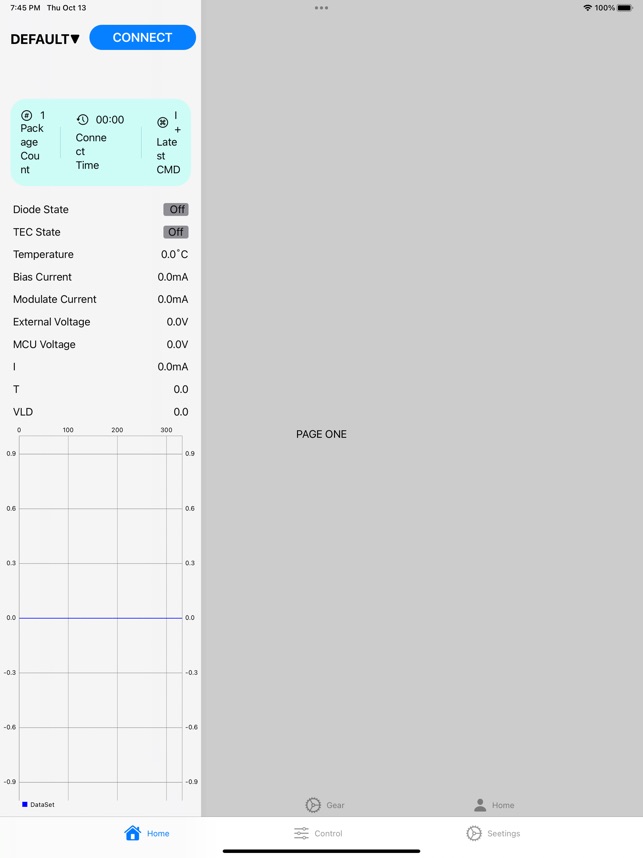
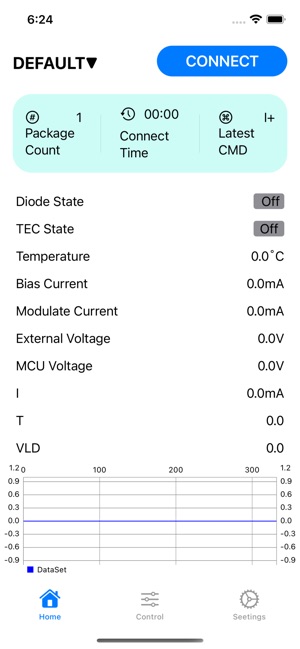
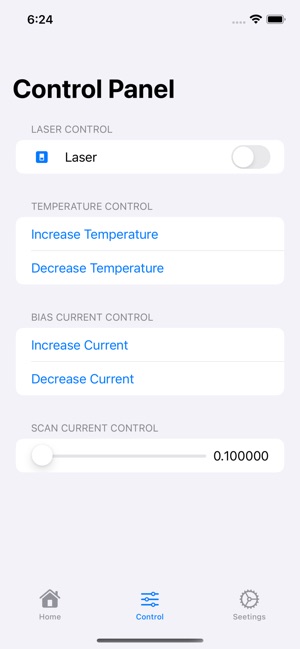
microCavity screenshot 1 of 4microCavity screenshot 2 of 4microCavity screenshot 3 of 4microCavity screenshot 4 of 4

Detailed Description

Functionality & Mechanism The microCavity application provides wireless remote control for whispering-gallery-mode (WGM) microresonator sensing systems. It interfaces with a miniaturized embedded system, supplanting conventional bulky laboratory equipment. The interface facilitates real-time visualization of the sensor's transmission spectrum, and its core functions enable the initiation of measurements and the capture of instrument screenshots. This system allows for remote data acquisition and monitoring of the photonic sensor hardware directly from a compatible iOS device.

Evidence & Research Context

  • A general research article details the development and application of the WGM sensing system that is controlled by the microCavity app.
  • The system was deployed to conduct real-time, continuous air temperature measurements over a 12-hour period, demonstrating its capacity for environmental monitoring.
  • In a proof-of-concept demonstration, the sensor node was mounted on an unmanned drone to perform aerial mapping of temperature distributions.
  • The associated research positions the technology as a photonic sensor solution for Internet of Things (IoT) applications, particularly in harsh environments with electromagnetic interference.

Intended Use & Scope This application is designed for researchers and engineers operating wireless WGM optical resonator systems. Its primary utility is as a remote control and data acquisition interface for specialized hardware in laboratory or field research settings. The app does not perform independent data analysis and is non-functional without the corresponding sensor hardware.

Studies & Publications

1 publication

Peer-reviewed research associated with this app.

Development/Design Paper

Wireless whispering-gallery-mode sensor for thermal sensing and aerial mapping

Xu et al. (2018) · Light: Science & Applications

Describes the research-driven development of this app
The Internet of Things (IoT)1,2 employs a large number of spatially distributed wireless sensors to monitor physical environments, e.g., temperature, humidity, and air pressure, and has many applications, including environmental monitoring3, health care monitoring4, smart cities5, and precision agriculture. A wireless sensor can collect, analyze, and transmit measurements of its environment1,2. Currently, wireless sensors used in the IoT are predominately based on electronic devices that may suffer from electromagnetic interference in many circumstances. Being immune to the electromagnetic interference, optical sensors provide a significant advantage in harsh environments6. Furthermore, by introducing optical resonance to enhance light–matter interactions, optical sensors based on resonators exhibit small footprints, extreme sensitivity, and versatile functionalities7,8, which can significantly enhance the capability and flexibility of wireless sensors. Here we provide the first demonstration of a wireless photonic sensor node based on a whispering-gallery-mode (WGM) optical resonator, in which light propagates along the circular rim of such a structure like a sphere, a disk, or a toroid by continuous total internal reflection. The sensor node is controlled via a customized iOS app. Its performance was studied in two practical scenarios: (1) real-time measurement of the air temperature over 12 h and (2) aerial mapping of the temperature distribution using a sensor node mounted on an unmanned drone. Our work demonstrates the capability of WGM optical sensors in practical applications and may pave the way for the large-scale deployment of WGM sensors in the IoT.
... Read More

microCavity

Free