
AppsFromResearch
Mobile Science - Acceleration icon

Mobile Science - Acceleration

Evidence Tier:DOCUMENTED

Published in academic literature

For:Researchers & AcademicsGeneral Public & Enthusiasts

App Summary

Mobile Science - Acceleration is an educational tool that allows students to use their mobile device's built-in accelerometer to record, graph, and analyze motion data for science experiments. The app is based on the principle of using ubiquitous mobile devices as portable science laboratories, enabling data collection and analysis in real-world environments outside of a traditional classroom. The associated research concludes that this approach can make learning more personal and immediate, allowing students to analyze phenomena like acceleration at the point of curiosity.

App Screenshots

Mobile Science - Acceleration screenshot 1 of 4Mobile Science - Acceleration screenshot 2 of 4Mobile Science - Acceleration screenshot 3 of 4Mobile Science - Acceleration screenshot 4 of 4

Detailed Description

Functionality & Mechanism

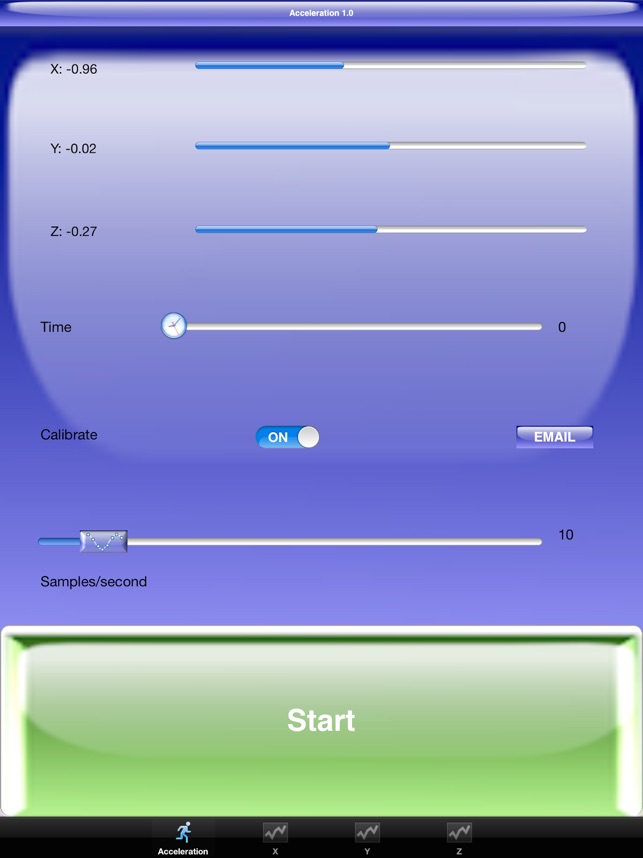
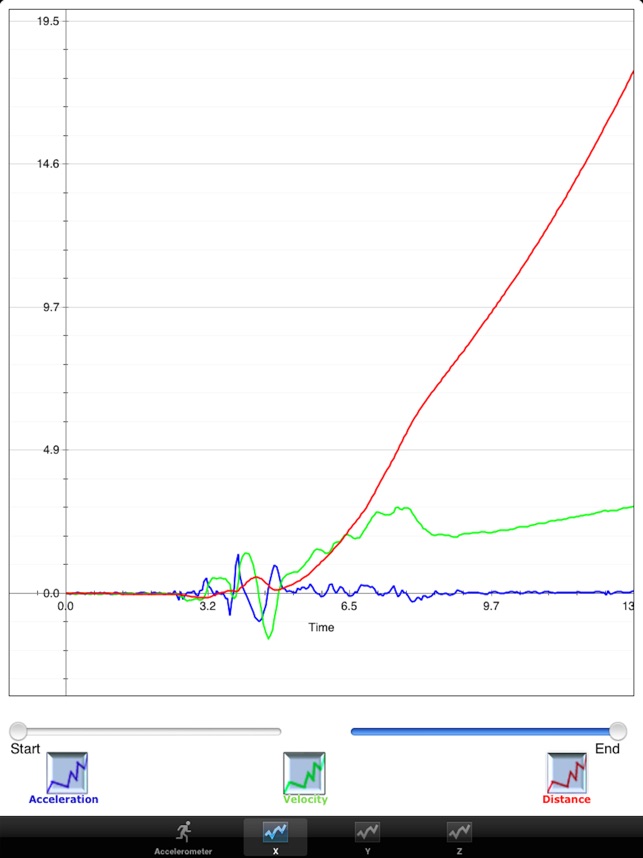
Developed at Indiana University SE, this tool captures, visualizes, and exports accelerometer data from a mobile device's internal sensors. The system facilitates setting a sampling rate from 1 to 100 Hz before initiating a recording session. An integrated calibration function zeros the X, Y, and Z axes to isolate specific motion from background forces. During data acquisition, the interface renders real-time graphs of acceleration, velocity, and distance, which can be reviewed and exported via email for external analysis.

Evidence & Research Context

  • The associated research, a general article on mobile learning, frames the application as a tool for conducting science experiments outside of traditional laboratory environments.
  • It is designed to leverage a mobile device's integrated accelerometer, transforming the device into a data acquisition instrument for physics education.
  • The authors articulate a pedagogical approach where students can analyze real-world phenomena (e.g., amusement park rides) to create more personal and experiential learning opportunities.

Intended Use & Scope

This tool is designed for educators and students in physics or general science courses. Its primary utility is the collection and visualization of motion data for demonstrative experiments. The system does not provide pedagogical content or interpret results. Its output is not a substitute for data from calibrated laboratory instruments and requires contextual analysis by the user.

Studies & Publications

1 publication

Peer-reviewed research associated with this app.

Development/Design Paper

Mobile Science

Wisman et al. (2011) · The International Journal of Ubiquitous Learning

Describes the research-driven development of this app
The conference title of Ubiquitous Learning speaks of learning at any point in space and, presumably, at any moment in time. Mobile devices, particularly cell phones, present a technology that can create learning opportunities anyplace and anytime. Our work has long been to create tools for basic science experimentation, with similar capabilities to specialized equipment in an undergraduate science laboratory, but using personal computers for data acquisition and analysis. Now, using a mobile device, significant science experiments can be done outside the laboratory, in the student's native environment. Importantly, when the mobile device is a cell phone, which almost all students have on their person almost all the time, a student can collect and analyze the data of an experiment when and where an opportunity and their curiosity intersect. This has the potential to dramatically change the relationship between students and their role in learning, and how they contemplate science; for example, in addition to the standard approach of studying acceleration by rolling a ball down an inclined plane in their college lab, the student could also bungee-jump or ride a roller-coaster to more personally experience the effects and analyze the experiment. Many mobile phones come already are equipped with accelerometers appropriate for such an analysis. Another important dimension of mobile devices is the combining of voice and data communications with multiple and malleable means of human interaction, that include touch screens, sounds, vibration, GPS, magnetometer, accelerometers, vision, and more – all of which provide the foundation for a rich collaboration between students nearby or anywhere on earth, allowing students to work together on a common problem without the constraints of place or time. We share a number of examples of recent work on several different mobile platforms, including examples using accelerometers, magnetometers and sound, some of the lessons learned, and potential future directions.
... Read More

Mobile Science - Acceleration

Free