
AppsFromResearch
MyHeart Counts icon

MyHeart Counts

Evidence Tier:CLINICAL GRADE

Validated in clinical trials · Supported by multiple studies

For:Researchers & AcademicsGeneral Public & EnthusiastsPatients & Caregivers

App Summary

MyHeart Counts is a research app that helps individuals track their physical activity, estimate cardiovascular risk, and assess functional capacity with a 6-minute walk test. A randomized crossover trial substudy (N=2,458) found that personalized e-coaching prompts, tailored to an individual's baseline activity, significantly increased their mean daily step count. The authors conclude that digital interventions are more effective for increasing short-term physical activity when prompts are personalized.

App Screenshots

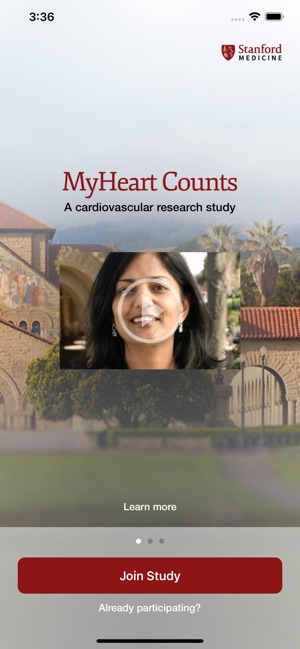
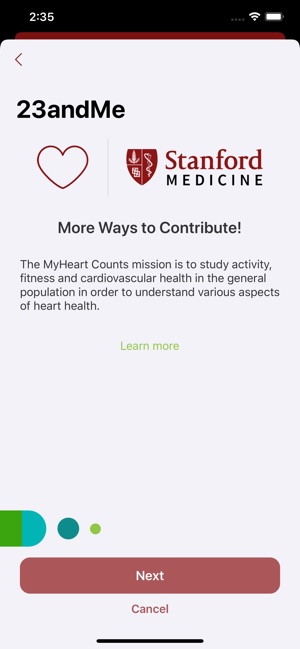
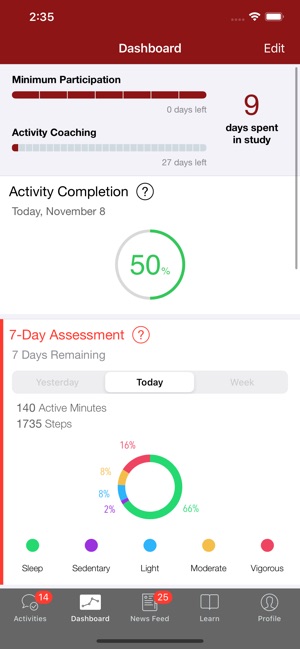
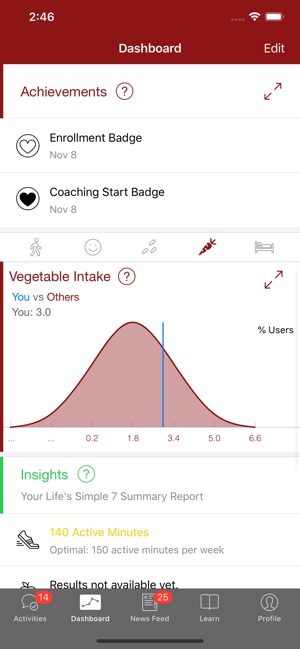
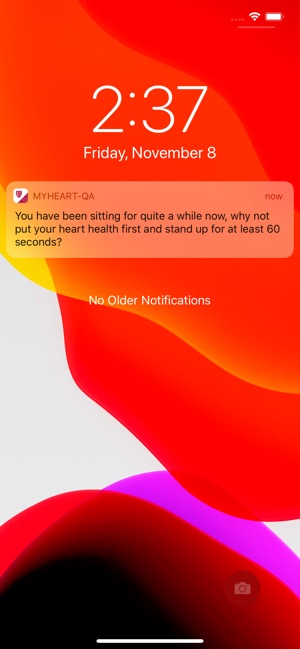
MyHeart Counts screenshot 1 of 6MyHeart Counts screenshot 2 of 6MyHeart Counts screenshot 3 of 6MyHeart Counts screenshot 4 of 6MyHeart Counts screenshot 5 of 6MyHeart Counts screenshot 6 of 6

Detailed Description

Functionality & Mechanism

Developed by Stanford Medicine, MyHeart Counts functions as a cardiovascular health research platform. The app leverages smartphone sensors to passively collect physical activity and sleep data. Participants actively contribute through health questionnaires, a guided six-minute walk test to assess functional capacity, and by inputting lipid and blood pressure values. The system then calculates a 10-year cardiovascular risk score and a corresponding "heart age," providing personalized feedback and testing various digital coaching interventions.

Evidence & Research Context

  • A large-scale feasibility study (N=48,968) demonstrated the app is a viable platform for collecting real-world cardiovascular health data, though sustained participant engagement and data completion were identified as challenges.
  • In a randomized crossover substudy (N=2,458), personalized e-coaching prompts significantly increased short-term physical activity (+402 steps/day) more effectively than generic prompts or standard educational content.
  • Analysis of over 30,000 remotely collected six-minute walk tests (N=8,922 participants) validated associations between test distance and clinical variables, including diagnoses of atrial fibrillation and peripheral artery disease.
  • In a longitudinal subset of participants (N=1,129), sustained app use was associated with a statistically significant increase in six-minute walk test distance (+17.5 m).
  • The app has been utilized as a data collection tool in multiple studies, generating a large, publicly available dataset for cardiovascular research.

Intended Use & Scope

Primarily designed for researchers to conduct large-scale observational and interventional cardiovascular studies. The app also serves the general public as a tool for self-monitoring and health education. The risk scores provided are for informational purposes only and do not constitute a clinical diagnosis. Users should consult a healthcare professional for medical advice and management of cardiovascular risk.

Studies & Publications

4 publications

Peer-reviewed research associated with this app.

Effectiveness/Outcome Study

Unlocking insights: Clinical associations from the largest 6-minute walk test collection via the my Heart Counts Cardiovascular Health Study, a fully digital smartphone platform

Kim et al. (2025) · Progress in Cardiovascular Diseases

Validated known health associations and identified new clinical patterns using data from over 30,000 smartphone-based walk tests.

The six-minute walk test (6MWT) is a prognostic sub-maximal exercise test used clinically as a measure of functional capacity. With the emergence of advanced sensors, 6MWTs are being performed remotely via smartphones and other devices. The My Heart Counts Cardiovascular Health Study is a smartphone application that serves as a digital platform for studies of human cardiovascular health, and has been used to perform 30,475 6MWTs on 8922 unique participants. As our 30,475 6MWTs represent the largest such collection of data available, we sought to identify associations with measured demographic and clinical variables with 6MWT distance at enrollment and separately determine if use of the My Heart Counts smartphone application led to changes in 6MWT distance. We present the public data release of our 30,475 6MWTs and the launch of a webpage-based data viewer of summary-level statistics, to compare the functional capacity of an individual by their age, gender, height, weight, and disease status (https://mhc-6mwts.streamlit.app). Using multivariable regression, we report associations of demographic and clinical variables with baseline 6MWT distance (N = 3606), validating prior associations with age, male gender, height, and baseline physical activity level with 6MWT distance. We also report associations of 6MWT baseline distance with employment status (+12.4 m ±4.9 m, P = 0.011) and feeling depressed (-3.65 m, ±0.79 m, P < 0.001). We separately found that cardiovascular disease status was significantly associated with decreased 6MWT distance for atrial fibrillation (-24.9 m ±7.8 m, P = 0.0013), peripheral artery disease (-41.7 m ±12.5 m, P < 0.001), and pulmonary arterial hypertension (-76.3 m ±24.8 m, P = 0.0022). Heart failure was associated with decreased 6MWT distance but was not statistically significant (-25.5 m ±14.5 m, P = 0.078). In a subset of participants who conducted repeat 6MWTs separated by at least 1 week but no greater than 3 months (N = 1129), we found that use of the My Heart Counts app was associated with a statistically significant increase in 6MWT distance (+17.5 m ±7.85 m, P < 0.001). We validate previously identified associations from clinic-performed 6MWTs, demonstrating the utility of a mobile method in collecting 6MWT data for clinicians and researchers. We also demonstrate that use of the My Heart Counts app is associated with small, but significant increases in 6MWT distance. Given the importance of 6MWTs in assessment of functional capacity, our publicly-available data will serve an important purpose as a health and disease-specific reference for investigators worldwide.
... Read More
RCT

Personalized digital behavior interventions increase short-term physical activity: a randomized control crossover trial substudy of the MyHeart Counts Cardiovascular Health Study

Javed et al. (2023) · European Heart Journal - Digital Health

Personalized coaching increased daily steps by 402 and hourly standing reminders increased steps by 292.

AimsPhysical activity is associated with decreased incidence of the chronic diseases associated with aging. We previously demonstrated that digital interventions delivered through a smartphone app can increase short-term physical activity.Methods and resultsWe offered enrolment to community-living iPhone-using adults aged ≥18 years in the USA, UK, and Hong Kong who downloaded the MyHeart Counts app. After completion of a 1-week baseline period, e-consented participants were randomized to four 7-day interventions. Interventions consisted of: (i) daily personalized e-coaching based on the individual's baseline activity patterns, (ii) daily prompts to complete 10 000 steps, (iii) hourly prompts to stand following inactivity, and (iv) daily instructions to read guidelines from the American Heart Association (AHA) website. After completion of one 7-day intervention, participants subsequently randomized to the next intervention of the crossover trial. The trial was completed in a free-living setting, where neither the participants nor investigators were blinded to the intervention. The primary outcome was change in mean daily step count from baseline for each of the four interventions, assessed in a modified intention-to-treat analysis (modified in that participants had to complete 7 days of baseline monitoring and at least 1 day of an intervention to be included in analyses). This trial is registered with ClinicalTrials.gov, NCT03090321.ConclusionBetween 1 January 2017 and 1 April 2022, 4500 participants consented to enrol in the trial (a subset of the approximately 50 000 participants in the larger MyHeart Counts study), of whom 2458 completed 7 days of baseline monitoring (mean daily steps 4232 ± 73) and at least 1 day of one of the four interventions. Personalized e-coaching prompts, tailored to an individual based on their baseline activity, increased step count significantly (+402 ± 71 steps from baseline, P = 7.1⨯10−8). Hourly stand prompts (+292 steps from baseline, P = 0.00029) and a daily prompt to read AHA guidelines (+215 steps from baseline, P = 0.021) were significantly associated with increased mean daily step count, while a daily reminder to complete 10 000 steps was not (+170 steps from baseline, P = 0.11). Digital studies have a significant advantage over traditional clinical trials in that they can continuously recruit participants in a cost-effective manner, allowing for new insights provided by increased statistical power and refinement of prior signals. Here, we present a novel finding that digital interventions tailored to an individual are effective in increasing short-term physical activity in a free-living cohort. These data suggest that participants are more likely to react positively and increase their physical activity when prompts are personalized. Further studies are needed to determine the effects of digital interventions on long-term outcomes.
... Read More

In the Media

Smartphones could be game-changing tool for cardiovascular research

Stanford researchers launched MyHeart Counts to transform cardiovascular research by using smartphones to provide rapid, large-scale and real-time measurement of individuals' physical activity. Within six months of the app's launch, researchers had enrolled 47,109 participants from all 50 states who consented to participate in the study using Apple's ResearchKit framework. The app collected data from 4,990 participants who completed a six-minute walk fitness test using built-in motion sensors, achieving numbers several times larger than the largest study previously published.

STANFORDRead article

Stanford's heart health app launches in Hong Kong and UK

Stanford University School of Medicine developed MyHeart Counts to enable users to learn about their heart health while participating in a large-scale cardiovascular study, using Apple's ResearchKit framework and iPhone motion sensors to collect physical activity data. "We are ready to take the study as far as it will go. We would like to build a new Framingham heart study for the ages," said Euan Ashley, professor of cardiovascular medicine at Stanford, noting they want millions of participants. The app has expanded to Hong Kong and the UK with over 41,000 users already participating in the study.

STANFORDRead article

Stanford launches smartphone app to study heart health

Stanford University School of Medicine researchers launched MyHeart Counts to study heart disease prevention and treatment, using Apple's new ResearchKit framework to collect data about physical activity and cardiac risk factors. "We are looking for everyone who is curious as to how healthy their heart is to download this app," said Dr. Alan Yeung, noting that users can see their activity levels and 'heart age.' The app launched March 9, 2015, and aims to provide data for the largest study of measured physical activity and cardiovascular health to date.

STANFORDRead article

MyHeart Counts

Free