AppsFromResearch
NASA Visualization Explorer icon

NASA Visualization Explorer

Evidence Tier:DOCUMENTED

Published in academic literature

For:General Public & EnthusiastsKids & Youth

App Summary

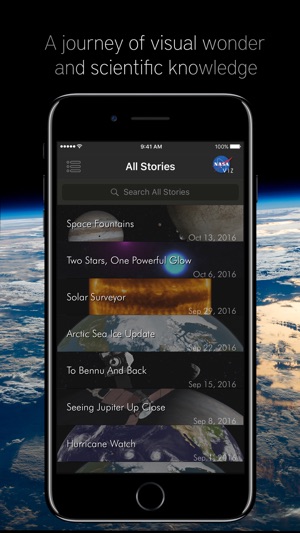
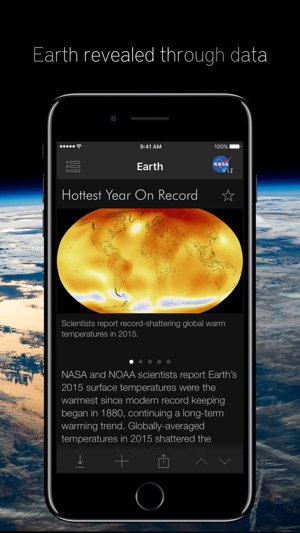
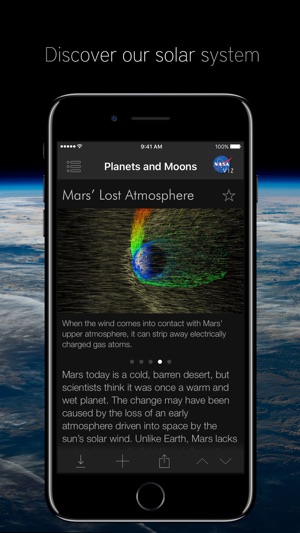
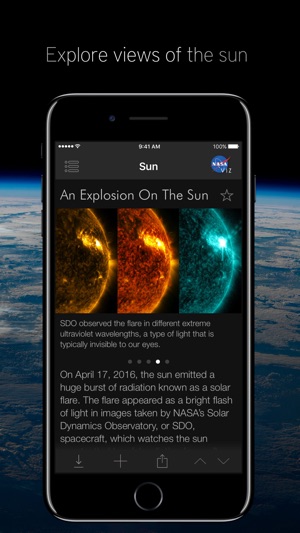
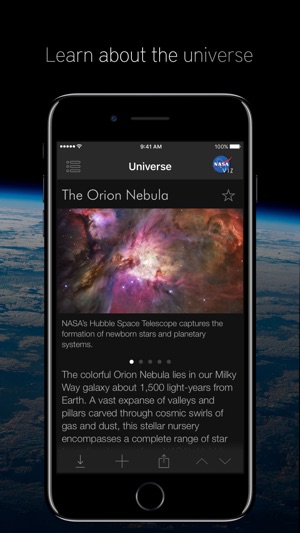
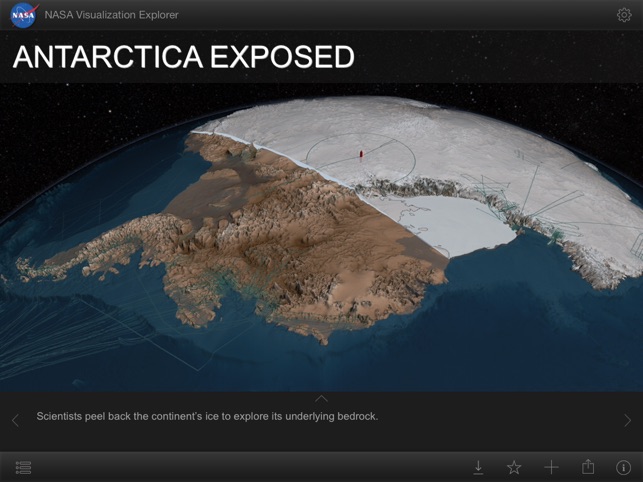
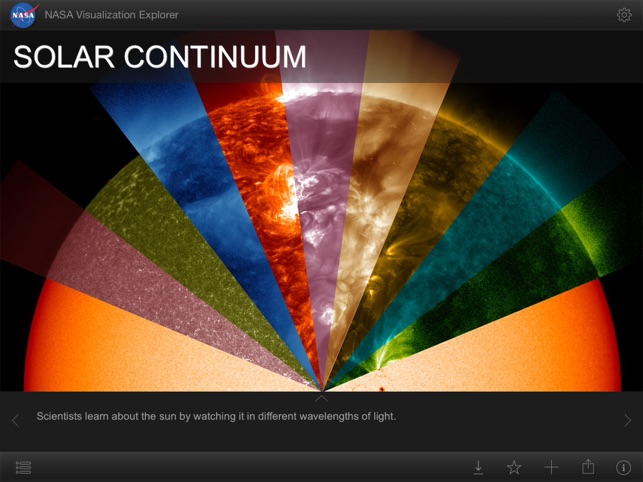
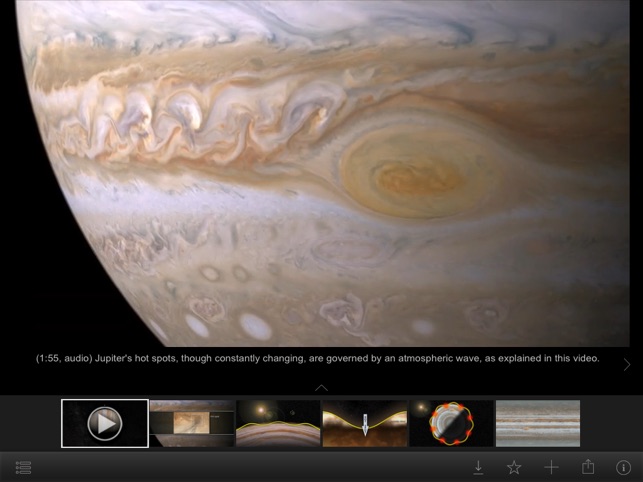
This educational app delivers stories about advanced space-based research, using visualizations to make NASA's cutting-edge science accessible to the general public and students. The associated research explains that tailored visualizations can make complex scientific concepts more engaging, concrete, and understandable for learners with limited prior domain knowledge. The authors conclude that adapting complex data into accessible visual formats offers a powerful opportunity to enrich educational settings and enhance learning for a broad audience.

App Screenshots

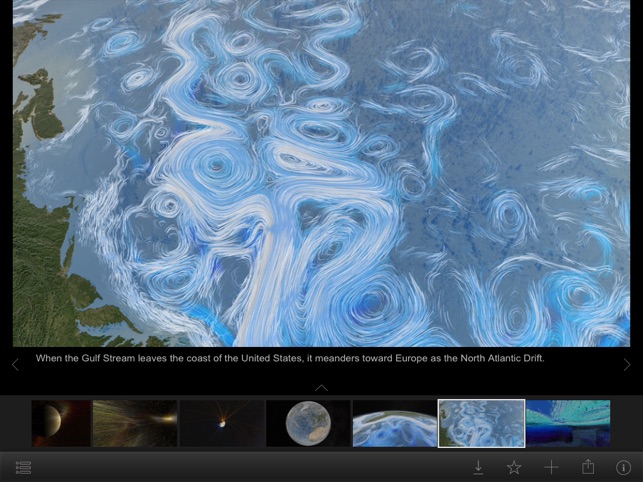
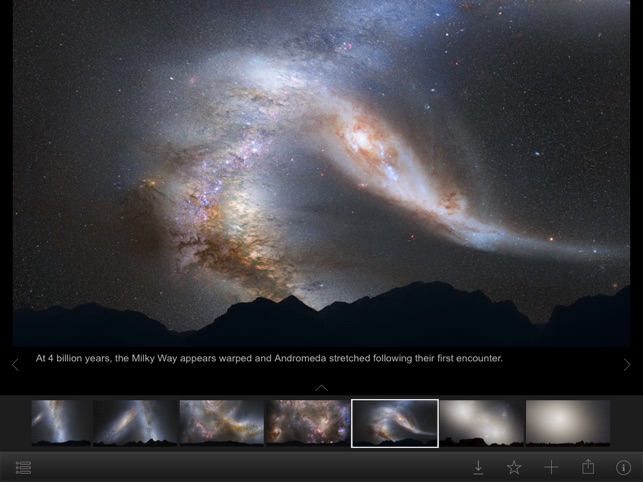
NASA Visualization Explorer screenshot 1 of 10NASA Visualization Explorer screenshot 2 of 10NASA Visualization Explorer screenshot 3 of 10NASA Visualization Explorer screenshot 4 of 10NASA Visualization Explorer screenshot 5 of 10NASA Visualization Explorer screenshot 6 of 10NASA Visualization Explorer screenshot 7 of 10NASA Visualization Explorer screenshot 8 of 10NASA Visualization Explorer screenshot 9 of 10NASA Visualization Explorer screenshot 10 of 10

Detailed Description

Functionality & Mechanism

The NASA Visualization Explorer application functions as a content portal, delivering curated visual narratives derived from advanced space-based research. Developed by NASA, the interface provides direct access to visualizations of Earth and space science phenomena, leveraging data from the agency's research spacecraft fleet. Sessions involve exploring regularly updated content modules, each presenting a distinct research story in a format designed for accessibility and engagement. The system requires an active internet connection to stream and update its visualization library.

Evidence & Research Context

  • The application's design is informed by research on adapting scientific visualizations for educational and general public audiences.
  • Associated research describes the utility of visualizations that require limited prior domain knowledge to enhance accessibility and make complex concepts more concrete.
  • The pedagogical approach leverages visual storytelling to render complex data from Earth and space science more comprehensible for learners.
  • This system exemplifies principles for scaling and adapting scientific data for delivery on consumer devices to support public outreach and educational objectives.

Intended Use & Scope

This application is intended as an educational resource for the general public, students, and educators. Its primary utility is to disseminate findings from NASA research and enhance scientific literacy through accessible visual storytelling. The system delivers curated, narrative-driven content and is not designed for primary data analysis or conducting independent research. For access to raw datasets, users should consult primary NASA scientific archives.

Studies & Publications

1 publication

Peer-reviewed research associated with this app.

Non-Evaluative Reference

Reaching Broad Audiences in an Educational Setting

Rheingans et al. (2020) · Foundations of Data Visualization

Referenced in academic literature; no direct evaluation of the app
Visualization can be a powerful tool to enhance learning and to better support the learning process. Tailoring visualization to the specific audiences and goals of these situations can increase the likelihood of effective communication. In many cases, visualizations which require limited prior specific domain knowledge are helpful. Similarly, when crafting visualization development experiences for students in visualization courses, selecting easy-to-understand application domains for projects helps students to leverage their existing intuition about the domain in order to be able to focus on developing skills in visualization. Visualizations offer the potential to enrich educational settings, making concepts more engaging, concrete, and accessible. Visualizations for student audiences present both challenges and opportunities. The challenges are grounded in the potentially limited background knowledge of students, the need for examples to be engaging and accessible, and the need to support explicit curricular goals. The opportunities stem from a freedom to choose methods, data, and even application domains to address curriculum focus and learning objectives. This chapter discusses issues in adapting visualizations for educational settings, tuning visualizations to support curriculum goals, scaling visualization to fit on student devices, and crafting visualization development projects in course settings. The observations discussed in this chapter result from our experiences that include adapting visualizations produced by a science agency for the general public for use in the K-12 classroom, scaling and adapting interactive visualizations developed for a museum setting for classroom use, and designing visualization exercises and projects in a college-level computer science course.
... Read More

NASA Visualization Explorer

Free