
AppsFromResearch
Our Voice Discovery Tool icon

Our Voice Discovery Tool

Evidence Tier:DOCUMENTED

Published in academic literature

For:Researchers & AcademicsGeneral Public & Enthusiasts

App Summary

The Our Voice Discovery Tool is a citizen science app that empowers community residents, including older adults, to systematically document and map neighborhood features that impact health and active living. In an evaluation of the tool (N=27), older adults successfully captured granular, site-specific audio and photo data on environmental elements affecting their mobility, reaching consensus on key barriers and facilitators. The associated research concludes that this participatory approach can help decision-makers build consensus for environmental changes that promote community health and health equity.

App Screenshots

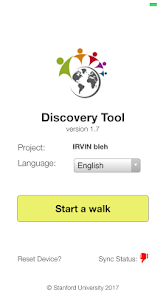
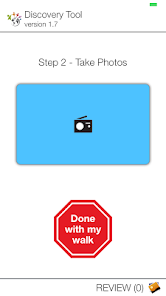
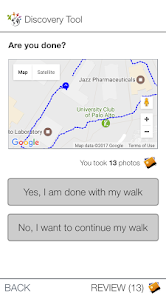
Our Voice Discovery Tool screenshot 1 of 3Our Voice Discovery Tool screenshot 2 of 3Our Voice Discovery Tool screenshot 3 of 3

Detailed Description

Functionality & Mechanism The Our Voice Discovery Tool, developed at Stanford University, is a tablet-based citizen science platform for documenting local built environments. The system leverages integrated GPS to track a participant's route through their community. Throughout a data collection session, the interface enables the capture of geocoded audio narratives and time-stamped photographs, allowing residents to precisely identify environmental features that either support or hinder health-related behaviors. This process generates granular, place-based qualitative data for subsequent analysis by research teams.

Evidence & Research Context

  • The associated research describes the tool as a core component of the "Our Voice" method, a four-step participatory citizen science framework designed to advance health equity outcomes.
  • An initial evaluation (N=27 older adults) demonstrated the tool's utility for engaging community residents in identifying environmental factors that impact opportunities for active living.
  • The study captured 464 geocoded audio narratives and photographs, revealing site-specific environmental profiles that were distinct to each of the three low-income housing neighborhoods assessed.
  • Data collected with the tool can assist decision-makers and planners by complementing other environmental assessments and facilitating consensus-building processes for community-level change.

Intended Use & Scope This tool is designed for public health researchers, urban planners, and community practitioners conducting participatory environmental assessments. Its primary utility is the collection of granular, geolocated qualitative data to inform community-level planning and health equity initiatives. The platform facilitates data gathering and community engagement; it does not provide interventions or generate policy recommendations directly. Data requires expert analysis to guide planning.

Studies & Publications

2 publications

Peer-reviewed research associated with this app.

Development/Design Paper

The "Our Voice" Method: Participatory Action Citizen Science Research to Advance Behavioral Health and Health Equity Outcomes

Pedersen et al. (2022) · International Journal of Environmental Research and Public Health

Describes the research-driven development of this app
Citizen science research that more fully engages the community can systematically involve people from under-resourced groups to create practical health-enhancing improvements across physical, social and food environments. Exemplary health equity-focused outcomes include key health behaviors (e.g., healthy eating or physical activity) and community-level changes (e.g., public transit to food shops) that are central to health promotion while being demonstrably impacted by local environmental contexts. Yet, few examples of this approach are readily available for application within complex, community-based settings. In this paper, we present the Our Voice (OV) four-step method to demonstrate an integrated participatory citizen science approach and its usability for action-focused researchers and community health practitioners. In addition, we present a summary of the major research, processes, and community outcomes, with examples drawn from nutrition and healthy food access areas, among others. Finally, we explore the hallmark features of the OV method that effectively engage citizen scientists, empowering action and fostering solution-building across social and environmental structures impacting community health. Expanding research that marries participatory research philosophies with innovative citizen science methods, supported by systematic data collection, visualization, and delivery technologies, in turn provides a powerful toolkit for tackling local to global health equity challenges.
... Read More
Development/Design Paper

The Stanford Healthy Neighborhood Discovery Tool: A Computerized Tool to Assess Active Living Environments

Buman et al. (2013) · American Journal of Preventive Medicine

Describes the research-driven development of this app
Background The built environment can influence physical activity, particularly among older populations with impaired mobility. Existing tools to assess environmental features associated with walkability are often cumbersome, require extensive training, and are not readily available for use by community residents. Purpose This project aimed to develop and evaluate the utility of a computerized, tablet-based participatory tool designed to engage older residents in identifying neighborhood elements that affect active living opportunities. Methods Following formative testing, the tool was used by older adults (aged ?65 years, in 2011) to record common walking routes (tracked using built-in GPS) and geocoded audio narratives and photographs of the local neighborhood environment. Residents (N=27; 73% women; 77% with some college education; 42% used assistive devices) from three low-income communal senior housing sites used the tool while navigating their usual walking route in their neighborhood. Data were analyzed in 2012. Results Elements (from 464 audio narratives and photographs) identified as affecting active living were commensurate with the existing literature (e.g., sidewalk features, aesthetics, parks/playgrounds, crosswalks). However, within each housing site, the profile of environmental elements identified was distinct, reflecting the importance of granular-level information collected by the tool. Additionally, consensus among residents was reached regarding which elements affected active living opportunities. Conclusions This tool serves to complement other assessments and assist decision makers in consensus-building processes for environmental change.
... Read More

Our Voice Discovery Tool

Free