PhET Simulations
Initial evidence from research studies
App Summary
App Screenshots
Detailed Description
Functionality & Mechanism
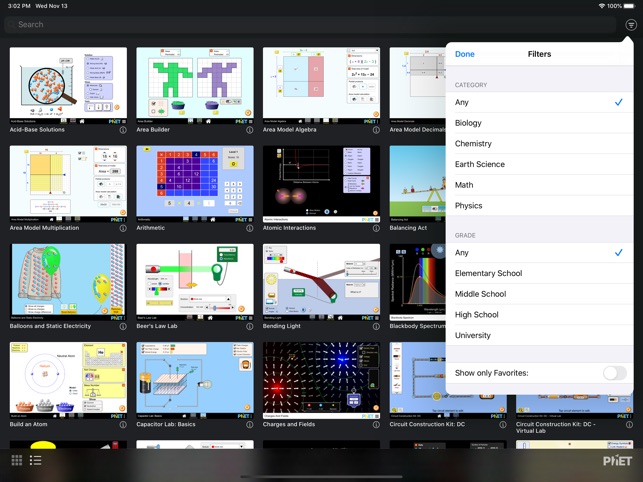
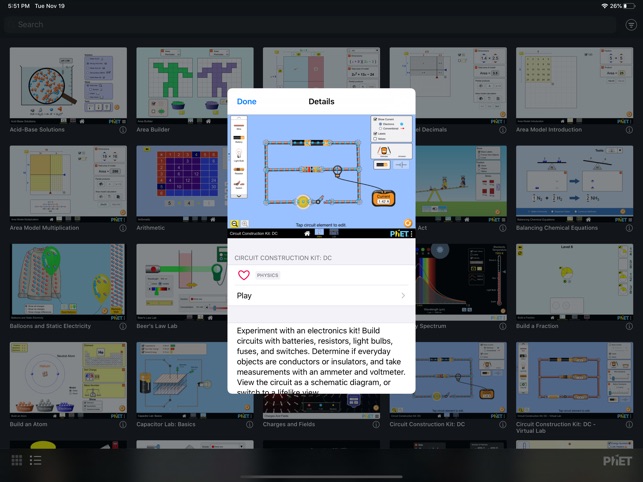
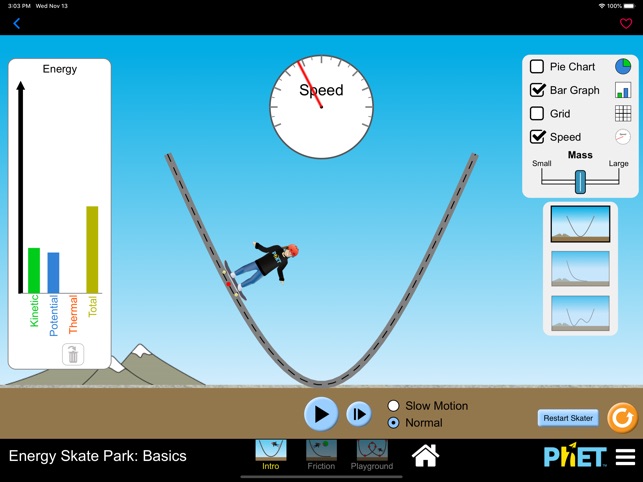
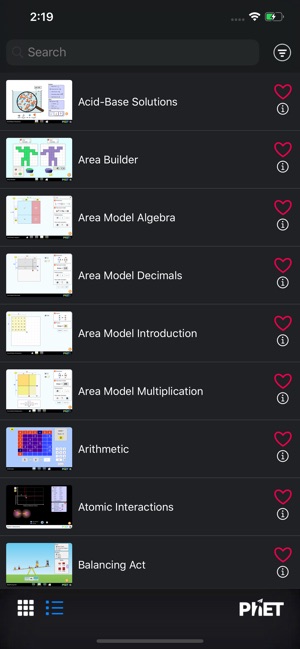
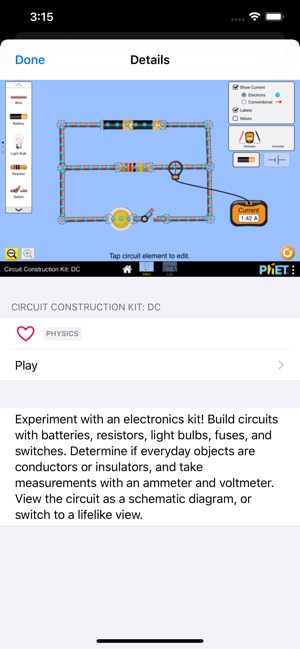
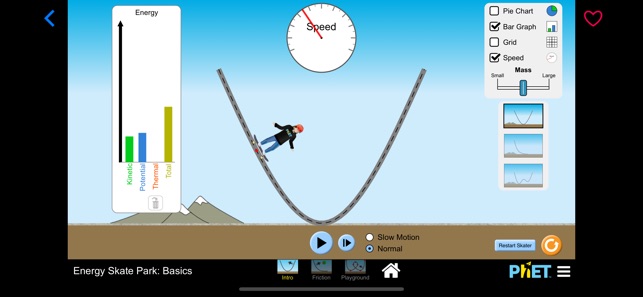
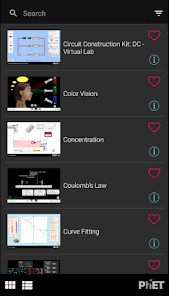
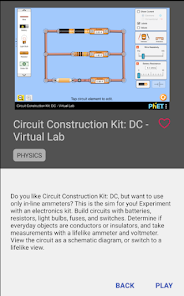
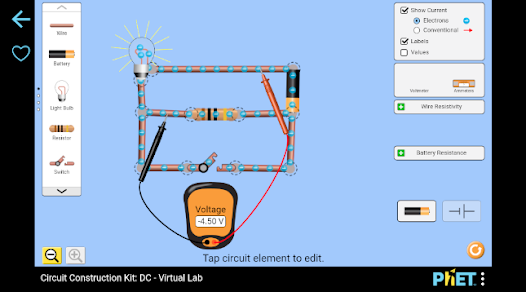
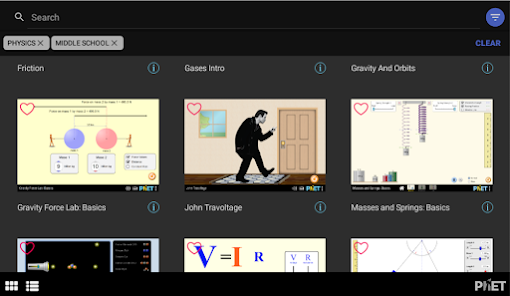
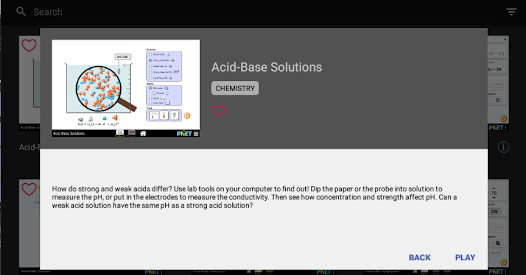
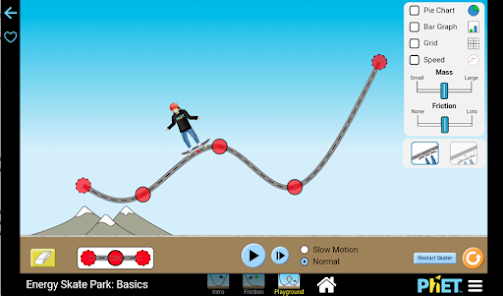
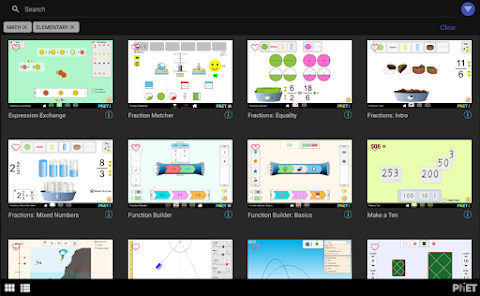
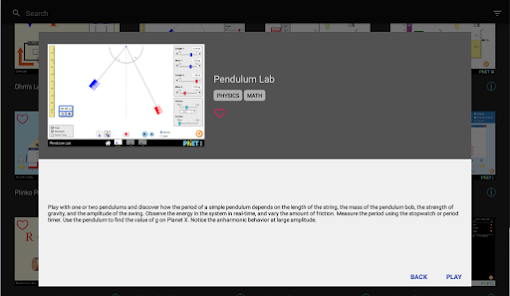
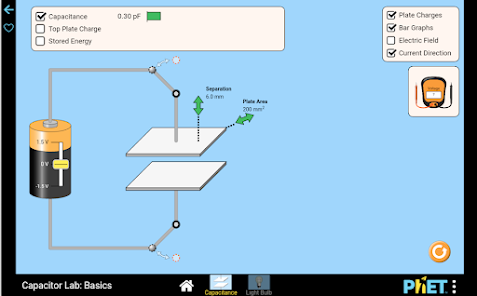
The PhET Simulations platform, developed at the University of Colorado Boulder, delivers a suite of over 75 interactive HTML5 modules for science and mathematics education. The interface facilitates navigation and selection of specific simulations, which can be organized into custom collections. Each module presents a game-like environment designed to encourage exploration-based learning. The system supports offline use and multi-language translation, enabling integration into diverse instructional settings from individual study to classroom-based pedagogical activities.
Evidence & Research Context
- An effectiveness study (N=60) involving Grade 10 Physics students demonstrated that instruction integrating PhET simulations produced significantly higher academic performance scores compared to traditional teaching methods.
- In the same study, students in the simulation group reported significantly higher levels of engagement as measured by an instrument based on the National Survey for Student Engagement (NSSE).
- The simulations are grounded in established design principles derived from cognitive learning research and discipline-based educational studies, refined through extensive student interviews and iterative development.
- Associated research documents widespread adoption, with the simulations being utilized globally and translated into more than 65 languages for educational use.
Intended Use & Scope
The platform is intended for use by educators and students in K-12 and higher education settings to supplement science and mathematics curricula. Its primary utility is to facilitate conceptual understanding and scientific inquiry through interactive exploration. The simulations do not constitute a standalone curriculum or include embedded assessments. Most modules currently lack full accessibility support.
Studies & Publications
Peer-reviewed research associated with this app.
The Effectiveness of PhET Simulation in the Academic Performance and Engagement of Grade 10 Physics Students
Cezar et al. (2024) · figshare
Improved physics test scores and student engagement compared to traditional teaching.
Insights from Using PhET's Design Principles for Interactive Chemistry Simulations
Lancaster et al. (2013) · ACS Symposium Series
Describes the research-driven development of this appIn the Media
PhET Interactive Simulations Honored with Meggers Project Award
The University of Colorado Boulder's PhET Interactive Simulations team received the American Institute of Physics' prestigious $25,000 William F. and Edith R. Meggers Project Award for their initiative to reshape high school physics education through professional learning courses for teachers. AIP CEO Michael Moloney praised PhET's submission as "an exemplary model, heralded for its innovative approach, sustainability, and scalability." The platform, launched in 2002, now hosts over 170 interactive simulations accessible in more than 130 languages worldwide.
PhET Interactive Simulations
Nobel Laureate Carl Wieman founded PhET Interactive Simulations in 2002 to teach science and math through research-based digital environments that make invisible concepts visible and connect academic ideas to everyday life. The platform's 108 openly-licensed simulations are used over 250 million times per year, translated into 120 languages, and integrated into over 60 partner products including Nearpod and BrainPOP. PhET recently won the Cool Tool Award for "Best Games for Learning / Simulations Solution" as part of The EdTech Awards 2024.
Nobel laureate Carl Wieman awarded Yidan Prize for Education Research
Nobel laureate Carl Wieman founded CU Boulder's award-winning PhET Interactive Simulations project to advance STEM education globally, using research-based digital tools and techniques. Wieman received the prestigious Yidan Prize for Education Research, worth nearly $4 million, which he will use to support PhET's mission and expand its global reach. "Through Carl's tremendous generosity, PhET will be able to expand its global reach and impact to improve STEM education globally," according to university officials.
PhET simulations keep students engaged while learning science remotely
The University of Colorado Boulder developed PhET Interactive Simulations to help science teachers keep students engaged in remote learning, using free interactive science simulations that cover topics from atoms to algebra. Since the COVID-19 pandemic began, PhET has seen usage increase substantially across the globe, with use in hard-hit countries like Italy and France increasing by 500%. "As schools around the world switch to remote learning, many teachers, students and parents who might not have used any science or math simulations before are now discovering and using PhET's library of simulations for the first time," said Kathy Perkins, director of PhET Interactive Simulations.
PhET Interactive Simulations Partners with Adaptive Learning Pioneer to Advance Science Education
PhET Interactive Simulations at University of Colorado Boulder partnered with adaptive learning company Smart Sparrow to enable science educators to create customized learning experiences around research-backed interactive simulations. "Through this collaboration, faculty members can access an authoring tool that allows them to control the simulation and learning experiences of every students," said Dr. Kathy Perkins, director of PhET Interactive Simulations. The partnership serves more than 250,000 existing PhET users globally with access to over 140 digital interactive science and math simulations.
PhET Interactive Simulations wins global education award
The University of Colorado Boulder developed PhET Interactive Simulations to improve global STEM literacy and accessibility through free, open-source educational software, originally founded by Nobel laureate Carl Wieman using part of his Nobel Prize winnings. The project has been used more than 80 million times a year by students and teachers and recently won the prestigious 2017 WISE Award. "This WISE Award affirms the importance of advancing STEM learning and literacy in today's world and the positive impact high-quality open-educational resources can have at scale," said director Kathy Perkins.
PhET Simulations Provide Interactive Learning Tools
The University of Colorado Boulder developed PhET Interactive Simulations to help students discover answers to physical phenomena questions while improving scientific literacy, using free, interactive, research-based simulations founded by Nobel Laureate Carl Wieman. NSF Einstein Fellow Zeke Kossover explained that "PhET allows students to simulate experiments" and "lets students play around in a physics sandbox where they can't break anything and they can try everything." The National Science Foundation provides primary funding support through its education programs for these simulations that serve elementary through university students.
App Information
Developer
University of Colorado BoulderCategory
Evidence Profile
Initial evidence from research studies
Platforms
Updated
Oct 2024
© 2025 University of Colorado Boulder