
POCUS Carnival
Initial evidence from research studies
App Summary
App Screenshots
Detailed Description
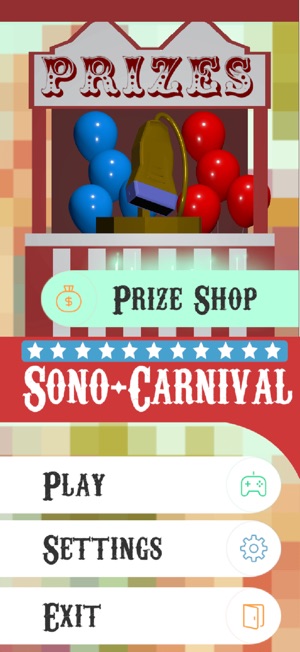
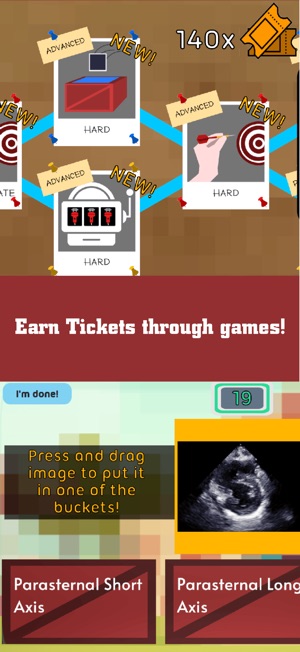
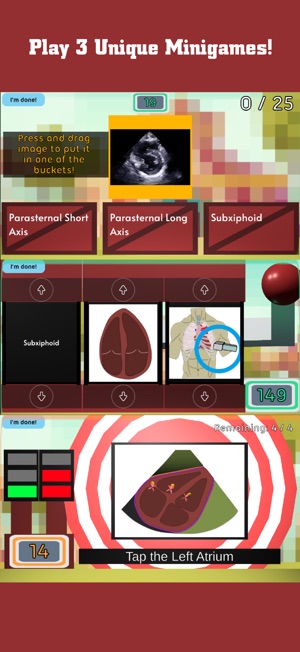
Functionality & Mechanism POCUS Carnival delivers point-of-care ultrasound training through a gamified interface. The system comprises three distinct mini-games designed to develop and reinforce skills in ultrasound probe positioning, image interpretation, and pathology identification. Sessions involve objective-based challenges where performance metrics are used to award points. These points can then unlock modules of increasing difficulty. The interface is engineered to provide immediate feedback, facilitating an iterative learning process for core POCUS competencies within a simulated, low-risk environment.
Evidence & Research Context
- The app's pedagogical model is supported by a prospective observational study of a gamified POCUS training event for fourth-year medical students (N=265).
- The study demonstrated a statistically significant improvement in POCUS knowledge assessment scores after the 2.5-hour gamified session (68% pre-test vs. 78% post-test).
- Participants also reported a significant increase in self-assessed comfort with image acquisition, interpretation, and clinical integration following the event.
- The majority of the student cohort (82%) had little to no prior POCUS experience, suggesting the model's applicability for novice learners.
Intended Use & Scope This application is designed as a supplementary educational tool for medical students, residents, and other clinicians-in-training to reinforce foundational POCUS knowledge. Its primary utility is for skill practice and knowledge consolidation. The tool does not replace formal, proctored instruction or hands-on clinical practice and is not intended for diagnostic use.
Studies & Publications
Peer-reviewed research associated with this app.
Gamification of POCUS: Are Students Learning?
Russell et al. (2023) · Western Journal of Emergency Medicine
Knowledge scores improved from 68% to 78% and students reported increased comfort with ultrasound skills.
In the Media
New POCUS education requirements coming to clerkships
IU School of Medicine launched new POCUS education requirements for Phase 2 students, providing each student with their own handheld device and iPad Mini for hands-on training across multiple clerkships. "We're excited for the opportunity to put a handheld POCUS device in the hands of every one of our Phase 2 medical students," said POCUS Director Rob Ferre, MD. The program begins this April with the Class of 2027 and includes required coursework in obstetric anesthesia, internal medicine, family medicine, and surgery clerkships.
POCUS Carnival - Apps on Google Play
Indiana University developed POCUS Carnival to help medical students and sonographers practice ultrasound image identification skills, using a gamified carnival-themed approach with mini-games. The app features three mini-games that help users practice skills ranging from probe position placement to pathology identification, with players earning tickets to unlock harder difficulties and trophies. The app was updated on November 7, 2024.
App Information
Developer
Indiana UniversityCategory
Evidence Profile
Initial evidence from research studies
Platforms
Updated
Nov 2024
© 2025 Indiana University
Tags
Relevant Links
Privacy Policy

POCUS Carnival
Free