AppsFromResearch
Quantum 3 icon

Quantum 3

Evidence Tier:DOCUMENTED

Published in academic literature

For:Educators & TeachersGeneral Public & EnthusiastsKids & Youth

App Summary

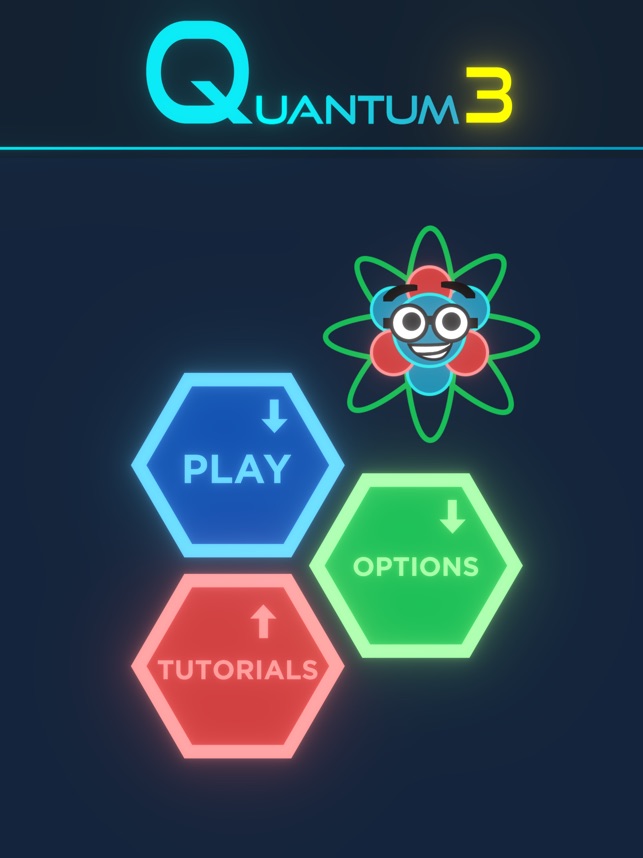
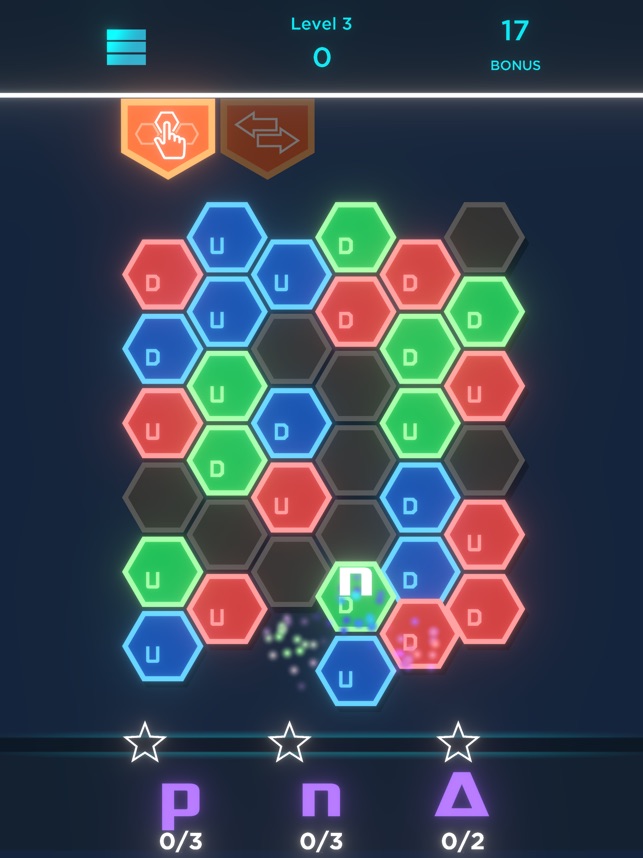
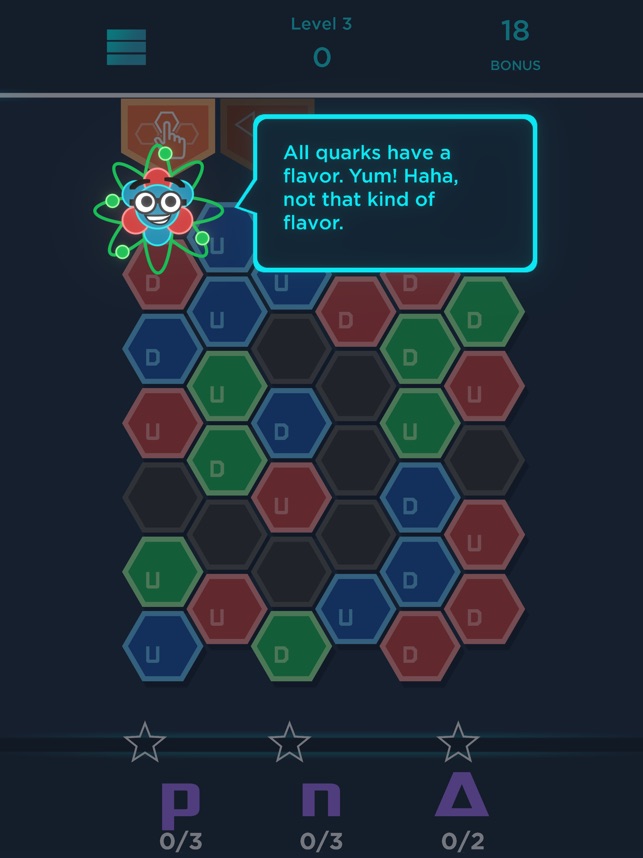
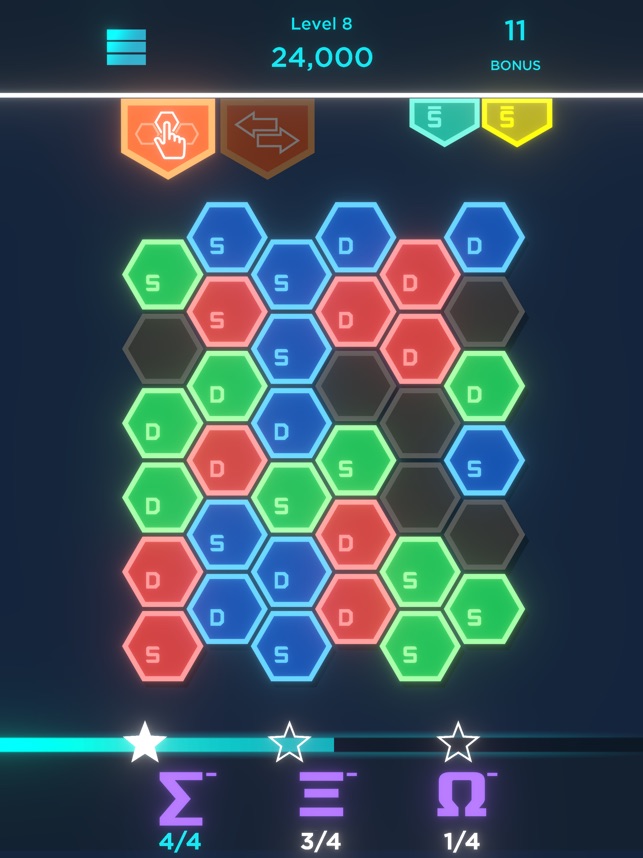
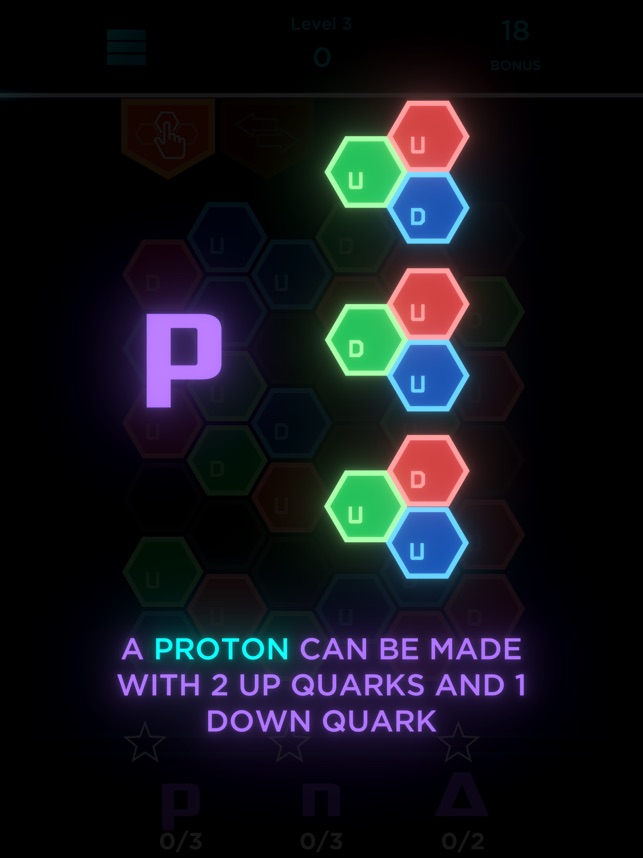
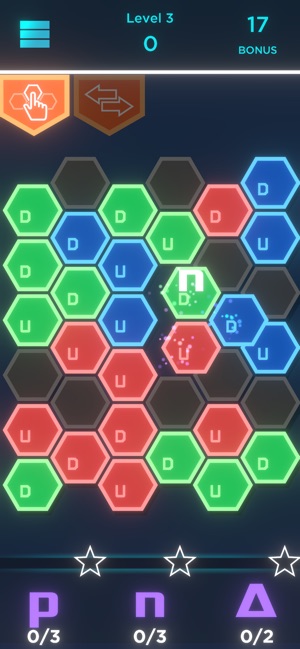
Quantum 3 is a match-3 puzzle game for a general audience that teaches the fundamental principles of quantum physics by challenging players to combine quarks into subatomic particles. The associated research explains that the game was designed to make complex topics in Quantum Chromodynamics (QCD) accessible by integrating physics principles into the core rules of an engaging puzzle format. The authors conclude that this approach has the potential to raise public interest in physics and encourage more K-12 girls to engage with STEM subjects.

App Screenshots

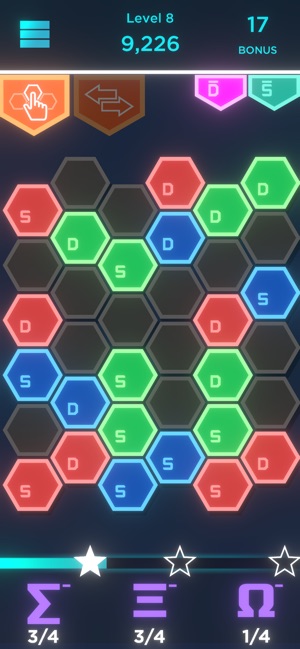
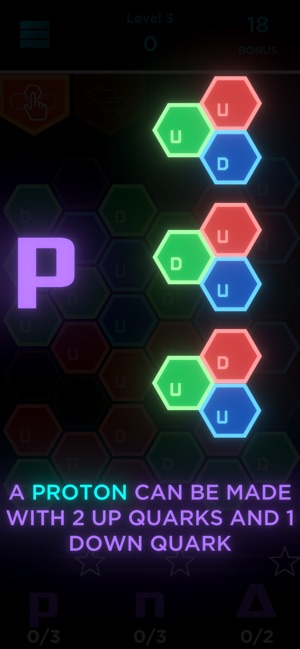
Quantum 3 screenshot 1 of 10Quantum 3 screenshot 2 of 10Quantum 3 screenshot 3 of 10Quantum 3 screenshot 4 of 10Quantum 3 screenshot 5 of 10Quantum 3 screenshot 6 of 10Quantum 3 screenshot 7 of 10Quantum 3 screenshot 8 of 10Quantum 3 screenshot 9 of 10Quantum 3 screenshot 10 of 10

Detailed Description

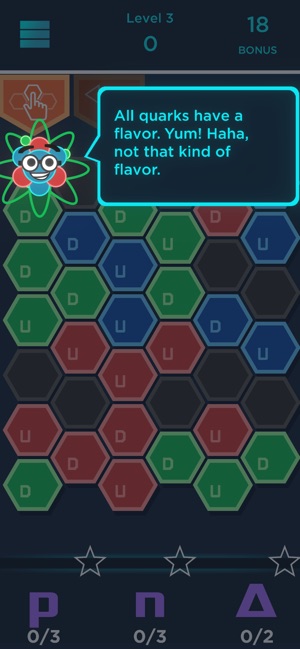
Functionality & Mechanism Developed by Michigan State University's Games for Entertainment and Learning Lab, Quantum 3 integrates a match-3 puzzle format to deliver pedagogical content on quantum chromodynamics (QCD). Sessions involve matching and swapping quark-based tiles to construct specific subatomic particles, such as baryons. Progression through the game's objectives requires the direct application of fundamental QCD principles, including color, flavor, and spin. The interface is designed for intuitive play, embedding physics rules directly into the core gameplay loop.

Evidence & Research Context

  • The app's design is grounded in leveraging established game mechanics to facilitate intuitive, non-formal learning of complex scientific concepts.
  • Associated research outlines the project's primary goal to increase public engagement with particle physics, with a specific focus on K-12 students.
  • The game was developed as part of a National Science Foundation-funded project to create accessible and engaging educational tools for STEM topics.
  • The development protocol includes planned evaluations with student populations to assess engagement and measure educational impact through outreach activities and follow-up surveys.

Intended Use & Scope This app is intended for the general public and students as an introductory educational tool. It functions as an accessible entry point to particle physics, demonstrating core concepts through an interactive puzzle format. The app is not a substitute for a formal physics curriculum and provides a conceptual, rather than mathematical, understanding of the subject.

Studies & Publications

1 publication

Peer-reviewed research associated with this app.

Development/Design Paper

Quantum 3: Learning QCD through Intuitive Play

Özkan et al. (2019) · arXiv

Describes the research-driven development of this app
There is a nationwide drive to get more girls into physics and coding, and some educators believe gaming could be a way to get girls interested in coding and STEM topics. This project, sponsored by NSF, is to create a QCD game that will raise public interest in QCD, especially among K-12 girls, and increase interest in coding among girls. Through the immersive framework of interactive gameplay, this QCD phone game will allow the public to peek into the QCD research world. The game design will fall into the "Match 3" genre, which typically attracts a higher ratio of female players. The game will be implemented initially as a phone app, and the gameplay would require learning simple QCD rules to progress. By leveraging the willingness of players to engage with the rules of an entertaining game, they are able to easily learn a few principles of physics. The game is now available to download from the Google Play store (https://play.google.com/store/apps/details?id=com.gellab.quantum3) and the Apple Appstore (https://itunes.apple.com/gb/app/quantum-3/id1406630529)! We formed a development team of MSU undergraduate students to make the game and provided them with a QCD curriculum. The game will be tested at MSU outreach activities, as well as among local K-12 girls through school activities, and feedback will be used to improve the design. The final game can be easily distributed through various app stores and impact will be measured through a follow-up survey. If such a new direction works to attract more girls to coding and physics, one should develop more games to engage more girls in STEM.
... Read More

Quantum 3

Free