
RTTC
Assessed for usability and quality
App Summary
App Screenshots
Detailed Description
Functionality & Mechanism
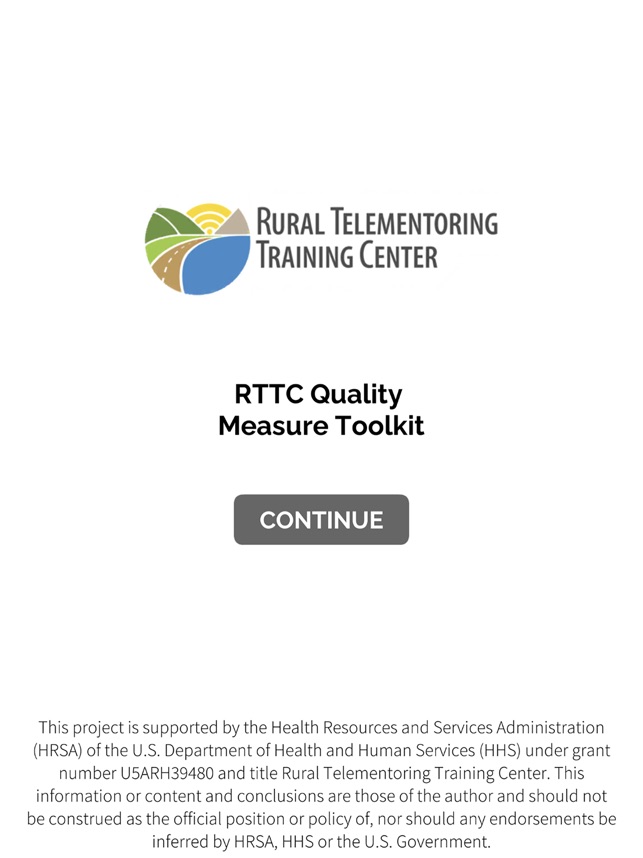
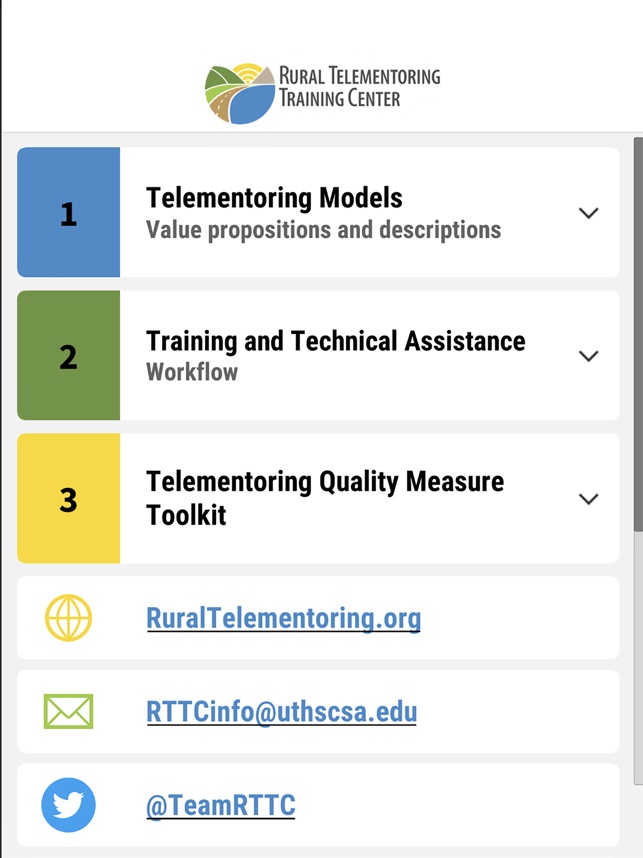
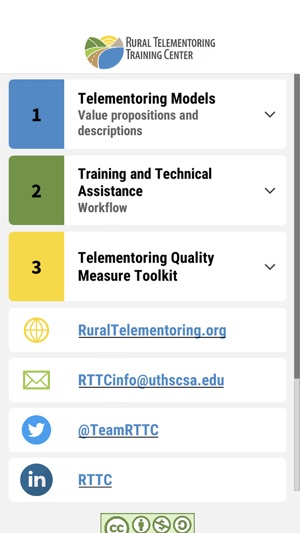
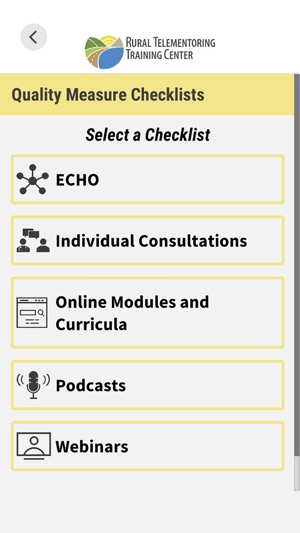
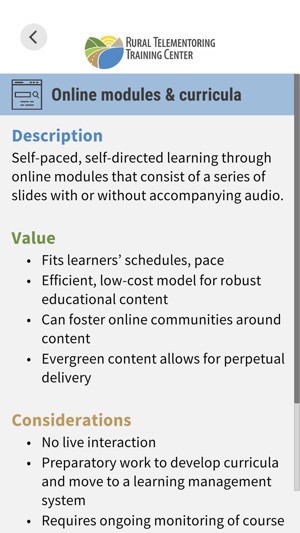
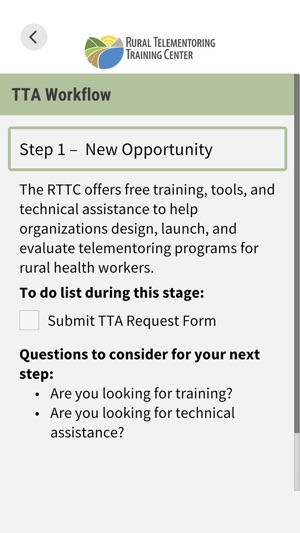
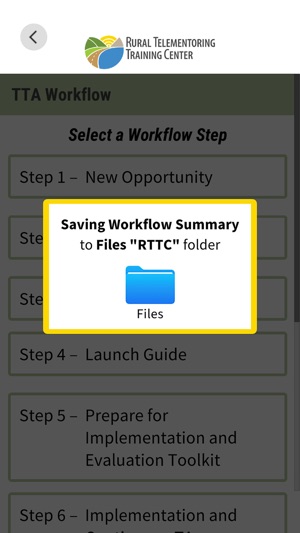
Developed by the federally funded Rural Telementoring Training Center (RTTC), this application delivers resources for designing, launching, and evaluating telementoring programs in rural health. The interface is organized into three core modules: detailed introductions to six telementoring models, technical assistance workflow checklists for program lifecycle management, and specific quality measure checklists for five delivery formats. All content is accessible offline after initial installation, ensuring utility in low-connectivity settings for program administrators and developers.
Evidence & Research Context
- The app's content and dissemination are integral to the national Rural Telementoring Training Center initiative, a program designed and evaluated using the PRISM and RE-AIM implementation science frameworks.
- The associated research details the RTTC's implementation strategies, which resulted in outreach to over 300 organizations and engagement metrics including over 6,400 website views.
- Initial adoption data for the Quality Measure Toolkit, which constitutes the app's core content, documented access by 70 individuals during the program's evaluation period.
- The integrated frameworks provide an adaptive and comprehensive approach to implementing and evaluating a large-scale, national workforce development program.
Intended Use & Scope
Intended for public health professionals, program developers, and healthcare administrators, this app functions as a strategic planning and quality assurance resource for rural telementoring. It provides structured models and implementation checklists. The tool is not a direct telementoring platform or a clinical decision aid; it serves exclusively to support program design and evaluation.
Studies & Publications
Peer-reviewed research associated with this app.
Utilizing PRISM and RE-AIM to implement and evaluate the Rural Telementoring Training Center (RTTC) for health care workforce development in rural communities
Melhado et al. (2023) · Frontiers in Health Services
Achieved high national reach with strong engagement and successful adoption of telementoring training resources.
In the Media
Quality Measure Toolkit and Mobile App - National Rural Telementoring Training Center
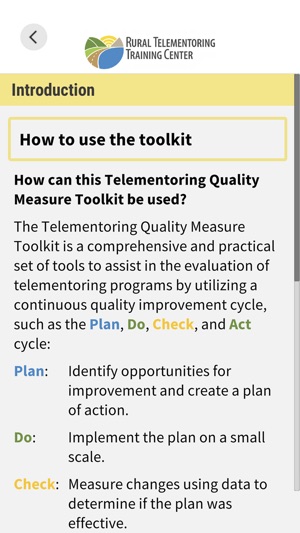
The National Rural Telementoring Training Center developed RTTC to support telementoring programs in rural healthcare, providing access to comprehensive program resources through a mobile platform. The app features the Rural Telementoring Quality Measure Toolkit, which offers a comprehensive set of questions to help design, implement, and evaluate telementoring programs. The center celebrated the launch with a series of events in Summer 2023 to promote this innovative tool for supporting telementoring program quality.
'RISE for Rural Telementoring" launches to boost health care in underserved rural communities
UT Health San Antonio's Rural Telementoring Training Center developed RTTC to address limited healthcare access in rural communities, using telecommunication technology to deliver training and support to health workers. The center launched "RISE for Rural Telementoring" during the week of October 25-29, featuring virtual events with the theme "Emerging Voices in Rural Telementoring." "Telementoring is a valuable mechanism for facilitating access to health education and peer-support for health workers in rural America," said Dr. Waridibo Allison, the program's director.
App Information
Category
Evidence Profile
Assessed for usability and quality
Platforms
Updated
Oct 2023
© 2025 University of Texas Health San Antonio
Tags
Relevant Links
Privacy Policy


RTTC
Free