

Skin & Bones
Proven effective in research studies
App Summary
App Screenshots
Detailed Description
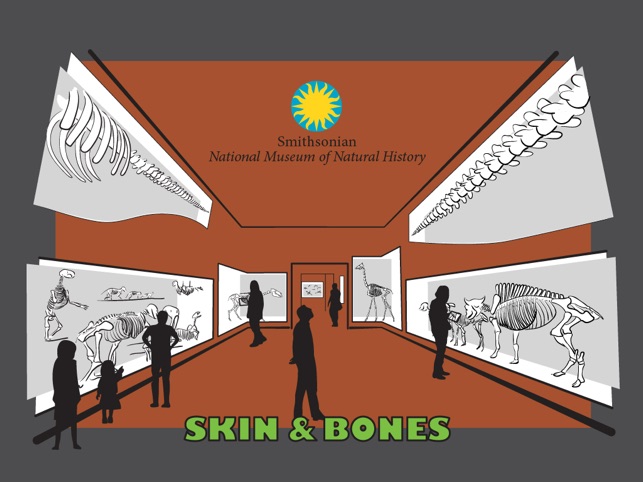
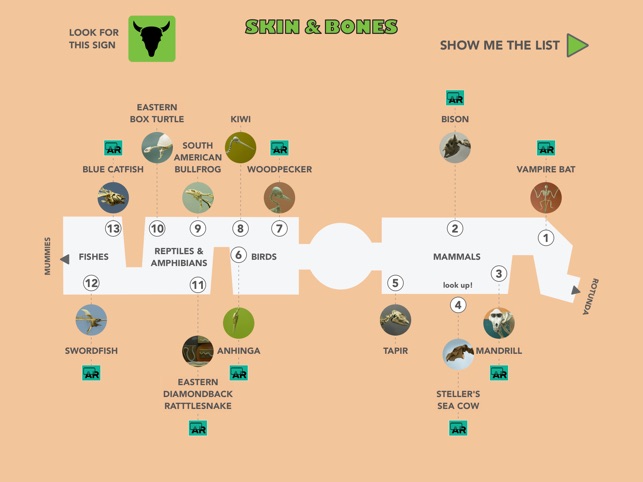
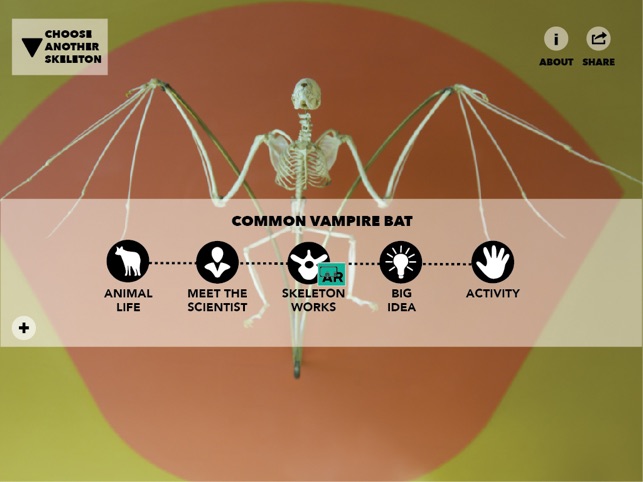
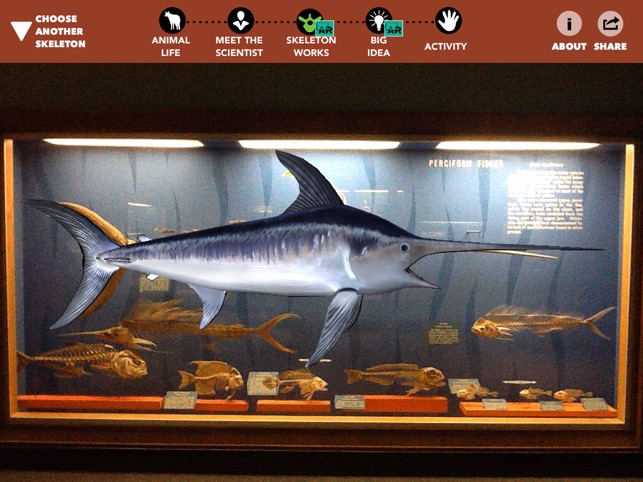
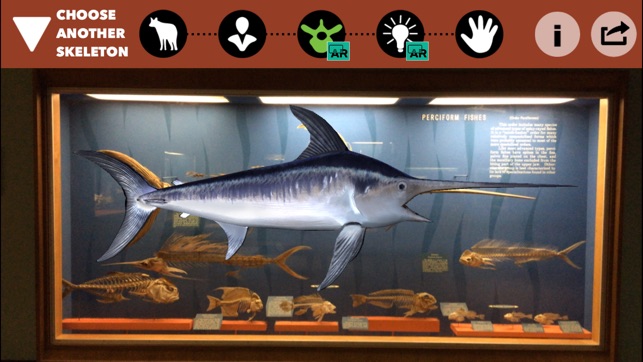
Functionality & Mechanism The system, developed by the Smithsonian's National Museum of Natural History, leverages augmented reality to animate vertebrate skeletons. The interface utilizes a mobile device's camera to track skeletons on display or recognize printed markers, triggering 3D animations and informational overlays. Core functionality includes ten AR experiences, 32 educational videos, and two interactive games designed to deliver pedagogical content about animal biology and behavior. The application is engineered for use in both museum and remote educational environments.
Evidence & Research Context
- The application was developed to enhance science communication in a static museum exhibit by integrating artistic and scientific design principles.
- An evaluation incorporating visitor interviews and surveys confirmed the app's multisensory, artistic approach is an effective method for communicating scientific concepts to non-specialized audiences.
- A case study analysis of the app's implementation concluded that its augmented reality integration provides high user experience rewards without significant detraction from the physical exhibit.
Intended Use & Scope This application is intended for educators, students, and museum visitors as a supplementary educational tool. Its primary utility is to facilitate engagement with and understanding of vertebrate anatomy and behavior through interactive visualization. The system does not provide comprehensive curricula and is designed to augment, not replace, formal science education or expert-guided museum experiences.
Studies & Publications
Peer-reviewed research associated with this app.
Concerns and Challenges Developing Mobile Augmented Reality Experiences for Museum Exhibitions
Marques et al. (2018) · Curator: The Museum Journal
Museum visitors found augmented reality engaging and valuable without the expected drawbacks.
Skin & Bones: an artistic repair of a science exhibition by a mobile app
Marques et al. (2015) · MIDAS
Made museum science more accessible through artistic audio and visual content on mobile app.
In the Media
App review: See Natural History skeletons before they were just bones
The Smithsonian developed Skin & Bones for the National Museum of Natural History's Bone Hall to help visitors learn about mammals, birds, reptiles and fish through compelling digital experiences. The app serves as a valuable resource while the museum's fossil hall remains closed for renovation until 2019. Amateur paleontologists can use this tool to explore natural history specimens in an engaging new format.
Museum app fleshes out old bones
The Smithsonian developed Skin & Bones to revitalize its outdated 50-year-old bone hall exhibit, using augmented reality technology that digitally covers skeletons with skin and fur to show what live animals looked like. Museum outreach manager Robert Costello observed that visitors "are not reading a single label" and "are not getting a single concept" as they quickly pass through the hall. The free app includes additional videos and games but only works on Apple devices.
New Smithsonian app brings Bone Hall to 3D life
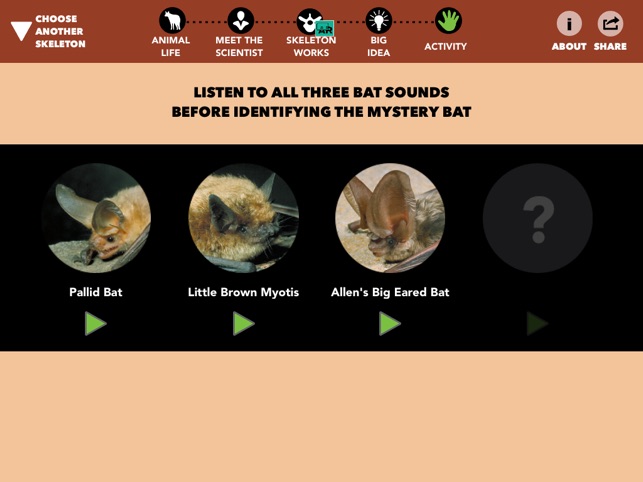
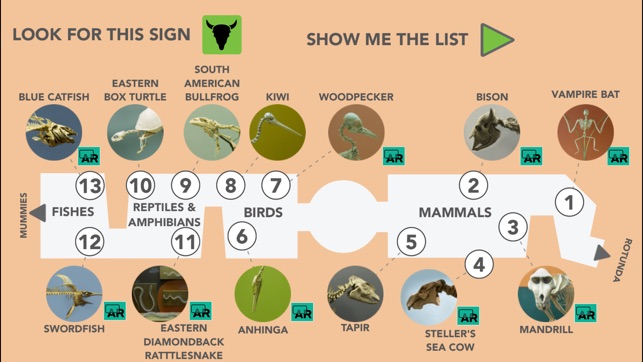
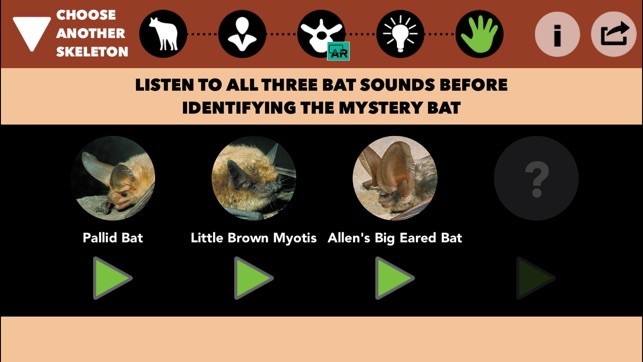
The Smithsonian's Natural History Museum developed Skin & Bones to enhance its Bone Hall experience, using augmented reality and 3D tracking technology. The free app brings 13 of the hall's 300 skeletons to life through iPhone or iPad displays, featuring experiences that range from diamondback rattlesnake skulls attacking rodents to games identifying bat species by their calls. The museum partnered with Virginia Polytechnic Institute and State University to develop the app for one of the Smithsonian's oldest exhibits, which opened in 1881.
A transfusion for vampire bats: Virginia Tech researcher gives Smithsonian display new life
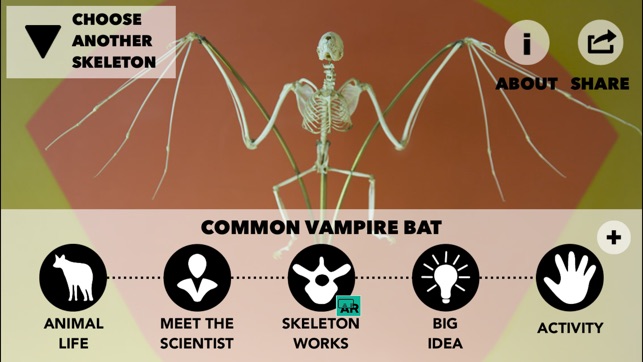
Virginia Tech researcher Rolf Mueller developed "Skin & Bones" to modernize the Smithsonian's Hall of Bones exhibit using augmented reality technology and high-resolution micro CT scans of bat specimens. "A submarine can be about 23 feet wide and has hundreds of sonar emitting and receiving elements distributed over its cross-section, whereas a vampire bat has just a single nose and two ears, each less than an inch long," Mueller explained while comparing bat echolocation to man-made sonar. The iPad and iPhone app creates 3-D digital bat skeletons that interact with actual museum displays through augmented reality experiences.
App Information
Developer
Smithsonian InstitutionCategory
Evidence Profile
Proven effective in research studies
Platforms
Updated
Mar 2016
© 2025 Smithsonian Institution
Tags
Relevant Links
Privacy Policy


Skin & Bones
Free