
The Tick App
Proven effective in research studies
App Summary
App Screenshots
Detailed Description
Functionality & Mechanism
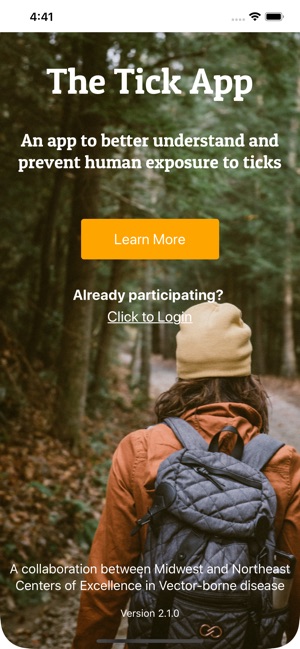
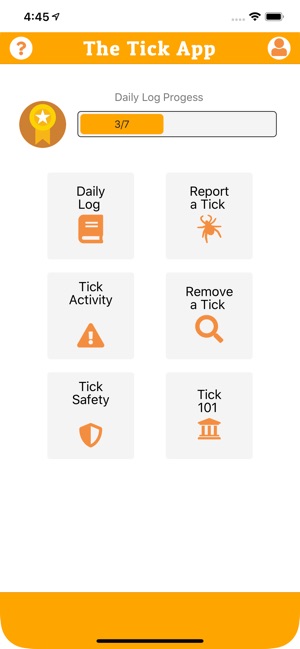
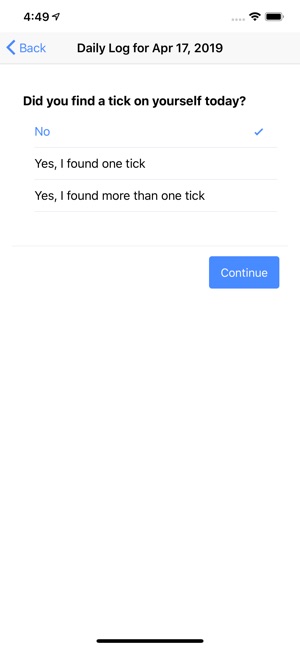
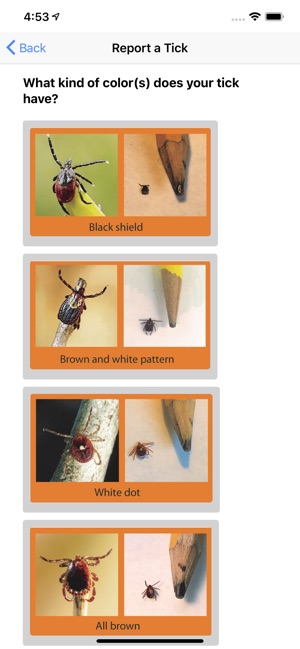
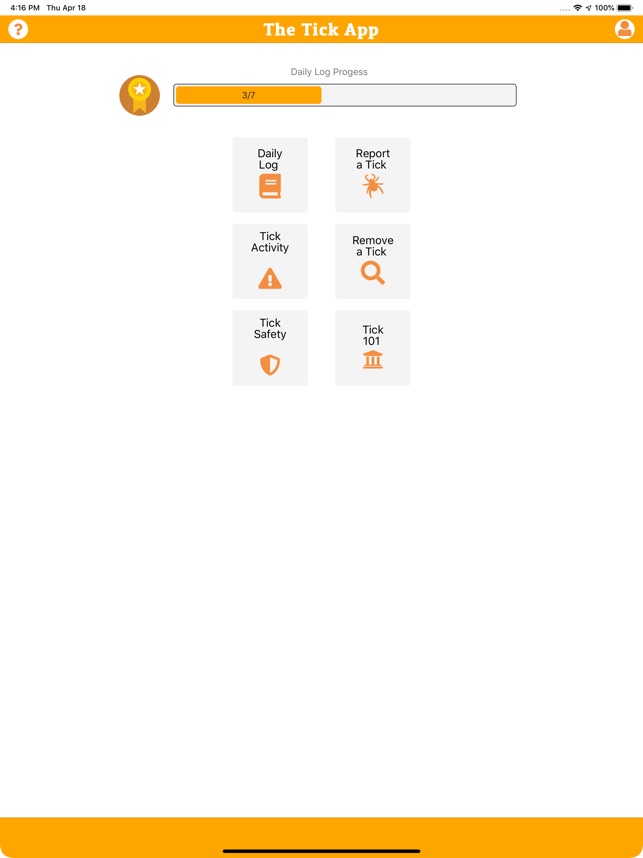
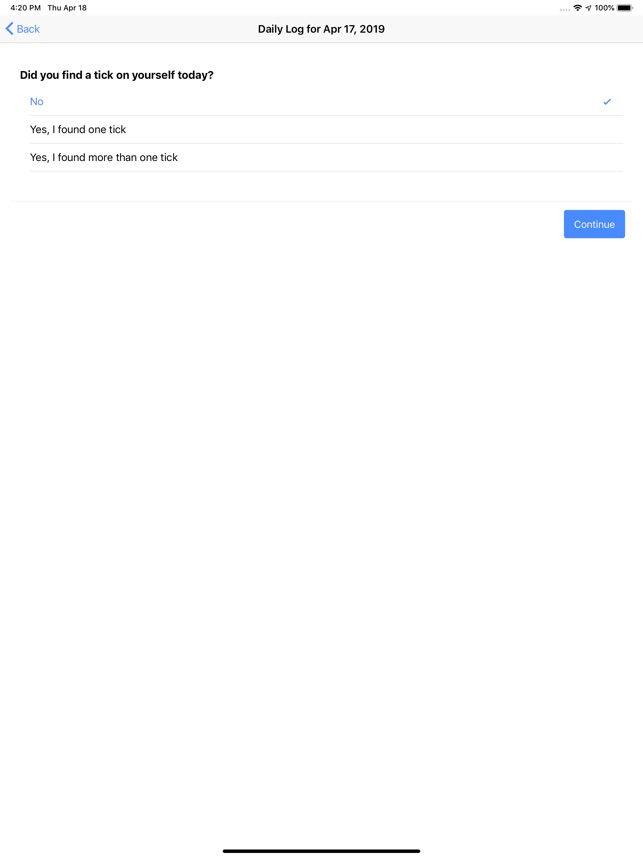
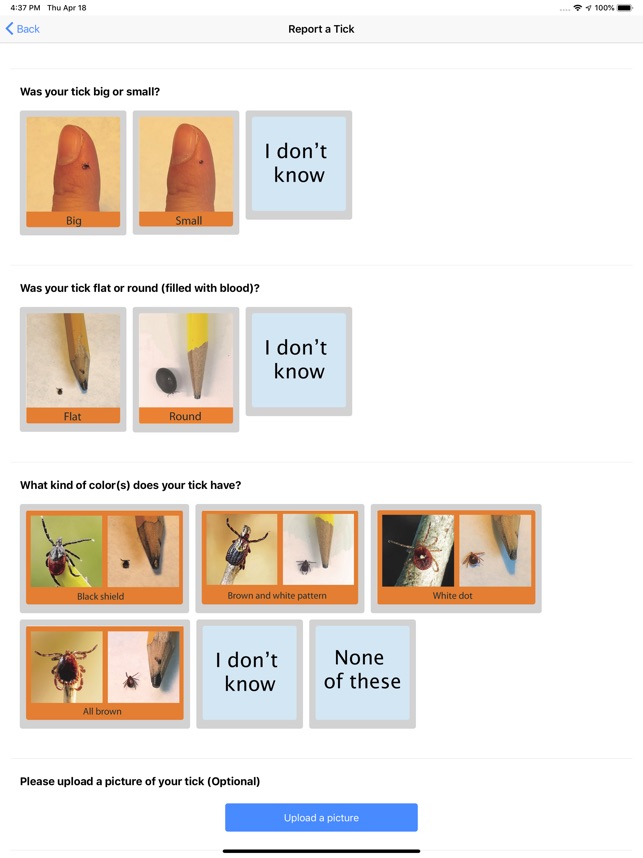
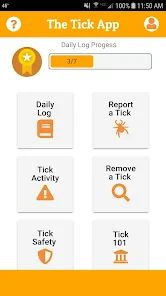
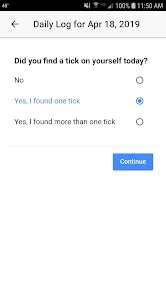
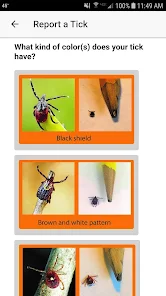
Developed by a research collaborative including the University of Wisconsin and Columbia University, this citizen science tool captures data on human-tick encounters. The system initiates with an enrollment survey to establish baseline risk factors and demographic information. A 'Tick Diary' module facilitates longitudinal logging of daily activities relevant to exposure risk, while a 'Report a Tick' feature enables submission of encounter details and images for expert identification. The interface also delivers integrated educational material on tick identification, removal, and prevention strategies.
Evidence & Research Context
- A pilot feasibility study (N=1,468) established the app's utility for collecting data on tick exposure behaviors, noting higher longitudinal engagement among users over 55 years old.
- An evaluation of 11,424 submissions demonstrated that the app effectively captures encounter context, with most reports occurring in peri-domestic (51%) or recreational (37%) settings.
- The evaluation also confirmed that community-submitted data, when adjusted for user travel, aligns with known geographical distributions of key tick species (I. scapularis and D. variabilis).
- A guided image-based identification feature for users showed moderate success, with frequent-submitters correctly selecting photos of D. variabilis adults in 76% of submissions.
Intended Use & Scope
The app is designed for the general public to contribute to citizen science research and for epidemiologists studying vector-borne disease. Its primary utility is to augment traditional tick surveillance systems and provide public education. The tool does not provide medical diagnoses or treatment recommendations; individuals with tick bites should consult a healthcare professional for clinical guidance.
Studies & Publications
Peer-reviewed research associated with this app.
Evaluating spatial and temporal patterns of tick exposure in the United States using community science data submitted through a smartphone application
Kache et al. (2023) · Ticks and Tick-borne Diseases
Successfully collected reliable tick exposure data across the United States and generated accurate species distribution maps.
Usability and Feasibility of a Smartphone App to Assess Human Behavioral Factors Associated with Tick Exposure (The Tick App): Quantitative and Qualitative Study
Fernandez et al. (2019) · JMIR mHealth and uHealth
Feasibility confirmed — met benchmarks for recruitment, user engagement, and high satisfaction ratings among participants.
In the Media
With weather warming, another warning about ticks all around Illinois
CBS Chicago reported that ticks may be more prevalent than ever across Illinois in 2025 as the relatively mild winter did not kill as many ticks as usual. The Cook County Forest Preserve District posts reminders every few weeks about tick prevention on social media as warming temperatures create ideal conditions. Scientists told CBS News Chicago that everyone should prepare for ticks when enjoying outdoor activities this year.
Your Tick Bite Can Help Scientists Map The Spread Of Disease
Resources like The Tick App and local tick research labs at East Stroudsburg University's Pennsylvania Tick Research Lab help people learn about tick exposure and contribute to tracking their impact. The citizen science platform enables users to report tick encounters and submit samples for testing, providing valuable data for mapping the spread of tick-borne diseases. The app allows anyone who finds a tick to participate in scientific research while learning about tick identification and prevention.
New phone app: ‘your on-the-go tick expert’
Michigan State University partnered with Columbia University and the University of Wisconsin to develop The Tick App, allowing users to learn about ticks, track encounters, and participate as citizen scientists. MSU researchers explained that "the easy to use app will allow users to share their experiences" in a tick exposure behavioral study. The app provides tick identification, tracking capabilities, and educational resources for outdoor enthusiasts during peak tick season.
Download the Tick App and Help Researchers Track Ticks
The Midwest Center of Excellence for Vector-Borne Diseases launched The Tick App as a free citizen science opportunity, described as "your tick expert on-the-go," to help prevent future tick bites. After completing a survey about their environment, participants use the mobile app to share daily activities and tick encounters with researchers. The University of Wisconsin-led initiative enables users to contribute to tick tracking and prevention research.
Menu
The Midwest Center of Excellence for Vector-Borne Diseases at UW-Madison developed The Tick App to help users share their experiences with ticks and prevent future tick bites. After completing an initial 5-minute survey about their environment, participants are encouraged to tell researchers about daily activities and tick encounters through tick diaries. The mobile application allows researchers to study why some people always find ticks while others never do.
Encountering Backyard Bloodsuckers? The Tick App Tracks That
The University of Wisconsin-Madison Midwest Center of Excellence for Vector-Borne Diseases released The Tick App as a free smartphone tool to track and identify ticks during peak season in the upper Midwest. Researchers hope more people will download the app to help track the tiny arachnids and understand tick encounters across the region. The app provides educational resources and data collection capabilities for studying tick distribution and behavior.
Tracking Ticks with The Tick App
The Midwest Center of Excellence for Vector Borne Disease developed The Tick App smartphone application to gain better understanding of where ticks occur across the upper Midwest. Dr. Susan Paskewitz and Dr. Lyric Bartholomay from the University of Wisconsin-Madison led the research project, which was featured in Wiscontext's coverage of tick tracking initiatives. The app enables citizen scientists to report tick sightings and contribute to mapping tick distribution patterns.
University of Wisconsin-Madison launches tick tracking app
University of Wisconsin-Madison researchers launched The Tick App smartphone application to gain better understanding of where people encounter ticks in the state, according to Wisconsin Public Radio. The app helps people identify ticks, provides removal instructions, and gives users daily reminders to track when and where they find ticks. The tool combines education and data collection to support tick research efforts.
Wisconsin researchers release new app to study what makes ticks tick
University of Wisconsin-Madison researchers developed The Tick App as a research and educational tool to understand and limit people's exposure to disease-carrying ticks as Wisconsin faces an ever-increasing number of Lyme disease cases. The smartphone app helps scientists understand where ticks are active and how people expose themselves to ticks through daily activities. The tool addresses increasing concerns about tick-transmitted diseases across the state.
The Tick App' launched to study human behavior, tick exposure and the risk of Lyme disease
The Tick App enables users over 18 years old to participate in Lyme disease research by completing consent forms, enrollment questions, and daily tick diaries tracking whereabouts and tick encounters. The app provides tick identification guides, reporting capabilities, and reminders to check for ticks and take precautions. More information is available at www.thetickapp.org for those interested in contributing to tick exposure behavioral studies.
Art Show/Reception for Rob BeverlyÃÂÂÃÂÂÃÂÂâÃÂÂââÃÂÂÃÂÂÃÂÂìÃÂÂââÃÂÂÃÂÂÃÂÂâs new photography work: ÃÂÂÃÂÂÃÂÂâÃÂÂââÃÂÂÃÂÂÃÂÂìÃÂÂàâÃÂÂÃÂÂNew York State of MindÃÂÂÃÂÂÃÂÂâÃÂÂââÃÂÂÃÂÂÃÂÂìÃÂÂÃÂÂÃÂÂÃÂÂ
Flying Pig Gallery and Studios in downtown Kingsport, Tennessee hosted a two-week exhibition of gallery artist Rob Beverly's New York City images from December, with an opening reception on Friday February 13th. The gallery space occupies two adjacent buildings at the corner of Broad and Center streets and maintains regular hours Wednesday through Saturday from 10am. The show ran through February 28th featuring Beverly's photographic work.
App Information
Developer
University of Wisconsin-MadisonCategory
Evidence Profile
Proven effective in research studies
Platforms
Updated
Jun 2026
© 2025 University of Wisconsin-Madison