
AppsFromResearch
UnityPhilly 2.0 icon

UnityPhilly 2.0

Evidence Tier:VALIDATED

Initial evidence from research studies

For:General Public & Enthusiasts

App Summary

UnityPhilly 2.0 is a community response app that enables volunteer bystanders to alert nearby app users to administer naloxone during a suspected opioid overdose while concurrently notifying EMS. A prospective observational cohort study (N=112 volunteers) found that when laypersons administered naloxone, successful overdose reversal was reported 95.9% of the time, and intervention preceded EMS arrival by five or more minutes in 59.5% of cases. The associated research concludes that these findings support the benefits of equipping community members with both naloxone and an emergency response app to facilitate a rapid, localized overdose response.

App Screenshots

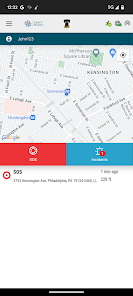
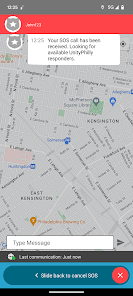
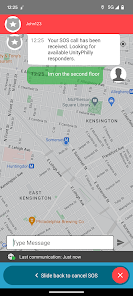
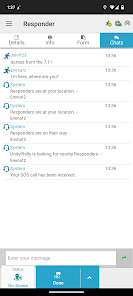
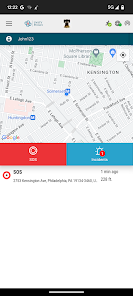
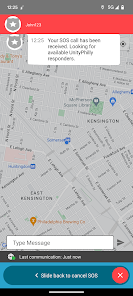
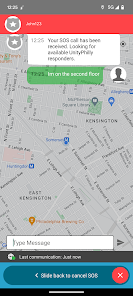
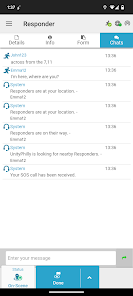
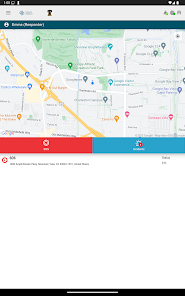
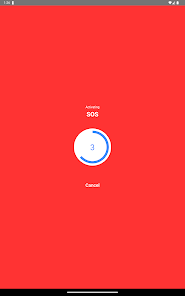
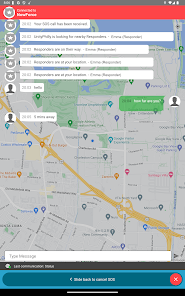
UnityPhilly 2.0 screenshot 1 of 11UnityPhilly 2.0 screenshot 2 of 11UnityPhilly 2.0 screenshot 3 of 11UnityPhilly 2.0 screenshot 4 of 11UnityPhilly 2.0 screenshot 5 of 11UnityPhilly 2.0 screenshot 6 of 11UnityPhilly 2.0 screenshot 7 of 11UnityPhilly 2.0 screenshot 8 of 11UnityPhilly 2.0 screenshot 9 of 11UnityPhilly 2.0 screenshot 10 of 11UnityPhilly 2.0 screenshot 11 of 11

Detailed Description

Functionality & Mechanism

Upon encountering a suspected opioid overdose, a trained volunteer initiates an alert via a single button press. The system transmits location data and dispatches notifications to the four nearest volunteers within an estimated 15-minute radius, leveraging the Google Maps platform to facilitate navigation. Concurrently, the application initiates a semi-automated call to 911 to ensure dispatch of professional emergency medical services. The interface is designed for rapid activation under duress, mobilizing a community-based response network.

Evidence & Research Context

  • A prospective observational cohort study (N=112) in a high-overdose Philadelphia neighborhood evaluated the system across 202 true overdose alerts.
  • In cases where layperson naloxone was administered (n=74), a successful overdose reversal was reported in 95.9% of events.
  • The study found that layperson intervention preceded Emergency Medical Services arrival by five or more minutes in 59.5% of cases.
  • The app's design protocol was informed by qualitative research, including focus groups with community members and people who use opioids to establish trust and usability.

Intended Use & Scope

This application is intended for trained layperson volunteers participating in a coordinated community overdose response network. Its primary utility is to facilitate rapid, bystander-initiated naloxone administration prior to the arrival of professional responders. The system is an adjunct to, not a replacement for, formal emergency medical services. Its effectiveness is contingent on a local network of active, naloxone-equipped volunteers and should be deployed within a comprehensive harm reduction strategy.

Studies & Publications

3 publications

Peer-reviewed research associated with this app.

Development/Design Paper

Empowering communities with a smartphone-based response network for opioid overdoses

Marcu et al. (2020) · IEEE Pervasive Computing

Describes the research-driven development of this app
In a Philadelphia neighbourhood where opioid overdoses are frequent, neighbors used a smartphone app to request and give help for a victim of suspected overdose. A one-year study demonstrated the feasibility of this approach, which empowered the local community to save lives and even respond to overdoses faster than emergency medical services. UnityPhilly is an app designed as an Emergency Response Community, to support laypersons in signaling and responding to opioid overdose incidents3,4. 9olunteers signal an overdose incident with a single button press, initiating an automated alert to other nearby volunteer app users who answer the alert if they can respond to the scene. Design of the app was informed by needs assessment in the form of interviews and focus groups with end users4. Signalling an Overdose App users signal an alert when they encounter a suspected opioid overdose, administer naloxone if they have any, and speak with 11 through a phone call initiated by the app. Concurrent with sending the alert, a call is initiated from the signaler's smartphone to a dedicated phone number connecting to the Philadelphia Police EMS (Emergency Medical Services) dispatch unit. Smartphone operating system constraints result in slightly different EMS call behavior for Android and Apple-based phones. On Android handsets, calls are placed immediately when the signaling button is pressed. On Apple iOS handsets, a pop-up with the EMS phone number appears requiring the caller to confirm the dial request. Location data from the volunteer's smartphone are transmitted to UnityPhilly servers which automatically check for other nearby volunteers and send dispatch alerts with the overdose location to the four closest. For our pilot study, 'nearby' was defined as within a 15-minute estimated time of arrival to the overdose site, calculated dynamically based on the participants' declared transport mode foot, car, etc.). CONCLUSION The distribution of naloxone to those who are likely to witness an overdose is a key evidence-based strategy for addressing the opioid epidemic. Smartphone applications are a novel medium for facilitating naloxone distribution and administration, and policy efforts are encouraging their development. Our findings support the benefits of equipping community members with naloxone and an emergency response community smartphone app, for alerting EMS and nearby laypersons to provide additional naloxone. Individuals affected by opioid use and overdose reacted positively to the concept and use of our UnityPhilly app, which they perceived as a useful tool that could help combat the high rate of opioid overdose fatalities in their neighborhood. A sense of unity with others who have shared their experiences could be leveraged to connect willing volunteers with victims of overdose, but risk must be mitigated for layperson responders.
... Read More
Cohort/Longitudinal Study

Layperson reversal of opioid overdose supported by smartphone alert: A prospective observational cohort study

Schwartz et al. (2020) · EClinicalMedicine

Smartphone alerts enabled layperson naloxone administration in 36.6% of overdoses, with 95.9% successful reversals.

Background Rapid naloxone administration is crucial in reversing an opioid overdose. We investigated whether equipping community members, including people who use opioids (PWUO), with a smartphone application enabling them to signal and respond to suspected overdose would support naloxone administration in advance of Emrgency Medical Services (EMS). Methods This observational cohort study of opioid overdose intervention used a dedicated smartphone app, UnityPhilly, activated by volunteers witnessing an overdose to signal other nearby volunteers in Philadelphia (March 2019 - February 2020). Alerted volunteers chose to respond, or declined to respond, or ignored/missed the alert. Witnessing volunteer was connected to 9-1-1 through a semi-automated telephone call. The primary outcome was layperson-initiated overdose reversal before EMS arrival, and a secondary outcome was hospital transfer. This study is registered with ClinicalTrials.gov, NCT03305497. Findings 112 volunteers, including 57 PWUO and 55 community members, signaled 291 suspected opioid overdose alerts. 89 (30?6%) were false alarms. For 202 true alerts, the rate of layperson initiated naloxone use was 36?6% (74/202 cases). Most naloxone-use cases occurred in the street (58?11% (43/74)) and some in home settings (22?98% (17/74)). The first naloxone dose was provided by a nearby volunteer responding to the alert in 29?73% (22/74) of cases and by the signaling volunteer in 70?27% (52/74) of cases. Successful reversal was reported in 95?9% (71/74) of cases. Layperson intervention preceded EMS by 5 min or more in 59?5% of cases. Recovery without hospital transport was reported in 52?7% (39/74) of cases. Interpretation Our findings support the benefits of equipping community members, potentially witnessing suspected opioid overdose, with naloxone and an emergency response community smartphone app, alerting EMS and nearby laypersons to provide additional naloxone.
... Read More

In the Media

How a New App Could Help Prevent Opioid Overdoses in Philadelphia

Drexel University Dornsife School of Public Health researchers led by Stephen Lankenau, PhD developed an app to help address the opioid crisis in Philadelphia, featured in Philadelphia magazine on September 23. The team created the mobile application to enable community-based overdose prevention and response efforts. The innovative tool represents a new approach to combating Philadelphia's ongoing opioid epidemic through smartphone technology.

DrexelRead article

Can a Smartphone App Help Save Lives? Philly Researchers Have an Overdose-Reversal Tool Set for Citywide Testing

Drexel University's Stephen Lankenau, PhD, professor and associate dean for research in the Dornsife School of Public Health, led research showing community members can save lives in America's opioid crisis using the UnityPhilly overdose-reversal app. The Philadelphia Inquirer featured the new Drexel research on August 7, highlighting how the smartphone tool enables rapid response to opioid emergencies. The study demonstrates the potential for technology-enabled community intervention in addressing the overdose epidemic.

DrexelRead article

Study: UnityPhilly app can help fight America's opioid crisis

Drexel University's Dornsife School of Public Health researchers developed UnityPhilly, a smartphone app that enables community members equipped with naloxone to signal and respond to opioid overdoses, according to research published in The Lancet journal EClinicalMedicine. During a pilot study, enrolled participants successfully used the app to respond to 22 overdoses in Philadelphia's fight against America's opioid crisis. The study demonstrates how smartphone technology combined with naloxone can save lives through community-based overdose response.

News-medicalRead article

A Drexel-made smartphone app to reduce overdose deaths in Philly

Drexel public health researcher and professor Stephen Lankenau spent a year creating an app that aims to prevent fatal opioid overdoses in Philadelphia through smartphone technology, according to Billy Penn at WHYY. The application connects community members responding to overdoses similar to how ride share apps connect drivers with passengers. Lankenau believes the key to saving more Philadelphians from fatal overdoses could be as simple as a smartphone app enabling rapid community response.

BillypennRead article

UnityPhilly 2.0

Free