
ACT Coach
Published in academic literature
App Summary
App Screenshots
Detailed Description
Functionality & Mechanism
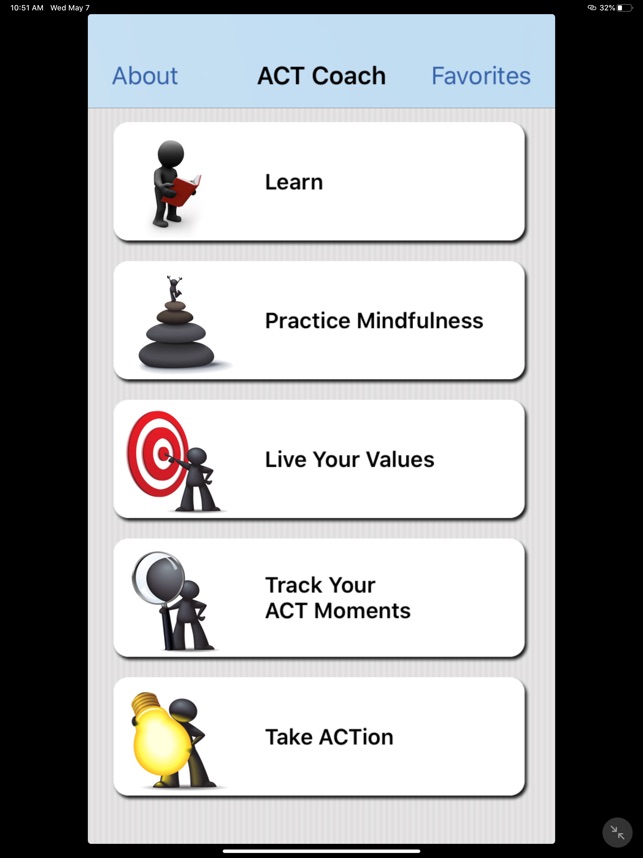
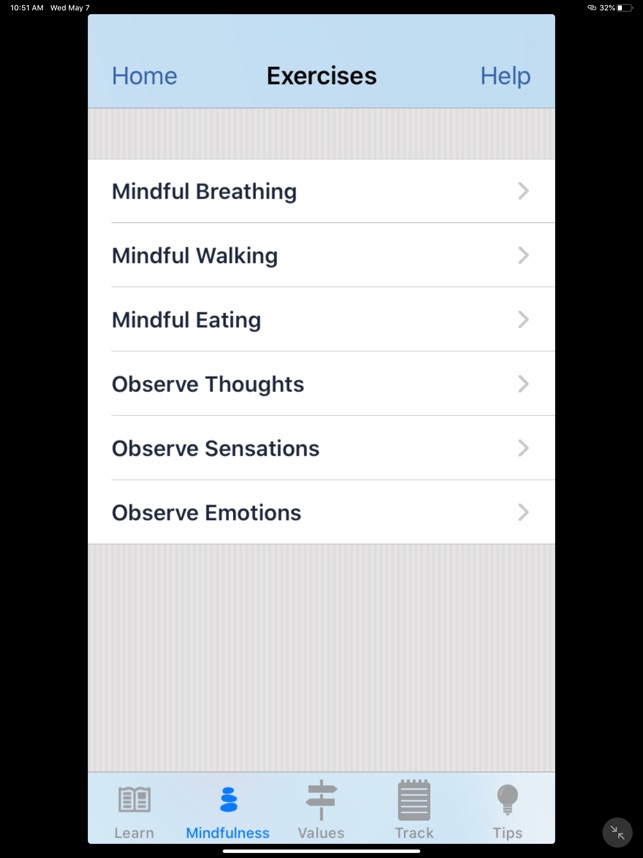
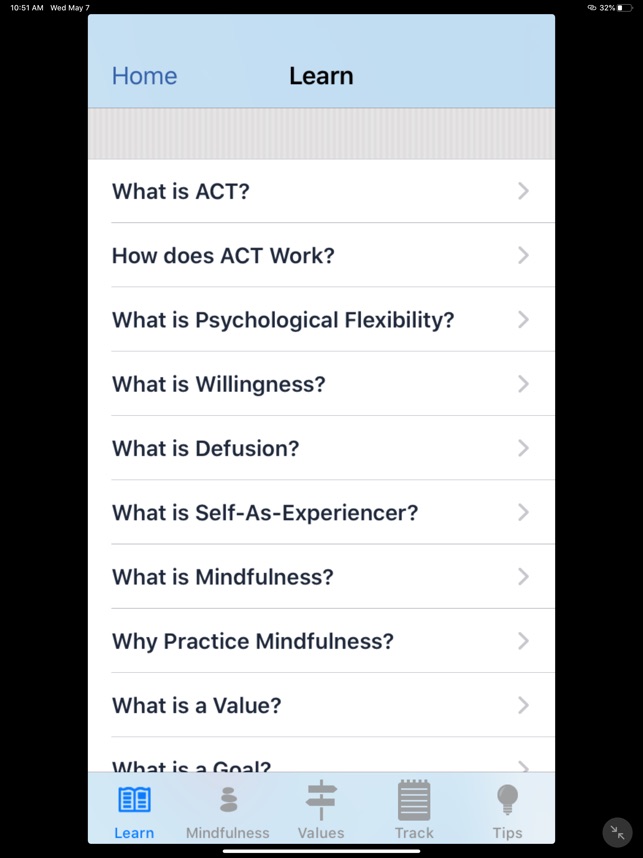
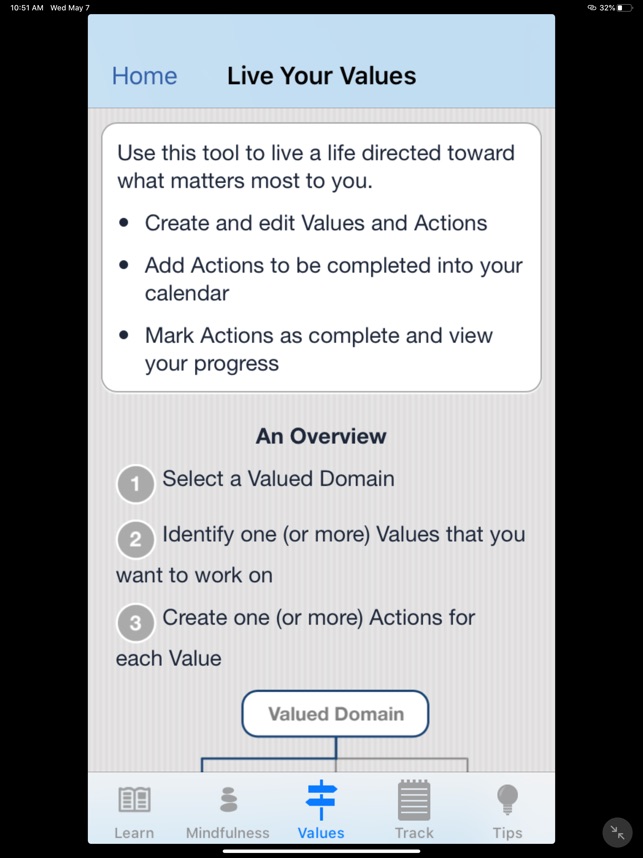
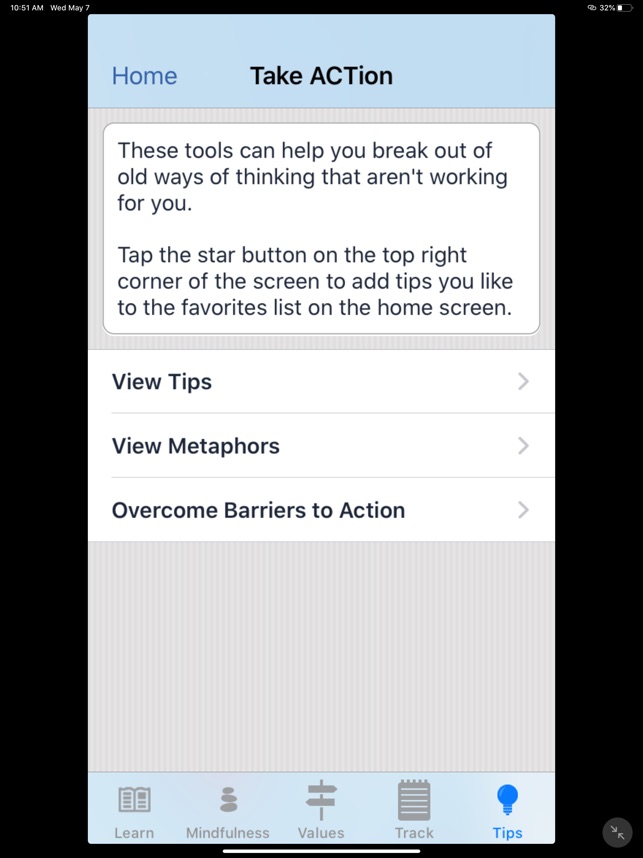
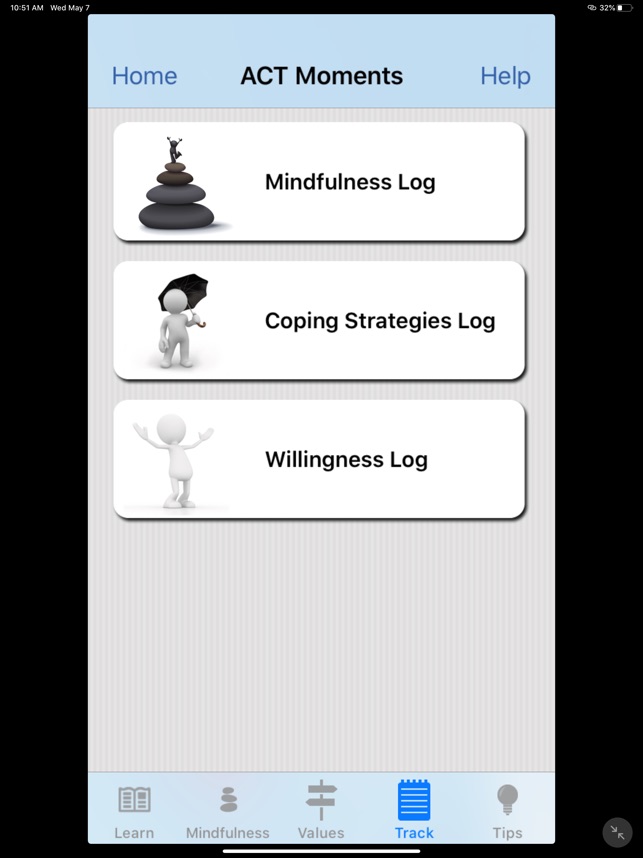
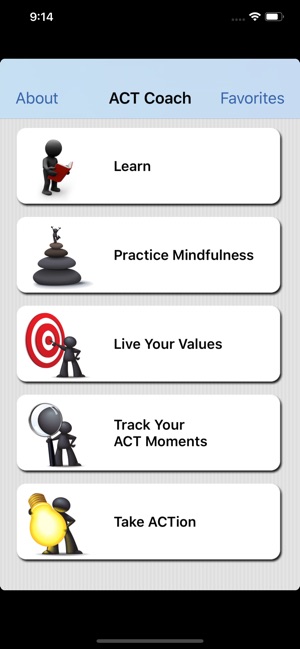
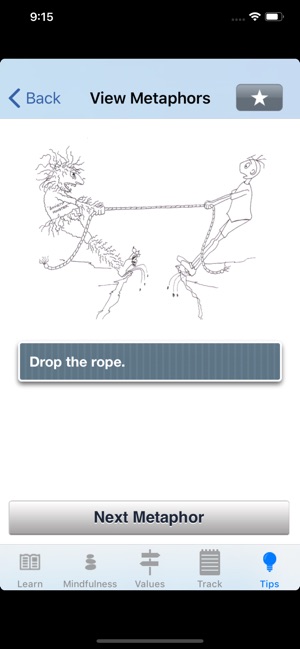
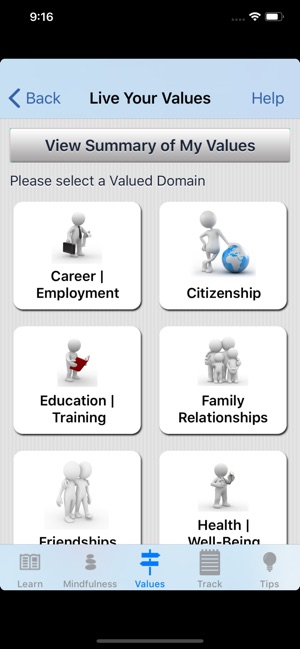
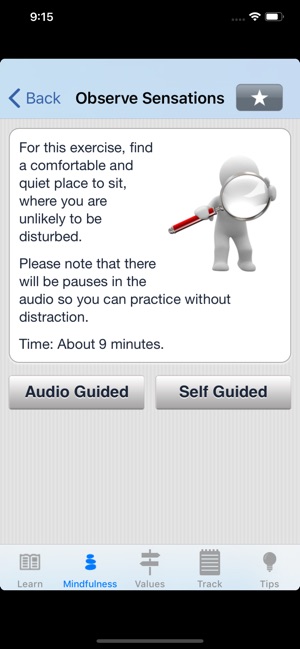
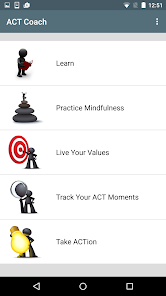
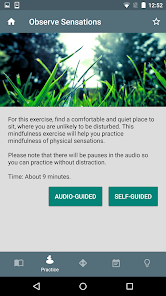
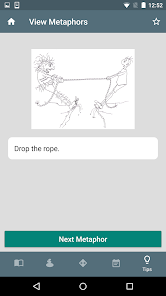
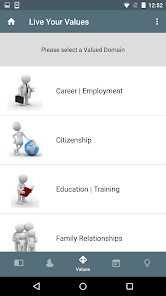
Developed by the VA's National Center for PTSD, ACT Coach reinforces Acceptance and Commitment Therapy (ACT) principles for individuals receiving clinical care. The system delivers pedagogical content and structured exercises focused on mindfulness, acceptance, and values-based action. Its interface provides interactive tools and tracking logs to facilitate skill practice and self-monitoring between therapy sessions. This design supports the application of therapeutic concepts to daily life experiences, augmenting the work conducted with a provider.
Evidence & Research Context
- The app's framework is grounded in Acceptance and Commitment Therapy (ACT), an evidence-based psychotherapeutic approach for various mental health conditions.
- ACT Coach is part of a suite of mental health applications developed by the U.S. Department of Veterans Affairs as a component of a national public health strategy.
- Associated research on the VA's app portfolio describes a growing evidence base for several of the treatment-companion tools in reducing clinical symptoms.
- An evaluation of the broader VA app suite indicates that providers find the tools engaging and a practical advantage in augmenting standard care.
Intended Use & Scope
This application is designed as a treatment companion for individuals, including veterans and service members, actively engaged in therapy with a clinical provider. Its primary utility is to reinforce and extend therapeutic concepts between sessions. The app does not function as a standalone treatment and is not a substitute for professional mental healthcare.
Studies & Publications
Peer-reviewed research associated with this app.
VA mobile apps for PTSD and related problems: public health resources for veterans and those who care for them
Owen et al. (2018) · mHealth
Referenced in academic literature; no direct evaluation of the appIn the Media
10 Apps for Veterans to Improve Health and Wellness
The VA National Center for PTSD, DoD National Center for Telehealth and Technology, and Stanford School of Medicine developed ACT Coach to help users cope with mental health symptoms, using mindfulness and acceptance strategies from Acceptance and Commitment Therapy. The app serves as a tool for use while receiving face-to-face ACT treatment, assisting users in managing emotions and symptoms related to mental health conditions.
41 Awesome Mental Health Resources When You Can't Afford A Therapist
ACT Coach was developed to help users tolerate negative thoughts and feelings by virtually guiding them through awareness exercises and providing tips on how to overcome self-doubt. The app focuses on mindfulness and includes a progress tracking log for users to monitor their development. ACT Coach is available for free on iOS devices.
App Information
Developer
US Department of Veterans AffairsCategory
Evidence Profile
Published in academic literature
Platforms
Updated
May 2025
© 2025 US Department of Veterans Affairs