
Aliviado Caregiving
Proven effective in research studies
App Summary
App Screenshots
Detailed Description
Functionality & Mechanism
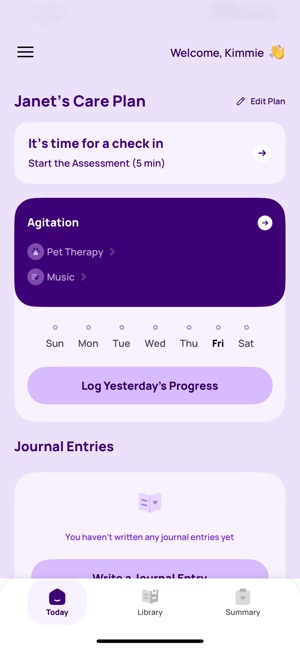
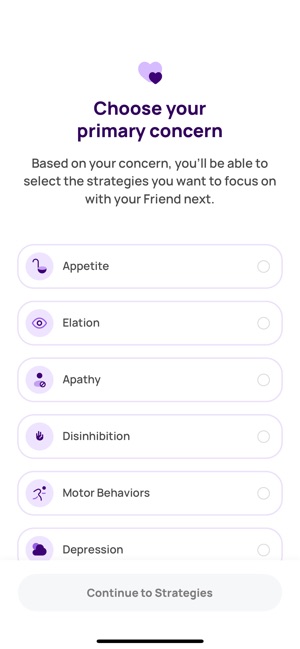
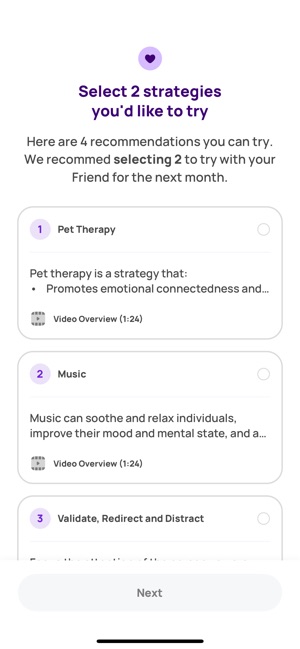
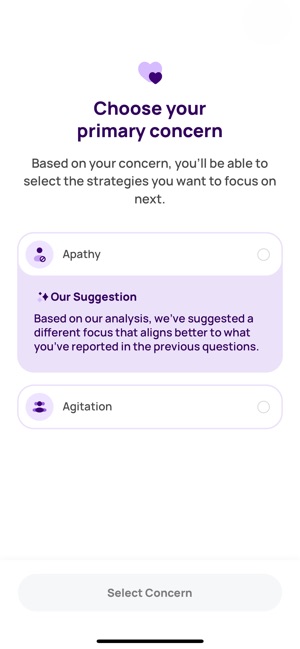
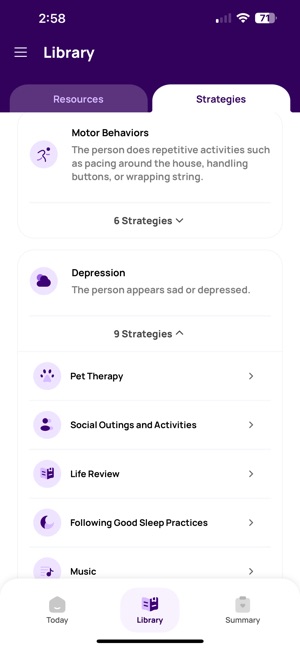
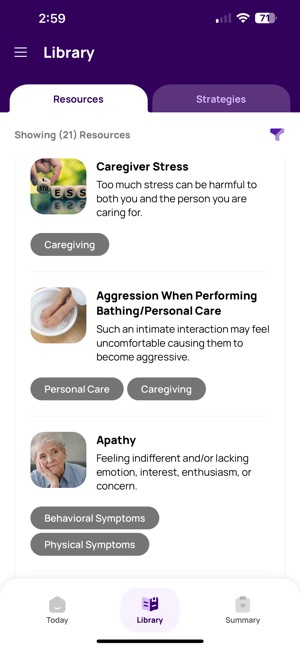
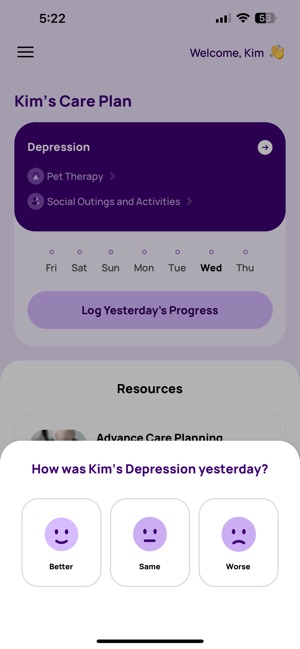
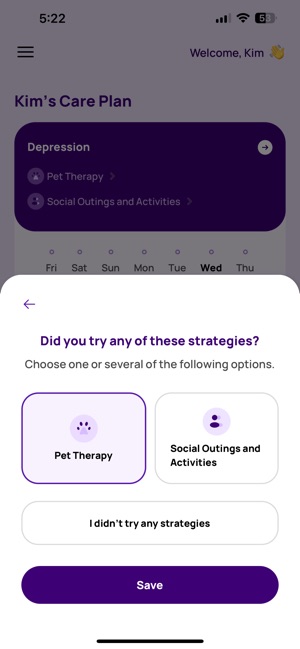
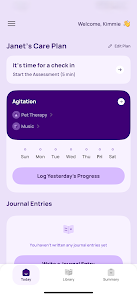
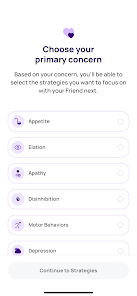
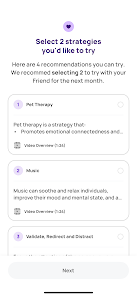
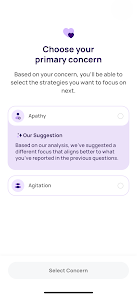
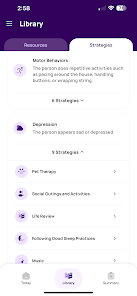
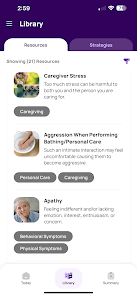
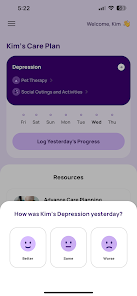
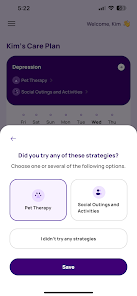
Aliviado Caregiving is a mobile decision-support system engineered to guide non-pharmacological symptom management for persons with dementia. The interface facilitates the creation of personalized care plans targeting specific concerns, such as agitation or sleep disturbances. The system then delivers targeted pedagogical content through a library of instructional videos and condensed tip sheets. This structured approach is designed to equip caregivers with evidence-based strategies to manage challenging behavioral and psychological symptoms in community-based settings.
Evidence & Research Context
- The application's design was refined through an iterative, human-centered process involving clinicians (N=101), care partners (N=8), and a community advisory board to enhance usability.
- A usability evaluation (N=86) of a parallel version developed for hospice providers demonstrated high utility, with over 90% of users reporting it was ready for implementation.
- The broader Aliviado training program, which provides the scientific basis for the app's content, was evaluated in a pre-post trial with hospice staff (N=39).
- The program produced significant increases in staff knowledge and confidence, including an 18.4% improvement in selecting appropriate interventions for behavioral and psychological symptoms of dementia (BPSD).
Intended Use & Scope
This application is intended for informal caregivers seeking guidance on non-pharmacological dementia care strategies. Its primary utility is as an adjunct educational and decision-support tool. The system does not provide medical diagnoses or treatment recommendations and is not a substitute for professional clinical consultation. Users should consult a healthcare provider for comprehensive care planning and medical management.
Studies & Publications
Peer-reviewed research associated with this app.
The Aliviado Caregiving Application: An Iterative, Human-Centered Design Study (Preprint)
Fernandez Cajavilca et al. (2025) · JMIR Preprints
Describes the research-driven development of this appAliviado Mobile App for Hospice Providers: A Usability Study
David et al. (2021) · Journal of Pain and Symptom Management
Hospice providers found the app useful and effective, with over 90% rating it ready for launch.
In the Media
Aliviado Health Collaborates on New Dementia Patient and Caregiver Guide
The National Partnership for Healthcare and Hospice Innovation collaborated with Aliviado Health and the Center to Advance Palliative Care to release the NPHI Dementia Care Resources Provider Guide, aiming to improve quality of life for dementia patients and reduce hospitalizations. "Persons living with dementia and their caregivers deserve compassionate, high-quality, evidence-based palliative and hospice care," said Ab Brody, PhD, RN, FAAN, FPCN, founder of Aliviado Health and associate director of the Hartford Institute for Geriatric Nursing at NYU Rory Meyers College of Nursing. The guide integrates Aliviado's clinical trials-tested approach to provide comprehensive, person-centered care resources at no extra cost.
NYU Meyers awarded $6.1 million NIH grant to improve quality of dementia care in hospice
The Hartford Institute for Geriatric Nursing at NYU Rory Meyers College of Nursing created Aliviado Dementia Care to implement effective community care for people with dementia and their caregivers, using a program based on a decade of research on dementia symptom assessment and management. "Our evidence-based program is designed to help people with dementia who are near the end of their lives, as well as their families, to improve their quality of life and cope with this devastating illness," said Ab Brody, associate director of the Hartford Institute and founder of Aliviado Health. The program received a $6.1 million NIH grant to fund the first large-scale clinical trial of people with dementia in hospice care.
NYU-Affiliated Aliviado Lands $6.1M for Hospice Dementia Care
NYU's Hartford Institute for Geriatric Nursing developed Aliviado Caregiving to improve hospice dementia care by partnering with home-based care providers through educational materials, training tools, and treatment algorithms. The app received $6.1 million in National Institute on Aging funding, addressing the fact that 16% of hospice patients have dementia as their primary diagnosis, making it the second most common hospice diagnosis after cancer. "Despite high rates of dementia in hospice care, little research has been performed on how hospices can best help people with dementia and their caregivers," said developer Ab Brody.
Aliviado Teams with Home Health Providers to Slash Dementia-Related Readmissions - Home Health Care News
The Hartford Institute for Geriatric Nursing at New York University's Rory Meyers College of Nursing developed Aliviado Health to address the knowledge gap in dementia care among home health providers, using educational materials, training tools, and treatment algorithms. "A lot of what Aliviado does is around understanding how to approach patients and finding out why they might be agitated or resistant to care," said Ab Brody, the initiative's developer and NYU associate professor. Formally launched in August, the initiative partners with home-based providers to slash readmission rates while maximizing independence for dementia patients.
NYU Meyers launches Aliviado, a resource for teams caring for people with dementia
The Hartford Institute for Geriatric Nursing at NYU Rory Meyers College of Nursing developed Aliviado Health to provide relief to people with dementia and their caregivers by helping home health and hospice agencies deliver high-quality care. "Aliviado was built around the idea that people with dementia, caregivers, and clinicians all need relief from the symptoms that occur from this set of diseases," said developer Ab Brody, who noted that up to one-third of home health patients have dementia. The program translates Brody's decade of research into comprehensive training that improves clinicians' knowledge while decreasing hospital readmissions and healthcare costs.
App Information
Developer
New York UniversityCategory
Evidence Profile
Proven effective in research studies
Platforms
Updated
Aug 2026
© 2025 New York University