
AppsFromResearch
BGC Science icon

BGC Science

Evidence Tier:CLINICAL GRADE

Validated in clinical trials

For:General Public & Enthusiasts

App Summary

BGC Science is a mobile platform designed for researchers, clinicians, and the public to administer a range of psychoacoustical tasks for auditory assessment outside of a traditional laboratory. Validation studies demonstrated that the platform's test results show high repeatability and are comparable to or better than those from standard laboratory methods, even when using consumer-grade hardware in less controlled settings. The associated research concludes that this accessible tool can reliably measure auditory function, providing a normative baseline against which auditory dysfunction can be identified.

App Screenshots
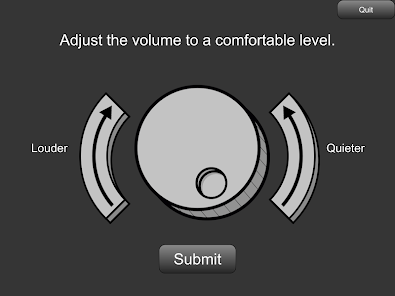
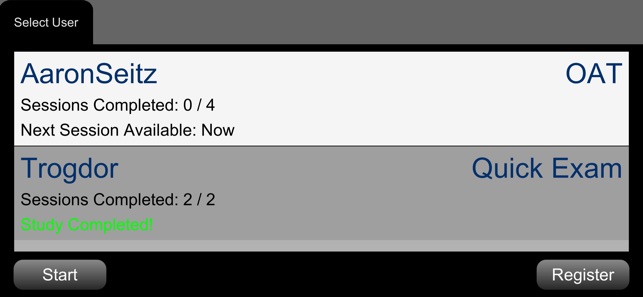
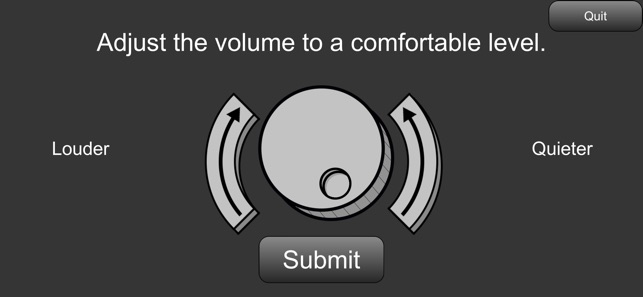
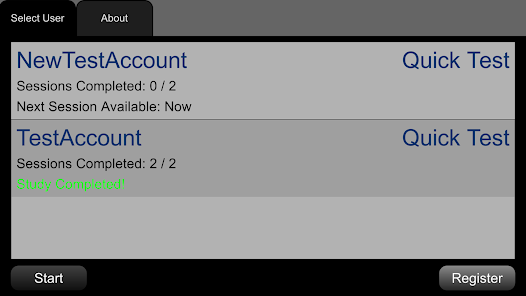
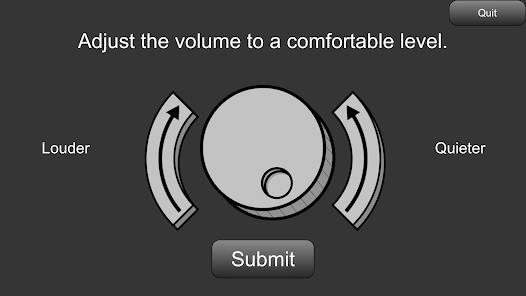
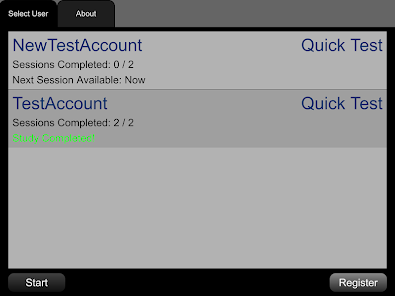
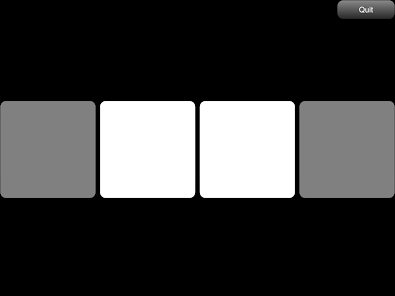
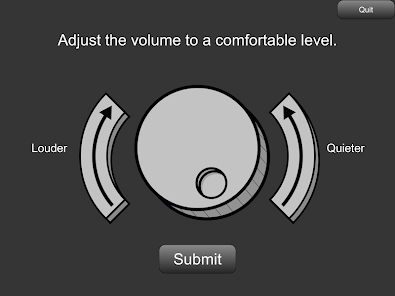
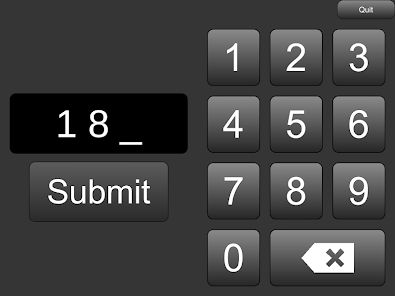
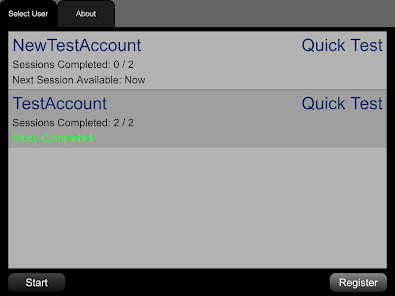
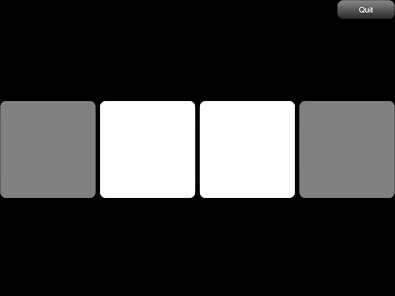
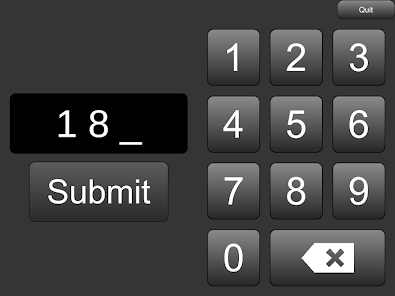
BGC Science screenshot 1 of 25BGC Science screenshot 2 of 25BGC Science screenshot 3 of 25BGC Science screenshot 4 of 25BGC Science screenshot 5 of 25BGC Science screenshot 6 of 25BGC Science screenshot 7 of 25BGC Science screenshot 8 of 25BGC Science screenshot 9 of 25BGC Science screenshot 10 of 25BGC Science screenshot 11 of 25BGC Science screenshot 12 of 25BGC Science screenshot 13 of 25BGC Science screenshot 14 of 25BGC Science screenshot 15 of 25BGC Science screenshot 16 of 25BGC Science screenshot 17 of 25BGC Science screenshot 18 of 25BGC Science screenshot 19 of 25BGC Science screenshot 20 of 25BGC Science screenshot 21 of 25BGC Science screenshot 22 of 25BGC Science screenshot 23 of 25BGC Science screenshot 24 of 25BGC Science screenshot 25 of 25

Detailed Description

Functionality & Mechanism

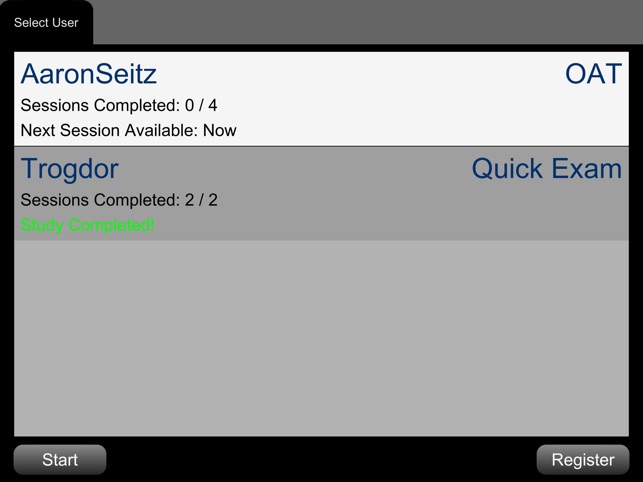
Developed by the Brain Game Center at Northeastern University, BGC Science is a mobile platform for administering psychoacoustical assessments. Known in research as Portable Automated Rapid Testing (PART), the system operates on consumer-grade tablets and calibrated headphones. It delivers a battery of auditory tasks, including spatial release from masking, binaural sensitivity, and spectrotemporal modulation discrimination. The interface is engineered to rapidly collect threshold data in settings outside of traditional laboratories, facilitating remote and field-based auditory research.

Evidence & Research Context

  • Two validation studies demonstrated that the platform can replicate standard laboratory results for several psychoacoustical tests using consumer-grade hardware.
  • In studies involving younger normal-hearing and older hearing-impaired listeners, spatial release and spectrotemporal modulation thresholds were found to be equivalent to or better than those reported in established literature.
  • A validation study confirmed high test-retest repeatability, which was maintained across different headphone models (passive and active noise-attenuating) and in the presence of recorded background noise.
  • The platform's methodology has been used to establish a normative baseline dataset, which can serve as a reference for identifying auditory dysfunction in future research.

Intended Use & Scope

This application is intended for researchers, clinicians, and students requiring a tool for accessible psychoacoustical data collection. Its primary utility is for research-grade auditory assessment in non-laboratory environments. The platform does not provide clinical diagnoses of hearing disorders and is not a substitute for a comprehensive audiological evaluation conducted by a qualified healthcare professional.

Studies & Publications

2 publications

Peer-reviewed research associated with this app.

Validation Study

Portable Automated Rapid Testing (PART) for auditory research: Validation in a normal hearing population

Lelo et al. (2020) · The Journal of the Acoustical Society of America

Produced consistent, repeatable hearing assessments comparable to laboratory results across varied conditions.

This study aims to determine the degree to which Portable Automated Rapid Testing (PART), a freely available program running on a tablet computer, is capable of reproducing standard laboratory results. Undergraduate students were assigned to one of three within-subject conditions that examined repeatability of performance on a battery of psychoacoustical tests of temporal fine structure processing, spectro-temporal amplitude modulation, and targets in competition. The repeatability condition examined test/retest with the same system, the headphones condition examined the effects of varying headphones (passive and active noise-attenuating), and the noise condition examined repeatability in the presence of recorded cafeteria noise. In general, performance on the test battery showed high repeatability, even across manipulated conditions, and was similar to that reported in the literature. These data serve as validation that suprathreshold psychoacoustical tests can be made accessible to run on consumer-grade hardware and perform in less controlled settings. This dataset also provides a distribution of thresholds that can be used as a normative baseline against which auditory dysfunction can be identified in future work.
... Read More
Validation Study

Development and validation of Portable Automated Rapid Testing (PART) measures for auditory research

Gallun et al. (2018) · Proceedings of Meetings on Acoustics

App-based hearing tests reliably matched laboratory-standard measurements across diverse auditory tasks.

The current state of consumer-grade electronics means that researchers, clinicians, students, and members of the general public across the globe can create high-quality auditory stimuli using tablet computers, built-in sound hardware, and calibrated consumer-grade headphones. Our laboratories have created a free application that supports this work: PART (Portable Automated Rapid Testing). PART has implemented a range of psychoacoustical tasks including: spatial release from speech-on-speech masking, binaural sensitivity, gap discrimination, temporal modulation, spectral modulation, and spectrotemporal modulation (STM). Here, data from the spatial release and STM tasks are presented. Data were collected across the globe on tablet computers using applications available for free download, built-in sound hardware, and calibrated consumer-grade headphones. Spatial release results were as good or better than those obtained with standard laboratory methods. Spectrotemporal modulation thresholds were obtained rapidly and, for younger normal hearing listeners, were also as good or better than those in the literature. For older hearing impaired listeners, rapid testing resulted in similar thresholds to those reported in the literature. Listeners at five different testing sites produced very similar STM thresholds, despite a variety of testing conditions and calibration routines. Download Spatial Release, PART, and Listen: An Auditory Training Experience for free at https://bgc.ucr.edu/games/.
... Read More

BGC Science

Free