bloomWatch
Published in academic literature
App Summary
App Screenshots
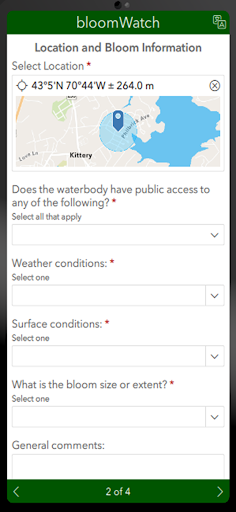
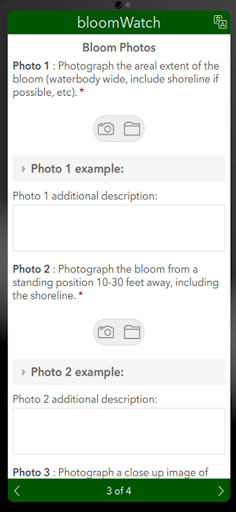
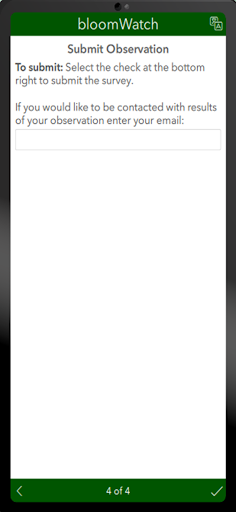
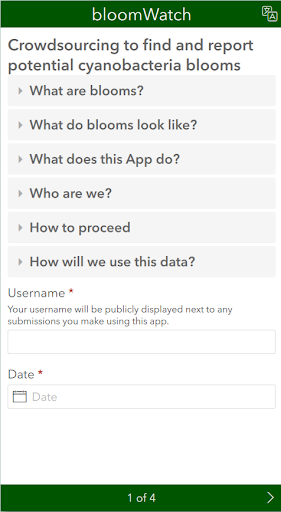
Detailed Description
Functionality & Mechanism
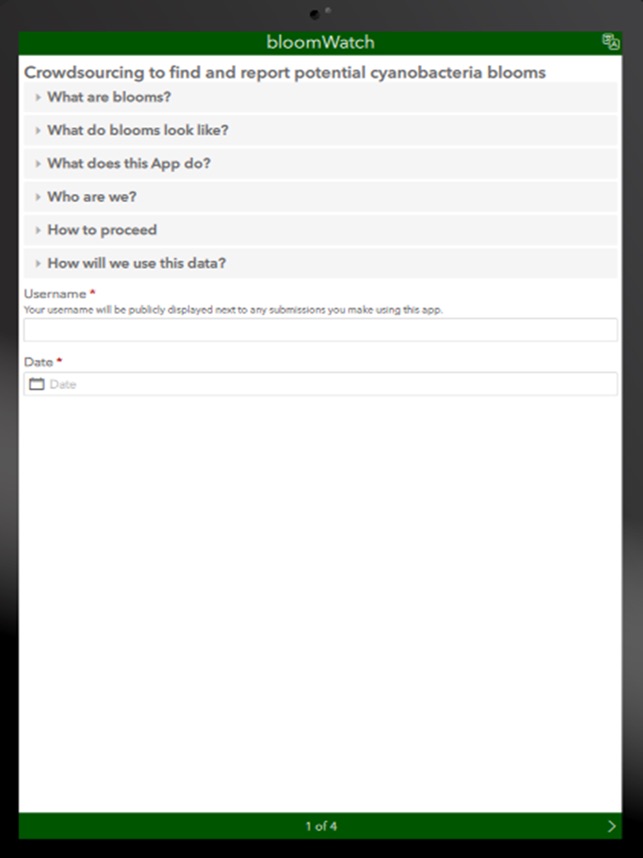
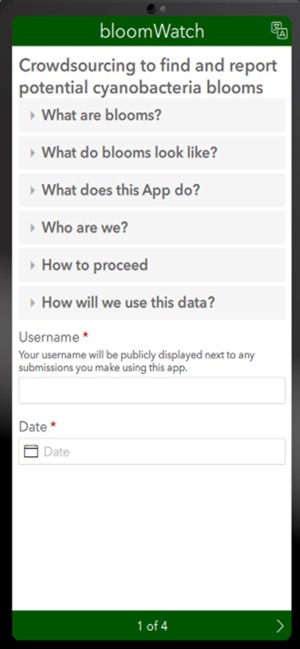
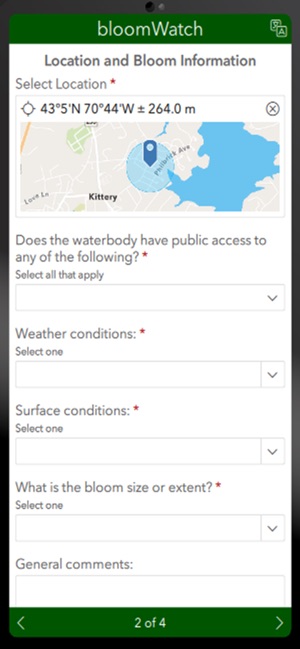
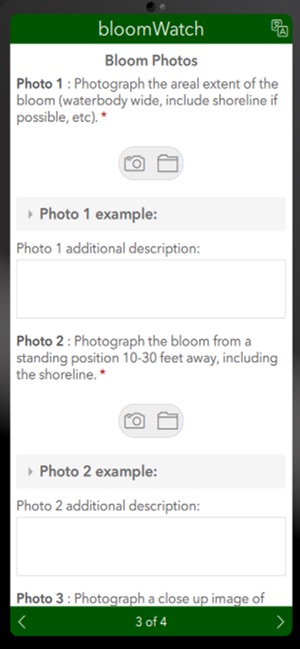
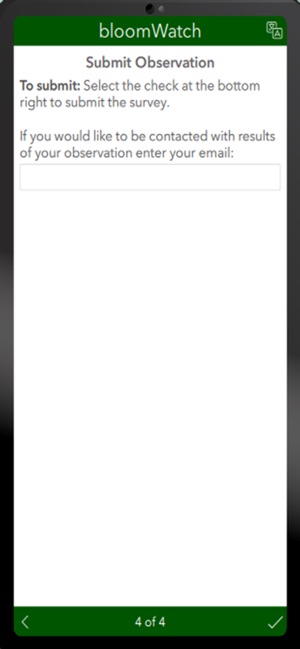
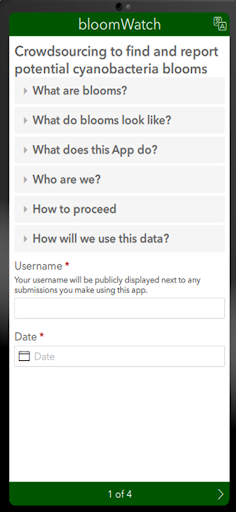
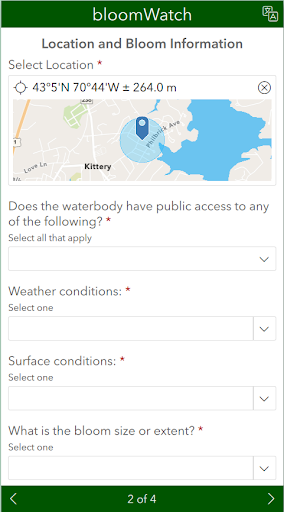
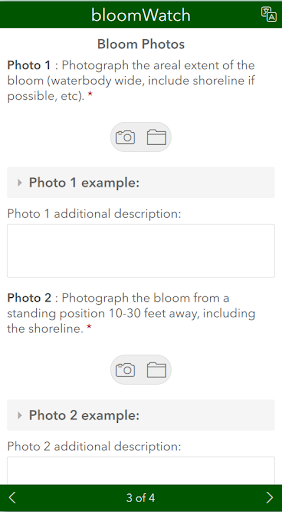
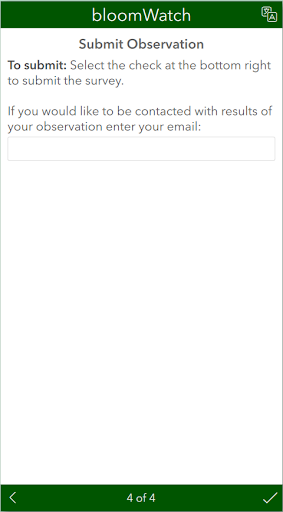
The bloomWatch application, a component of the Cyanobacteria Monitoring Collaborative, facilitates crowdsourced documentation of potentially harmful algal blooms. The system guides participants through a structured four-screen data entry protocol designed to capture observations. This process involves inputting location data, environmental conditions, and bloom size estimates using spatial references. A core function requires the submission of three distinct, geo-located photographs—landscape, mid-range, and close-up—from a single vantage point to provide a robust visual record for analysis.
Evidence & Research Context
- The associated research describes bloomWatch as a citizen science tool designed to address the significant under-reporting of cyanobacteria and harmful algal blooms (HABs).
- Its protocol leverages crowdsourcing to capture data on ephemeral bloom events that official monitoring programs may miss due to logistical constraints.
- The required three-photo submission is designed to generate a standardized "weight of evidence" for subsequent expert assessment of potentially harmful conditions.
- Submitted data populates a public dashboard, providing an accessible resource for researchers and water managers to analyze spatial and temporal bloom patterns.
Intended Use & Scope
This application is intended for use by the general public as a citizen science data collection tool. Its primary utility is to report and document the occurrence of potential algal blooms for scientific and public health monitoring. The system does not provide real-time risk assessment or confirm cyanotoxin presence; all submissions require subsequent expert analysis.
Studies & Publications
Peer-reviewed research associated with this app.
CYANOBACTERIA MONITORING COLLABORATIVE PROGRAM
Cyanobacteria Monitoring Collaborative Program et al. (2023)
Describes the research-driven development of this appIn the Media
Version 5 of bloomWatch now available for download on iOS
The U.S. Environmental Protection Agency launched bloomWatch Version 5 for iOS devices, with the Android version submitted to Google Play Store for upcoming release. The updated app automatically replaces previous versions on devices with automatic updates enabled. How-to videos and a quick start guide for the new bloomWatch will be available in the near future.
bloomWatch
The US EPA developed bloomWatch as a participatory science app to help track and manage harmful cyanobacteria blooms in water bodies, enabling users to report suspected blooms that may pose risks to public health and ecosystems. Originally a project of the Cyanobacteria Monitoring Collaborative and facilitated by EPA Region 1, the app notifies participating state and Tribal partners in real-time when observations are submitted. The app helps address the challenge that "state and local officials cannot watch every water body at all times."
New app encourages public help in combating blue green algae
The Environmental Protection Agency launched the smartphone app bloomWatch to combat blue-green algae, partnering with Rhode Island's Department of Environmental Management and the University of Rhode Island's Watershed Watch for training initiatives. The EPA is touring New England states with the new CyanoMobile, using a mobile platform to provide training and resources on the cyanobacteria monitoring program for the region. The app demonstrates its utility in New England's effort to monitor cyanobacteria through public participation.
App Information
Developer
US Environmental Protection AgencyCategory
Evidence Profile
Published in academic literature
Platforms
Updated
Dec 2024
© 2025 US Environmental Protection Agency