
AppsFromResearch
BrainHealth icon

BrainHealth

Evidence Tier:VALIDATED

Proven effective in research studies

For:Researchers & AcademicsGeneral Public & Enthusiasts

App Summary

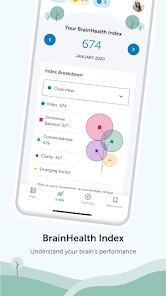
BrainHealth is a research platform for healthy adults that uses a multidimensional BrainHealth Index (BHI) to assess cognitive, social, and emotional well-being while delivering evidence-based training strategies. A preliminary pilot study (N=180) found that 75% of participants improved their BHI score after 12 weeks, with gains in areas including cognition, resilience, and social engagement. The authors conclude this pilot is a first step in a large-scale project designed to scale evidence-based protocols and develop precision models for optimizing brain health across the lifespan.

App Screenshots

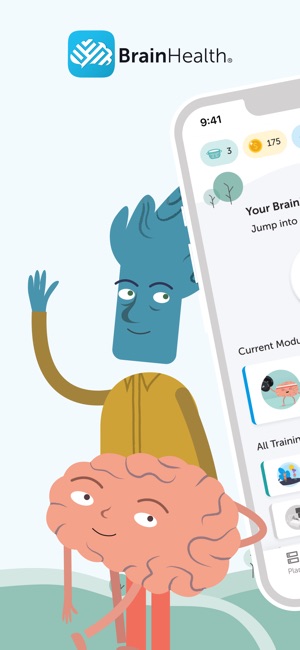
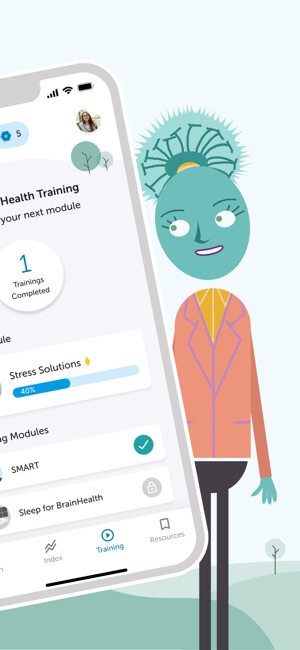
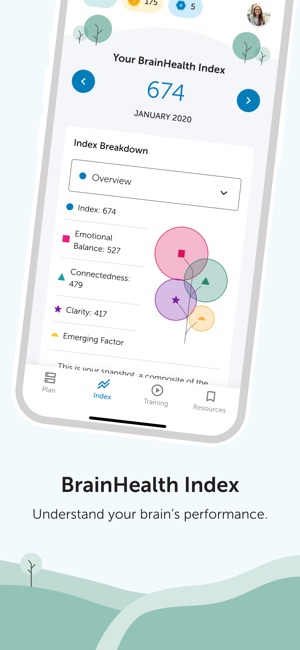
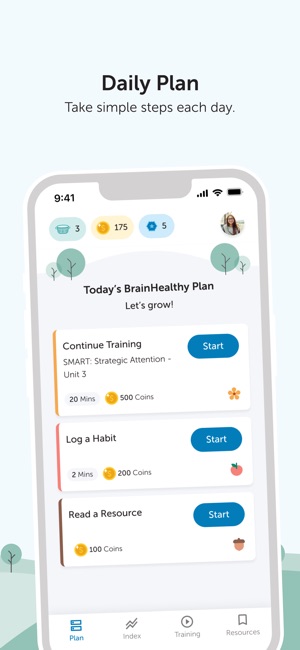
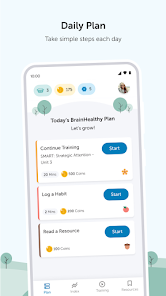
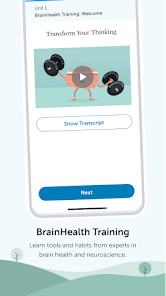
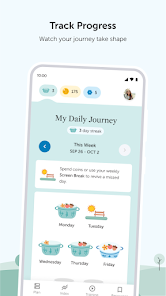
BrainHealth screenshot 1 of 12BrainHealth screenshot 2 of 12BrainHealth screenshot 3 of 12BrainHealth screenshot 4 of 12BrainHealth screenshot 5 of 12BrainHealth screenshot 6 of 12BrainHealth screenshot 7 of 12BrainHealth screenshot 8 of 12BrainHealth screenshot 9 of 12BrainHealth screenshot 10 of 12BrainHealth screenshot 11 of 12BrainHealth screenshot 12 of 12

Detailed Description

Functionality & Mechanism

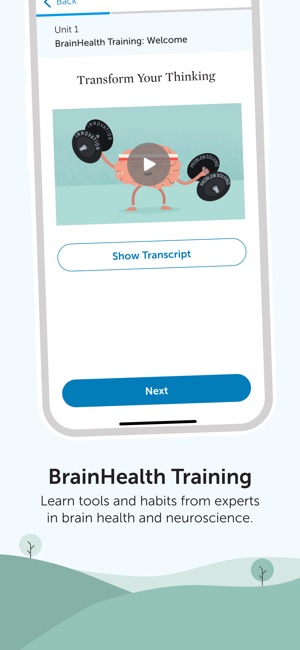
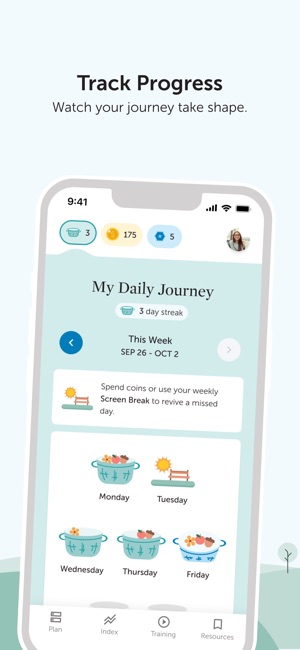
Developed by the Center for BrainHealth® at The University of Texas at Dallas, the BrainHealth platform facilitates longitudinal tracking of cognitive and psychosocial well-being. The system delivers the BrainHealth Index (BHI), a composite assessment measuring cognition, social engagement, and emotional balance. Participants engage with self-paced training modules, such as the evidence-based SMART program, and can access virtual coaching sessions. The platform is designed for periodic reassessment to quantify changes in brain health metrics over time.

Evidence & Research Context

  • A preliminary pilot study (N=180) of a 12-week intervention indicated that 75% of participants achieved gains on the BrainHealth Index, with larger gains associated with module utilization.
  • The platform's primary cognitive training (SMART) is grounded in over 25 years of research, with previously reported efficacy in randomized controlled trials for improving cognition and well-being.
  • The system is central to a large-scale longitudinal study protocol designed to further validate the BrainHealth Index in a cohort of up to 100,000 adults over 10 years.
  • The cognitive index has been adopted as a primary outcome in neuroimaging research, where a machine learning model predicted gains with 90% accuracy in a small cohort (N=48).

Intended Use & Scope

This platform is intended for the general public as citizen scientists to monitor brain health metrics and for researchers as a data collection tool. Its primary utility is to facilitate self-guided cognitive training and track longitudinal changes in performance. The system does not provide medical diagnoses or treatment and should not replace consultation with a qualified health provider.

Studies & Publications

3 publications

Peer-reviewed research associated with this app.

Study Protocol

The BrainHealth Project Study Protocol: A Longitudinal Study in Generally Healthy Adults

Cook et al. (2024) · Research Square

Research study planned or in progress; results not yet available
Background: Optimization of brain health is a focal point in medical science, yet data regarding measuring, preserving, and improving lifelong brain health are lacking. This void demands an objective, change-sensitive measure of brain health and proven strategies to strengthen brain performance. The BrainHealth Project addresses these key issues, drawing upon neuroplasticity evidence of persistent modifiability of brain function across the lifespan. This landmark study aims to definitively (i) evaluate and refine holistic change indices of brain health, (ii) evaluate the impact of evidenced-based cognitive strategies and lifestyle interventions on improving/maintaining brain health, and (iii) elucidate the mechanisms associated with brain health gains/losses. Methods: This prospective, longitudinal, interventional, open-label, single-arm clinical trial aims to recruit 100,000 generally healthy adults over 10 years. Assessments, coaching, and training are conducted online through the secure BrainHealth Platform, allowing utilization tracking. The BrainHealth Index (BHI)—a multidimensional assessment—is offered at baseline and every six months. Participants have access to coaching every three months and continual access to self-paced trainings and resources. The primary outcome is the further validation of a novel composite BHI score and its sub-scores: Clarity (cognitive health), Connectedness (social health), and Emotional Balance (well-being). The BHI includes measures sensitive to change, including gains from behavior change and integration of cognitive strategies into daily life. These contrast with traditional assessments focused on detecting cognitive decline or diagnosing pathological conditions. The primary online training, SMART (Strategic Memory Advanced Reasoning Tactics), is a strategy-based program validated with 25+ years of research. SMART promotes improvements in neural health, cognition, well-being, connectedness, and real-life function, previously reported in randomized controlled trials (RCTs). Statistical approaches focus on individual prediction using nonlinear models trained with large samples and on assessing mechanisms influencing gains or losses on brain health metrics. Discussion: This research extends RCT evidence to a longitudinal, epidemiologic approach, leveraging digital health and machine learning tools to deliver a generalizable measure of longitudinal brain health and to achieve precision brain health. By integrating advanced statistical methods and large-scale data, the BrainHealth Project should provide medicine and society with accurate and actionable ways to optimize brain health practices across the lifespan.
... Read More
Effectiveness/Outcome Study

Toward Precision Brain Health: Accurate Prediction of a Cognitive Index Trajectory Using Neuroimaging Metrics

Spence et al. (2023) · Cerebral Cortex

Brain imaging metrics accurately predicted cognitive improvements with 90% accuracy.

Abstract The goal of precision brain health is to accurately predict individuals' longitudinal patterns of brain change. We trained a machine learning model to predict changes in a cognitive index of brain health from neurophysiologic metrics. A total of 48 participants (ages 21–65) completed a sensorimotor task during 2 functional magnetic resonance imaging sessions 6 mo apart. Hemodynamic response functions (HRFs) were parameterized using traditional (amplitude, dispersion, latency) and novel (curvature, canonicality) metrics, serving as inputs to a neural network model that predicted gain on indices of brain health (cognitive factor scores) for each participant. The optimal neural network model successfully predicted substantial gain on the cognitive index of brain health with 90% accuracy (determined by 5-fold cross-validation) from 3 HRF parameters: amplitude change, dispersion change, and similarity to a canonical HRF shape at baseline. For individuals with canonical baseline HRFs, substantial gain in the index is overwhelmingly predicted by decreases in HRF amplitude. For individuals with non-canonical baseline HRFs, substantial gain in the index is predicted by congruent changes in both HRF amplitude and dispersion. Our results illustrate that neuroimaging measures can track cognitive indices in healthy states, and that machine learning approaches using novel metrics take important steps toward precision brain health.
... Read More

In the Media

Good Sleep and Good Friends Are Good for Your Brain. UT Dallas' New Project Will Prove It

UT Dallas's Center for BrainHealth developed BrainHealth to encourage people to think about brain health before something goes wrong, focusing on preventive cognitive wellness. The project emphasizes how good sleep and strong social connections benefit brain function as key components of maintaining cognitive health. The initiative represents a proactive approach to brain wellness rather than waiting for problems to develop.

CenterforbrainhealthRead article

The 6 Pillars of Brain Health

Cleveland Clinic developed the "Six Pillars of Brain Health" framework to protect against dementia and cognitive decline, using scientifically demonstrated approaches to reduce Alzheimer's risk. "You can influence this," says psychiatrist Dylan Wint, MD, emphasizing that daily decisions have enormous impact on brain health. The framework recommends 150 minutes weekly of moderate exercise and continual mental challenges to promote new brain cell growth.

ClevelandclinicRead article

Brain Performance Institute Launches App to Boost Brain Power

Center for BrainHealth developed Charisma, a flexible virtual simulation platform designed to help users increase their social adeptness, using cutting-edge game development software combined with clinician-led cognitive social learning protocols. The platform allows "repeated but novel practice with real-time simulation of authentic, dynamic social interactions at varying levels of complexity."

CenterforbrainhealthRead article

BrainHealth

Free