
AppsFromResearch
Chat2Learn icon

Chat2Learn

Evidence Tier:CLINICAL GRADE

Validated in clinical trials

For:Educators & TeachersGeneral Public & EnthusiastsKids & Youth

App Summary

Chat2Learn is an app for parents that uses an AI-powered chatbot to suggest open-ended questions, aiming to promote higher-quality conversations with their young children. An effectiveness study (N=~600) testing the program's approach found that its text-based prompts significantly increased preschool-age children's vocabulary. The associated research concludes that this light-touch tool can boost children's language skills by supporting parents in having richer, more engaging conversations.

App Screenshots

Chat2Learn screenshot 1 of 12Chat2Learn screenshot 2 of 12Chat2Learn screenshot 3 of 12Chat2Learn screenshot 4 of 12Chat2Learn screenshot 5 of 12Chat2Learn screenshot 6 of 12Chat2Learn screenshot 7 of 12Chat2Learn screenshot 8 of 12Chat2Learn screenshot 9 of 12Chat2Learn screenshot 10 of 12Chat2Learn screenshot 11 of 12Chat2Learn screenshot 12 of 12

Detailed Description

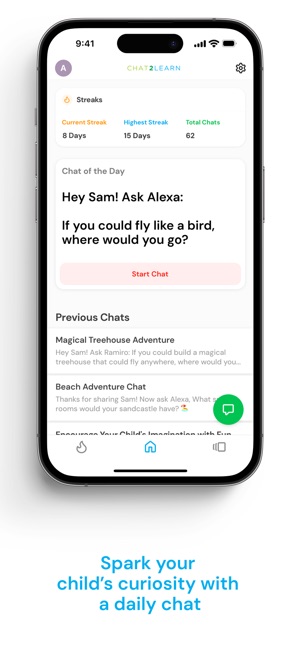
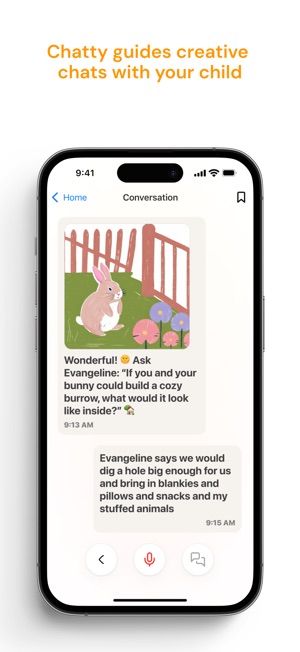
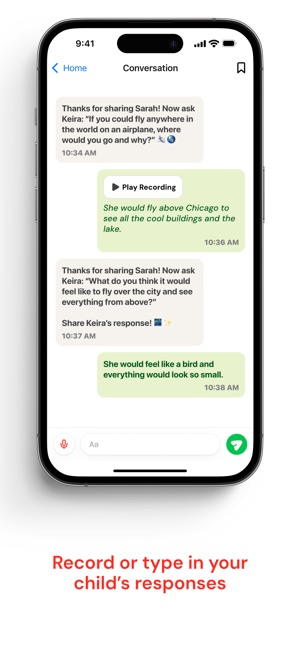
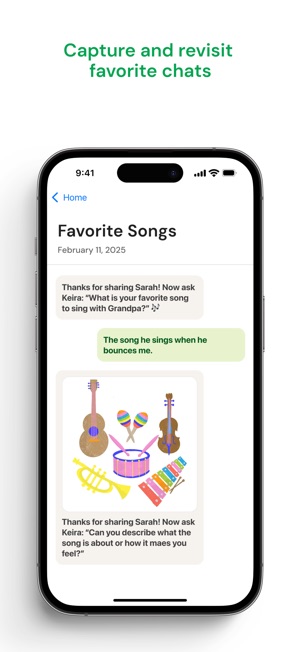
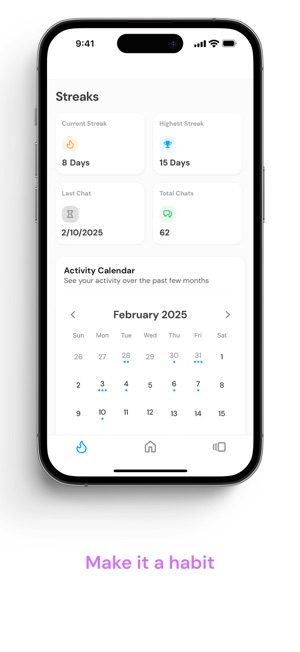
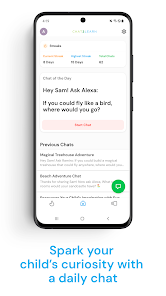
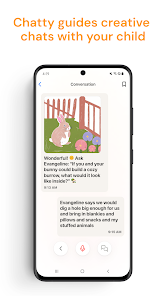
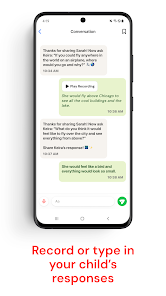
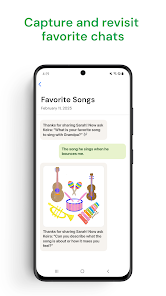
Functionality & Mechanism Developed at the University of Chicago's Behavioral Insights and Parenting Lab, Chat2Learn is an AI-driven tool designed to enhance parent-child dialogue. The system delivers open-ended, illustrated conversational prompts to parents via a chatbot interface. Sessions involve selecting a daily question or requesting a topic-specific prompt to initiate interaction. The interface accommodates both text and voice input to sustain conversations, and a feature enables the capture and storage of conversational records for later review.

Evidence & Research Context

  • Research includes a proof-of-concept evaluation (N=63) and a larger intervention study (N≈600) involving preschool-age children (3-6) from lower-income households.
  • In a controlled evaluation, parents using the tool demonstrated higher-quality language input, including longer utterances, more unique words, and more open-ended questions (p<.05).
  • A six-month intervention found the app's prompts significantly increased children's vocabulary for targeted words, with effect sizes ranging from 0.23 to 0.37 standard deviations.
  • A definitional prompt approach also reduced parents' fixed-mindset beliefs regarding their child's intelligence by 0.17 standard deviations.

Intended Use & Scope This tool is intended for parents and caregivers of preschool-age children as a behavioral aid to enrich daily conversations. Its primary utility is to model and facilitate high-quality verbal interactions that support language development. The app does not serve as a diagnostic tool or a substitute for formal speech-language pathology or educational intervention.

Studies & Publications

2 publications

Peer-reviewed research associated with this app.

RCT

Chat2Learn: A Proof-of-Concept Evaluation of a Technology-Based Tool to Enhance Parent-Child Language Interaction

Lu et al. (2025) · Becker Friedman Institute Working Paper

Parents using Chat2Learn provided richer language input and were more engaged compared to control families.

Parental language input is essential for children's early language development, yet substantial disparities persist in both its quantity and quality. Most early language interventions adopt an explicit theory of change, educating parents about why and how to talk with their children, but such approaches tend to be resource-intensive, which limit their potential for scalability. The present study examines Chat2Learn, a low-cost, text-messaging tool that delivers open-ended prompts designed to elicit decontextualized conversations among parent-child dyads. Grounded in Cognitive Load Theory, Chat2Learn aims to reduce parents' extraneous load of generating conversational topics, thereby increasing opportunities for rich parent–child interactions. Participants were 63 parent–child dyads (children ages 3–6; 65.1% girls) recruited from preschool programs serving families in under-resourced neighborhoods in Chicago. They were randomly assigned to an experimental condition, where parents had access to Chat2Learn, or a business-as-usual control condition, during a 10-minute unstructured waiting period. Results showed that parents in the Chat2Learn condition spent less time inattentive or withdrawn during interactions (p = .05). Chat2Learn parents also produced higher-quality language input, including longer utterances, more unique words, and more open-ended questions, compared to controls (all p's < .05). No immediate differences emerged in children's language output. These findings provide a proof-of-concept that an intervention that takes a learning by doing approach in providing concrete support for parents with 'what to talk about' rather than abstract training in 'why" and "how' to talk can positively shift parent–child interaction patterns.
... Read More
RCT

Talking about Words Boosts Preschool-Age Children's Vocabulary: Evidence from a Parent Intervention

Rury et al. (2025) · SSRN

Children whose parents used Chat2Learn showed significant vocabulary gains compared to controls.

Correlational research shows that children whose parents talk with them more often have stronger vocabulary and language skills than children whose parents talk to them less frequently. To test whether this relationship is causal and to test the impact of a light-touch parent intervention, we designed and implemented a program ("Chat2Learn") to support parents in talking to their preschool-age children about words. Chat2Learn sent three text-based prompts per week for six months to a sample of nearly 600 low-income parents in the United States. Chat2Learn tested two different approaches. In approach one (the "definition approach") parents were prompted to talk with their child about what a word means. In approach two (the "conversation approach") parents were prompted not only to define the word but also to have a conversation using the word. Both approaches significantly increased children's vocabulary (effect sizes of .37 and .23, SDs respectively) for words contained in our intervention – or treatment words. Quantile regressions further showed that the definition approach significantly boosted vocabulary for non-treatment words for children at the upper end of the vocabulary distribution. The definition approach also reduced by .17 SD parents' beliefs that the child's intelligence is fixed and cannot be changed. Neither approach changed parents' feelings of stress, fatigue, or enjoyment of learning activities.
... Read More

Chat2Learn

Free