AppsFromResearch
Clutter Image Rating icon

Clutter Image Rating

Evidence Tier:VALIDATED

Proven effective in research studies

For:Clinicians & Healthcare ProfessionalsGeneral Public & EnthusiastsPatients & Caregivers

App Summary

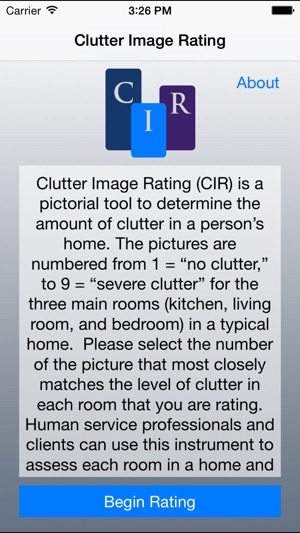
The Clutter Image Rating (CIR) is a pictorial assessment tool designed for clinicians and individuals to rate the severity of household clutter across three common rooms to help gauge the clutter dimension of hoarding disorder. Validation studies demonstrated the tool has good internal consistency, test-retest reliability, and interobserver reliability for measuring clutter in both mid-life and older adults. The associated research concludes the CIR is a valid pictorial method for clinical assessment, providing a useful alternative when a home visit is not feasible.

App Screenshots

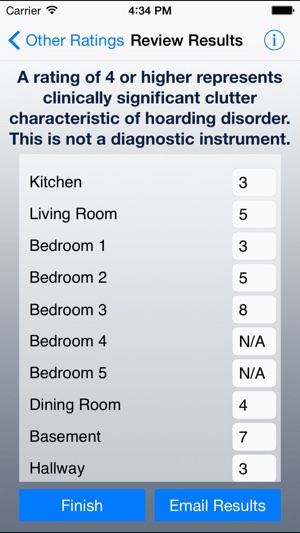
Clutter Image Rating screenshot 1 of 5Clutter Image Rating screenshot 2 of 5Clutter Image Rating screenshot 3 of 5Clutter Image Rating screenshot 4 of 5Clutter Image Rating screenshot 5 of 5

Detailed Description

Functionality & Mechanism

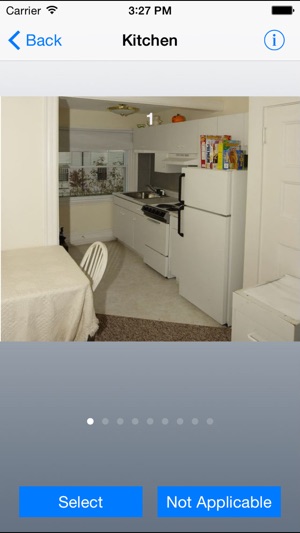
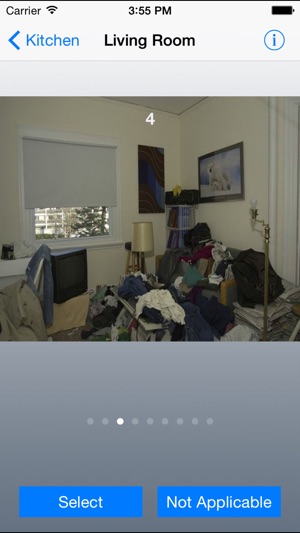
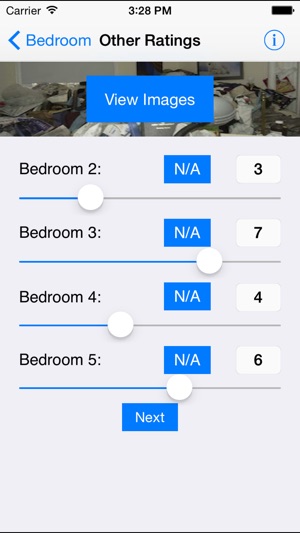
The Clutter Image Rating (CIR) is a validated pictorial instrument designed for the standardized assessment of home clutter. The system presents a series of nine equidistant photographs for three distinct rooms: the kitchen, living room, and bedroom. Each series visually depicts a clutter severity continuum from 1 (uncluttered) to 9 (severely cluttered). The interface captures a rating for each room by prompting the selection of the image that most accurately represents the environment, facilitating objective measurement and progress monitoring.

Evidence & Research Context

  • Two validation studies established the psychometric properties of the CIR in both mid-life and geriatric adult populations diagnosed with hoarding disorder.
  • The scale demonstrates robust internal consistency, test-retest reliability, and inter-observer reliability for rating clutter severity.
  • Validation analyses confirmed strong convergent validity with established questionnaire and interview measures of clutter.
  • The instrument shows strong divergent validity, correlating more significantly with clutter-specific measures than with other hoarding symptoms or general psychopathology scales.

Intended Use & Scope

This instrument is designed for clinicians, researchers, and human service professionals to conduct rapid, standardized assessments of clutter. Its primary utility is as a screening and progress-monitoring tool within a comprehensive clinical evaluation. The CIR assesses the single dimension of clutter and does not serve as a standalone diagnostic instrument for hoarding disorder; professional interpretation is required.

Studies & Publications

2 publications

Peer-reviewed research associated with this app.

Validation Study

Validation of the clutter image rating in older adults with hoarding disorder

Dozier et al. (2015) · International Psychogeriatrics

The Clutter Image Rating performed equally well for assessing hoarding in older adults.

Background The Clutter Image Rating (CIR) was created to meet a gap in the research on compulsive hoarding: how to ascertain clutter level in an individual's home without a home visit, as not all clinicians have the ability to conduct a home visit. The CIR has proven itself to be both reliable and valid for use in adults with compulsive hoarding symptoms. However, there is currently a dearth of information on performance of the CIR in older adults diagnosed with hoarding disorder (HD). Because older adults have increased medical issues, including fall risks, evaluating the level of clutter in the house is especially critical in geriatric populations. Method The current study was an investigation of the reliability and validity of the CIR in assessing late life HD. The internal consistency, convergent and divergent validity, and norms of the CIR were investigated in a large geriatric HD sample and compared with a midlife sample of individuals with HD. Criterion validity of the CIR was investigated through the comparison of participant ratings conducted in the clinic and clinician ratings conducted in the home. Results The current study found similar levels of reliability and validity in a late life sample as in previous studies conducted in mid-life adults. Conclusions Unlike previous studies, the current study did not find a significant relationship between the CIR and the non-clutter related subscales of the Savings Inventory-Revised. The CIR appears to be both reliable and valid for assessing clutter levels in older adults diagnosed with HD.
... Read More
Validation Study

Development and Validation of the Clutter Image Rating

Frost et al. (2007) · Journal of Psychopathology and Behavioral Assessment

The pictorial clutter rating scale reliably measures hoarding severity across different rooms.

Few instruments are available to assess compulsive hoarding and severity of clutter. Accuracy of assessment is important to understanding the clinical significance of the problem. To overcome problems associated with over- and under-reporting of hoarding symptoms, the clutter image rating (CIR) was developed. This pictorial scale contains nine equidistant photographs of severity of clutter representing each of three main rooms of most people's homes: living room, kitchen, and bedroom. The psychometric properties of this measure were examined in two studies. Internal consistency, test–retest, and interobserver reliabilities were good and convergent validity with other questionnaire and interview measures was also good. The CIR correlated more strongly with measures of clutter than with other hoarding and psychopathology scales. The CIR's very brief pictorial assessment method makes it useful in clinical and treatment contexts for measuring the clutter dimension of compulsive hoarding.
... Read More

Clutter Image Rating

Free