
AppsFromResearch
ConsultGeri: Dementia icon

ConsultGeri: Dementia

Evidence Tier:DOCUMENTED

Published in academic literature

For:Clinicians & Healthcare ProfessionalsPatients & Caregivers

App Summary

ConsultGeri: Dementia provides healthcare professionals and caregivers with evidence-based assessment tools and management guidance for identifying and caring for older adults with cognitive impairment, dementia, and delirium. The app operationalizes established geriatric nursing best practices, incorporating validated screening instruments such as the Mini-Cog to detect cognitive impairment and the Confusion Assessment Method (CAM) to identify delirium. The associated research concludes that early recognition using these tools is critical for developing tailored care plans that can prevent adverse outcomes and improve patient safety.

App Screenshots

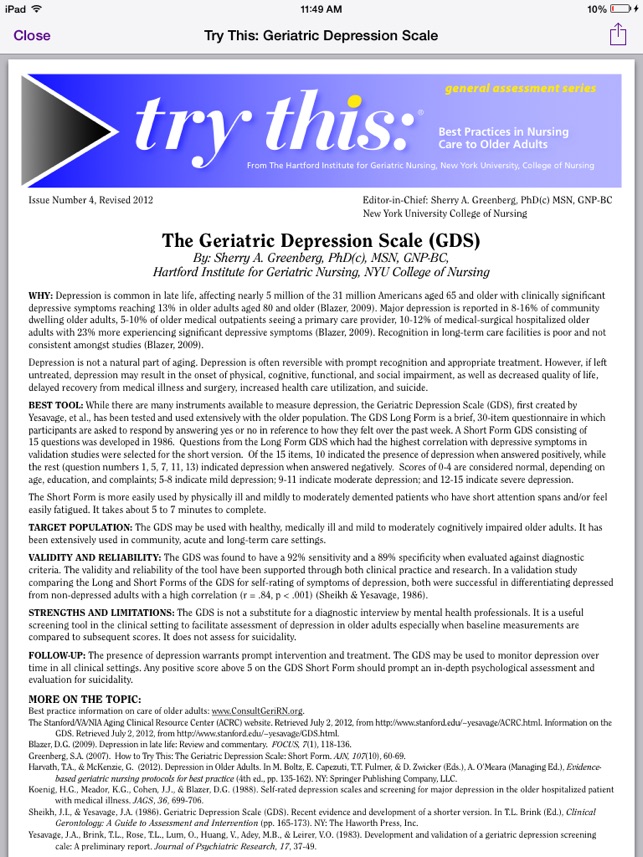
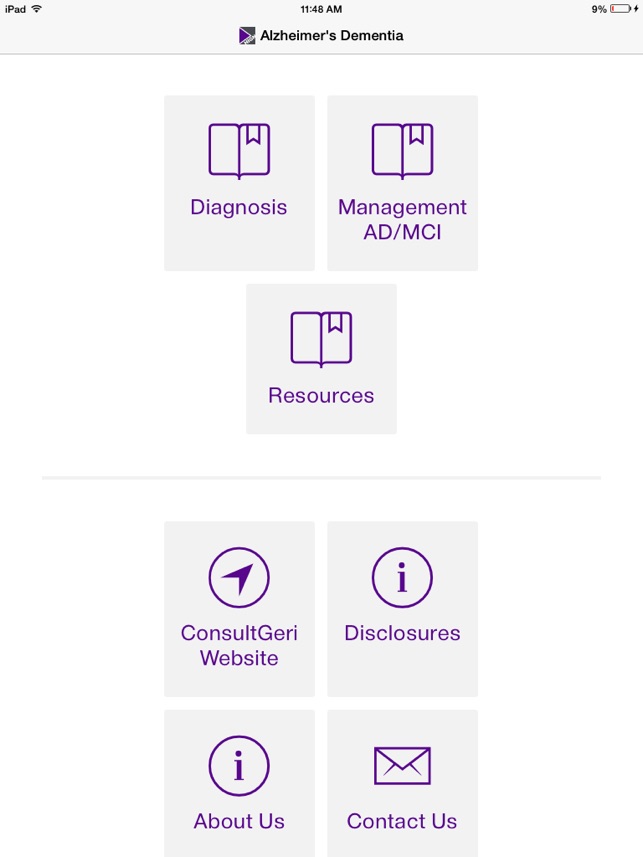
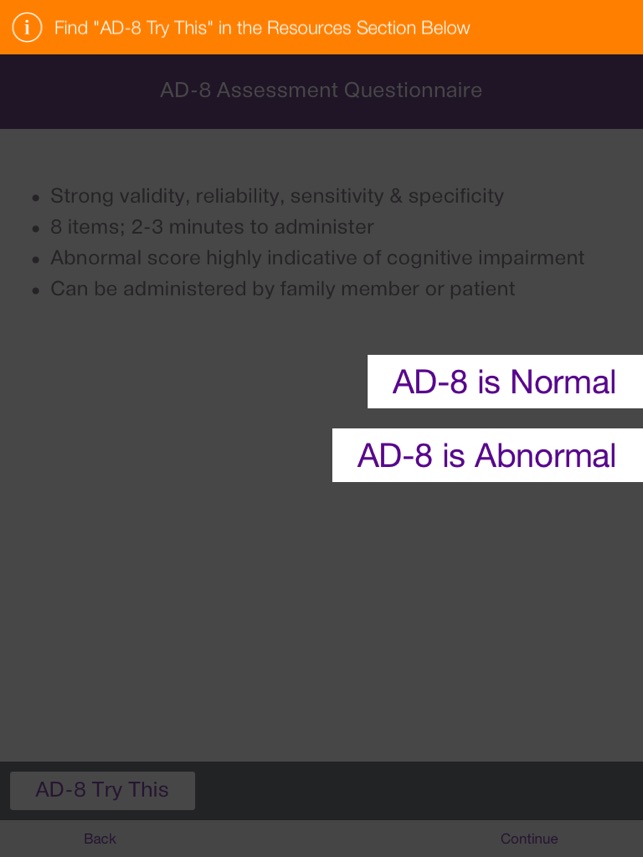
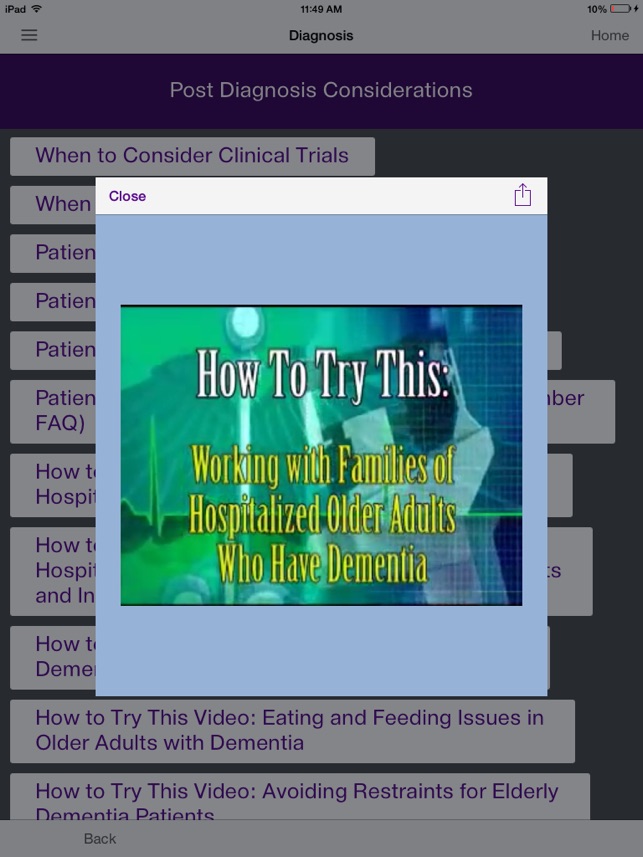
ConsultGeri: Dementia screenshot 1 of 10ConsultGeri: Dementia screenshot 2 of 10ConsultGeri: Dementia screenshot 3 of 10ConsultGeri: Dementia screenshot 4 of 10ConsultGeri: Dementia screenshot 5 of 10ConsultGeri: Dementia screenshot 6 of 10ConsultGeri: Dementia screenshot 7 of 10ConsultGeri: Dementia screenshot 8 of 10ConsultGeri: Dementia screenshot 9 of 10ConsultGeri: Dementia screenshot 10 of 10

Detailed Description

Functionality & Mechanism

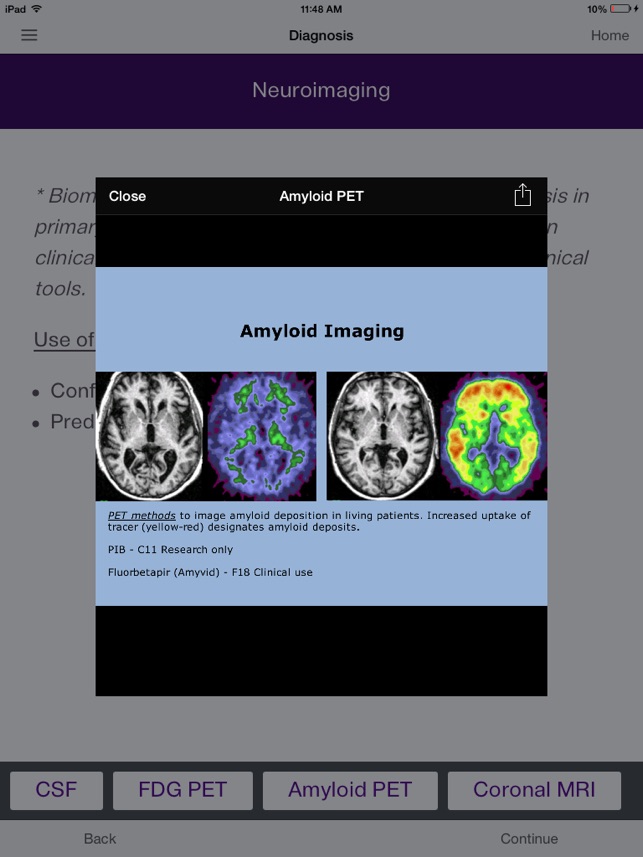
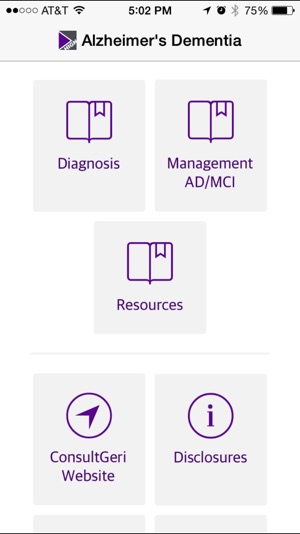
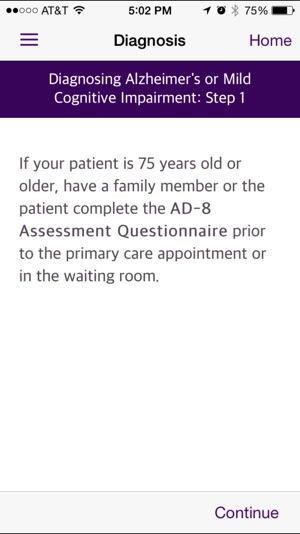
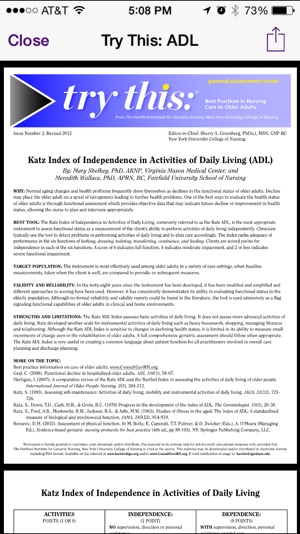
Developed by the Hartford Institute for Geriatric Nursing at NYU, this application functions as a clinical reference and management guide for cognitive impairment. The interface organizes evidence-based resources into step-by-step diagnostic and management pathways for conditions like Mild Cognitive Impairment and Alzheimer's Disease. It integrates validated "Try This" assessment tools, instructional videos, and educational materials for patients and families, facilitating rapid access to best practices in geriatric care within a clinical workflow.

Evidence & Research Context

  • The app's methodology is grounded in published best practices for geriatric care, including early dementia recognition in hospitalized older adults.
  • The integrated Mini-Cog assessment is a validated screening tool for early-stage cognitive impairment, administrable in three to five minutes.
  • For distinguishing delirium from other cognitive disorders, the app incorporates the Confusion Assessment Method (CAM) diagnostic algorithm, a five-minute assessment of fluctuating mental status.
  • Associated research provides a scientific basis for the inclusion of tools such as a family questionnaire and patient behavior checklists to identify cognitive decline.

Intended Use & Scope

This tool is designed for healthcare professionals (physicians, nurses) and home caregivers involved in the care of older adults with potential cognitive decline. It serves as a point-of-care reference to support screening and management. The application is intended to augment, not replace, comprehensive clinical evaluation and professional medical judgment for formal diagnosis.

Studies & Publications

3 publications

Peer-reviewed research associated with this app.

Development/Design Paper

Recognition of Dementia in Hospitalized Older Adults

Mezey et al. (2016) · Hartford Institute for Geriatric Nursing

Describes the research-driven development of this app
Approximately one-fourth of older hospital patients have dementia, a condition that is frequently undiagnosed or undocumented in hospital records. The stress of acute illness and hospitalization can exacerbate cognitive impairment in these patients, placing them at significantly higher risk for delirium, falls, dehydration, and functional decline compared to their peers. This publication outlines best practices for identifying underlying dementia in the hospital setting to mitigate these risks. It recommends routine screening through specific intake questions regarding "severe memory problems" and provides two practical assessment tools: a 7-item Family Questionnaire to identify history of memory interference in daily activities, and a Patient Behavior Triggers checklist for clinical staff to recognize signs such as disorientation or difficulty following instructions. Early recognition allows for tailored care plans that can prevent adverse outcomes and improve patient safety.
... Read More
Development/Design Paper

How to try this: detecting delirium

Waszynski et al. (2007) · AJN, American Journal of Nursing

Describes the research-driven development of this app
For patients and their loved ones, delirium can be a frightening experience. A fluctuating mental status is important to identify because it often signals a need for additional treatment. The Confusion Assessment Method (CAM) diagnostic algorithm enables nurses to assess for delirium by identifying the four features of the disorder that distinguish it from other forms of cognitive impairment. It can be completed in five minutes and is easily incorporated into ongoing assessments of hospitalized patients. (This screening tool is included in the series Try This: Best Practices in Nursing Care to Older Adults, from the Hartford Institute for Geriatric Nursing at New York University's College of Nursing.) For a free online video demonstrating the use of this tool, go to https://links.lww.com/A209.
... Read More

ConsultGeri: Dementia

Free