AppsFromResearch
CrowdMag icon

CrowdMag

Evidence Tier:DOCUMENTED

Published in academic literature

For:Researchers & AcademicsGeneral Public & Enthusiasts

App Summary

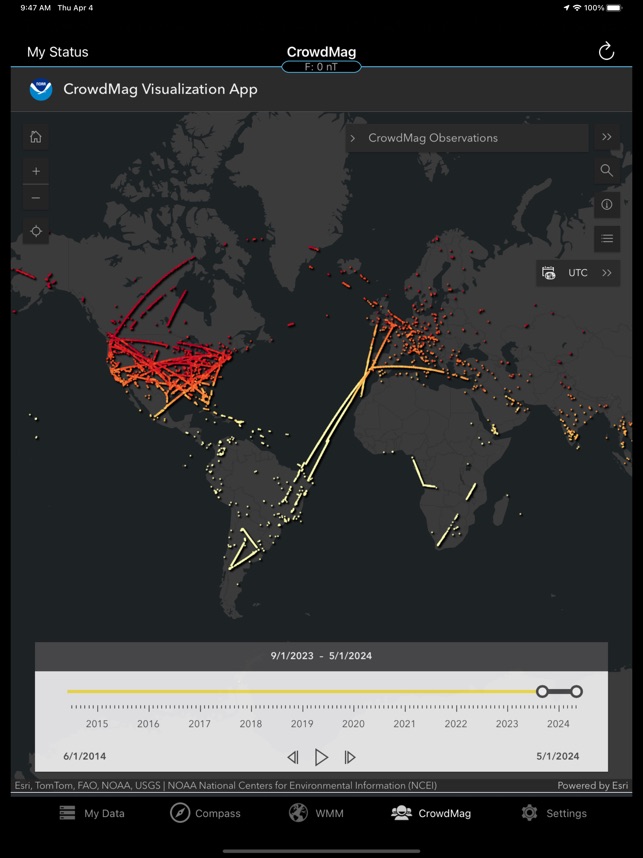
CrowdMag is a citizen science app that turns a smartphone into a mobile magnetometer, allowing users to record and share local magnetic field data with NOAA during activities like walking or flying. The associated research demonstrates that an AI-based autoencoder can denoise the inherently noisy smartphone measurements and that global models derived from this crowdsourced data are generally consistent with established satellite-derived models. The authors conclude that this approach helps fill critical gaps in global magnetic maps with unprecedented resolution, particularly in populated areas, and fosters public involvement in geoscience research.

App Screenshots

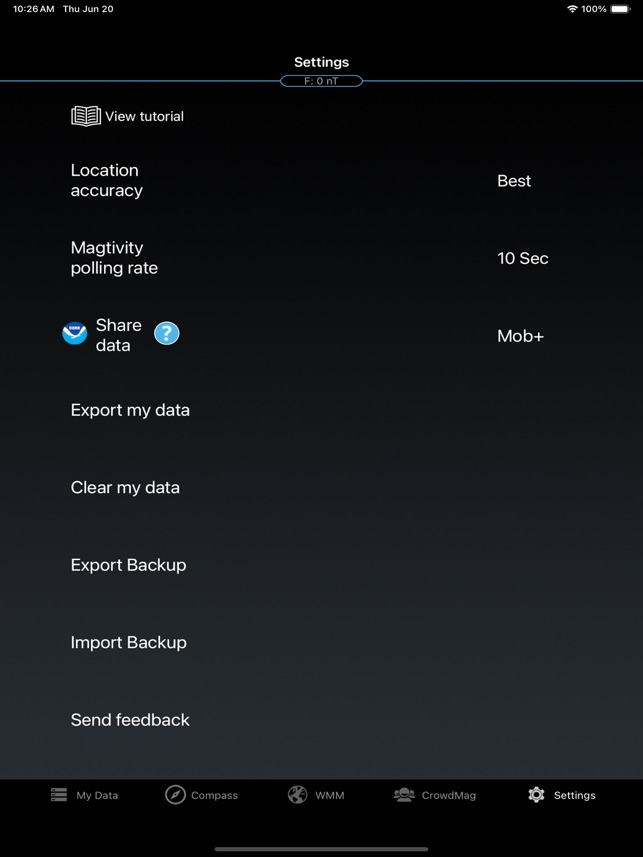
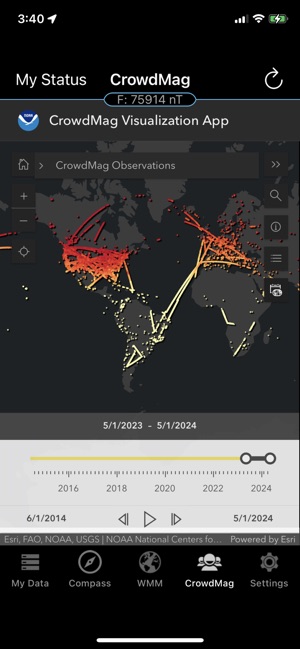
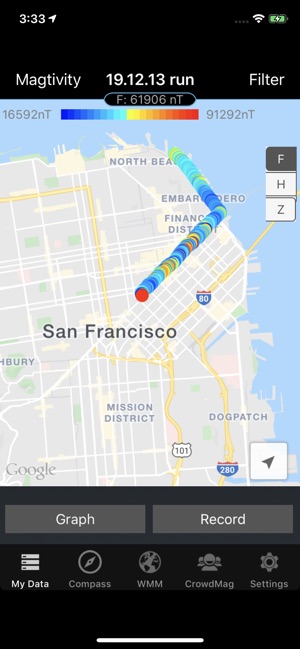
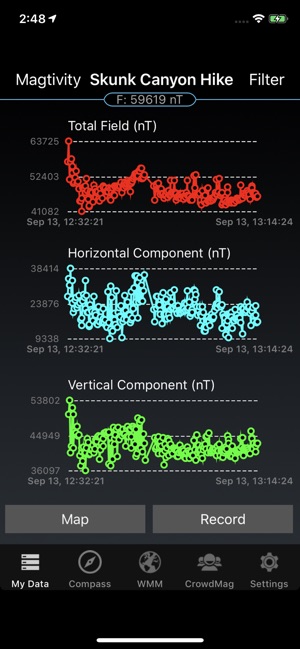
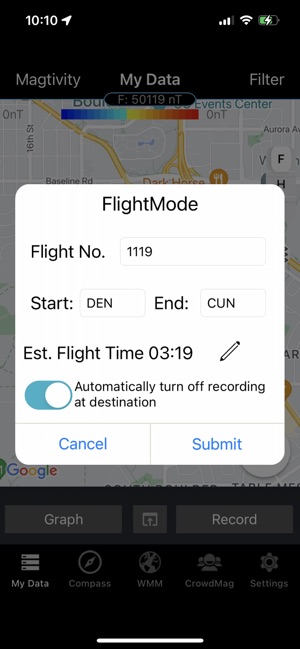
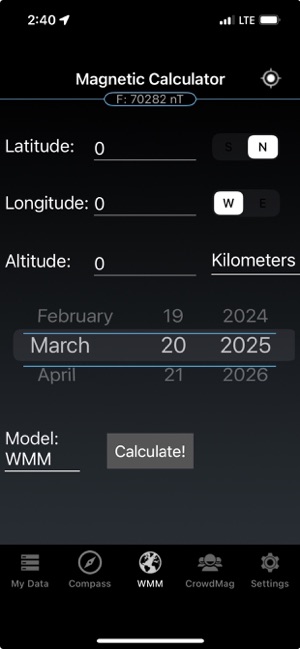
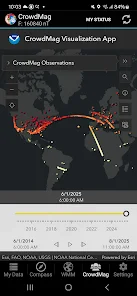
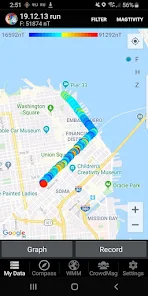
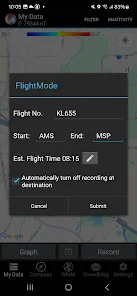
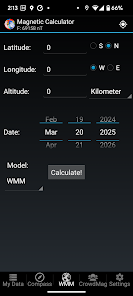
CrowdMag screenshot 1 of 22CrowdMag screenshot 2 of 22CrowdMag screenshot 3 of 22CrowdMag screenshot 4 of 22CrowdMag screenshot 5 of 22CrowdMag screenshot 6 of 22CrowdMag screenshot 7 of 22CrowdMag screenshot 8 of 22CrowdMag screenshot 9 of 22CrowdMag screenshot 10 of 22CrowdMag screenshot 11 of 22CrowdMag screenshot 12 of 22CrowdMag screenshot 13 of 22CrowdMag screenshot 14 of 22CrowdMag screenshot 15 of 22CrowdMag screenshot 16 of 22CrowdMag screenshot 17 of 22CrowdMag screenshot 18 of 22CrowdMag screenshot 19 of 22CrowdMag screenshot 20 of 22CrowdMag screenshot 21 of 22CrowdMag screenshot 22 of 22

Detailed Description

Functionality & Mechanism

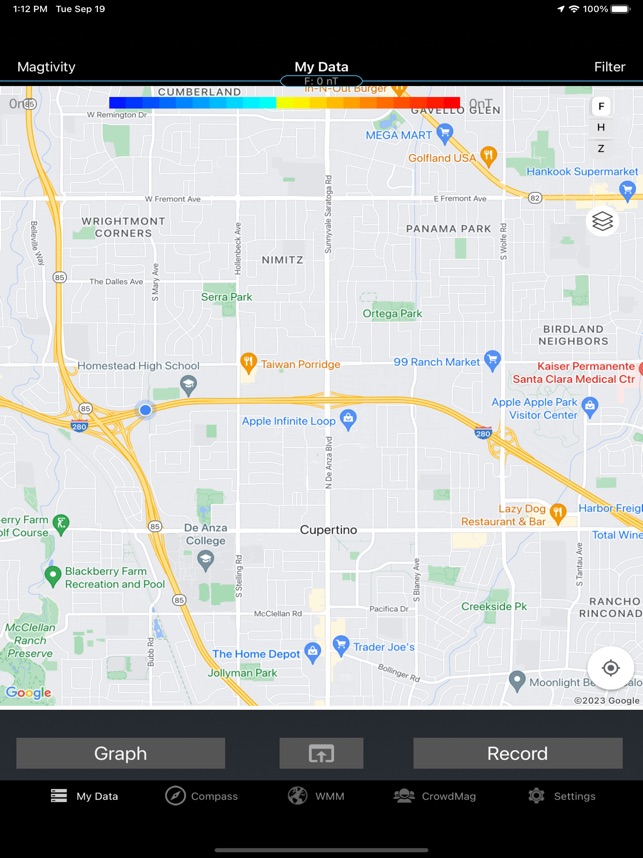
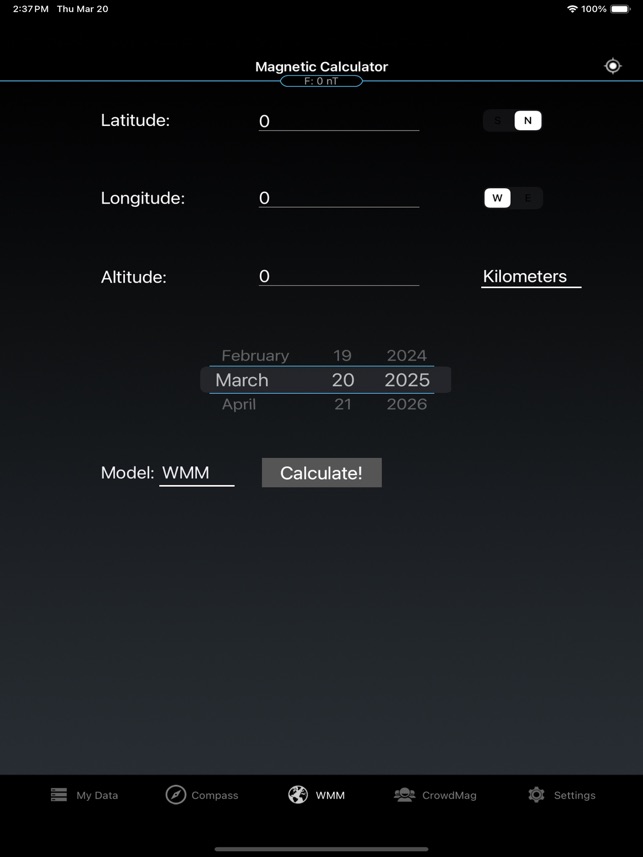
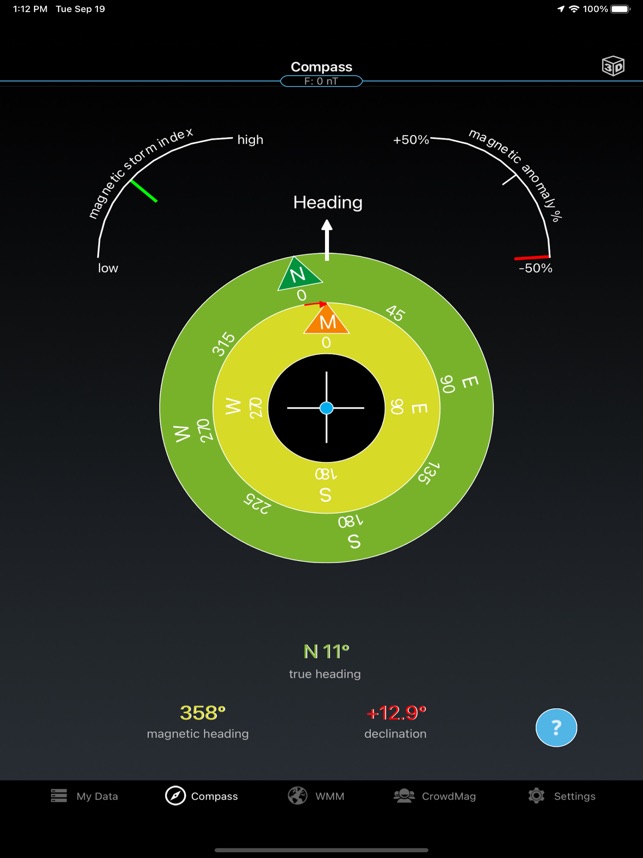
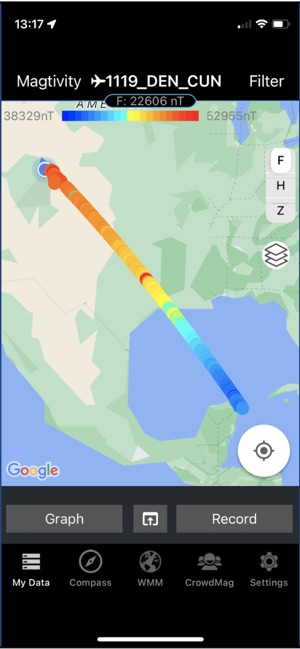
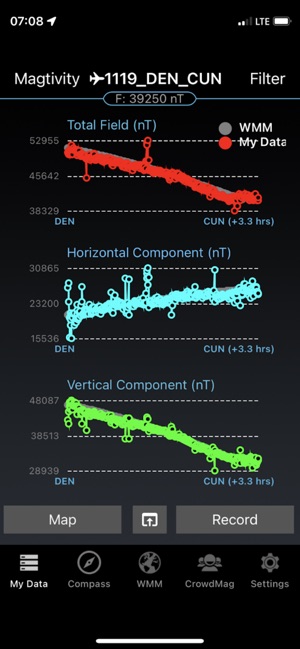
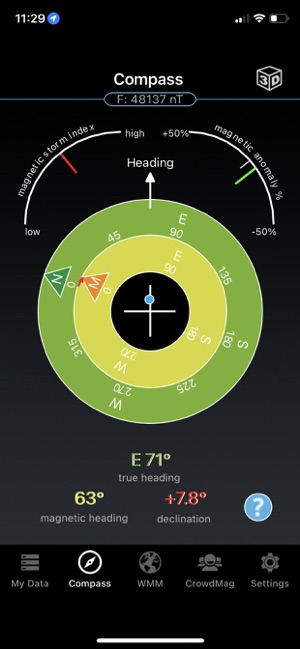
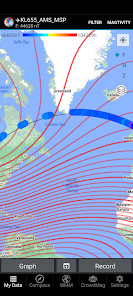
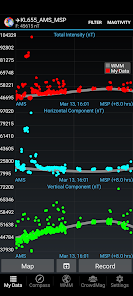
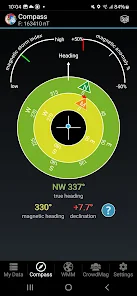
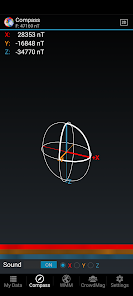
Developed by NOAA, CrowdMag leverages the integrated magnetometers in smartphones to function as a mobile geomagnetic data collection system. Users initiate recording sessions ("magtivities") to capture local magnetic field data, including Z (downward), H (horizontal), and F (total intensity) components. The interface facilitates data visualization via interactive maps and time-series graphs, and includes a magnetic calculator based on the World Magnetic Model. Optional data submission contributes to a global crowdsourced dataset for scientific research.

Evidence & Research Context

  • An early analysis of over 12 million crowdsourced data points demonstrated that a global magnetic model derived solely from app contributions is generally consistent with established satellite-derived models.
  • The app enables the collection of ground-level magnetic data in densely populated regions with an unprecedented spatial resolution not achievable through traditional survey methods.
  • Associated research details the novel application of a deep neural network (autoencoder) to denoise and calibrate the crowdsourced data, creating a high-quality, AI-ready dataset for geophysical analysis.
  • The platform has been utilized as a citizen science tool since 2014, with data collection protocols designed in partnership with the University of Colorado's Cooperative Institute for Research in the Environmental Sciences (CIRES).

Intended Use & Scope

This app is designed for citizen scientists, educators, and the general public to contribute to geophysical research. Its primary utility is as a data collection tool for a large-scale project to improve global magnetic field maps. The system is not a substitute for professional-grade magnetometers, as individual measurements are subject to significant local interference and require aggregation and advanced processing for scientific use.

Studies & Publications

2 publications

Peer-reviewed research associated with this app.

Development/Design Paper

Building an AI-Ready Calibrated and Denoised Dataset of Magnetic Anomalies using Citizen Science Contributed CrowdMag Measurements

Opper et al. (2023) · AGU Fall Meeting

Describes the research-driven development of this app
Deviations in local magnetic field strengths from what is expected are known as magnetic anomalies, whose proper detection can reveal various geophysical features and aid in resource exploration. NOAA's current magnetic anomaly map is known as EMAG2_v3, which is a compilation of data from airborne, shipborne, and satellite measurements. However, the resolution of this map is limited by the spacing between these measurements. To improve its magnetic reference models and maps, NOAA introduced CrowdMag, a citizen science project that harnesses data contributed by the public through a mobile app that utilizes the magnetometers embedded in modern smartphones. But because the magnetometers in smartphones are lower quality and therefore influenced by surrounding magnetic interference, the collected data is extremely noisy. To overcome this challenge, a type of deep neural network known as an autoencoder (AE) is employed to denoise the data. An AE learns to reconstruct its input data by effectively compressing the information into a lower-dimensional representation and then reconstructing it to remove noise. This artificial intelligence (AI) technique is trained using intentionally noised and masked EMAG2_v3 data (Figure 1b) and its hyperparameters optimally tuned before being applied to the noisy CrowdMag data. This tuning includes but is not limited to, altering input size, epoch size, loss function, masking and randomization level, and compression ratio. The AE's performance is measured by visual comparison of the original EMAG2_v3 data to its reconstruction (Figure 1a/1c) and the optimal hyperparameters are established. Once the reconstruction of EMAG2_v3 is sufficient, the AE is applied to the noisy CrowdMag data, and an AI-ready calibrated and denoised dataset of magnetic anomalies is produced. To the best of our knowledge, this is the first time autoencoders have been applied to this sector of geoscience. The outcomes of this project can be extended to other fields of science where noisy datasets are prevalent. Additionally, this initiative promotes the utilization of citizen-science-collected measurements, fostering greater public involvement in scientific research.
... Read More
Development/Design Paper

The CrowdMag App – turning your smartphone into a travelling magnetic observatory

Saltus et al. (2017) · EGU General Assembly

Describes the research-driven development of this app
In 2014, we started the "CrowdMag" Project to collect vector magnetic data from digital magnetometers in smartphones. In October 2014, we released our first-generation Android and iOS apps. Currently, the CrowdMag Project has more than 15,000 enthusiastic users contributing more than 12 million magnetic data points from around the world. NOAA's National Centers for Environmental Information (NCEI), in partnership with the University of Colorado's Cooperative Institute for Research in the Environmental Sciences (CIRES) develops magnetic field models to aid navigation, resource exploration and scientific research. We use observatories, satellites and ship/airborne surveys to measure the magnetic data. However, the measurements leave gaps in coverage, particularly for short-wavelength urban noise. Our ultimate goal is to use data from the CrowdMag Project to improve global magnetic data coverage. Here we present some early results from the analysis of the crowdsourced magnetic data. A global magnetic model derived solely based on CrowdMag data is generally consistent with satellite-derived models such as World Magnetic Model. A unique contribution of the CrowdMag Project is the collection of ground level magnetic data in densely populated regions with an unprecedented spatial resolution. For example, we show a magnetic map (by binning the data collected into 100x100m cells) of central Boulder using 170,000 data points collected by about 60 devices over the duration October 2014- January 2016. The median magnetic field value is consistent with the expected magnitude of the Earth's background magnetic field. The standard deviation of the CrowdMag total field (F) values is much higher than the expected natural (i.e., diurnal and geologic) magnetic field variation. However, the phone's magnetometer is sensitive enough to capture the larger magnitude magnetic signature from the urban magnetic sources. We discuss the reliability of crowdsourced magnetic maps and their applications to navigation, global models, and local geologic or environmental investigations.
... Read More

In the Media

CrowdMag Flight Mode Tutorial

The National Centers for Environmental Information developed CrowdMag to collect magnetic field data through citizen science, using mobile phones' internal magnetometers to record measurements during flight journeys. The project has transitioned to CIRES at the University of Colorado, with the underlying data remaining available until this tutorial page is removed on September 7, 2025. Users must set their phones to airplane mode before takeoff and keep devices in consistent locations like shirt pockets or carry-on bags while avoiding metal objects during recording.

NoaaRead article

CrowdMag

CIRES developed CrowdMag to collect high-resolution geomagnetic data using smartphone magnetometers from citizen scientists worldwide, providing a crowdsourced alternative to satellite magnetic field measurements. The app now includes a flight mode where users can collect magnetic data while flying, as airplane observations "fill in a large gap in magnetic data" between satellite and ground-based measurements. CrowdMag updates its interactive map hourly with crowdsourced magnetic data collected in the past 24 hours, following a 1x1 kilometer grid to ensure contributor privacy.

NoaaRead article

Become a Citizen Scientist with Our CrowdMag App

NOAA developed CrowdMag to help scientists obtain data about Earth's magnetic field using smartphone magnetometers and accelerometers that collect information during user "Magtivities." The app allows citizen scientists to send data from across the world, which NOAA combines with real-time solar wind data to create near-real-time models of Earth's magnetic field. The CrowdMag project has now transitioned to CIRES at the University of Colorado.

NoaaRead article

Become a Citizen Scientist with Our CrowdMag App

NOAA's National Centers for Environmental Information developed CrowdMag to help scientists obtain data about Earth's magnetic field, using smartphone magnetometers and accelerometers to collect geomagnetic measurements. The app allows users to complete "Magtivities" that send data to NOAA, which scientists then combine with real-time solar wind data to create near-real-time models of Earth's magnetic field. The CrowdMag project has transitioned to CIRES at the University of Colorado as of 2025.

NoaaRead article

Smartphone App Seeks to Make Navigation Safer

The Cooperative Institute for Research in Environmental Sciences and NOAA's National Geophysical Data Center developed CrowdMag to monitor Earth's magnetic field variations using smartphone magnetometers, addressing the limitations of GPS navigation systems. "All planes have magnetometers—high-tech compasses—because GPS can be jammed," explained scientist Manoj Nair, noting that traditional satellite data provides only fuzzy 3000-kilometer resolution while ships and planes achieve 56-kilometer resolution. The app aims to capture magnetic field details beyond current methods to improve navigation safety for planes, boats, and future delivery drones.

EosRead article

Crowdsourcing Earth's magnetic field

Dr. Manoj Nair from the Cooperative Institute for Research in Environmental Sciences developed CrowdMag to map Earth's magnetic field using crowdsourced data, taking advantage of cheap digital magnetometers embedded in smartphones. "Our goal is to see if low-quality but high-frequency magnetic measurements around the world can help us improve navigation systems," said Nair, who works in NOAA's National Geophysical Data Center. The app leverages over 1 billion smartphone users globally to provide simultaneous measurements that could help protect infrastructure from space weather damage.

ColoradoRead article

Crowdsourcing Earth's magnetic field

Dr. Manoj Nair from the Cooperative Institute for Research in Environmental Sciences developed CrowdMag to map Earth's magnetic field using digital magnetometers embedded in smartphones worldwide. "Our goal is to see if low-quality but high-frequency magnetic measurements around the world can help us improve navigation systems," said Nair, who works in NOAA's National Geophysical Data Center. The crowdsourced approach leverages over 1 billion smartphone users to provide simultaneous measurements that could help protect infrastructure from space weather and improve navigation accuracy.

ColoradoRead article

CrowdMag

Free