
AppsFromResearch
CU Face Race icon

CU Face Race

Evidence Tier:DOCUMENTED

Published in academic literature

For:Researchers & AcademicsGeneral Public & Enthusiasts

App Summary

CU Face Race is a research and training app that uses a series of games across eight levels to improve face recognition memory and perception. The app's design is grounded in event-related potential (ERP) research showing that recognition memory for objects like faces is supported by distinct neurocognitive processes for familiarity and recollection. The associated research concludes that these ERP findings offer strong support for the dual-process perspective on recognition memory.

App Screenshots

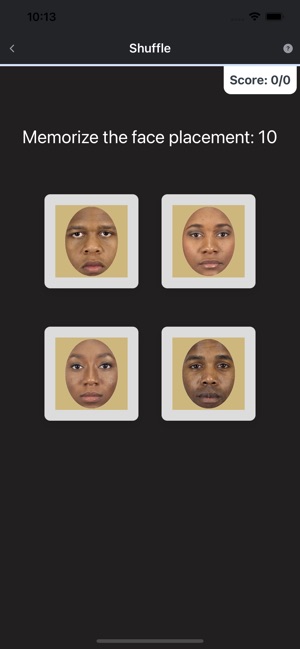
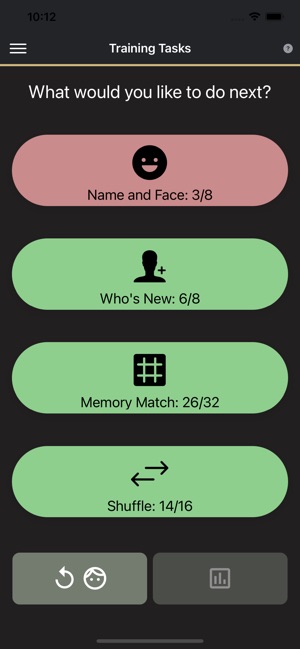
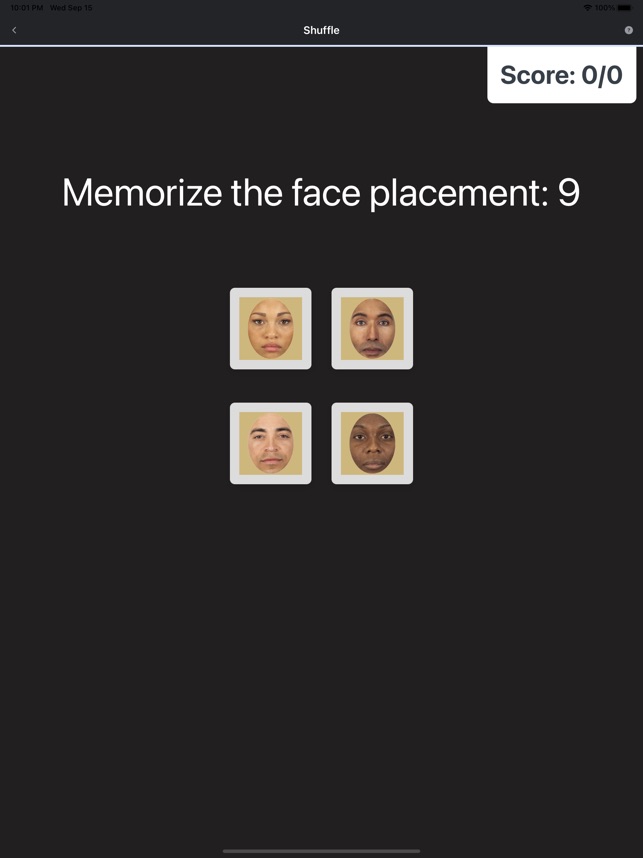
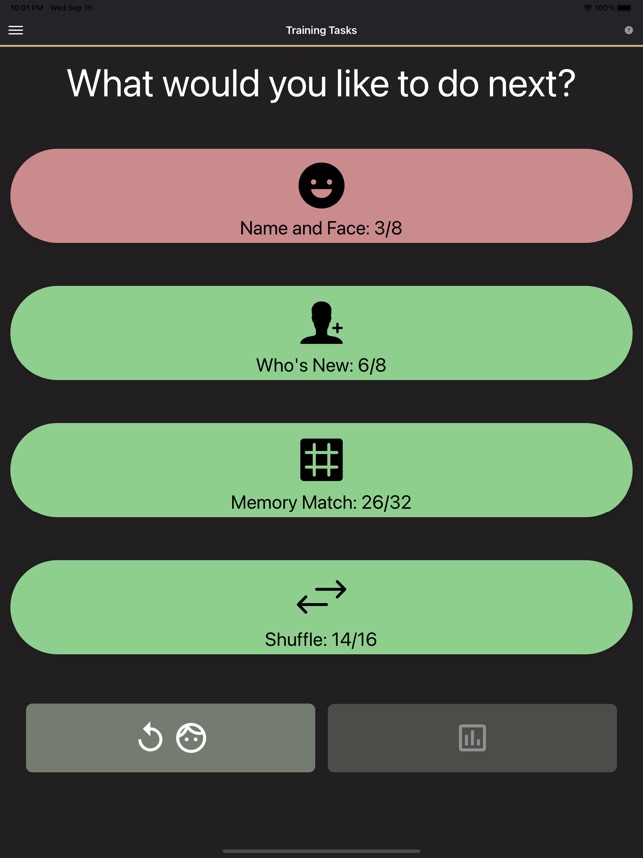
CU Face Race screenshot 1 of 10CU Face Race screenshot 2 of 10CU Face Race screenshot 3 of 10CU Face Race screenshot 4 of 10CU Face Race screenshot 5 of 10CU Face Race screenshot 6 of 10CU Face Race screenshot 7 of 10CU Face Race screenshot 8 of 10CU Face Race screenshot 9 of 10CU Face Race screenshot 10 of 10

Detailed Description

Functionality & Mechanism

Developed by computer science students, CU Face Race is a training application designed to engage facial recognition memory. The system delivers a structured protocol consisting of eight distinct training levels. Each level incorporates a series of perceptual and memory games that require participants to learn and recall a set of faces. The interface guides progression through increasingly complex tasks, with a primary application in psychological research settings to investigate the cognitive mechanisms of face processing.

Evidence & Research Context

  • The app's design is informed by dual-process models of recognition memory, which distinguish between familiarity-based and recollection-based retrieval.
  • Associated research utilizes event-related potentials (ERPs) to identify distinct neurocognitive markers for these processes, such as the mid-frontal FN400 old/new effect.
  • The FN400 component (300-500 ms) has been specifically demonstrated to index familiarity-based recognition of faces, independent of detailed recollection.
  • A separate ERP component, the N170, is associated with expert recognition, indicating that well-learned visual categories like faces are differentiated at an early stage of neural processing.

Intended Use & Scope

This application is primarily intended as a research instrument for psychologists and cognitive scientists investigating the mechanisms of face recognition memory. While available for general use as a cognitive training tool, it is not a validated therapeutic intervention or a diagnostic for memory impairment. Professional consultation is required for any clinical memory concerns.

Studies & Publications

4 publications

Peer-reviewed research associated with this app.

Non-Evaluative Reference

Event-related potentials and recognition memory

Rugg et al. (2007) · Trends in Cognitive Sciences

Referenced in academic literature; no direct evaluation of the app
According to dual-process models, recognition memory is supported by distinct retrieval processes known as familiarity and recollection. Important evidence supporting the dual-process framework has come from studies using event-related brain potentials (ERPs). These studies have identified two topographically distinct ERP correlates of recognition memory –the 'parietal' and 'mid-frontal' old/new effects – that are dissociated by variables that selectively modulate recollection and familiarity, respectively. We evaluate the extent to which ERP data support dual-process models in light of the proposal that recollection is a continuous rather than a discrete memory process. We also examine the claim that the putative ERP index of familiarity is a reflection of implicit rather than explicit memory. We conclude that ERP findings continue to offer strong support for the dual-process perspective.
... Read More
Non-Evaluative Reference

The FN400 indexes familiarity-based recognition of faces

Curran et al. (2006) · NeuroImage

Referenced in academic literature; no direct evaluation of the app
Separate event-related brain potential (ERP) components have been hypothesized to index familiarity and recollection processes that support recognition memory. A 300- to 500-ms mid-frontal FN400 old/new difference has been related to familiarity, whereas a 500- to 800-ms parietal old/new difference has been related to recollection. Other recent work has cast doubt on the FN400 familiarity hypothesis, especially its application to familiarity-based recognition of conceptually impoverished stimuli such as novel faces. Here we show that FN400 old/new differences can be observed with novel faces, and as predicted by the familiarity hypothesis, these differences are observed regardless of whether or not recognition is accompanied by the recollection of specific details from the study episode. Furthermore, FN400 differentiation between hits and misses is more consistent with an explicit familiarity process than an implicit memory process.
... Read More

CU Face Race

Free